

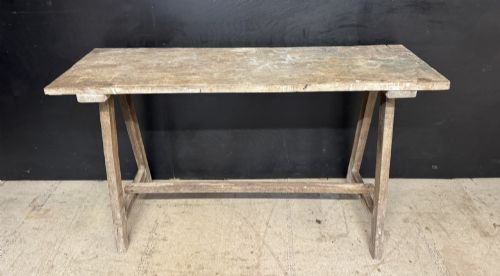
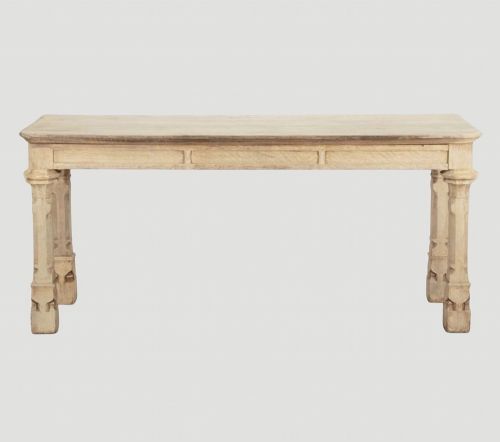

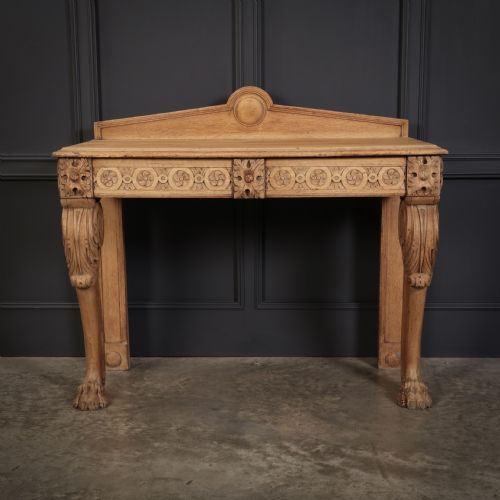
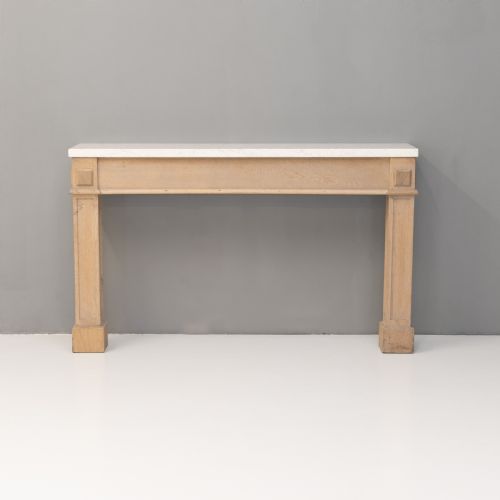


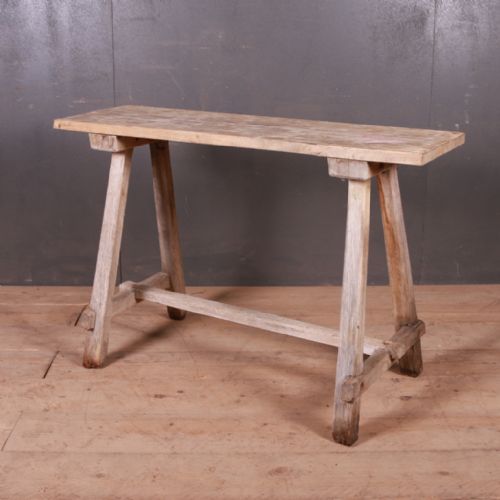


Bleached Oak Console Table
A bleached oak console table brings practical surface space and pale timber grain to an interior without dominating the room.

Bleached Oak Console Table
A bleached oak console table is a narrow rectangular surface designed to stand against a wall, frequently appearing in forms that span the eighteenth, nineteenth and early twentieth centuries. These tables emerge in English, French, Scottish, Dutch, Spanish and Italian variants, reflecting regional joinery traditions from country houses and provincial interiors.
The most frequent examples on this page date from the nineteenth century, often sharing lineage with French drapers tables, trestle tables, and serving pieces. Alongside these console forms, related serving tables, dressers, and hall tables share similar timber treatments and proportions.
Judging quality
Quality rests upon the proportion of the frame, the integrity of the timber, and the subtlety of the bleaching process. Superior pieces display crisp carving, balanced proportions, and timber that has been lightened evenly without losing the natural texture of the grain.
Simpler provincial tables rely on sturdy utility and honest wear for their character, whereas grander neoclassical revival or Gothic pieces demonstrate more elaborate architectural moulding and sophisticated turning.
Bleached Oak Console Table Retail Price Guide 2026
Typical asking prices for bleached oak console table among the pieces listed under this phrase on Sellingantiques today, from the lower quarter to the upper quarter. They describe what is for sale here now, not the wider market.
Listings include oak, pine, marble, and brass, spanning Georgian, Victorian, Edwardian, and twentieth-century periods.
The Bleached Oak Console Table Glossary
- Console table
- A table designed to stand against a wall, typically supported by legs at the front and brackets at the back. These narrow surfaces suit hallways, living rooms and dining spaces.
- Drapers table
- A long, utilitarian table traditionally used in fabric shops for displaying textiles, featuring a shallow rectangular top and sturdy legs. These tables provide generous surface area and open lower storage.
- Bleaching
- A chemical or mechanical process applied to timber to strip away dark natural pigments. This treatment creates a pale, neutral finish favoured in modern and traditional interiors alike.
- Trestle table
- A table construction where the top rests upon two or more supporting frames rather than four individual legs. This design offers stability and legroom.
- Potboard dresser
- A traditional storage unit featuring an open lower shelf beneath the main surface. This lower tier was historically used for storing earthenware pots and heavy vessels.
Bleached Oak Console Table: Frequently Asked Questions
Where should I place a console table?
A console table fits naturally in a narrow hallway, behind a sofa, or against a dining room wall where floor space is limited. Its shallow depth provides a surface for lamps and objects without obstructing walkways.
The pale finish of bleached oak allows these tables to blend easily with neutral walls and various wood tones across different room schemes.
How do I care for bleached oak?
Dust the surface regularly with a dry cloth and avoid placing the timber in direct sunlight or near extreme heat sources. Use coasters and placemats to protect the pale wood from moisture and stains.
Wax or oil treatments can be applied sparingly if recommended for the specific surface finish, though most require little maintenance beyond everyday cleaning.
Are these tables from the nineteenth century?
Many examples date from the nineteenth century, representing French provincial, English country, and Scottish regional furniture making. Other pieces originate in the eighteenth century or extend into early twentieth-century revivals.
Construction details, timber patination, and regional design traits help distinguish the precise period of each individual table.
What is the difference between a console and a drapers table?
A console table is specifically designed to sit flat against a wall as a decorative and functional surface. A drapers table originates from commercial shop use and typically offers a longer, wider proportion with an open underframe.
Both forms appear frequently in bleached oak, offering versatile surfaces for modern homes.