

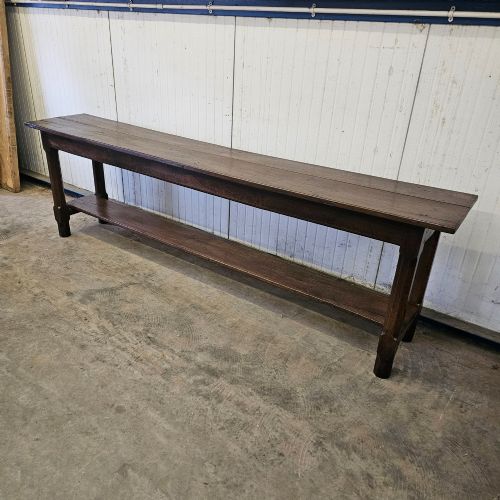

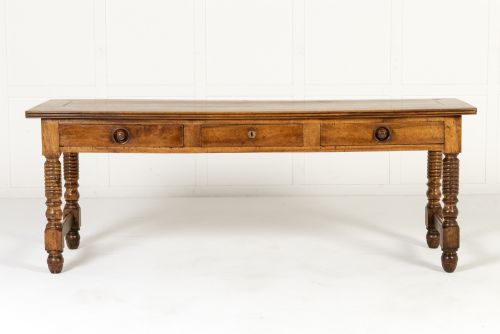
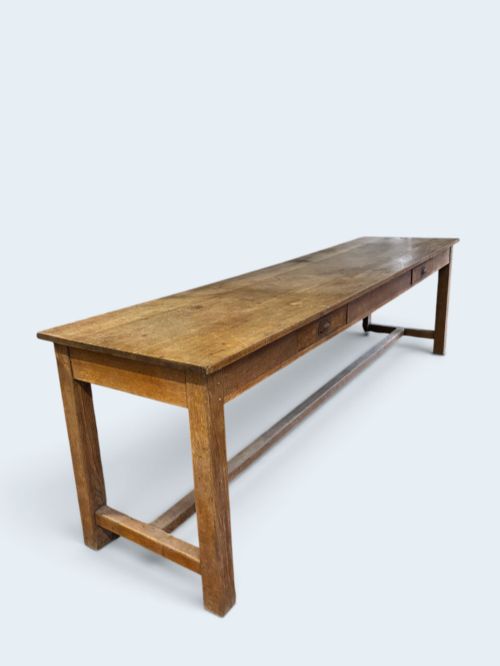

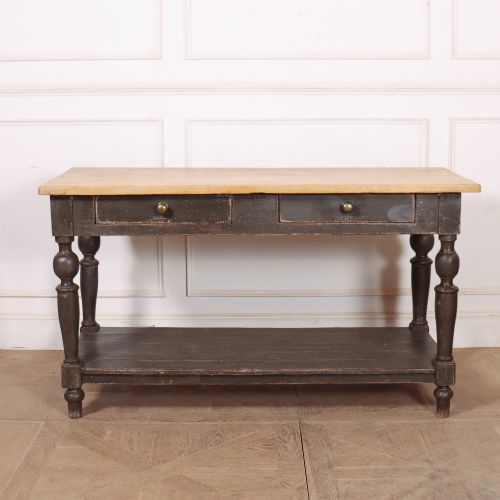


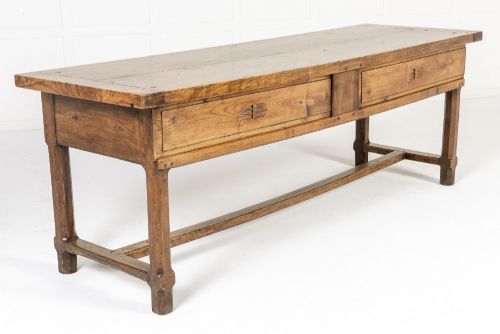
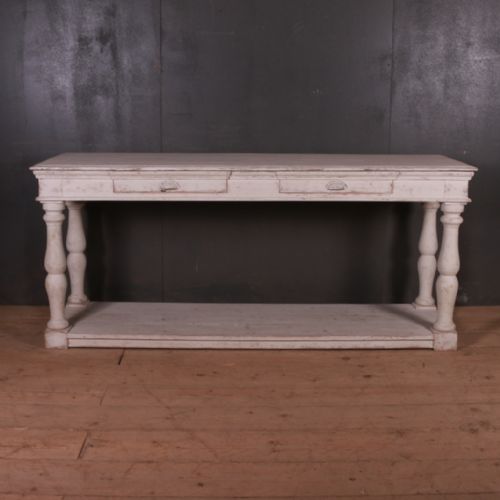


French Drapers Table
A French drapers table brings generous surface area and rustic utility to any room, offering robust charm for daily use.
French Drapers Table
When you search for a french drapers table, you encounter long, substantial tables originally built for commerce and fabric display in provincial shops. The pieces on this page span the nineteenth century, including examples dated through the eighteen sixties, eighties, and nineties.
Most entries belong to the French Country and French Provincial styles, reflecting practical origins in rural settings. Alongside standard drapers tables, you will find console tables, trestle tables, and dual-purpose serving tables.
The form prioritises length and stability, making these tables suited for use as large dining surfaces or central prep tables. Examples vary from simple pine and oak frames to substantial walnut and mahogany formats.
How they were made
Construction relies heavily on sturdy timbers such as oak, walnut, mahogany, and pine, selected for their structural endurance. Joinery is straightforward and robust, designed to withstand heavy daily loads without losing rigidity.
Surfaces frequently show the effects of time and treatment, appearing either in natural timber or finished with paint. Many pieces feature bleached oak surfaces that soften the appearance of the wood while retaining its grain.
French Drapers Table Retail Price Guide 2026
Typical asking prices for french drapers table among the pieces listed under this phrase on Sellingantiques today, from the lower quarter to the upper quarter. They describe what is for sale here now, not the wider market.
Some of these tables worked so hard in French shops they still carry the faint ghosts of yardage measurements carved into the wood.
What varies in quality
Quality rests primarily on the choice of primary timber, with dense hardwoods like walnut and oak commanding greater presence than softer pine. The depth and integrity of the timber grain, particularly in bleached oak examples, dictate the visual weight of the piece.
Proportion and scale also separate standard utility items from monumental or exceptionally large formats. Original painted finishes or patinated surfaces that show honest wear contribute to the character and desirability of individual examples.
The French Drapers Table Glossary
- Bleached oak
- Timber treated to lighten its natural colour while preserving the underlying grain pattern. This finish is frequently encountered on nineteenth-century examples.
- Trestle table
- A form supported by two or more upright structures connected by a horizontal beam. This design provides generous legroom along the length of the table.
- Console table
- A wall-mounted or freestanding narrow table often utilised for display or serving. Certain pieces bridge the category between drapers tables and prep consoles.
- French Provincial
- A style originating from rural regions of France, combining unpretentious utility with regional cabinet-making traditions. Pieces in this idiom emphasise practical shapes over ornate decoration.
French Drapers Table: Frequently Asked Questions
What is a french drapers table used for?
Originally designed for displaying textiles and bolts of fabric in nineteenth-century shops, these long surfaces provided ample room for commerce.
Today, their generous proportions make them popular as large dining tables or substantial prep surfaces in domestic kitchens.
How do I live with a french drapers table?
These pieces require space to breathe, working best as freestanding centrepieces in kitchens, dining rooms, or large hallways.
Their robust timber construction tolerates daily use well, though care should be taken to protect historic painted or bleached surfaces from moisture.
How do I tell periods apart?
Dating relies on observing construction methods, timber selection, and any recorded dates from the nineteenth century.
Earlier examples often display heavier oak or walnut framing, while pieces from the later decades incorporate varied woods and painted finishes.
Are these tables solid wood?
The pieces listed across the archive and current stock utilise solid timbers such as pine, oak, walnut, and mahogany.
Construction focuses on utility and strength, reflecting the functional demands placed on shop furniture of the period.