



19th Century Drapers Table
These long work surfaces once served trade, and a 19th century drapers table now brings exceptional length and utilitarian charm to modern domestic rooms.
19th Century Drapers Table
A 19th century drapers table is a substantial utilitarian form originally built for retail fabric shops and commercial workrooms, characterised by generous proportions and clean lines. When exploring this selection, buyers frequently encounter French examples alongside Italian, English, and Scandinavian pieces.
The inventory on this page spans console tables, preparation tables, and serving tables alongside dedicated drapers tables. These objects reflect various regional aesthetics including French provincial, English country house, and Scandinavian country styles.
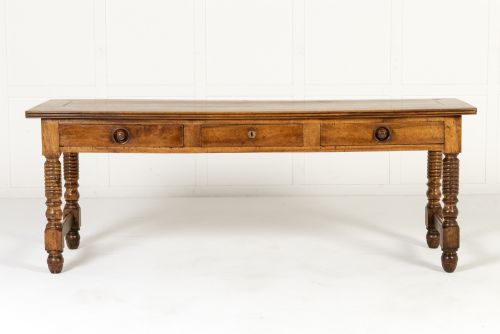
Most pieces date broadly to the nineteenth century, with specific dated examples placing around eighteen eighty, and occasional earlier eighteenth century precursors appearing in walnut and oak.
Assessing Quality and Proportion
Quality in these large tables rests upon the integrity of the timber, the balance of proportions, and the honesty of the surface finish. Monumental scales and uncommon lengths command attention, while smaller work tables offer utility in restricted spaces.
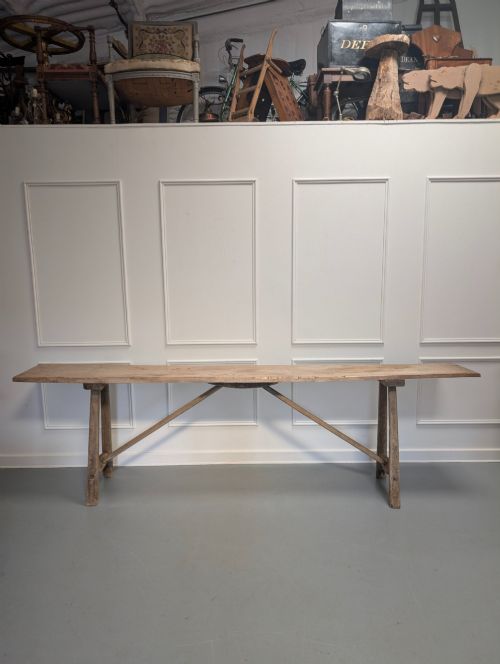
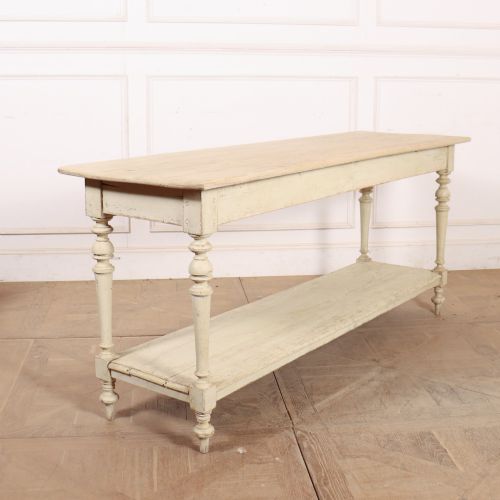
The character of the wood, whether bleached oak or painted softwood, dictates the visual weight of the piece within a room. Original surface treatments and untouched patination distinguish finer examples from later alterations.
19th Century Drapers Table Retail Price Guide 2026
Typical asking prices for 19th century drapers table among the pieces listed under this phrase on Sellingantiques today, from the lower quarter to the upper quarter. They describe what is for sale here now, not the wider market.
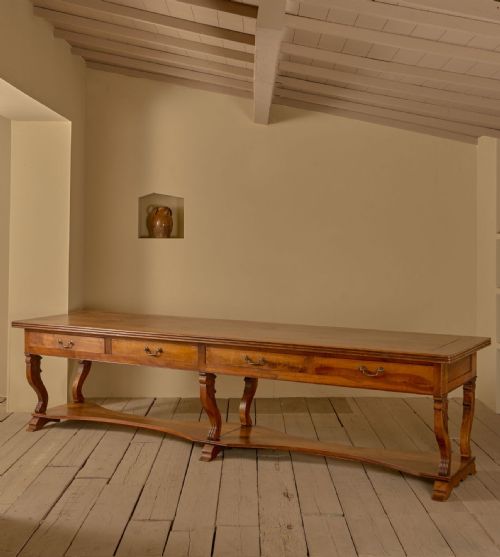
One exceptional listing measures a monumental four metres in length, designed for measuring out vast lengths of fabric.
The 19th Century Drapers Table Glossary
- Bleached oak
- Timber treated to lighten its natural tone while retaining the visible grain and texture. This finish is frequently found on French examples listed here.
- Painted softwood
- Timber such as pine coated with pigment, often showing signs of wear and age through layers of historic application. It forms the basis of many provincial pieces.
- Preparation table
- A sturdy utility surface designed for domestic tasks such as food preparation or textile handling. These share the robust construction typical of drapers tables.
- Console table
- A wall-mounted or freestanding narrow table often utilised as a sideboard or serving surface. Several variations appear alongside traditional work tables.
19th Century Drapers Table: Frequently Asked Questions
What is a drapers table?
A drapers table is a long, utilitarian work table originally designed for measuring and folding fabrics in nineteenth-century shops. Their generous length and sturdy build made them practical fixtures for commercial trade.
Today, these tables serve well as large dining surfaces, kitchen islands, or console tables in spacious rooms. Their honest construction brings a grounded character to modern interiors.
How do I style a large table?
Placing a monumental nineteenth-century table requires careful consideration of surrounding clearance and room proportions. Allow sufficient space for movement around the perimeter to let the piece stand clear.
Keep surface styling restrained to appreciate the timber grain and working patina. Simple ceramics or lighting work well without obscuring the historic surface.
What woods were used?
Carpenters relied on durable regional timbers capable of withstanding heavy daily use. Pine, oak, and walnut appear frequently across French, Italian, and English examples.
Surfaces also feature painted finishes or bleached treatments applied to the wood. These finishes record decades of practical service in shops and workrooms.
How do I date these pieces?
Dating relies on construction methods, timber selection, and regional design characteristics rather than precise documentation. Most pieces originate from the nineteenth century, with occasional examples from the eighteenth century.
Examine the joinery and wear patterns to understand the age of the structure. Painted surfaces and bleached oak treatments also offer clues to the period of use.