


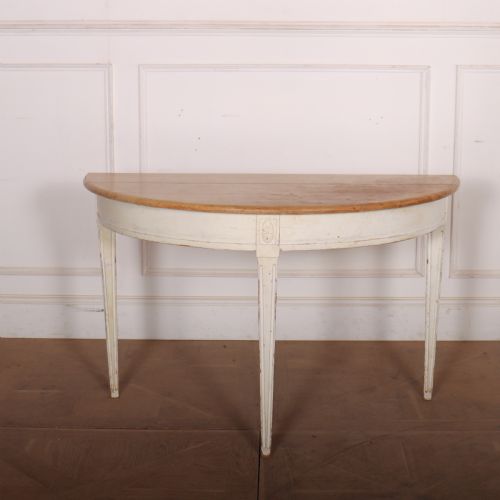
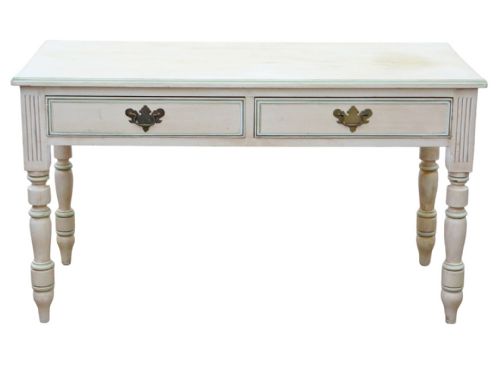

Cream Painted Console Table
A cream painted console table brings architectural grace and surface utility to a hall or drawing room, drawing on French and Victorian country aesthetics.
Cream Painted Console Table
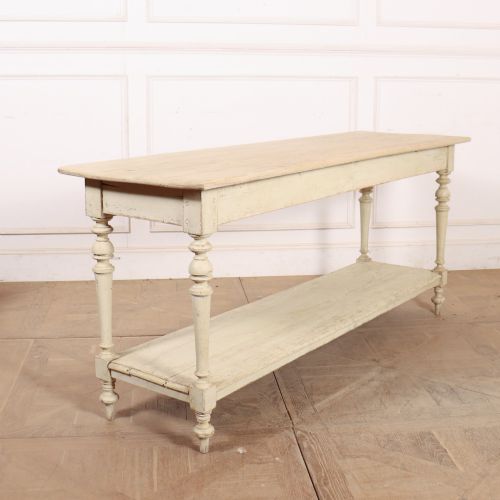
A cream painted console table serves as a narrow wall-abutting surface designed for hallways, reception rooms, and narrower spaces where depth is restricted. These items appear across several historic periods, notably the nineteenth century and around nineteen-twenty, reflecting enduring domestic utility.
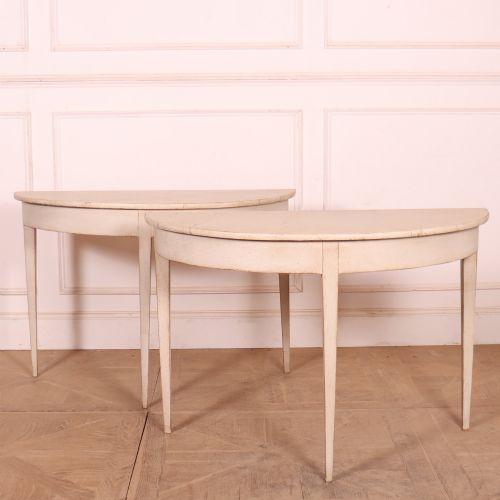
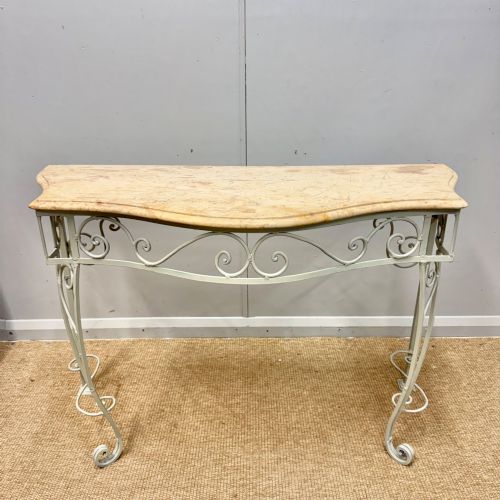
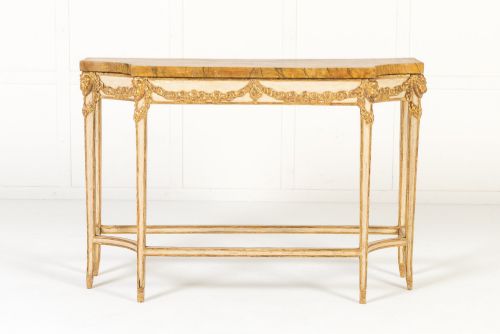
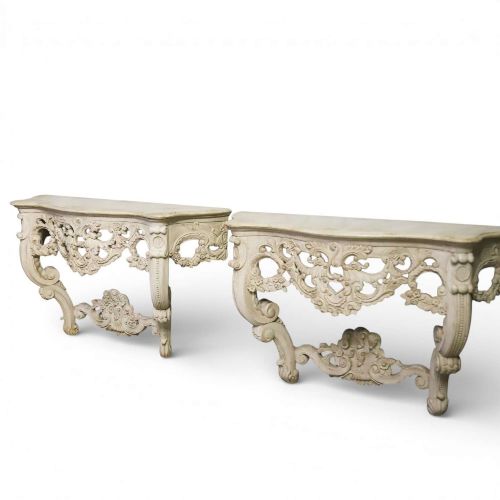
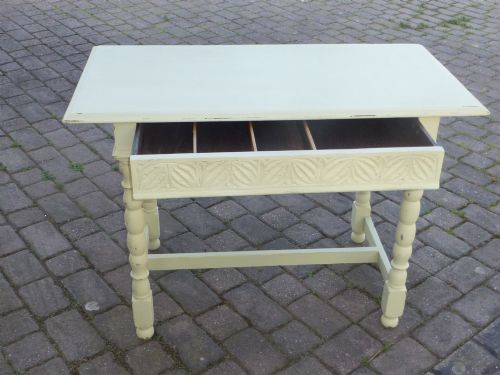
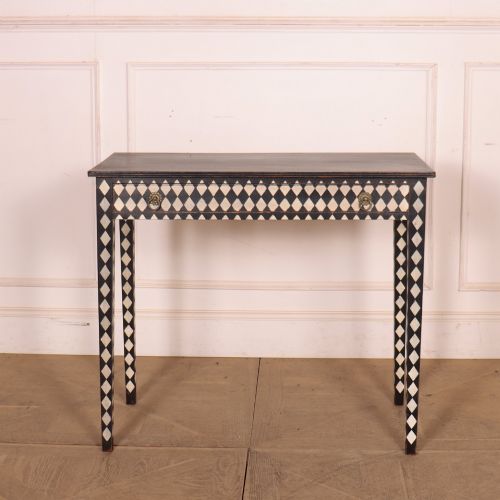
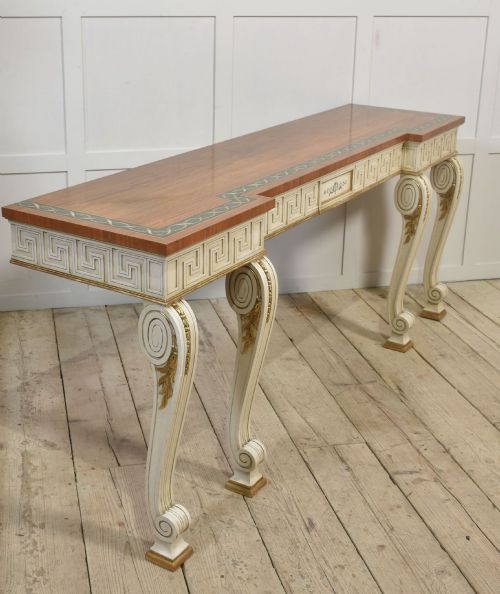
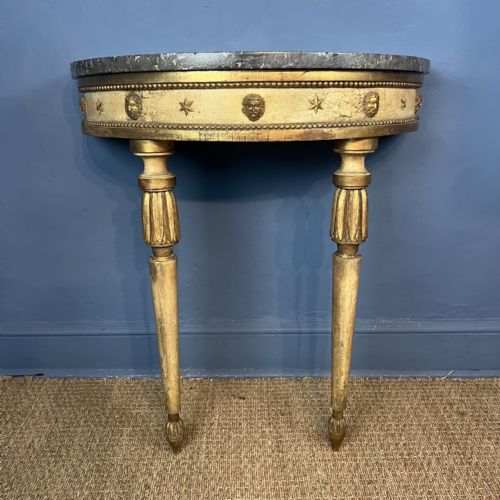
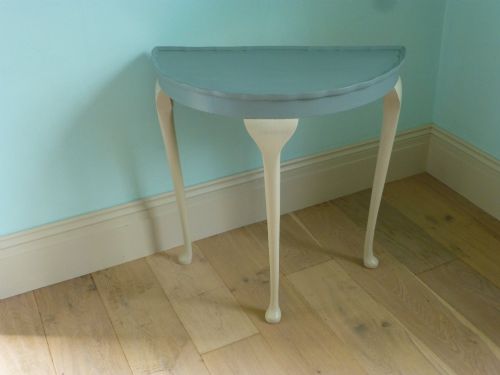
The regional design vocabulary spans French provincial, French country, Venetian rococo, French rococo, and neoclassical styles. Examples range from half-moon demi-lune shapes and single-drawer hall configurations to grand pieces fitted with marble tops.
Buyers encountering this selection will discover variations including drapers tables, carved timber frames, and versions featuring suede inserts or cabriole legs. The overarching form balances practical surface area with decorative presence.
Materials and Construction
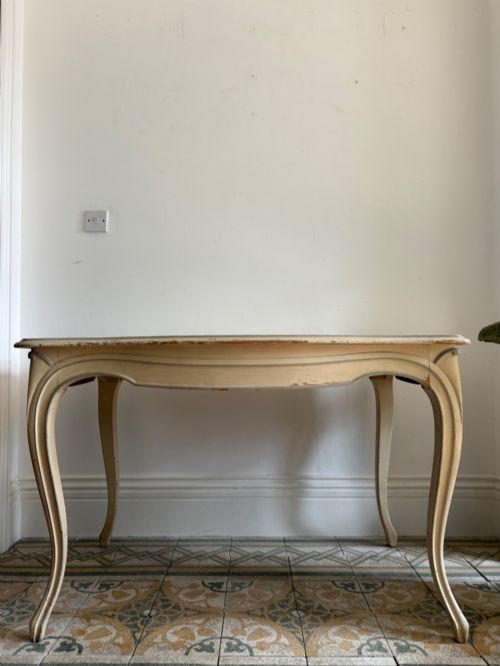
Construction relies primarily on timber and oak, worked into structural frames and carved details. Artisans shaped these woods into curving cabriole legs and half-moon silhouettes using traditional joinery methods appropriate to each period.
Surface treatments combine applied paint finishes with decorative embellishments such as gesso, gold leaf, and integrated marble slabs. Some variations incorporate inset suede surfaces, uniting utilitarian durability with refined texture.
Cream Painted Console Table Retail Price Guide 2026
Typical asking prices for cream painted console table among the pieces listed under this phrase on Sellingantiques today, from the lower quarter to the upper quarter. They describe what is for sale here now, not the wider market.
Design influences on this page range from Venetian rococo and neoclassical to French provincial country forms.
Assessing Quality and Execution
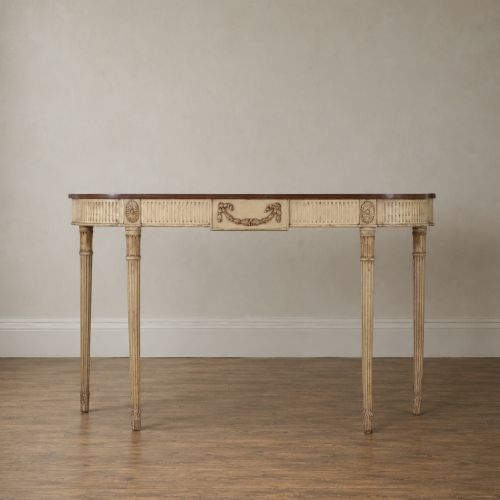
Distinctions in quality arise from the depth and crispness of carved wooden details upon the frame. Pieces displaying fluid hand-carving and balanced proportions outclass simpler, heavier carpentry.
The application and layering of paint, gesso, and occasional gilding dictate visual richness. Finer examples integrate heavy marble tops or precisely fitted suede inserts that complement the underlying timber structure.
The Cream Painted Console Table Glossary
- Console table
- A table designed to stand against a wall, traditionally supported by wall brackets or decorative legs rather than four independent vertical posts.
- Demi-lune
- A half-moon shape characteristic of tables built to fit snugly against flat wall surfaces while projecting minimally into a corridor.
- Cabriole leg
- A furniture leg featuring a double curve, typically swelling outward at the knee and tapering inward toward the foot in imitation of animal limbs.
- Gesso
- A plaster-like mixture applied to wood surfaces to provide a smooth base for painting or gilding.
Cream Painted Console Table: Frequently Asked Questions
Where should I place a console table?
These narrow tables suit entrance halls, narrow corridors, and reception rooms where floor space is limited. Their shallow profile allows them to sit flush against a wall without obstructing pathways.
They also function effectively beneath mirrors or artwork in living spaces, providing a stable surface for lamps, decorative objects, or correspondence.
How do I identify a French provincial style?
French provincial and country pieces typically exhibit softer, more rustic ornamentation than urban court furniture. Expect simpler carved motifs, painted surfaces, and curved structural lines rather than heavy gilding.
These designs prioritize domestic warmth and practical utility, making them adaptable to both traditional and modern interior schemes.
What is the difference between a hall table and a console table?
While the terms frequently overlap in historic furniture, traditional console tables rely heavily on wall support or specific bracket feet. Hall tables often function as freestanding or semi-attached furniture pieces with dedicated drawer storage.
Both forms share a narrow rectangular or semi-circular footprint designed for transitional spaces within a home.