
Neoclassical Hall Table
A neoclassical hall table brings architectural proportion and classical balance to an interior, making it the definitive choice for an impressive entryway.
What They Are
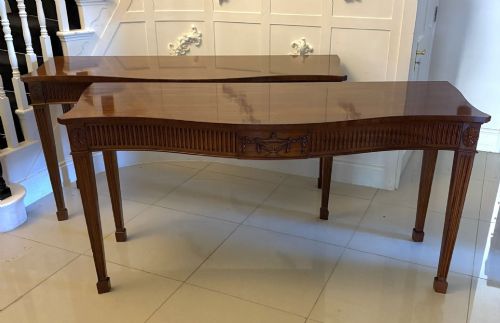
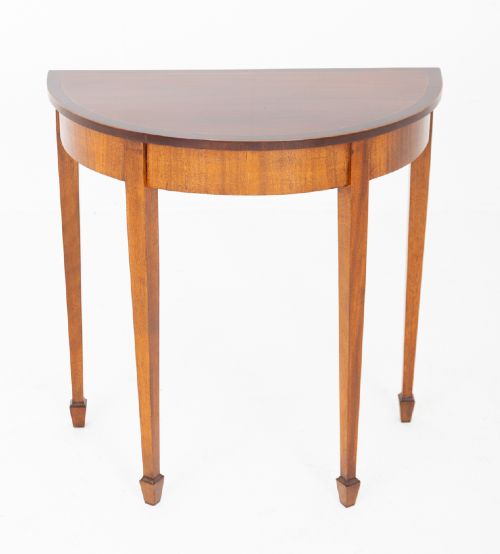
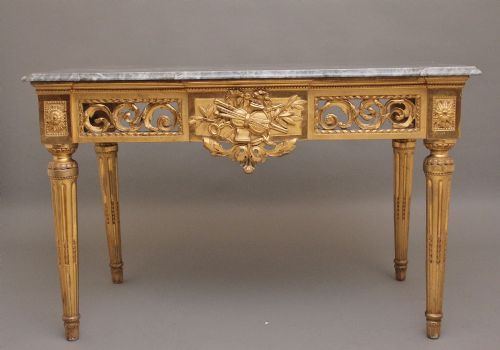
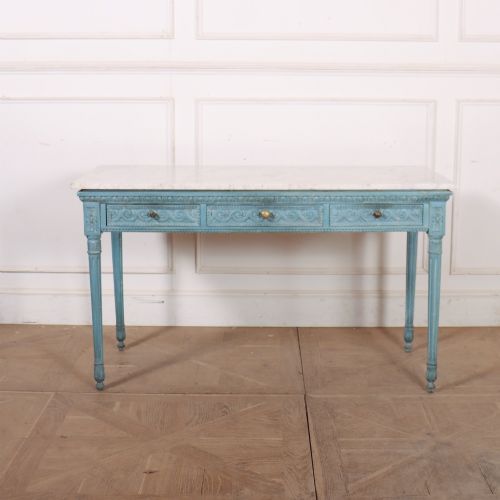
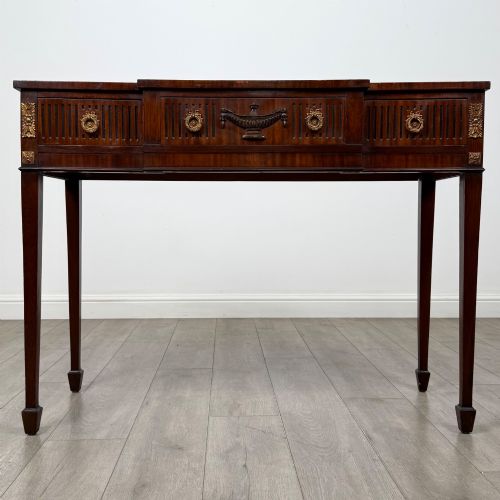
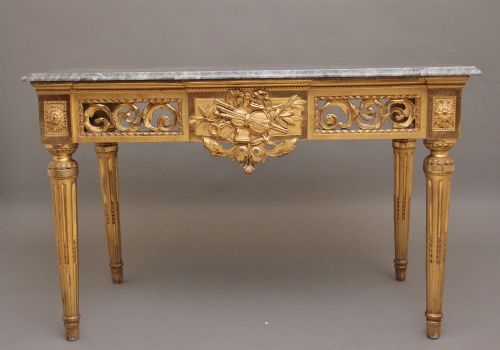
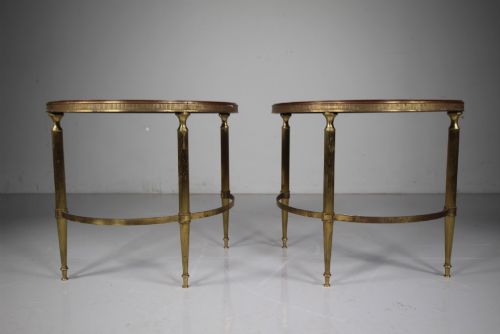
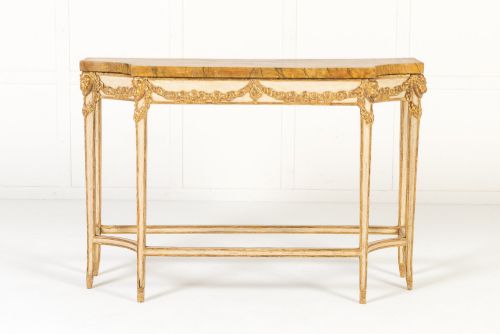
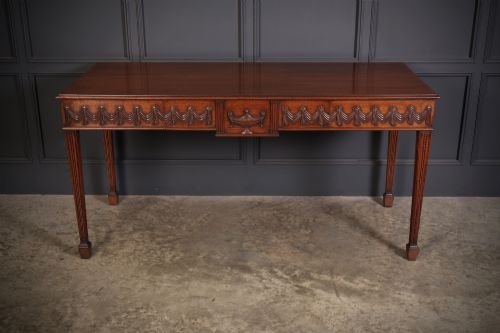
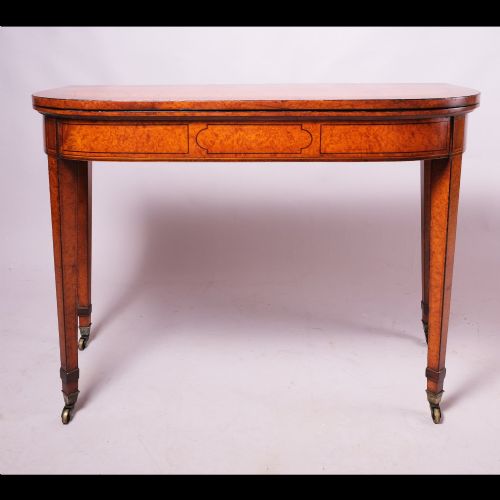
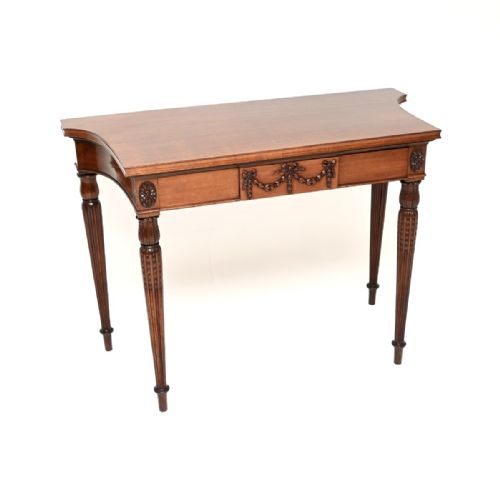
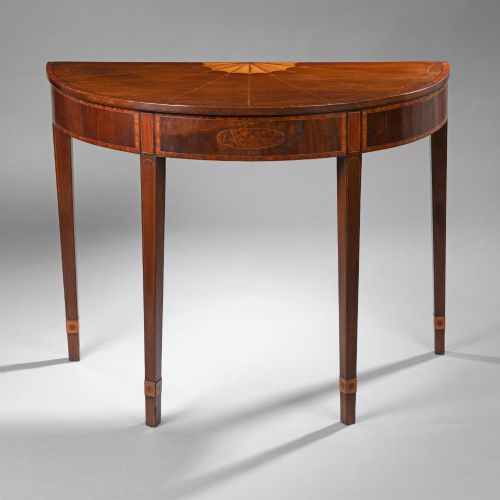
A neoclassical hall table is fundamentally a console form designed to sit flat against a wall, frequently featuring a half-moon or rectangular footprint. These pieces emerge in styles ranging from George III and the Adams taste to Italian neoclassical design, alongside nineteenth-century revivals and twentieth-century interpretations.
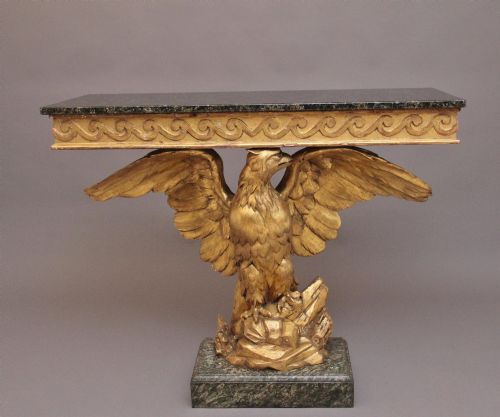
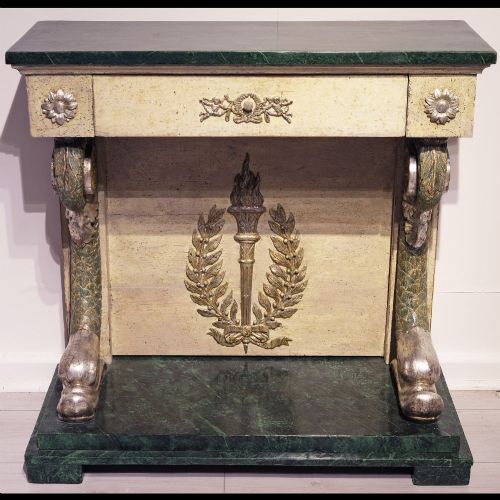
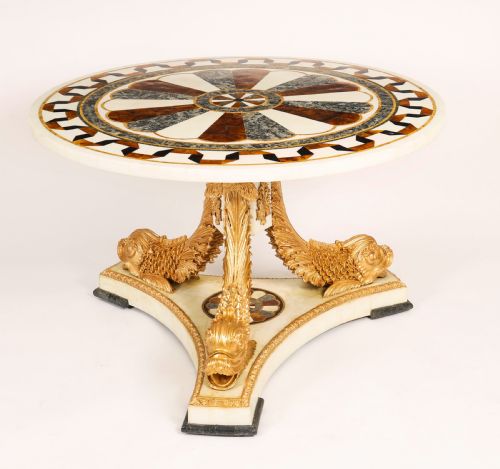
The inventory on this page demonstrates that these console tables span the eighteenth, nineteenth, and early twentieth centuries. Makers and workshops during these periods produced them in specific regional aesthetics, including the grand Empire manner and English neoclassical interpretations.
How They Were Made
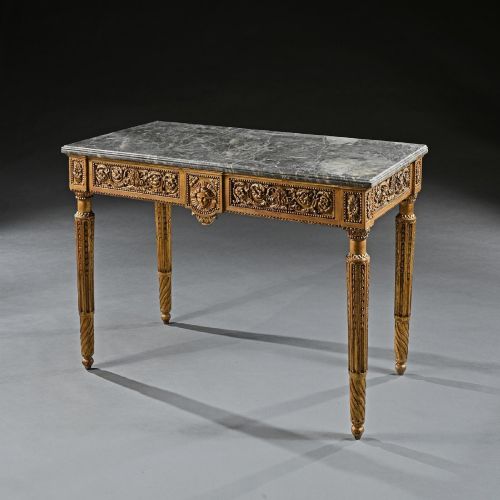
Construction relies heavily on traditional cabinet timbers such as mahogany, satinwood, and padoukwood, shaped into structural frames. Carved wood details provide architectural enrichment, while gesso and giltwood applications introduce reflective surface brilliance.
Surfaces frequently receive elaborate paint treatments, ranging from simple monochrome finishes to detailed painted decoration. Heavy marble tops sit atop these wooden and gilt bases, providing a durable and cool contrasting surface.
Retail Price Guide 2026
Typical UK retail prices for neoclassical hall table, calculated from the Sellingantiques database of over a million retail prices indexed since 2003. This retail price guide relies exclusively on Sellingantiques data; no external sources or auction records are used, so the figures do not describe the wider market.
Jean Joseph Chapuis made furniture so sturdy that a pair of his side tables survived centuries without losing their poise.
What Varies in Quality
The refinement of the carving separates standard execution from exceptional craftsmanship, particularly in the crispness of classical motifs like fluting, husks, and paterae. Superior pieces display fluid, hand-carved detail in wood or gesso that holds its definition beneath layers of paint or gilding.
Material selection dictates the upper tier of the range, visible in the choice of dense hardwoods and figured veneers like satinwood paired with high-grade marble slabs. Lesser examples rely on simpler secondary woods and simpler surface finishes with less depth.
Jean Joseph Chapuis
The Neoclassical Hall Table Glossary
- Console table
- A wall table supported by brackets or legs, historically designed to stand against a vertical surface rather than float in a room. This is the primary structural form found across these listings.
- Giltwood
- Timber that has been coated with a thin layer of gold leaf or metal leaf over a prepared gesso ground. It provides the characteristic bright, reflective finish seen on classical revival furniture.
- Adams taste
- An eighteenth-century design style inspired by Robert Adam, incorporating light, elegant classical ornamentation derived from Roman antiquities. It relies on symmetrical motifs and restrained proportions.
- Padoukwood
- A dense, stable tropical hardwood with reddish tones, utilised in fine cabinetmaking during the eighteenth century. It offers both durability and an attractive natural grain.
- Half moon
- A semicircular furniture profile designed to fit snugly against a flat wall in narrow spaces like hallways. This shape defines several console tables in the selection.
Frequently Asked Questions
What is a neoclassical hall table?
A neoclassical hall table is a console designed for an entryway, featuring classical architectural details like fluted legs, carved friezes, and symmetrical proportions.
These pieces typically sit flush against a wall and are often topped with marble or fine wood.
Where should I place a console table?
These tables belong in entryways, hallways, or narrow reception rooms where floor space is limited.
Because they are shallow and designed to stand against a wall, they provide a surface for lamps and decorative objects without blocking movement.
How do I date a painted console?
Dating relies on examining the timber beneath the paint, the style of the hand-carved ornamentation, and the formulation of the gesso or pigment.
Eighteenth-century examples show distinct construction methods and paint degradation compared to nineteenth-century revivals or early twentieth-century pieces.
Are marble tops original to these tables?
Many neoclassical console tables were designed specifically to carry heavy marble slabs, which provided a durable and formal surface.
Matching the stone type, thickness, and edge profile to the period of the base helps confirm authenticity.