
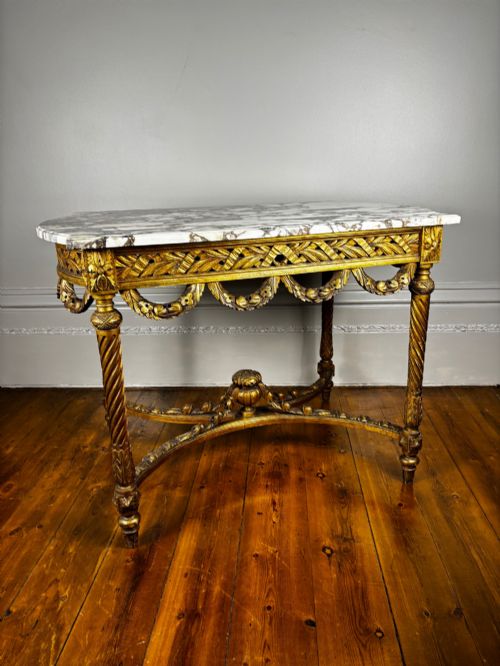
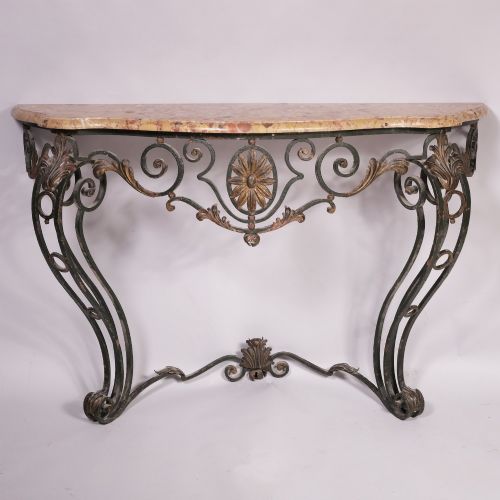
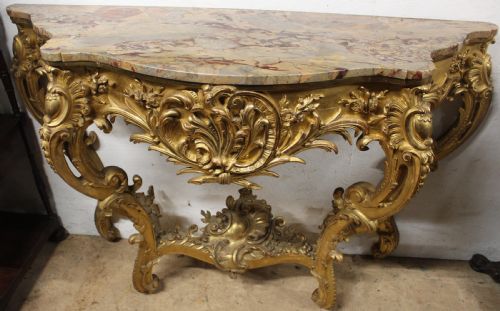
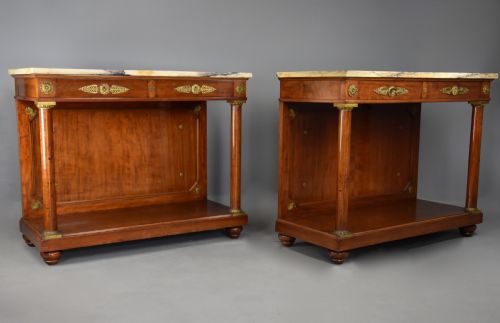
Gilt Marble Console Table
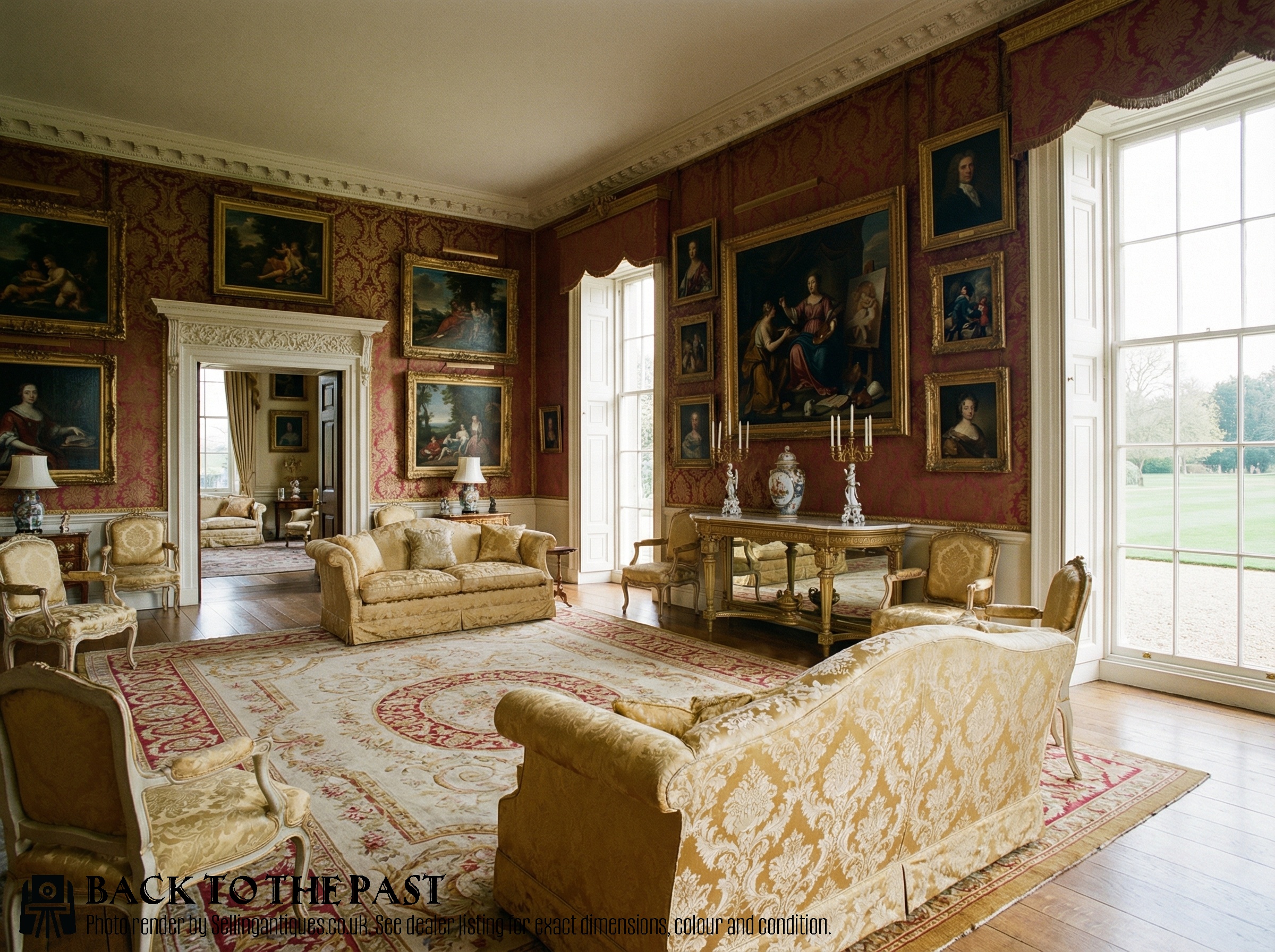
A gilt marble console table brings classical grandeur to a hallway, pairing cold stone with shimmering carved wood.
Gilt marble console tables
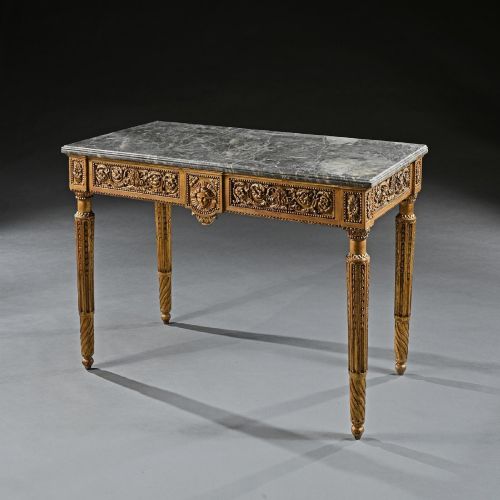
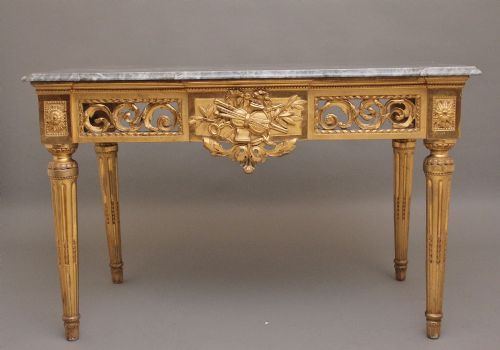
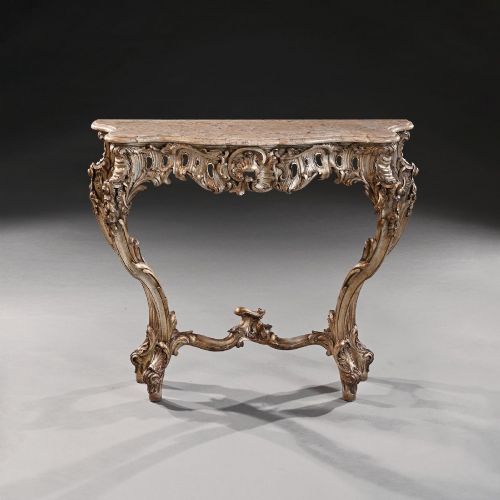
When you search for a gilt marble console table, you find a striking wall-anchoring furniture form designed to sit flat against a room's perimeter. These statement pieces combine heavy stone tops with decorative wooden frames, originating predominantly from nineteenth-century France, England, and Italy.
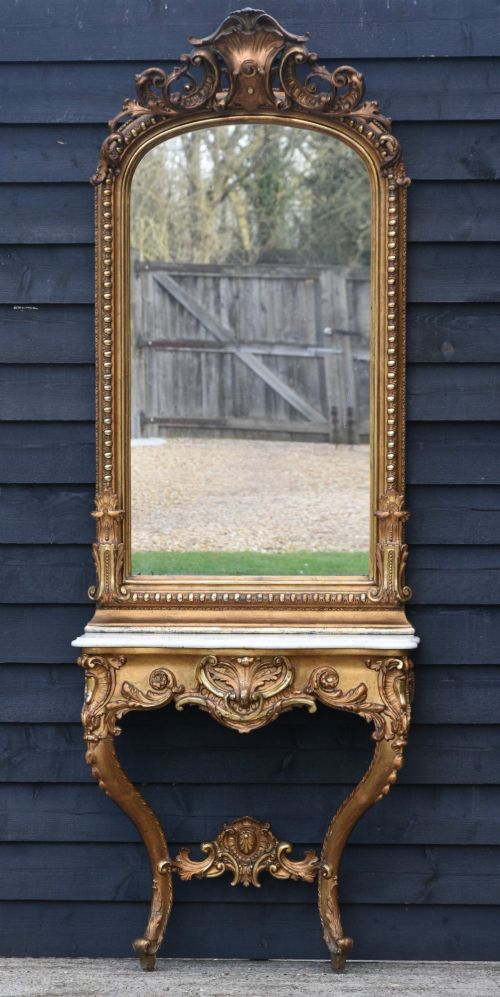
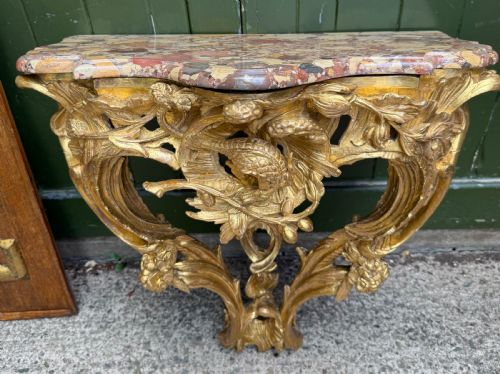
The versions most common on this page date from the Victorian era and the latter half of the nineteenth century. They frequently showcase French Rococo, Baroque, or Louis Revival influences through ornate carving and serpentine shapes.
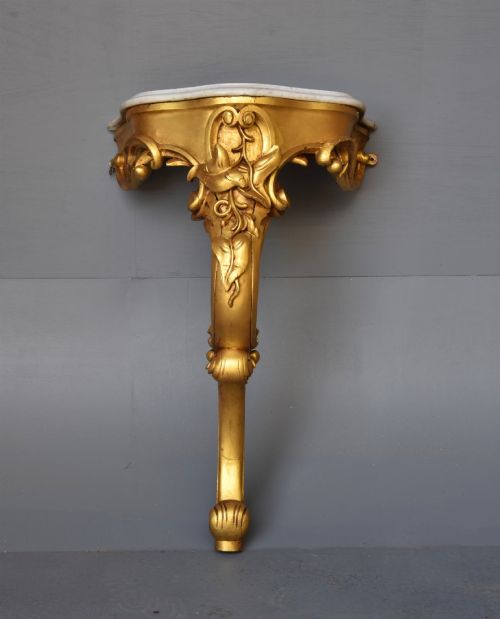
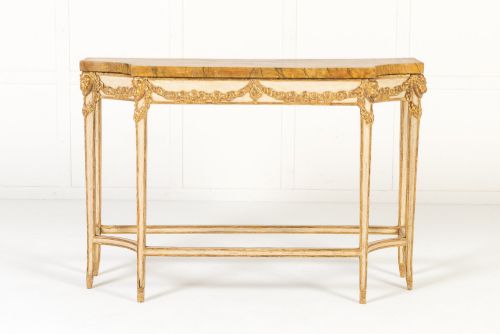
Most examples function as narrow hall tables or wall brackets, engineered to display decorative objects without taking up excessive floor space. Their defining characteristics remain the cool, smooth stone slab resting securely upon a gilded wooden base.
Materials and construction
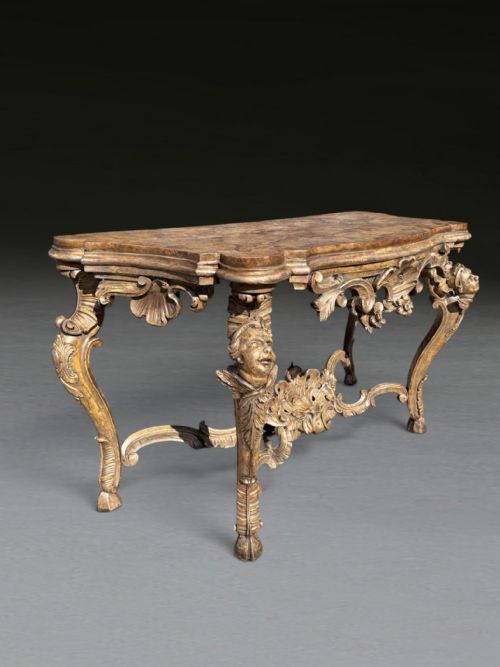
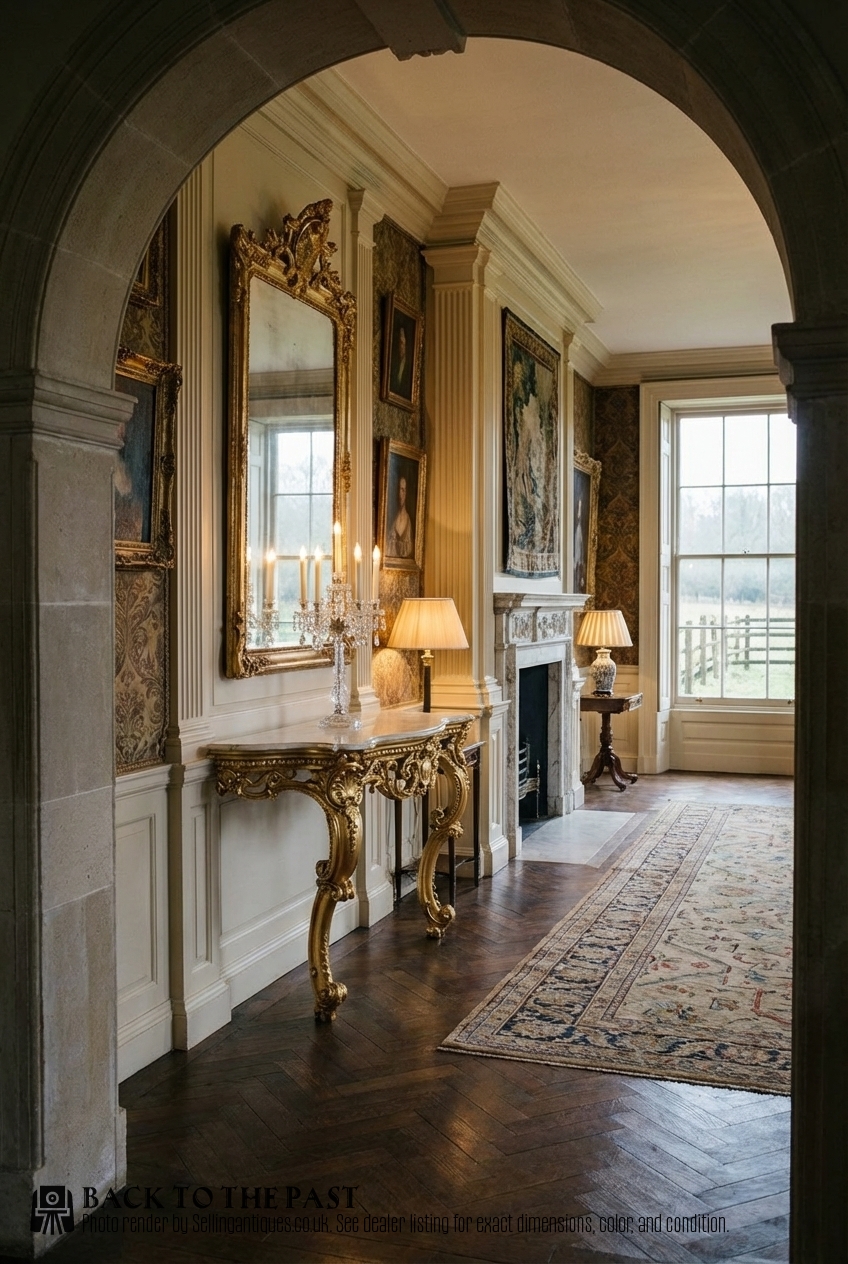
Makers constructed the structural frames primarily from wood, applying layers of gesso before finishing the surfaces with gold leaf, paint, or gilt metal. Carvers worked intricate details into the timber by hand, creating scrolling foliage, rams' heads, and maiden figures.
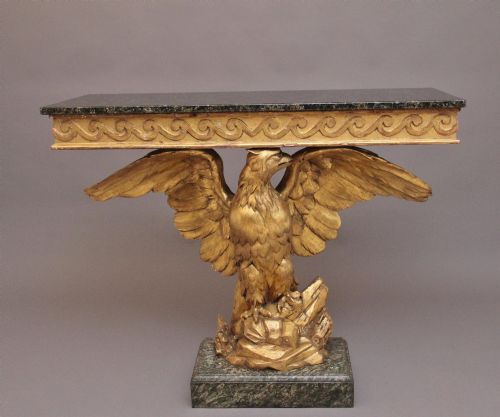
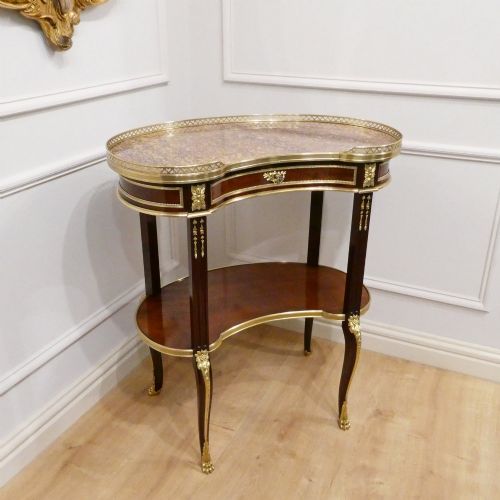
Heavy marble slabs, including Carrara and Breccia varieties, form the durable tops of these tables. Artisans shaped these stone surfaces into rectangles, demilunes, or serpentine curves to match the elaborate wooden bases below.
Retail Price Guide 2026
Typical UK retail prices for gilt marble console table, calculated from the Sellingantiques database of over a million retail prices indexed since 2003. This retail price guide relies exclusively on Sellingantiques data; no external sources or auction records are used, so the figures do not describe the wider market.
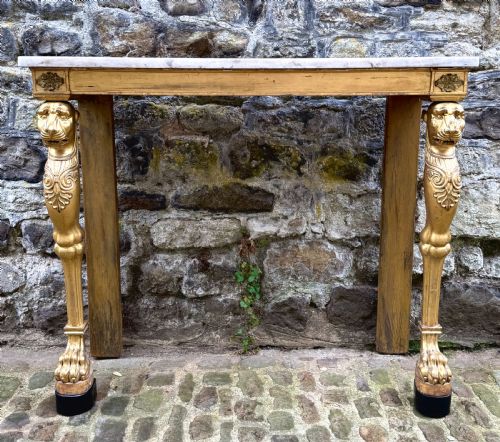
Several Victorian tables incorporate sculpted rams' heads and maiden figures directly into the gilded wooden framework.
Judging the standard of execution
The depth and crispness of the wood carving separate standard items from exceptional ones. Master craftsmen achieved sharp, deeply undercut foliage and figures that retain their definition beneath layers of historic gilding.
The selection and geological variation of the marble top also dictate quality. Superior pieces feature striking natural veining and substantial stone thickness, fitted precisely to the contours of the gilt frame.
The Gilt Marble Console Table Glossary
- Giltwood
- Timber decorated with thin sheets of gold leaf over a prepared gesso ground. This technique gives furniture a luminous metallic sheen.
- Console table
- A wall-mounted or flat-backed table supported by brackets or legs. These items are traditionally placed in hallways and drawing rooms.
- Demilune
- A half-moon shape used for tabletop surfaces and cabinet fronts. Such designs allow tables to fit flush against flat walls.
- Breccia marble
- A variegated stone composed of angular rock fragments cemented together by a fine-grained matrix. It displays complex natural patterns.
Frequently Asked Questions
How do I secure a wall-mounted console table?
These tables often require direct attachment to structural wall studs to prevent tipping, especially because heavy stone tops create an uneven weight distribution.
Many period examples include rear mounting points or brackets intended specifically for this purpose.
Can I use these tables in a small hallway?
The narrow profile of these pieces makes them well-suited for confined spaces like corridors and entryways. Their shallow depth allows clearance for foot traffic while offering a surface for small items.
Many historical variants were specifically built as wall shelves or bracket tables to preserve floor space.
How should I clean a marble top?
Wipe the stone surface using a damp cloth and mild, pH-neutral soap to prevent chemical damage. Avoid acidic liquids like vinegar or citrus juice, which etch polished marble.
Dry the stone thoroughly after washing to maintain its natural lustre.
What styles are common in these antiques?
Nineteenth-century pieces frequently draw upon French Rococo, Baroque, and Louis XVI revival aesthetics. These styles emphasise ornate, sweeping carved details and gilded finishes.
Italian and English workshops also produced comparable forms featuring regional decorative flourishes.