







Italian Rococo Console Table
An italian rococo console table brings theatrical curves and carved drama to a room, offering surface space beneath a mirror.
What an italian rococo console table is
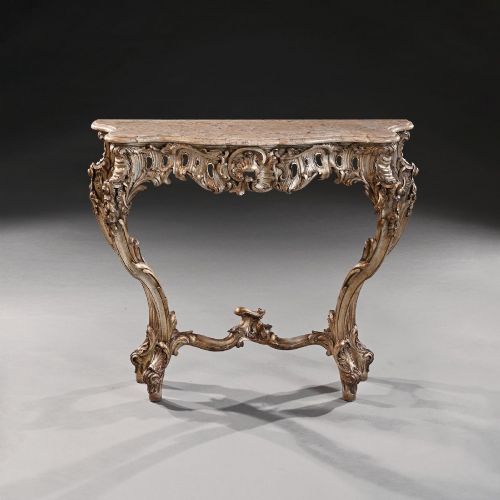
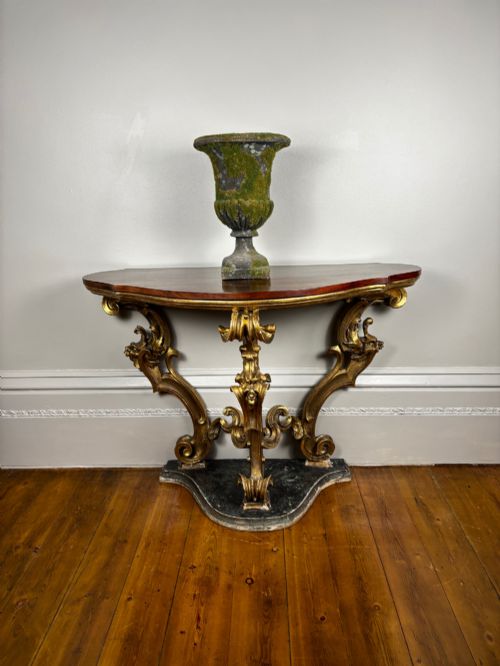
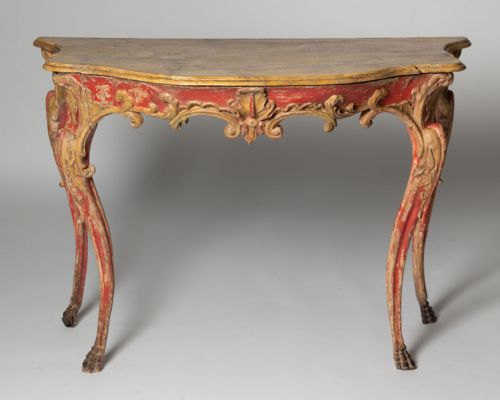
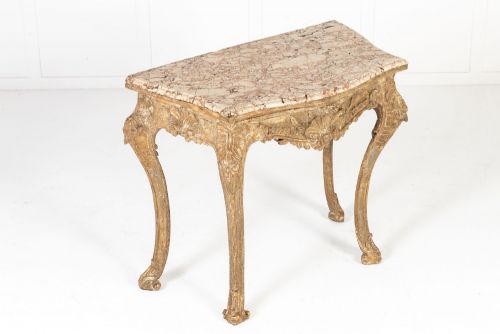
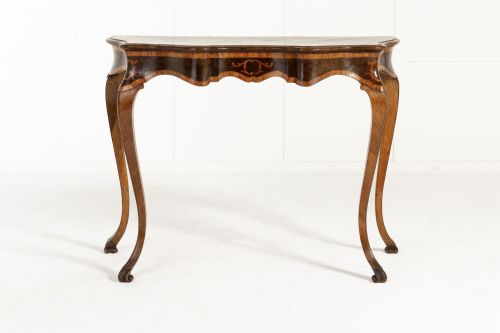
An italian rococo console table is a wall-mounted or freestanding table designed for display, usually placed beneath a mirror or in an entrance hall. The pieces seen here span the eighteenth century, the nineteenth century and the twentieth century, including revival works and specific Venetian interpretations.
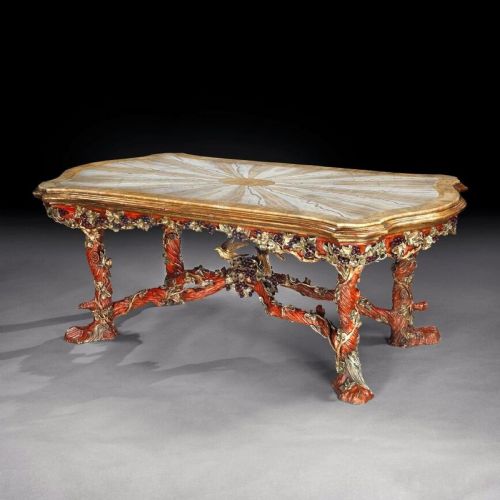
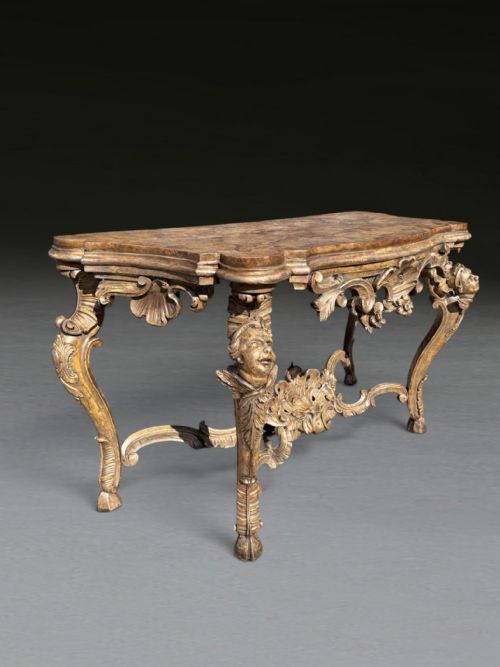
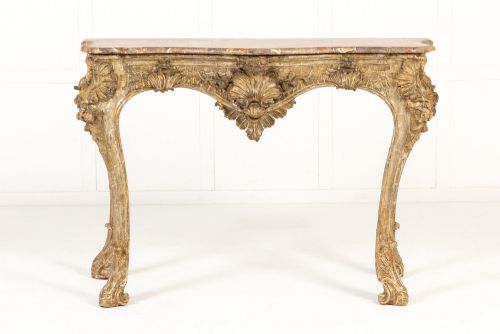
Most examples feature a serpentine or shaped marble top resting on heavily carved and decorated frames. Materials range from painted wood and gesso to silver gilt and giltwood, reflecting the decorative ambitions of their makers.
How they were made
Makers shaped wood into flowing asymmetrical curves and applied gesso to build up high-relief scrollwork and floral motifs before gilding or painting the surface. Many pieces incorporate marble tops cut to follow the serpentine contours of the base.
Finishes include silver gilt, painted details and decorative schemes influenced by Chinoiserie, applied over wood structures using traditional joinery and carving techniques.
Retail Price Guide 2026
Typical UK retail prices for italian rococo console table, calculated from the Sellingantiques database of over a million retail prices indexed since 2003. This retail price guide relies exclusively on Sellingantiques data; no external sources or auction records are used, so the figures do not describe the wider market.
Listings for this phrase include pieces finished in silver gilt, painted wood and giltwood, paired with marble tops.
What varies in quality
Quality rests in the depth and sharpness of the wood carving, where crisply defined acanthus leaves and scrolls separate ambitious workshops from simpler production. The handling of painted decoration and the weight and fit of the marble top also mark out superior examples.
The integration of the frame and the surface finish dictate the overall presence of the piece, distinguishing eighteenth-century originals and high-end nineteenth-century revivals from later or more rustic interpretations.
Pauly et Cie
The Italian Rococo Console Table Glossary
- Serpentine
- A shape that curves inward in the centre and outward at the sides, creating a dynamic undulating line on table tops and fronts. This contour is characteristic of eighteenth-century furniture design.
- Giltwood
- Wood that has been coated with a thin layer of gold leaf or metal leaf over a prepared gesso ground. It provides a brilliant metallic finish that catches candlelight and natural light.
- Gesso
- A plaster mixture applied to wood surfaces as a smooth base for painting or gilding. It allows carvers to achieve fine, sharp relief details.
Frequently Asked Questions
Where should I place an italian rococo console table?
These tables traditionally sit against a wall in a hallway, drawing room or dining room, often positioned directly beneath a matching wall mirror.
Because they feature finished fronts and sides designed for display, they anchor a room visually without requiring a large floor footprint.
How do I tell an 18th century piece from a revival?
Eighteenth-century originals exhibit hand-carving techniques, age-related timber shrinkage and wear patterns unique to centuries of use.
Revival pieces from the nineteenth and twentieth centuries often employ heavier gesso grounds, machine-sawn elements or construction methods typical of later eras.
Are these tables designed to stand alone?
Many console tables require attachment to the wall for stability, particularly those with two front legs that rely on the rear fastening for support.
Free-standing versions do exist, but checking the structural design ensures safe placement in a domestic setting.
What maintenance do painted and gilded surfaces need?
Dusting with a soft, dry cloth is sufficient for daily care, avoiding any moisture or chemical cleaning agents that might lift the delicate gesso or leaf.
Marble tops benefit from gentle wiping with a damp cloth and immediate drying to prevent staining.