


Brown Marble Side Table
A brown marble side table brings a cool, polished stone surface to a room, drawing on centuries of cabinet-making traditions.
Brown Marble Side Table
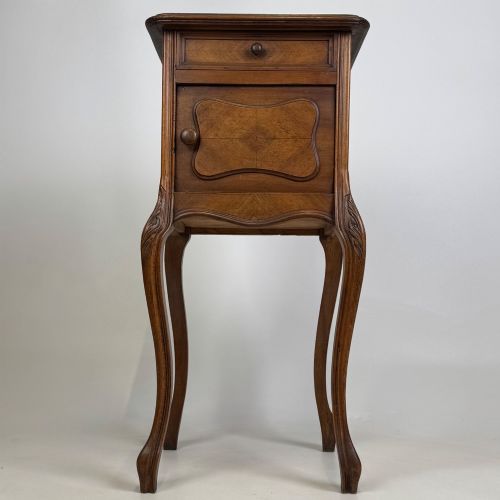
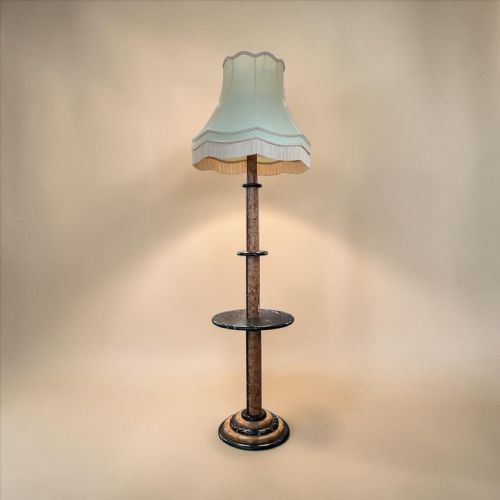
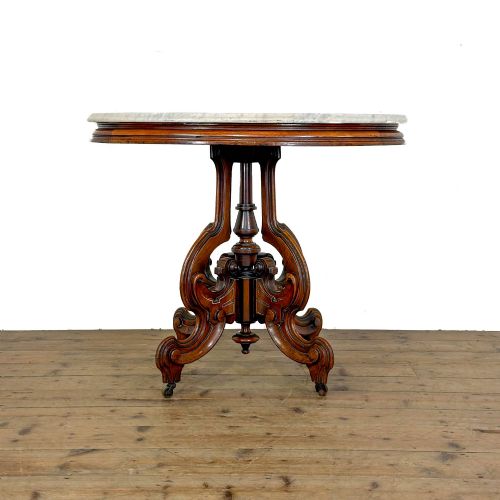
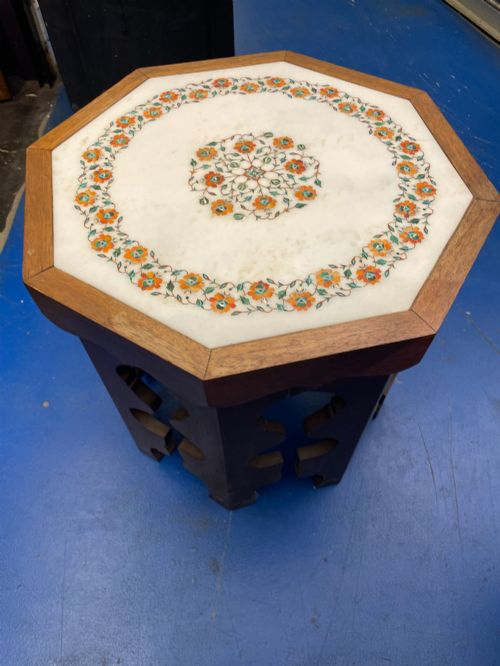
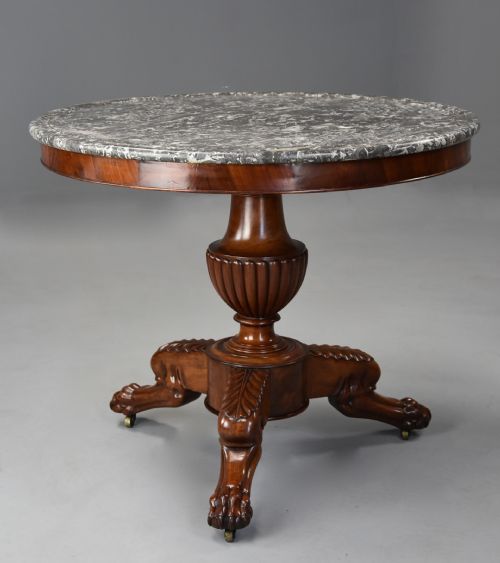
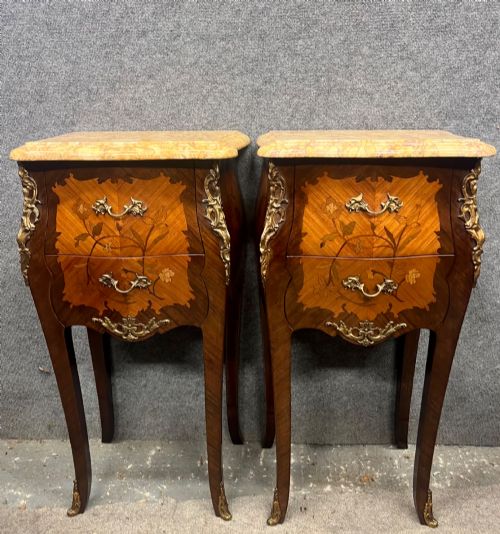
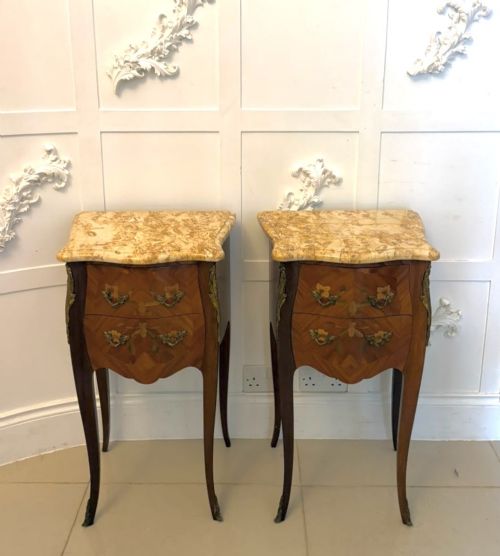
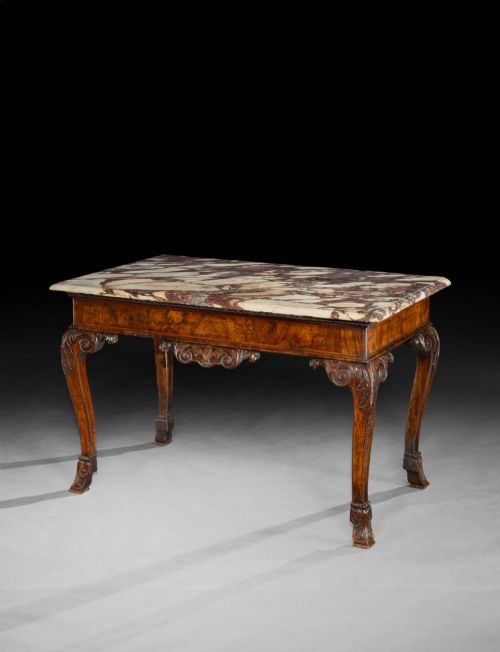
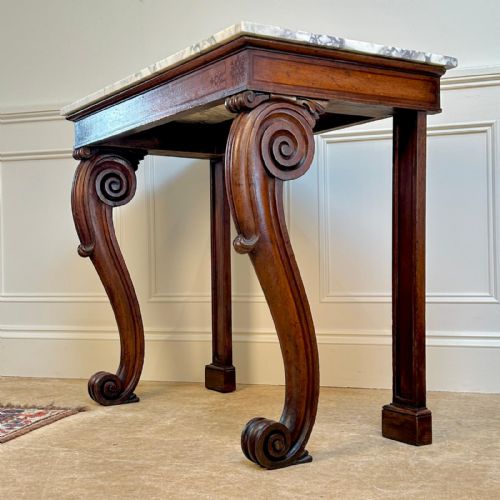
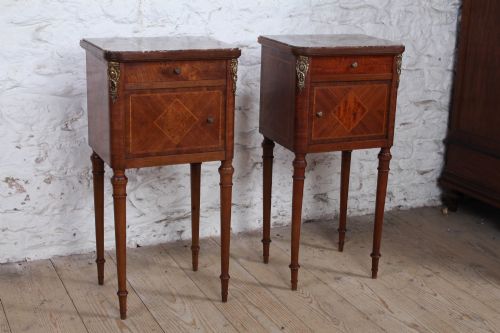
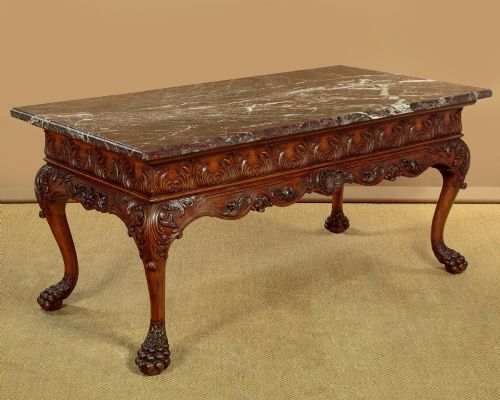
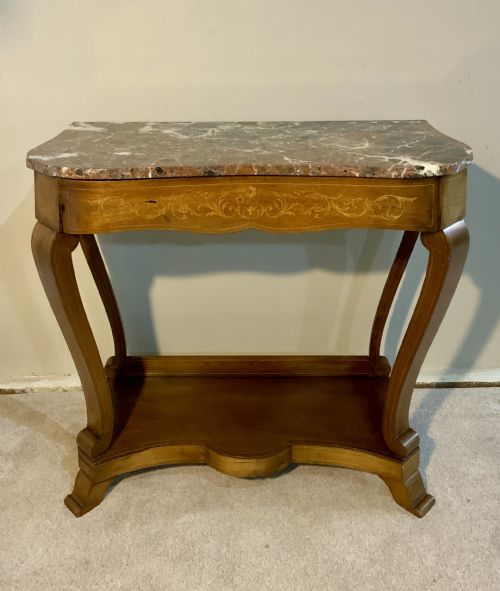
A brown marble side table combines a sturdy timber frame with a smooth stone surface, serving as a functional small table or washstand. These pieces appear in forms such as console tables, bedside cabinets, and gueridon tables.
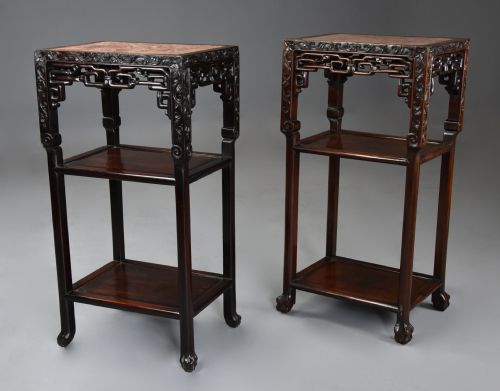
The selection ranges across the Victorian, Edwardian, and early twentieth-century periods, alongside styles influenced by French cabinet-making traditions and Chinese hardwood carving. Walnut, mahogany, and oak form the most common timber supports beneath the stone tops.
How they were made
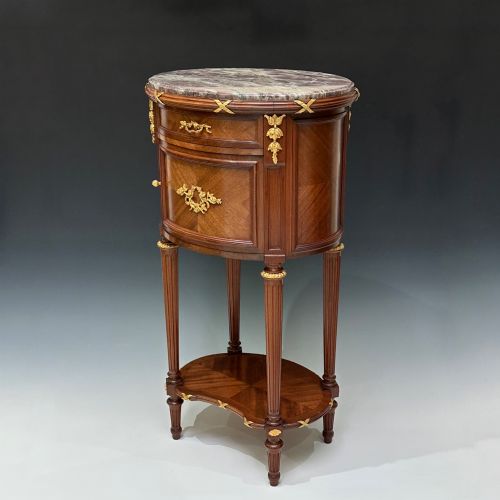
Cabinet-makers shaped frames from hardwoods like mahogany, walnut, and oak, frequently adding marquetry inlay, burr veneers, or ormolu mounts. Tops were cut and polished from natural marble or quartz, fitted precisely to the wooden carcass.
Joinery techniques matched the period, utilising solid timber construction alongside curved fronts, galleried edges, and turned supports designed to carry the heavy weight of the stone.
Brown Marble Side Table Retail Price Guide 2026
Typical asking prices for brown marble side table among the pieces listed under this phrase on Sellingantiques today, from the lower quarter to the upper quarter. They describe what is for sale here now, not the wider market.
Some nineteenth-century tables come with secret drawers perfectly sized for midnight chocolate stashes.
What varies in quality
Quality depends upon the choice of timber and the depth of the figuring in veneers such as burr walnut or kingwood. Grain selection and precision in inlay work distinguish standard production from finer workshop output.
The stone itself demonstrates variation through the richness of its veining and the crispness of its edge polishing. Heavier marble tops paired with robustly constructed frames indicate superior standard of manufacture.
François Linke·Maples
The Brown Marble Side Table Glossary
- Guéridon
- A small French round table, often supported by a single central pillar or slender legs. These tables frequently feature marble tops.
- Marquetry
- Decorative patterns formed by inserting small pieces of veneer into a wood foundation. Craftsmen utilise various coloured woods to create floral or geometric designs.
- Ormolu
- Gilt bronze mounts applied to furniture for decoration. This technique adds metallic highlights to timber frames.
- Washstand
- A piece of furniture designed to hold a basin and jug, typically fitted with a marble top to resist water damage.
- Console table
- A table designed to stand against a wall, frequently supported by decorative brackets or legs.
Brown Marble Side Table: Frequently Asked Questions
What is a brown marble side table used for?
These tables function as bedside cabinets, lamp tables, or small surface units in living spaces and hallways. The stone top provides a durable surface resistant to everyday wear.
They also appear as washstands or plant stands, adapting to different rooms depending on the height and form of the timber base.
How do I care for the marble top?
Clean the stone surface with a damp cloth and mild soap, avoiding acidic substances that etch polished marble. Prompt wiping prevents staining from liquids left on the table.
Condition the wooden frame occasionally with appropriate wax to maintain the finish of walnut, mahogany, or oak.
Are these tables heavy?
The weight varies according to the thickness of the stone and the timber used for the base. Marble and quartz add substantial heft compared to all-wood furniture.
Extra care is required when moving them to protect both the heavy stone top and the supporting wooden joints.
How do I identify the period?
Dating relies upon the timber species, construction methods, and stylistic details such as ormolu mounts or inlay patterns. Victorian and Edwardian examples show distinct turnings and hardware characteristic of their eras.
Twentieth-century pieces often adopt simpler geometric lines or reflect earlier French revival styles.