


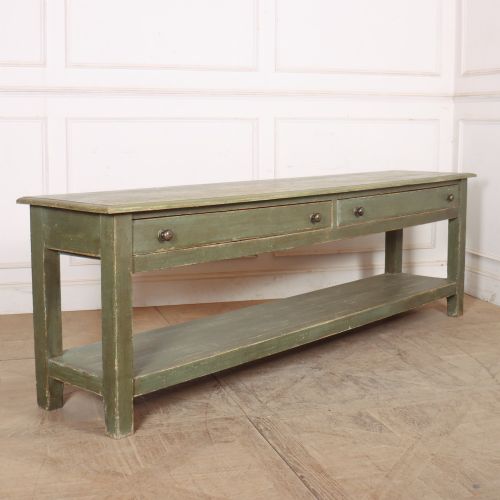


Green Painted Console Table
A green painted console table brings architectural presence and distressed colour to a hallway or reception room.
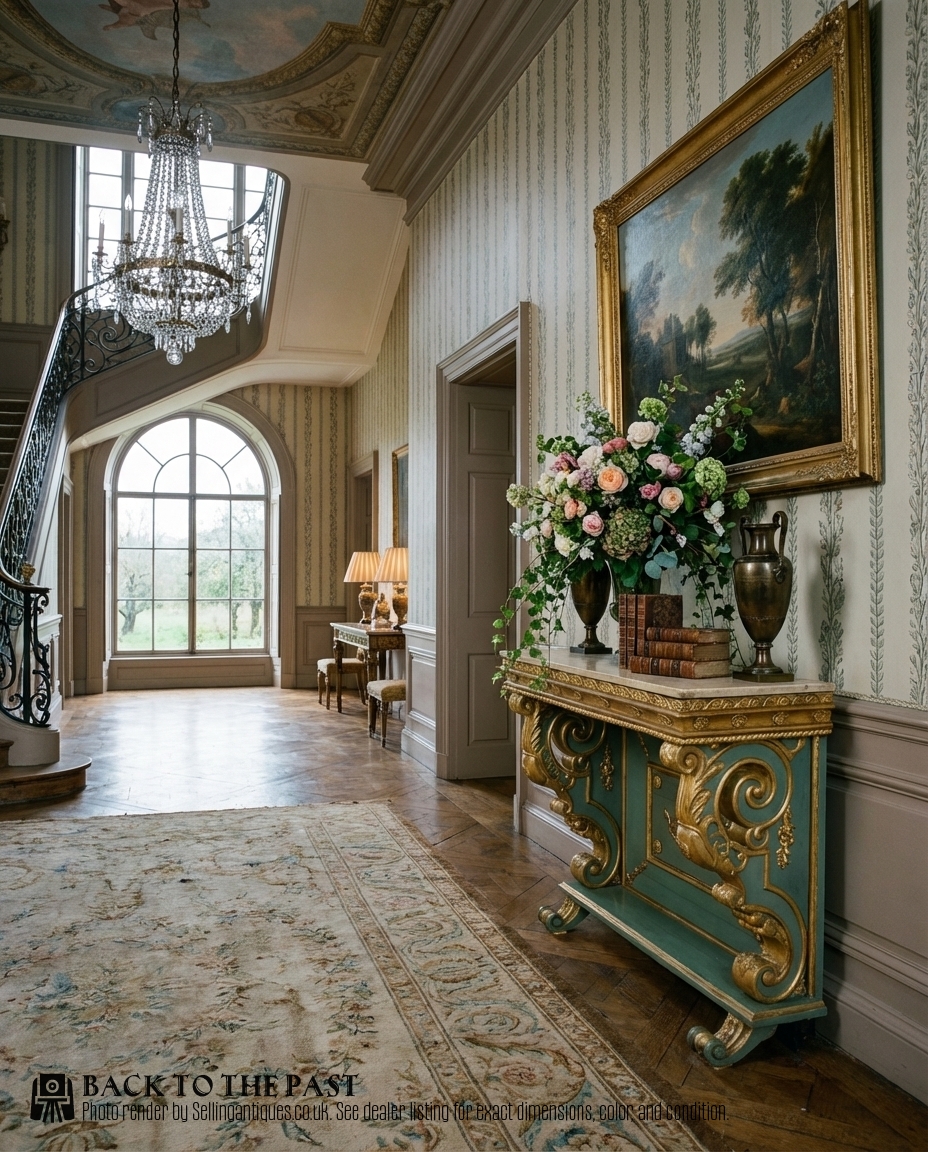
What these pieces are
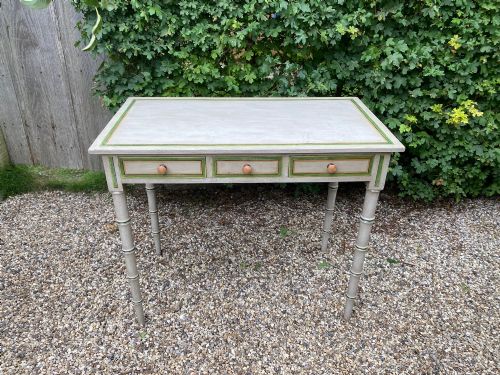
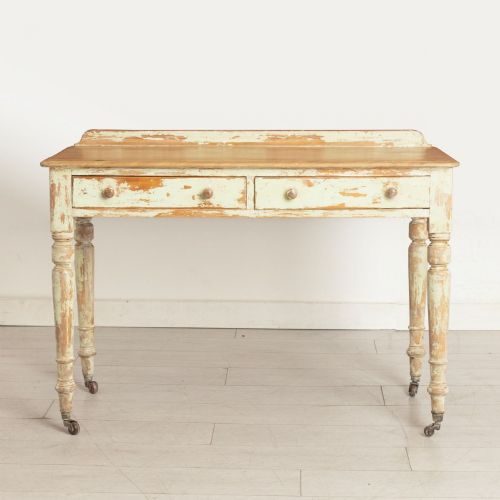
A green painted console table is a wall-abutting surface designed for hallways, drawing rooms and dining spaces, often encountered in forms dating from the nineteenth century. The selection includes demi-lune, serpentine and narrow tables, alongside related dresser bases and pastry tables.
Origins span English, Scottish, French, Swedish and Italian workshops, reflecting regional preferences for painted furniture. Styles range from French Provincial and Gustavian to rustic farmhouse and Italian Rococo, showing diverse provincial and neoclassical interpretations.
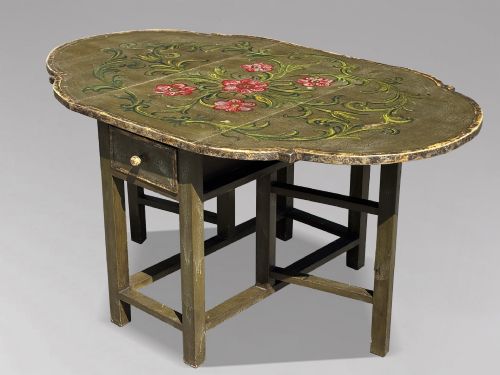
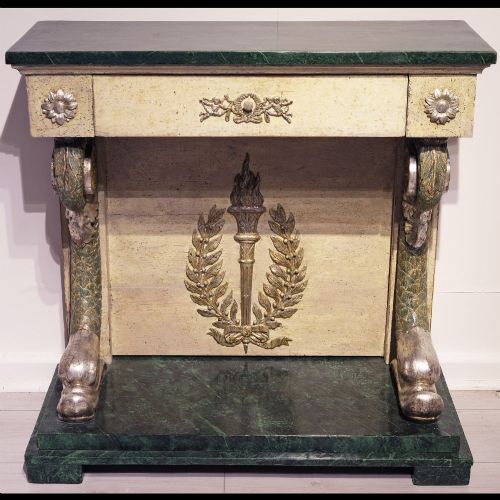
Many examples pair painted timber frames with contrasting marble tops, while others feature gilt wood accents or hand-painted finishes. They function practically as serving or display surfaces while adding distinct period character to an interior.
How they were made
Construction relies primarily on pine and general painted wood, often shaped into curved demi-lune or serpentine profiles. Surface decoration utilises layers of paint, sometimes combined with gesso and gilt wood details to highlight carved mouldings.
Heavier structural tops frequently incorporate inset marble, providing a durable and cool surface suited to pastry preparation or display. Metal components appear in structural braces and fixings, supporting the wooden frameworks of these nineteenth-century tables.
Retail Price Guide 2026
Typical UK retail prices for green painted console table, calculated from the Sellingantiques database of over a million retail prices indexed since 2003. This retail price guide relies exclusively on Sellingantiques data; no external sources or auction records are used, so the figures do not describe the wider market.
The listings span the nineteenth century, including specific dates from eighteen-sixty to eighteen-ninety alongside broader nineteenth-century items.
What varies in quality
Quality rests in the harmony of proportion, the sophistication of the carved or moulded timber, and the depth of the painted surface. Pieces that retain genuine historical paint layers display a patina and subtlety that mechanical distressing cannot replicate.
The integration of materials dictates distinction, particularly where heavy marble slabs meet finely jointed painted wood or gilt gesso details. Regional craftsmanship also plays a role, with Gustavian and Italian Rococo items offering more elaborate sculptural forms compared to simpler rustic country pieces.
The Green Painted Console Table Glossary
- Demi-lune
- A half-moon shape used for console tables designed to sit flush against a wall. This format saves floor space in narrow hallways.
- Serpentine
- A curved shape featuring a convex centre flanked by concave ends, typical of finer nineteenth-century case and table design. It creates fluid movement across the front edge.
- Gesso
- A plaster-like mixture applied to wood surfaces as a base for painting or gilding. It allows for crisp, intricate surface ornamentation.
- Dresser base
- A lower sideboard or console storage unit originally used in kitchens or dining rooms for food preparation and service. These pieces offer substantial surface area and structural weight.
Frequently Asked Questions
Where should I put a console table?
These tables fit naturally in entrance halls, narrow corridors or against living room walls where floor space is limited. Their shallow depth allows them to sit comfortably behind sofas or beneath mirrors without obstructing movement.
Pairing one with a table lamp or decorative bowl creates a functional focal point upon entering a home. They also serve well in dining rooms as supplementary surfaces for serving food or displaying ceramics.
How do I clean a painted wooden table?
Dust the surface regularly with a soft, dry cloth to prevent dirt accumulation on the painted finish. Avoid harsh chemical cleaners or abrasive scourers that can strip or dull historic paint.
For marble inserts, wipe gently with a damp cloth and mild soap, drying immediately to prevent water spots. Keeping the table away from direct heat sources protects both the timber substrate and the paint layers.
What is a Gustavian console table?
A Gustavian piece originates from Swedish neoclassical design commissioned during the reign of King Gustav III in the late eighteenth and nineteenth centuries. These items typically feature lighter, restrained ornamentation inspired by French court styles but adapted for Nordic interiors.
Characterised by pale painted finishes, fluted legs and subtle carved details, they bring a bright, airy quality to rooms. Their restrained elegance contrasts with the heavier ornamentation found in Italian Rococo or French Provincial equivalents.
Can I use a pastry table as a sideboard?
A French pastry table functions effectively as a sideboard or console table due to its sturdy construction and generous proportions. The original marble top provides a durable surface that handles serving platters and decorative objects with ease.
These tables bring an understated, utilitarian charm to dining spaces or kitchens. Their robust wooden bases and cool stone tops combine practicality with distinct nineteenth-century character.