






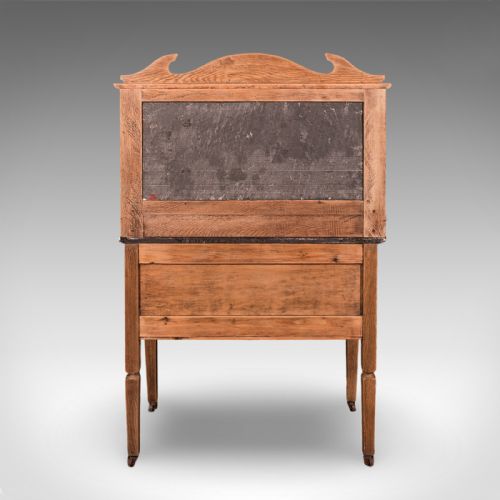

Country House Hall Table
A country house hall table grounds a large entrance with sturdy timbers and practical surfaces meant for daily arrivals.
Country House Hall Table
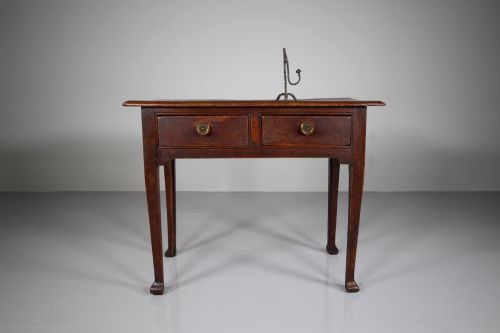
A country house hall table sits in passages and reception spaces to hold incoming post, lamps, or everyday necessities. These utilitarian forms include side tables, console tables, low boys, and dresser bases utilised for domestic service and hospitality.
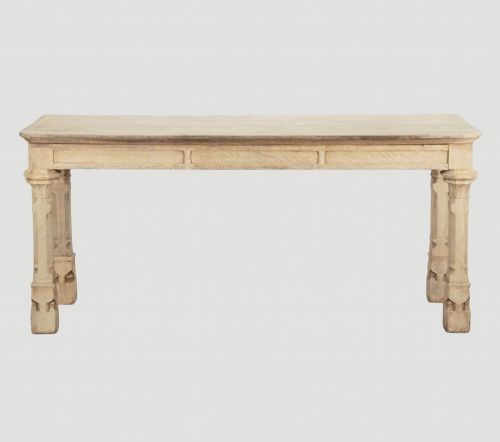
The pieces appearing on this page span the seventeenth, eighteenth, and nineteenth centuries, alongside Edwardian examples and later revivals. Oak predominates, joined by pine, mahogany, fruitwood, yew, cherry, and elm, often carrying original paint or bleached surfaces.
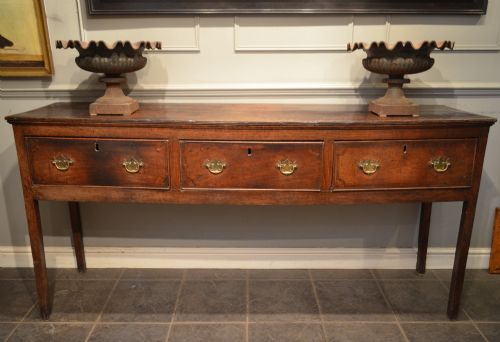
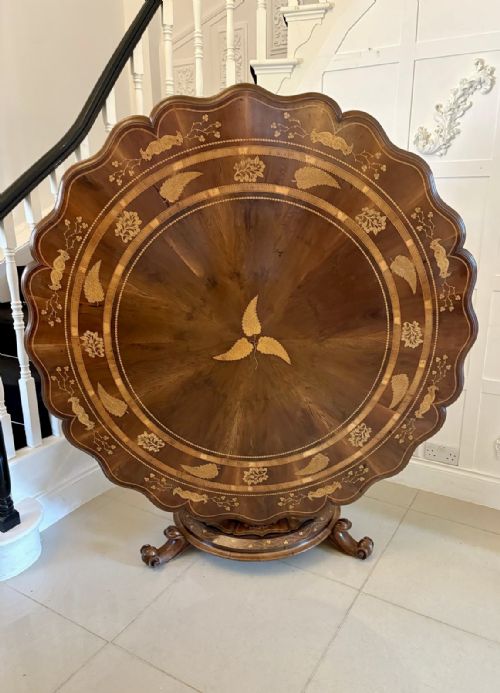
Regional variations emerge clearly across the selection, from Welsh and English oak dresser bases to French provincial serving tables and Irish marquetry centre pieces. Buyers most frequently encounter Georgian and nineteenth-century oak or painted pine specimens built for long service.
Construction and materials
Cabinet makers utilised dense native timbers like oak, elm, fruitwood, and pine, selecting sturdy hardwoods for structural frames and softer woods for secondary elements. Surfaces often display visible grain, pegged joints, and hand-planed boards shaped by traditional hand tools.
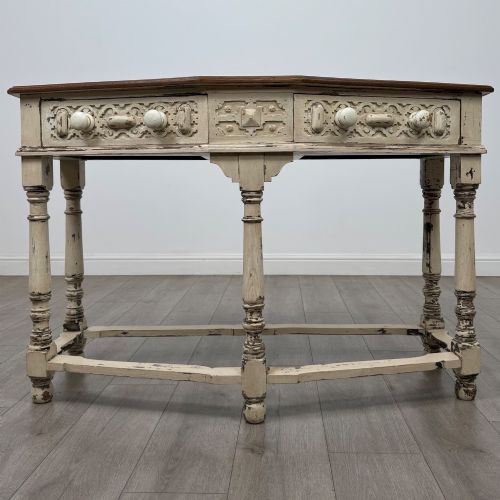
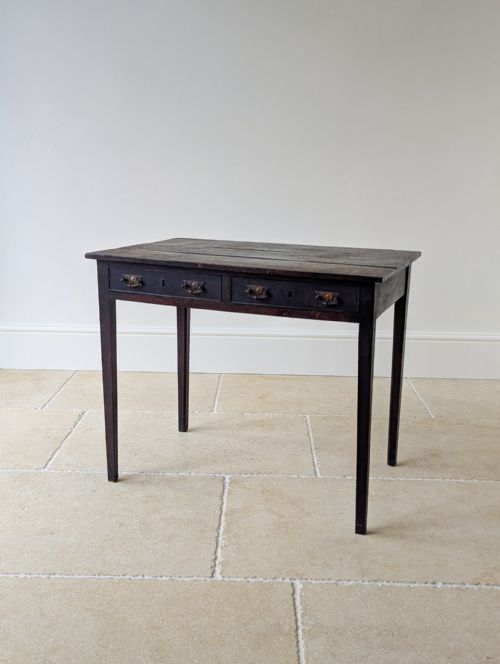
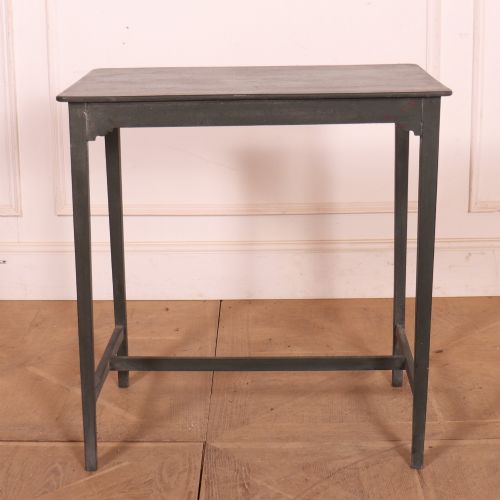
Many examples feature painted finishes, ranging from early layered pigments on pine to bleached oak and polished mahogany surfaces. Joinery relies on mortise and tenon construction, dovetailed drawer linings, and turned or square legs designed to bear weight without excessive ornamentation.
Listings feature periods spanning from the seventeenth century through to the Edwardian era, constructed primarily in oak, pine, and mahogany.
Evaluating quality and construction
Quality rests in the integrity of the timber selection and the restraint of the proportions, where utilitarian purpose meets competent regional craftsmanship. Thick planks, solid secondary framing, and minimal structural alteration distinguish superior examples from heavily restored or later constructed pieces.
The handling of surfaces dictates visual distinction, whether through unmolested original paint, honest patination accumulated over centuries, or refined marquetry inlay. Pieces retaining their original hardware, uncompromised drawer bases, and stable joinery command greater appreciation among collectors.
Egan Workshop
The Country House Hall Table Glossary
- Dresser base
- A low sideboard or cabinet featuring drawers and sometimes a pot shelf below, traditionally used for food preparation and storage in large kitchens or halls. These sturdy units form a substantial subset of entrance furniture.
- Low boy
- A small side table with one or more tiers of drawers, standing on relatively tall legs, typically dating from the eighteenth century. They served various domestic functions in bedrooms and dressing rooms before migrating to hallway spaces.
- Console table
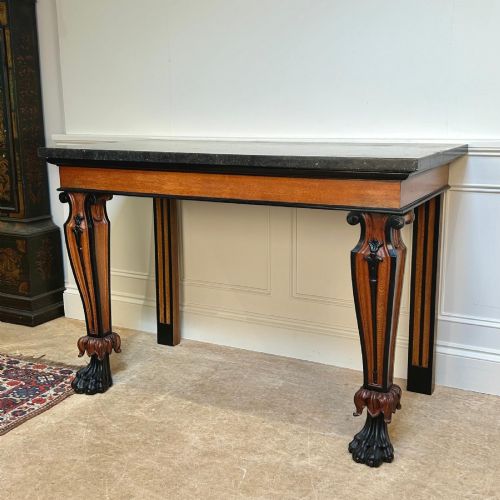
- A table designed to be fixed against a wall or supported by front legs with brackets securing the rear to the masonry. They frequently served as serving tables or decorative piers in grand hallways.
- Pot shelf
- An open lower shelf built between the legs of a table or dresser base, originally intended for storing heavy pots and pans. In hallway settings, it provides a stable platform for large objects or baskets.
- Marquetry
- The art of applying small pieces of veneered wood to a structure to form decorative patterns and pictorial designs. This technique appears on high-status tables intended for formal reception rooms.
Country House Hall Table: Frequently Asked Questions
What is a country house hall table?
A country house hall table is a sturdy, practical furnishing designed for entranceways, corridors, and reception rooms in large residences. These pieces range from simple pine side tables to substantial oak dresser bases and mahogany console tables.
They provided a functional surface for dropping keys, post, or lighting lamps as people entered the home, combining domestic utility with the architectural scale of historic properties.
How were these tables used originally?
In large historic properties, hall tables functioned as practical staging posts for daily arrivals and departures. Servants and family members utilised them for holding guest books, calling cards, candles, and outer garments.
Over time, many migrated from service corridors and kitchens into principal entrance halls to display decorative objects, floral arrangements, or silver trays.
How do I care for antique wood furniture?
Caring for antique wood requires stable indoor humidity and protection from direct sunlight, which can fade painted surfaces and dry out historic timber. Dusting with a dry, soft cloth prevents particulate buildup without moisture damage.
Avoid commercial silicone sprays, relying instead on traditional beeswax applied sparingly to nourish dry hardwood surfaces and maintain natural patination.
How do I identify eighteenth-century tables?
Eighteenth-century tables exhibit construction characteristics specific to hand-tool work, such as hand-cut dovetails on drawer boxes, pegged tenons, and uneven board thicknesses underneath. Timber choice often reflects native British woods like oak, elm, and fruitwood before exotic mahogany gained widespread popularity.
Surface wear on eighteenth-century pieces typically shows centuries of natural handling, distinct from the uniform tooling marks found on later reproductions.