
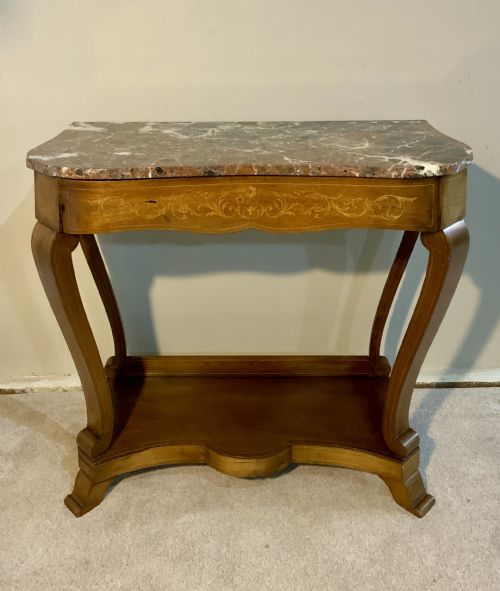


French Chateau Hall Table
A French chateau hall table brings weight and carved flourish to an entrance, grounding the room with stone and giltwood.
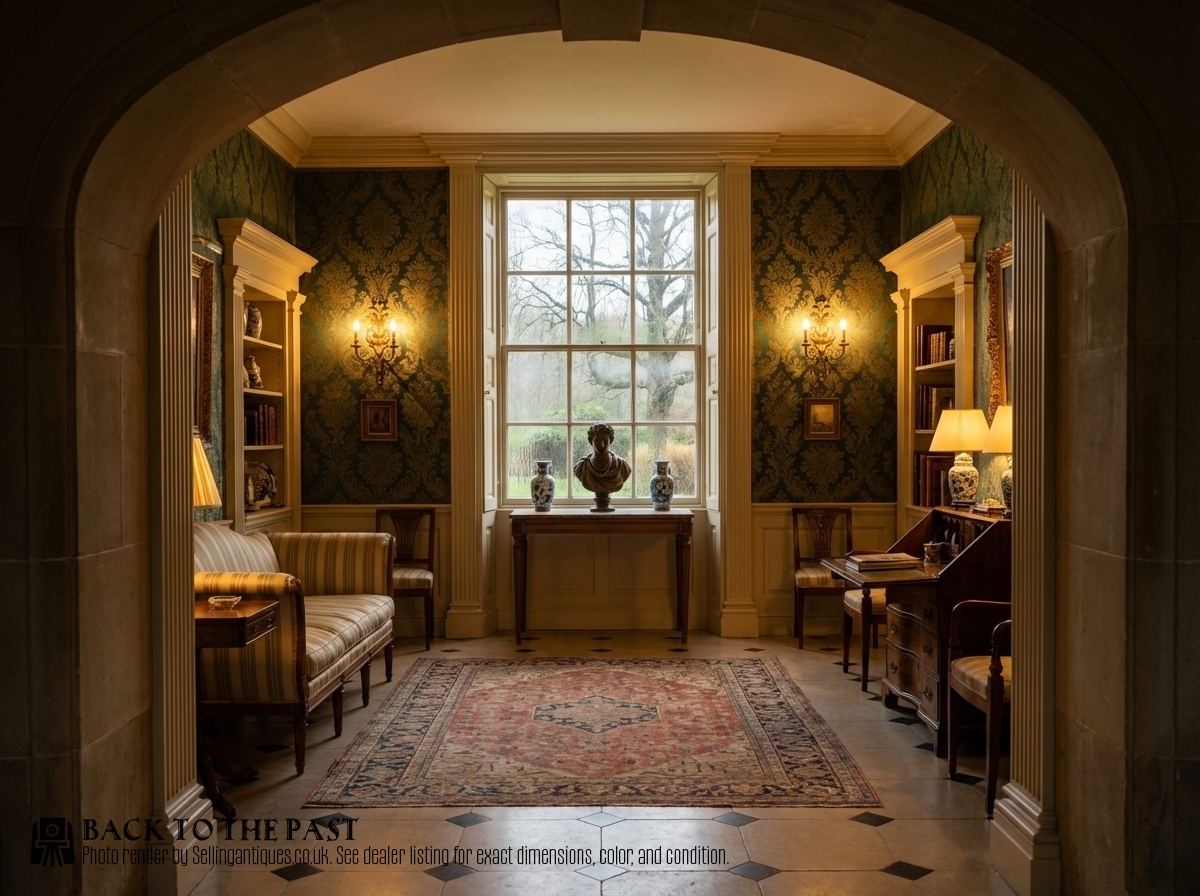
French Chateau Hall Table
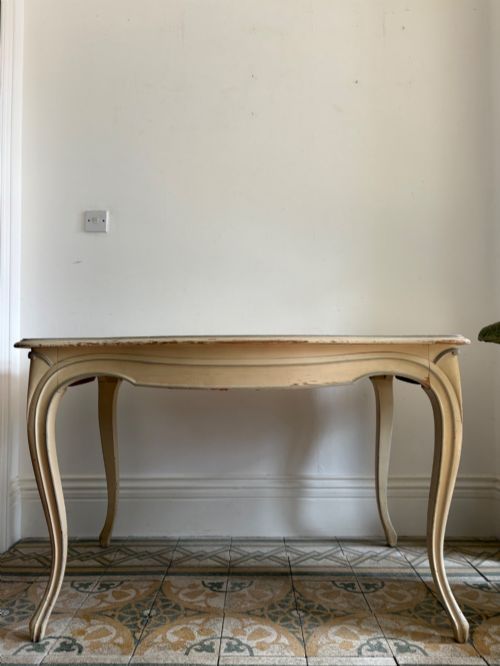
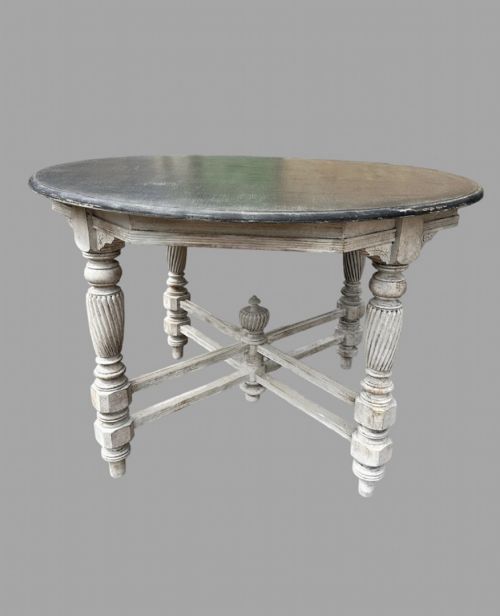
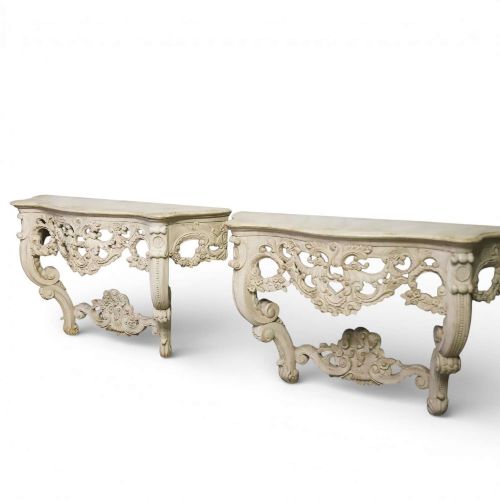
A French chateau hall table serves primarily as a grand console or side surface in a hallway or reception space. When searching for a French chateau hall table, a buyer encounters pieces originating mainly from the nineteenth and early twentieth centuries, alongside select eighteenth-century examples. Console tables, centre tables, and console tables paired with mirrors dominate the forms available.
The aesthetic draws heavily on French Provincial, Rococo Revival, and Baroque styles, reflecting the grandeur of country houses. Walnut, painted wood, and giltwood provide the structural foundation for these heavy tables. Makers frequently combine these timbers with inset marble surfaces or suede tops for practical daily use.
Materials and construction methods
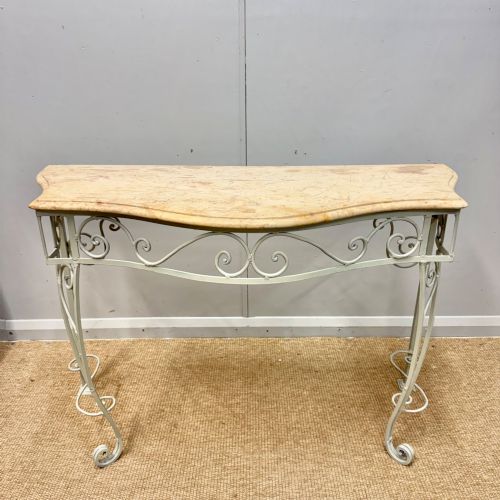
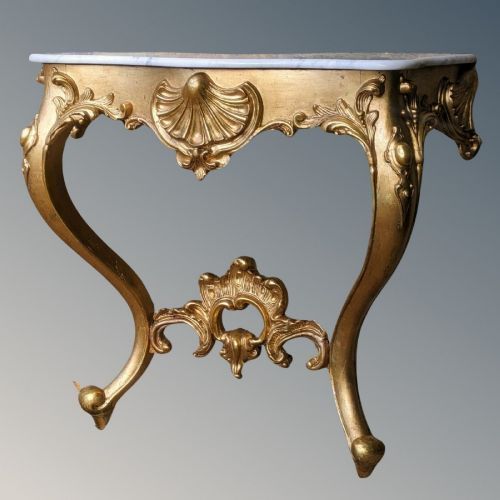
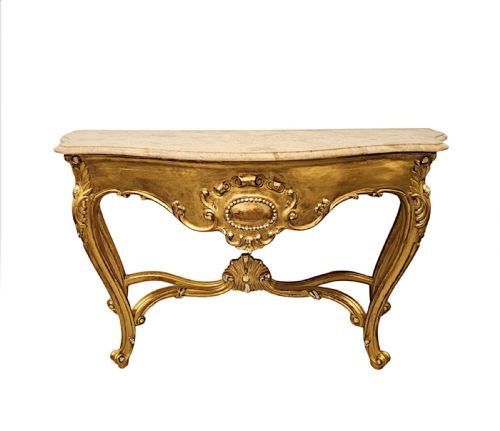
Makers utilised solid timbers such as walnut and mahogany alongside softer woods designated for painted or gilded finishes. Surfaces often feature applied gold leaf or intricate hand-carved detailing across the apron and legs. These wooden structures support heavy stone tops, notably marble in serpentine and bow-front shapes.
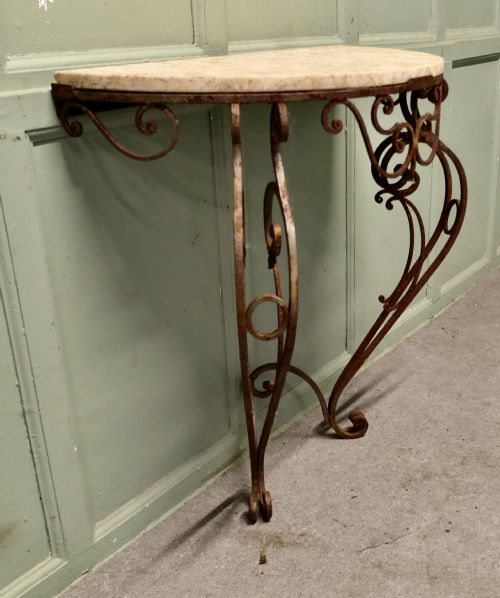
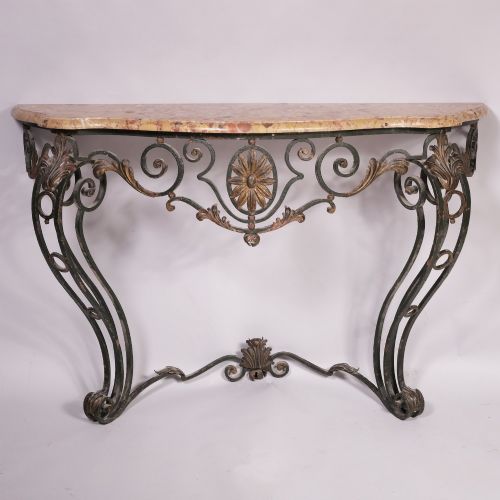
Wrought iron appears in select pieces as an alternative framing material, paired directly with marble surfaces for a rustic aesthetic. Carvers shaped cabriole legs and decorative motifs by hand before applying antique white paints or parcel gilt treatments. Structural joinery remains robust to bear the considerable weight of stone and giltwood.
Several tables come with matching wall mirrors, ensuring your guests get two chances to admire your hallway.
Distinctions in craftsmanship
Quality rests significantly upon the depth and precision of the hand-carved woodwork across the frame. Tables finished in genuine gold leaf or detailed parcel gilt demonstrate higher craftsmanship than standard painted alternatives. The thickness and figuring of the fitted marble top further distinguish finer examples.
Proportion and structural integrity define the upper tier of these tables. Pieces retaining original gilding, matching mirrors, and undamaged serpentine marble tops represent the most accomplished manufacturing standards of the period.
Holland and Son
The French Chateau Hall Table Glossary
- Console table
- A side table designed to stand against a wall, frequently secured with brackets or resting on cabriole legs.
- Giltwood
- Timber treated with gold leaf or gold paint to create a lustrous metallic finish across carved decorative elements.
- Serpentine
- A curved furniture front or tabletop featuring a convex centre flanked by concave ends, common in Rococo designs.
- Cabriole leg
- A furniture leg that curves outward at the knee and tapers inward to an ankle, echoing animal limbs.
- Parcel gilt
- A decorative technique where only specific raised portions of a painted or stained wooden surface are gilded.
French Chateau Hall Table: Frequently Asked Questions
Where should I place a hall table?
These tables suit narrow entrance halls and reception rooms where floor space is limited. Their shallow depth allows them to sit flush against a wall without obstructing doorways.
Pairing a console table with a matching wall mirror creates a balanced focal point for guests entering the home.
How do I care for marble tops?
Marble surfaces require gentle cleaning with damp cloths and mild soap to protect the natural stone. Avoid acidic liquids and harsh chemical cleaners that can etch the polished finish.
Using coasters and mats prevents scratching and staining from daily use in high-traffic hallways.
How do I date these tables?
Dating relies on examining the timber construction, tool marks, and style evolution from the eighteenth through to the early twentieth century. Victorian and Edwardian revivals often emulate earlier Baroque and Rococo forms.
Original hardware, wear patterns, and traditional joinery methods help establish the approximate age of the piece.