


Carved Wall Table
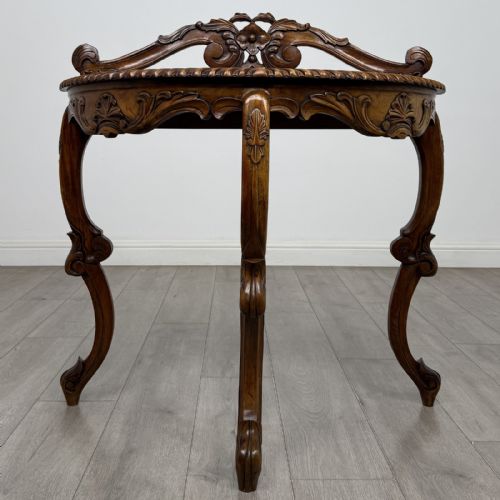
These pieces for carved wall table bring architectural presence into a room, fixed firmly against vertical surfaces to hold objects without traditional legs getting in the way.
Carved Wall Table
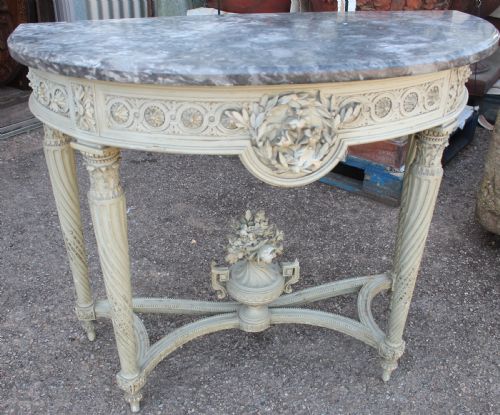
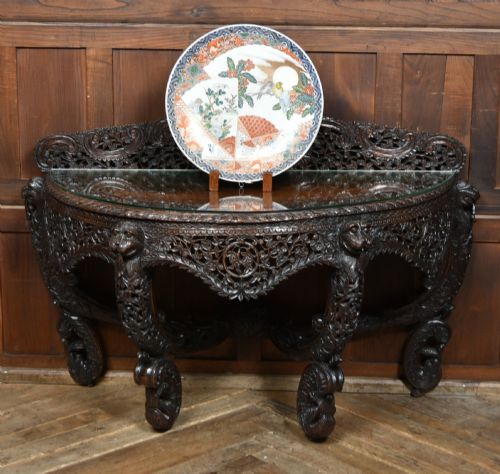
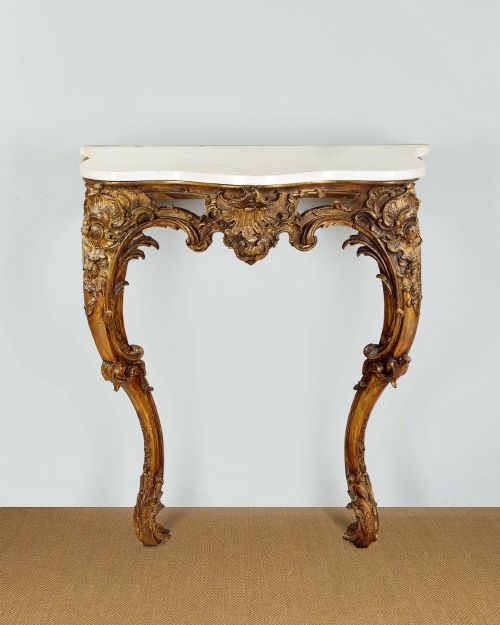
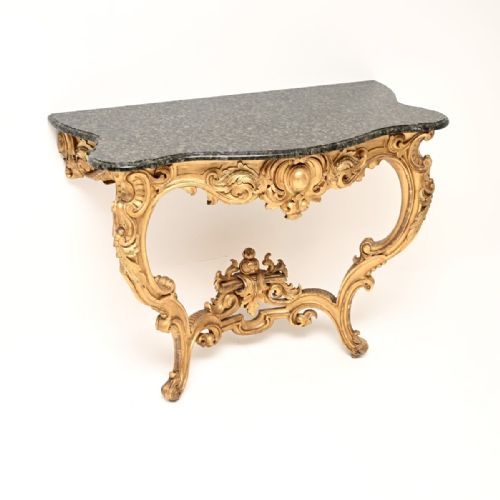
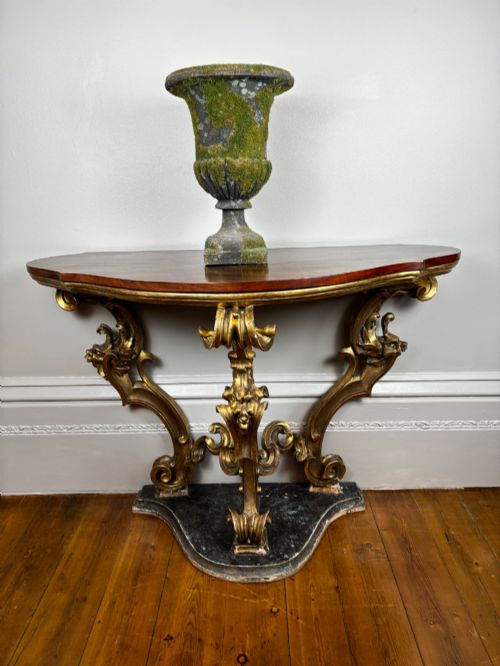
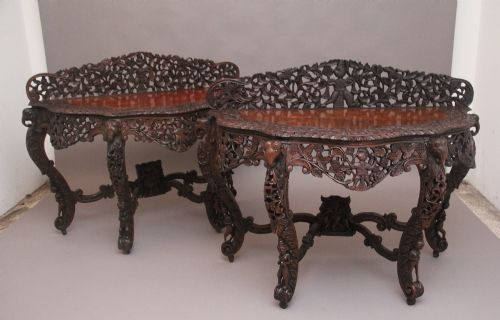
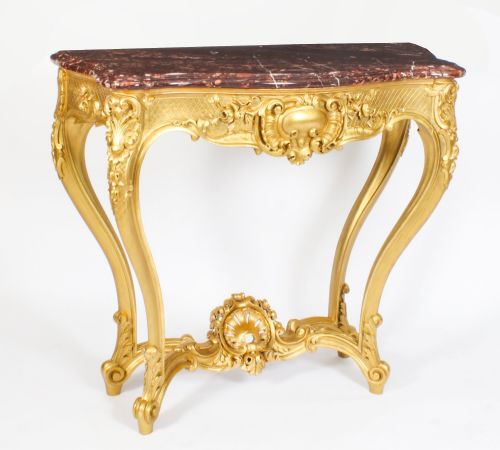
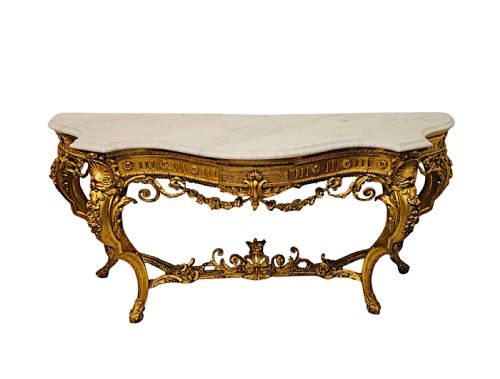
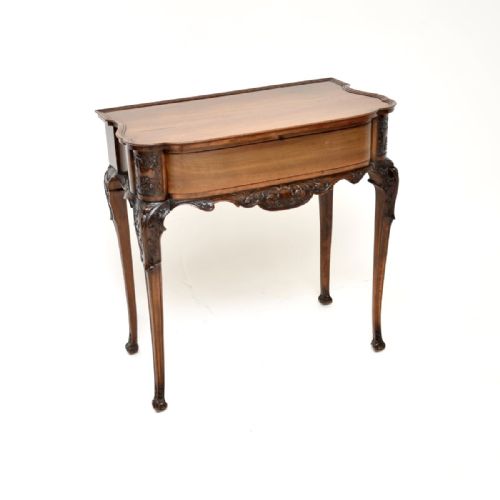
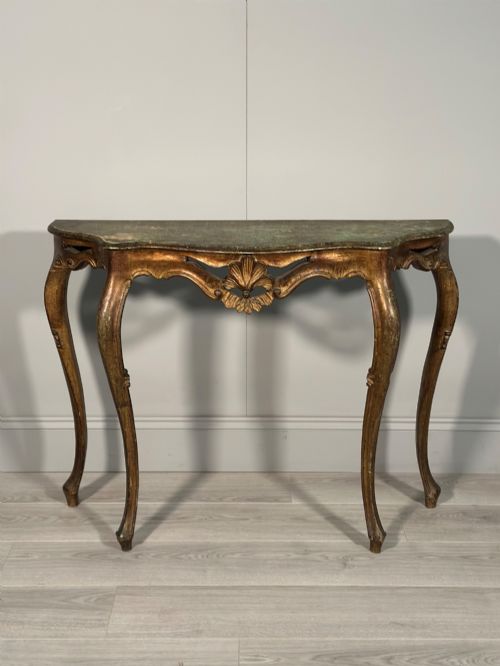
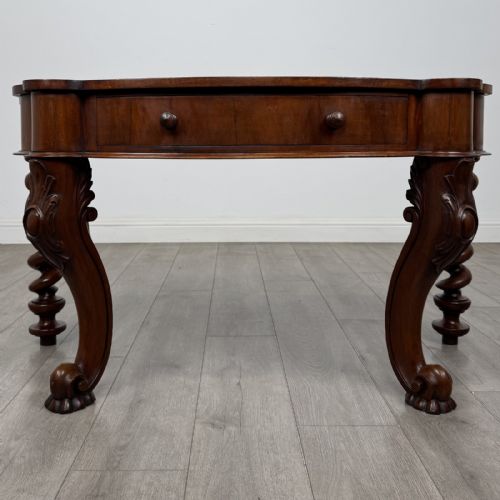
When searching for a carved wall table, buyers encounter console tables and wall-mounted ledges designed to sit flush against a room's perimeter. The selection spans the eighteenth, nineteenth, and early twentieth centuries, drawing heavily on French, Italian, and British decorative traditions.
Most examples function as pier tables placed beneath wall mirrors, taking up minimal floor space while offering a display surface. Forms range from compact demilune shapes to grand serpentine fronts influenced by neoclassical and rococo design.
How they were made
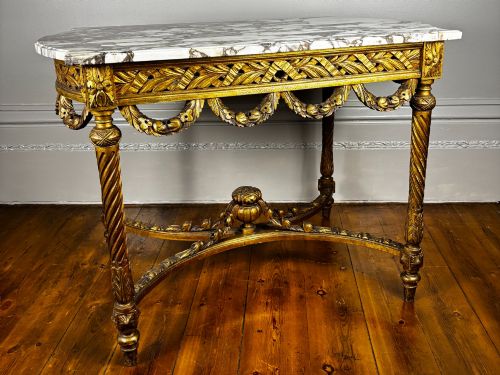
The primary construction relies on solid timbers like mahogany, oak, and walnut, frequently shaped into serpentine or demilune profiles. Many frames utilise carved wood and gesso finished in gilt or paint to mimic heavier solid metal or stone structures.
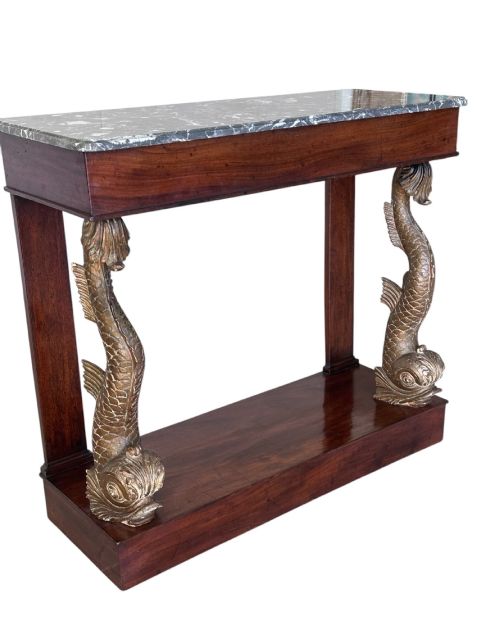
Tops are frequently fashioned from heavy slabs of marble, including figured varieties like breche d'alep, supported by substantial wall brackets or front legs. Hand-carving defines the decorative vocabulary, shaping foliage, scrollwork, and figural elements directly into the wood or gesso layers.
Carved Wall Table Retail Price Guide 2026
Typical asking prices for carved wall table among the pieces listed under this phrase on Sellingantiques today, from the lower quarter to the upper quarter. They describe what is for sale here now, not the wider market.
What varies in quality
Quality rests in the crispness and depth of the hand-carved detail across the wooden frames and gesso ornamentation. Superior pieces exhibit confident symmetry and fluid lines rather than rigid, shallow incisions.
The choice of materials dictates the upper tier, seen in thick, well-figured marble tops paired with dense, weighty timber frames. Evidence of skilled joinery and stable wall-fixing architecture distinguishes finer examples from simpler provincial work.
Felix-Alfred Ternisien·Arthur Simpson of Kendal
The Carved Wall Table Glossary
- Console table
- A table designed to stand against a wall, traditionally fixed to the vertical surface with brackets. Many versions on this page rely on front legs for additional support.
- Demilune
- A half-moon shape used frequently for table tops and frames. This curved profile allows the furniture to project minimally into a hallway or drawing room.
- Giltwood
- Timber coated with gold leaf over a prepared base of gesso and size. This finish reflects candle and natural light in period interiors.
- Serpentine
- A furniture front or top shaped with a double curve, sweeping inward then outward. The technique requires precise woodworking and adds visual movement to the piece.
- Pier mirror
- A large looking glass designed to hang on the wall directly above a console table. The combination creates a unified decorative scheme between furniture and glass.
Carved Wall Table: Frequently Asked Questions
How do you secure a wall table safely?
These items require direct fastening to wall studs or masonry using appropriate brackets or concealed fixings. Because many designs carry heavy marble tops, proper wall anchoring ensures structural stability.
Professional installation prevents tipping, particularly when the furniture relies solely on wall support rather than floor-resting legs.
Where were these tables placed historically?
Rooms such as hallways, grand reception spaces, and drawing rooms typically housed these furnishings. They stood between windows beneath large mirrors to reflect light and display decorative objects.
Their narrow footprint made them suitable for transitional spaces where standard four-legged tables would obstruct movement.
How do I clean marble tops?
Gentle wiping with a soft cloth dampened in warm water preserves the polished stone surface. Avoid acidic cleaners or harsh chemicals that etch the marble over time.
Routine dusting keeps the porous stone and gilded wooden frames free from accumulation without risking the antique finishes.
How can I tell a nineteenth-century piece apart from an eighteenth-century one?
Eighteenth-century examples often display hand-carved detailing with distinct tool marks and regional European stylistic traits like Venetian or Gustavian motifs. Nineteenth-century revivals tend to incorporate heavier Victorian proportions and machine-assisted preparation beneath the hand-finished surfaces.
Examining the underside, timber shrinkage, and fastener types helps clarify the manufacturing era.