

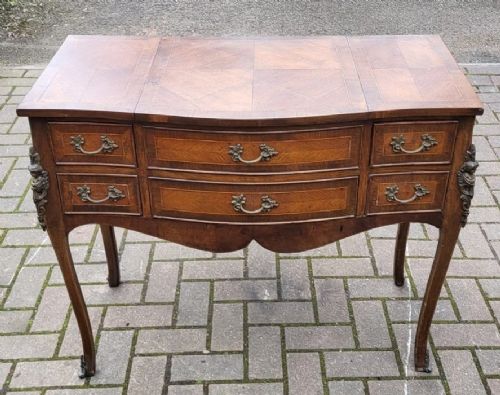
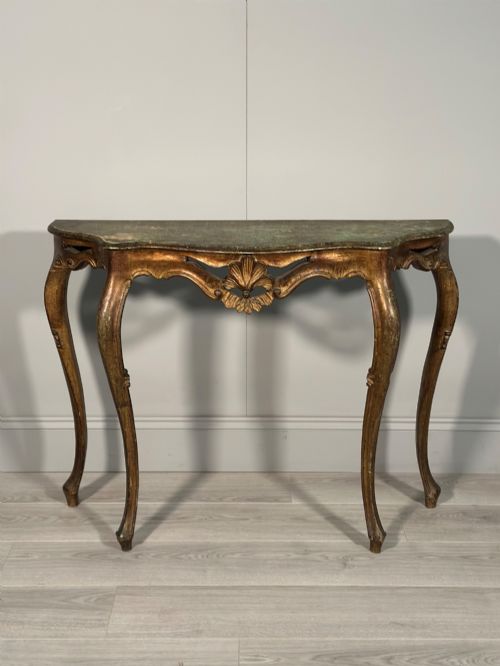
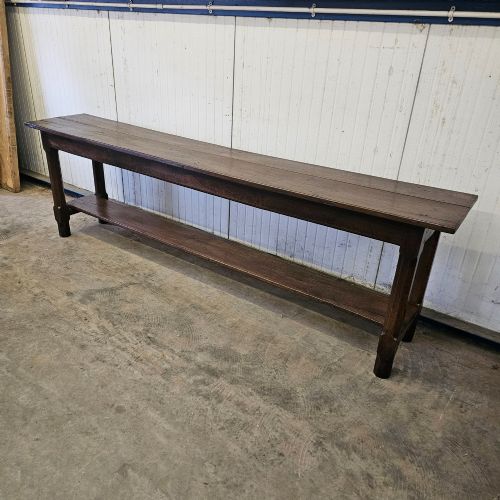
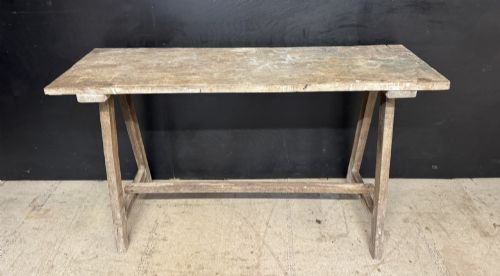
Vintage French Console Table
A vintage french console table brings architectural weight and refined surface utility to a hallway or reception room.
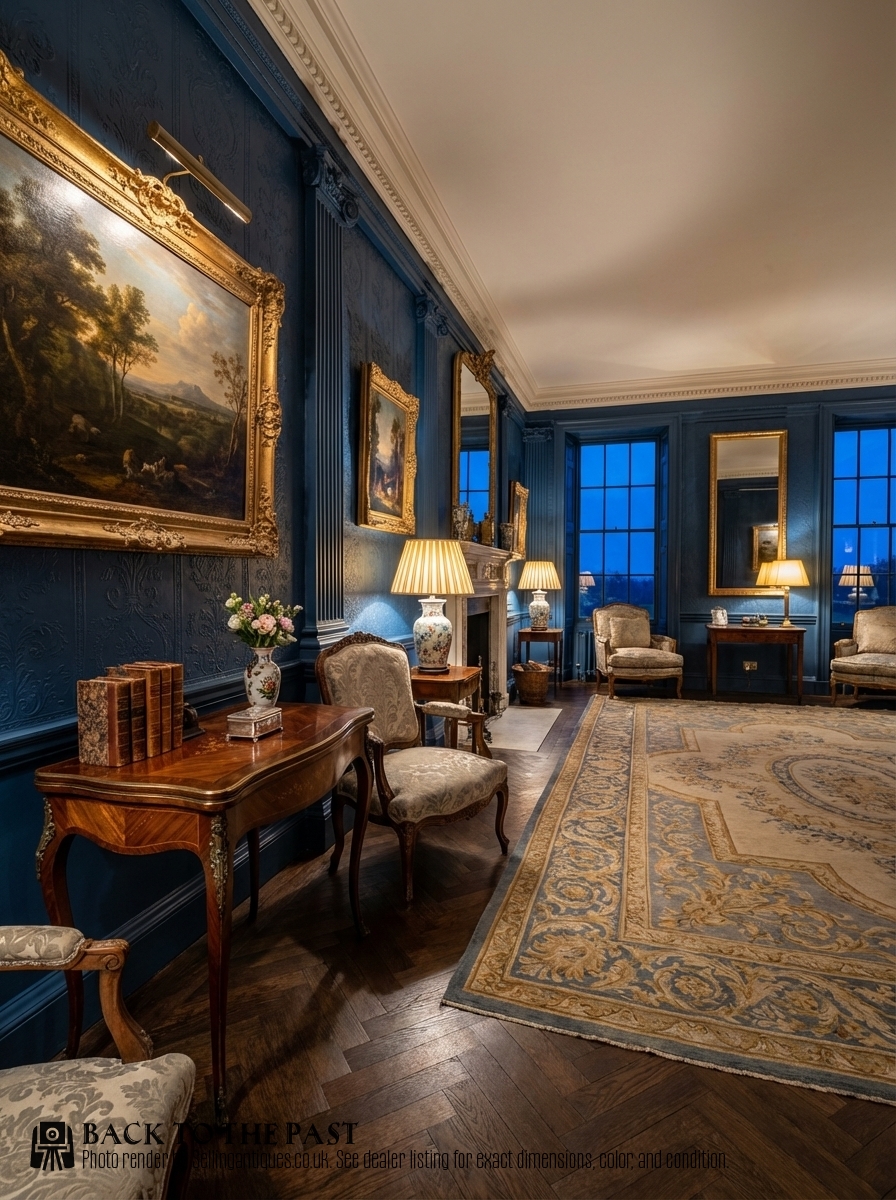
Vintage French Console Table
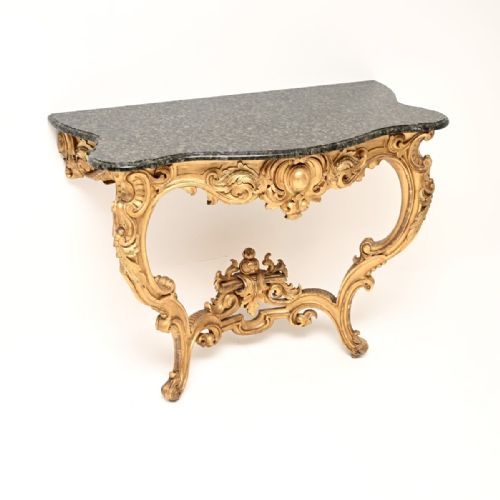
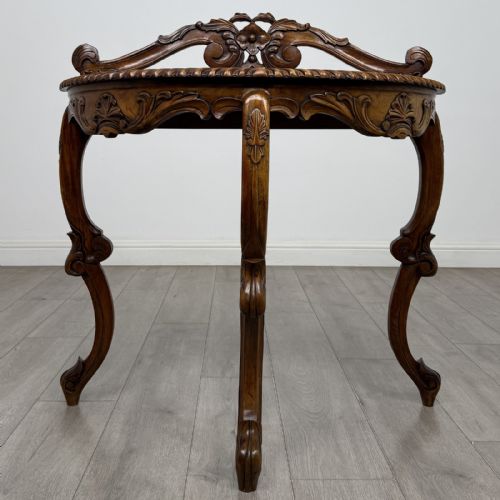
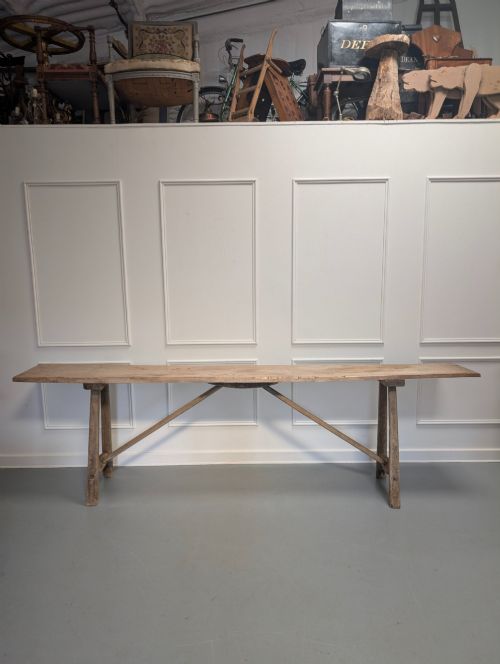
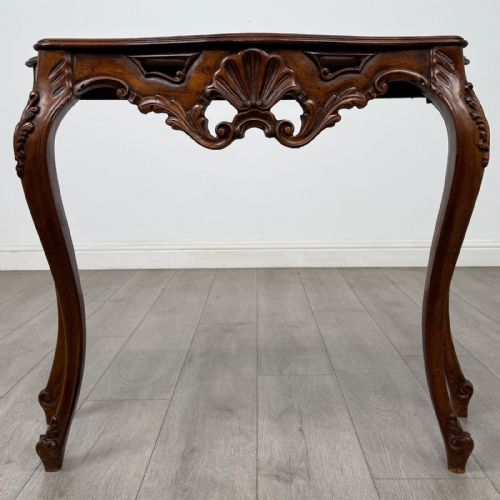
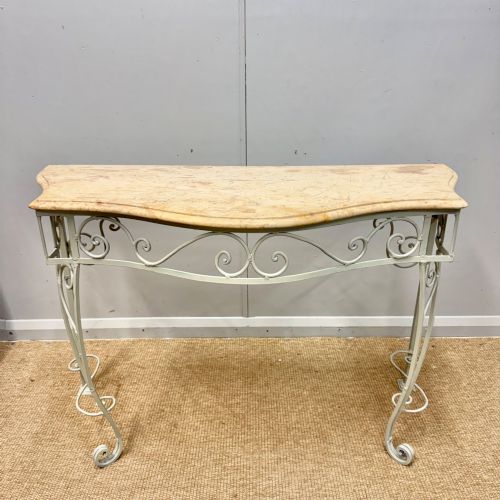
When you search for a vintage french console table, you encounter pieces designed to stand against a wall, ranging from utilitarian work surfaces to heavily ornamented display pieces. The selection includes narrow serving tables, marble-topped preparation surfaces, and carved wooden designs derived from classical periods.
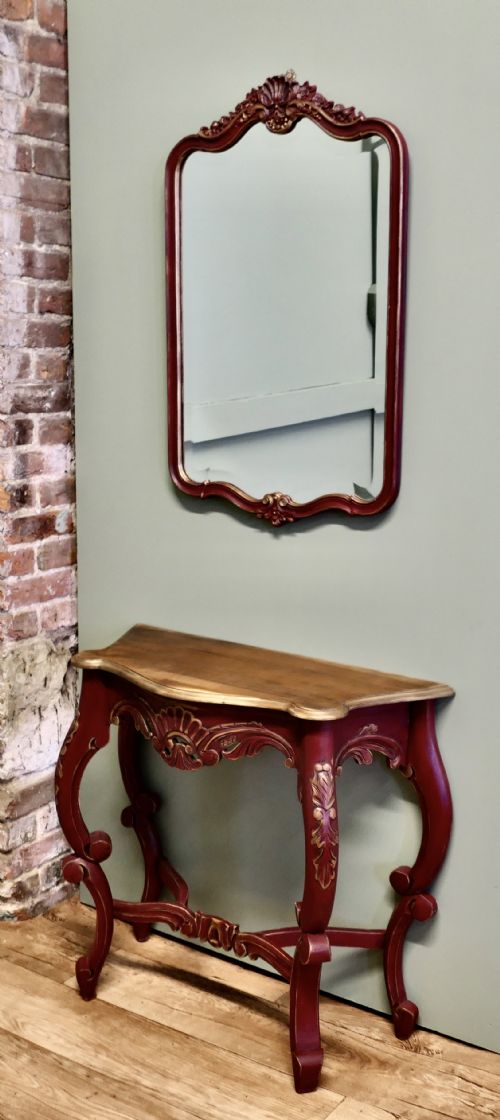
The materials span solid timber, such as oak, walnut, and pine, alongside cold stone slabs and worked metals like brass and wrought iron. Many examples carry traces of original paint finishes, patinated wood, or applied giltwood details appropriate to their regional or formal origins.
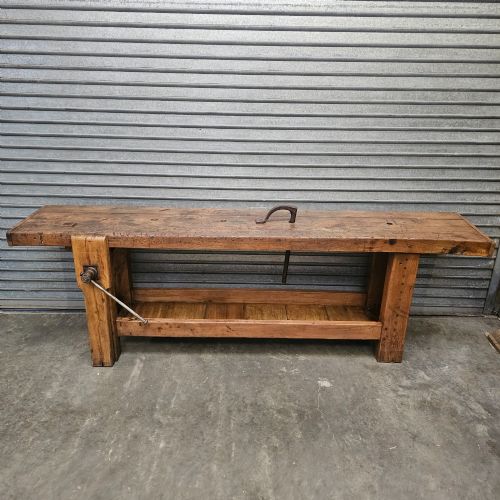
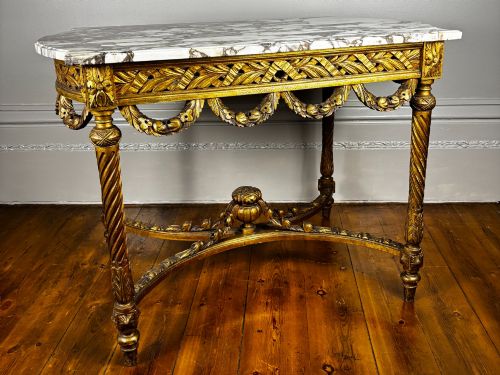
Originating from diverse domestic and commercial settings, these tables cross French provincial styles with urban neoclassical aesthetics. You find rustic workbenches alongside polished pieces bearing Louis XVI or Art Deco influence.
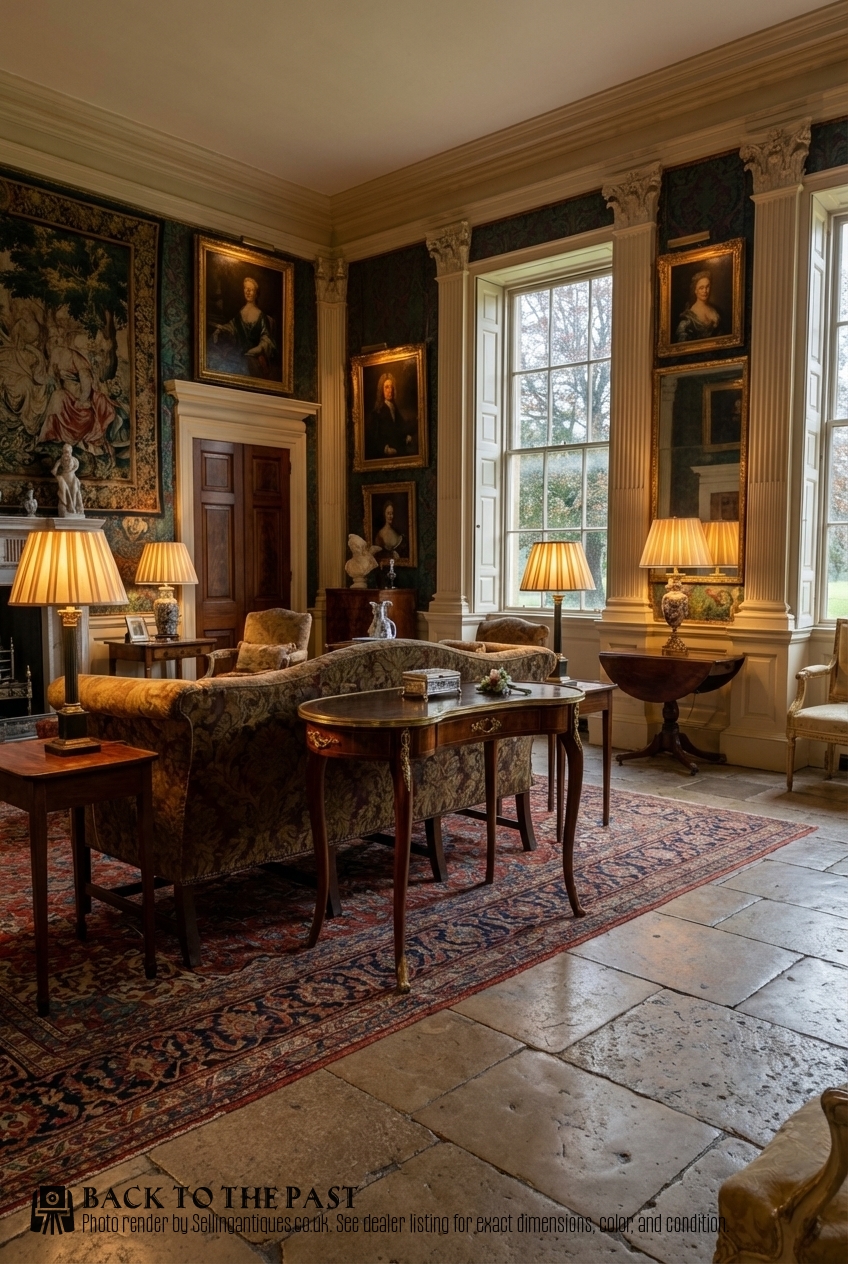
Construction and Materials
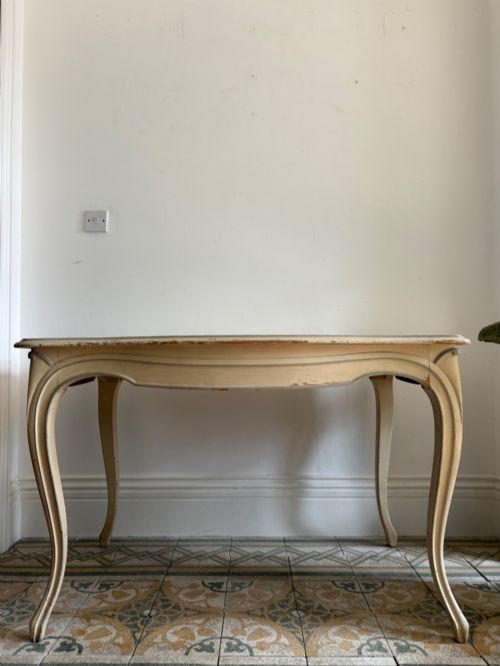
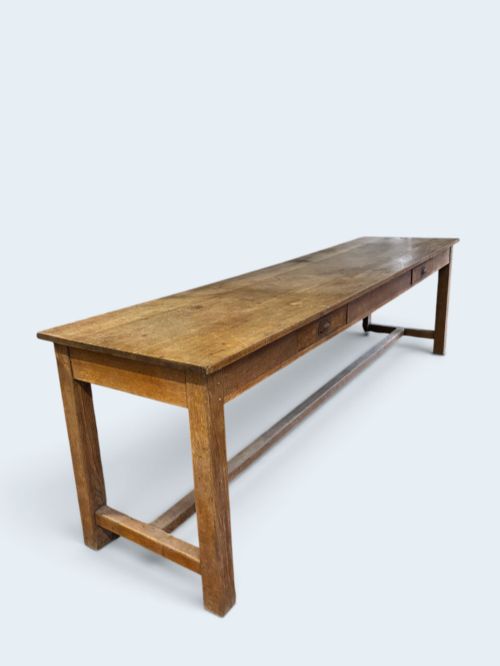
Cabinetmakers and rural joiners utilised native timbers including oak, walnut, pine, and mahogany, often joining them with traditional pegged mortise and tenon construction. Surfaces were left natural, waxed, or finished with layered paint that has worn down through decades of domestic use.
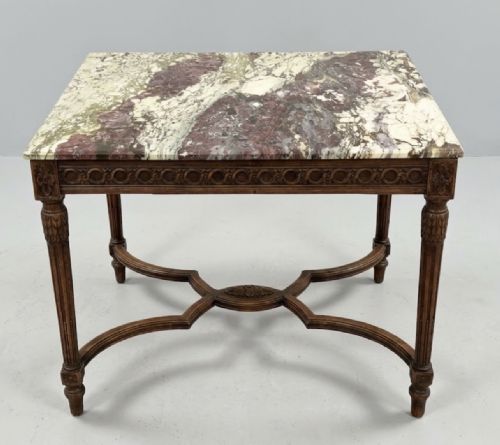
Heavy stone slabs, particularly marble and fossil marble, form the tops of many examples, providing durable surfaces originally intended for kitchens, shops, or formal reception rooms. These stone tops rest directly upon timber frames or are supported by cast iron and wrought iron bases.
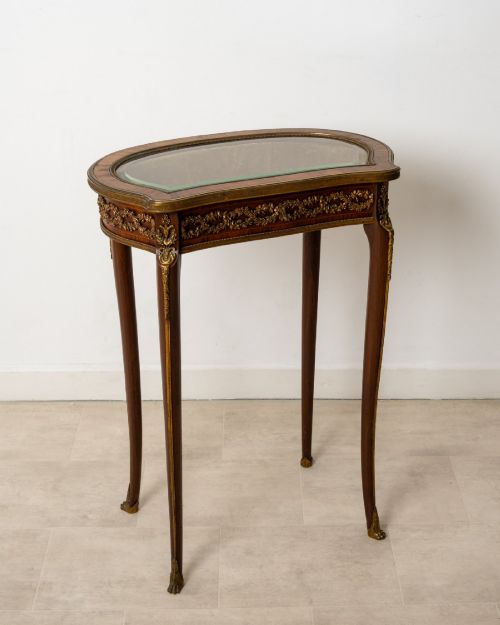
Decorative elements involve hand-carved woodwork, applied ormolu mounts, and marquetry veneers of kingwood and tulipwood on formal pieces. Metalwork components, including brass trim and forged iron bracing, were shaped by hand to provide structural stability and visual contrast.
Vintage French Console Table Retail Price Guide 2026
Typical asking prices for vintage french console table among the pieces listed under this phrase on Sellingantiques today, from the lower quarter to the upper quarter. They describe what is for sale here now, not the wider market.
Listings feature walnut, oak, pine, and mahogany alongside marble and wrought iron, spanning the eighteenth to the twentieth century.
Assessing Craftsmanship and Material Quality
The distinction between standard utility items and finer examples lies in the selection of materials and the precision of the joinery. Solid hardwoods, thick marble slabs, and finely cast ormolu mounts indicate workshop production intended for prosperous interiors, whereas softer pine and simpler ironwork reflect utilitarian origins.
Carved details reveal the hand of the maker, moving from stiff, uniform cuts to fluid, deeply undercut foliage and moulded edges. The integrity of the original structure, including the stability of the legs and the fit of drawers, dictates how well a piece has survived daily use.
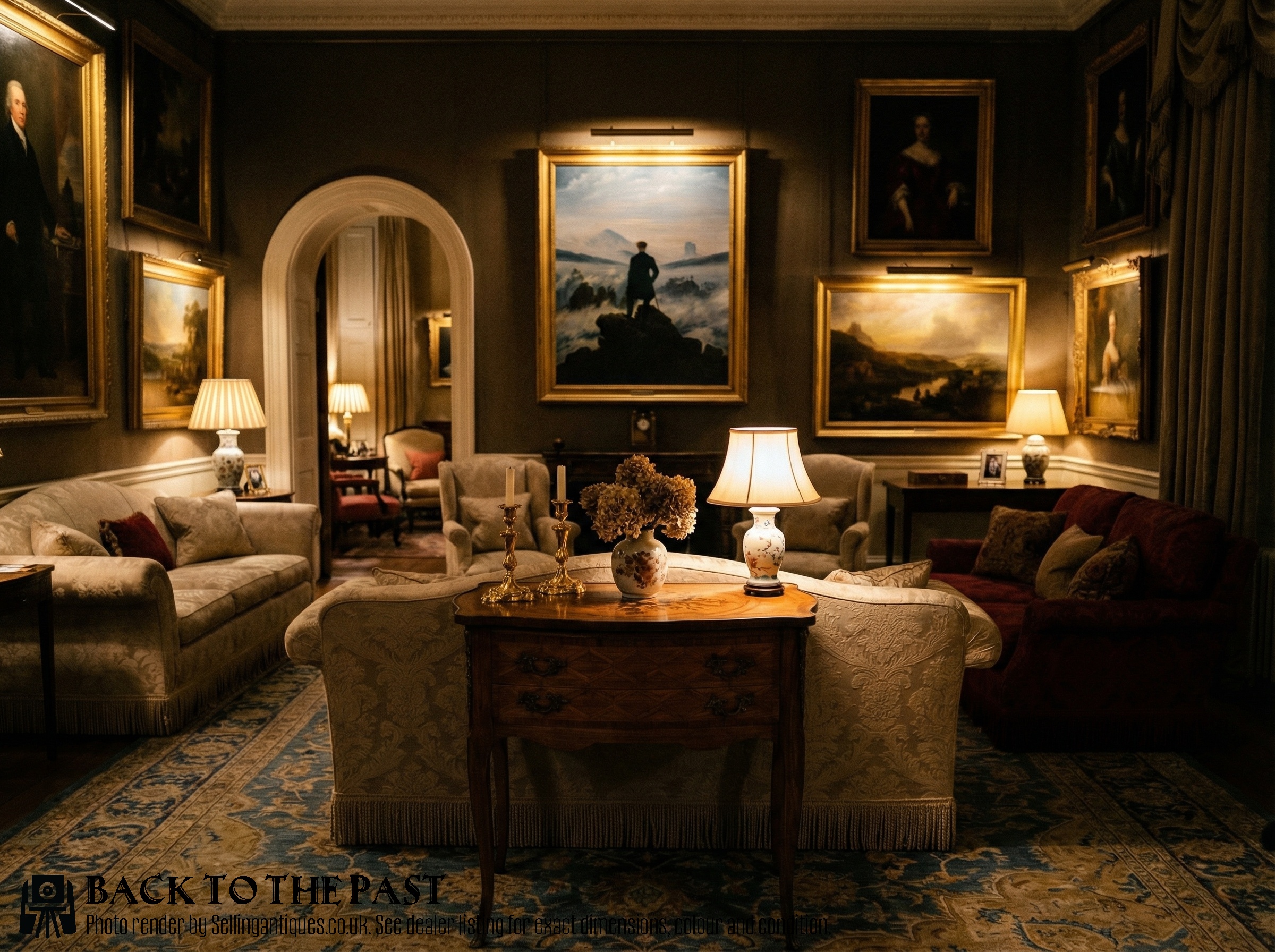
François Linke
The Vintage French Console Table Glossary
- Console table
- A table designed to stand against a wall, frequently secured to it or balanced on shaped legs. These pieces provide surface space in narrow areas like hallways.
- Marble top
- A polished stone slab fitted to the upper surface of a table. It offers a cool, water-resistant plane suitable for food preparation or display.
- Ormolu
- Gilded bronze mounts applied to furniture for decoration. This technique adds metallic contrast to wooden surfaces.
- Cabriole leg
- A furniture leg that curves outward and then tapers inward. It mimics the shape of an animal's leg and appears frequently on provincial and classical designs.
- Marquetry
- The art of applying pieces of veneer to a structure to form decorative patterns. Craftsmen use various coloured woods to create pictorial designs.
Vintage French Console Table: Frequently Asked Questions
What is a vintage french console table used for?
These tables function as narrow surface furniture placed against walls in entrances, living rooms, and dining spaces. They provide a place for lamps, mirrors, and decorative objects without obstructing pathways.
Historically, similar tables served functional roles in kitchens, shops, and formal salons as preparation surfaces or decorative stands.
How do I distinguish regional styles?
Provincial and rustic pieces utilise simpler timbers like pine, elm, and oak with minimal decoration and painted finishes. They reflect domestic or workshop origins in French country settings.
Formal styles incorporate walnut, mahogany, or exotic veneers alongside carved details, marble tops, and metal mounts that follow classical architectural rules.
Are marble tops original to these tables?
Many console tables incorporate heavy marble or fossil marble tops as a primary feature of their original design. These stone surfaces were chosen for durability in work tables, butcher tables, and formal serving pieces.
Some tables designed for dry domestic use feature fitted wooden tops, while others combine wooden frames with replacement stone slabs fitted at a later date.
How should I care for a wooden console?
Maintain wooden surfaces by applying appropriate wax polish sparingly to nourish the timber and preserve the historic patina. Avoid placing untreated wood near excessive heat sources or direct sunlight to prevent warping and drying.
Protect marble tops from acidic liquids that can etch the polished stone surface, wiping spills promptly with a damp cloth.