



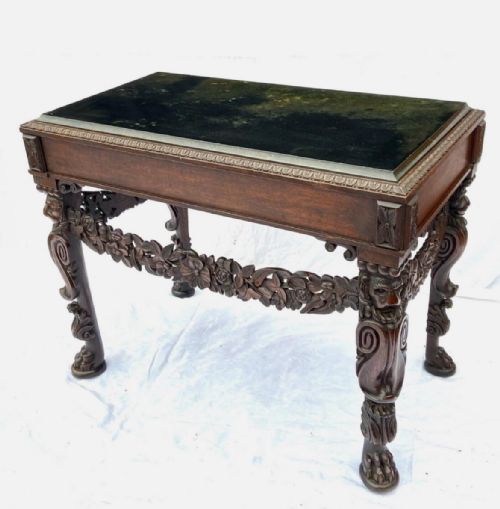


Oak Pier Table
An oak pier table brings architectural presence and sturdy utility to a hallway or reception room, standing flush against the wall.
Oak Pier Table
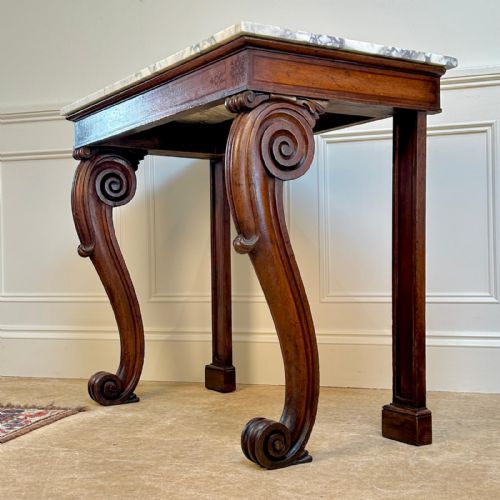
An oak pier table is a console or hall table designed to fit narrow wall spaces, frequently topped with marble or granite. Buyers seeking an oak pier table will encounter pieces ranging from eighteenth-century carved examples to nineteenth-century Regency and Victorian designs.
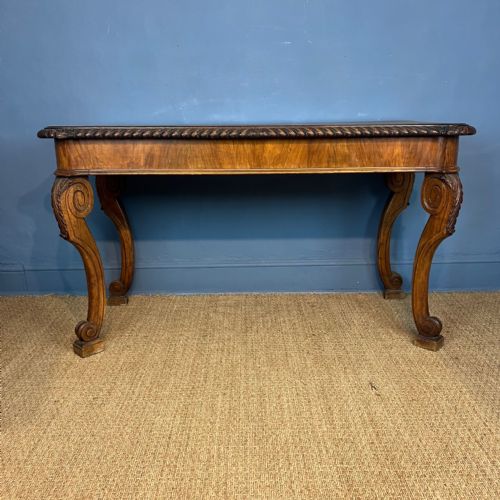
The form crosses paths with side tables, lowboys, and console tables, often featuring carved friezes or robust wooden legs. Most pieces date from the eighteenth and nineteenth centuries, with occasional twentieth-century interpretations appearing in the selection.
How they were made
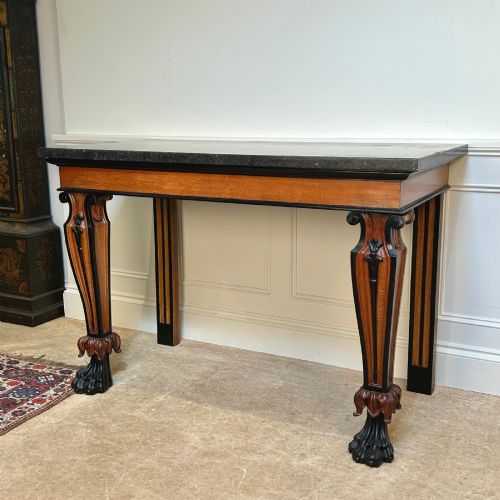
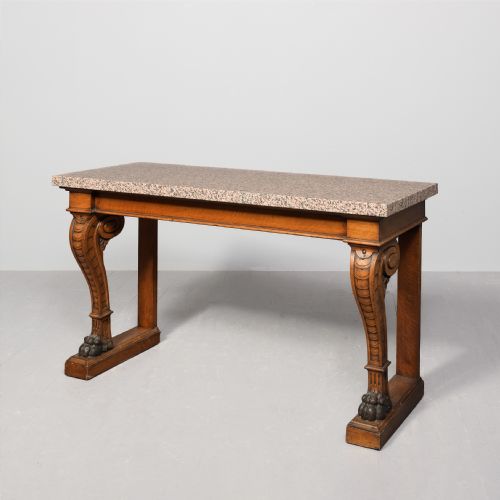
Cabinetmakers utilised solid oak for the primary frames and supports, sometimes incorporating golden oak, pollard oak, or bleached oak surfaces. These timbers were frequently joined with carved details such as lion masks, paw feet, and Green Man motifs.
Many tables were fitted with heavy stone surfaces, utilising marble or granite slabs for the tops. Workshops also combined walnut and ebonised wood accents to create contrast against the dominant oak structure.
Oak Pier Table Retail Price Guide 2026
Typical asking prices for oak pier table among the pieces listed under this phrase on Sellingantiques today, from the lower quarter to the upper quarter. They describe what is for sale here now, not the wider market.
Several tables stare back from the hallway with fierce wooden lion masks and mythical Green Man faces.
What varies in quality
Quality rests in the crispness of the hand carving and the harmonious integration of stone tops with the wooden base. Finer examples display deeply undercut foliage or figurative work rather than shallow or mechanical scoring.
The selection of timber grain and the structural proportion dictate the standing of a piece. Substantial proportions and well-figured oak elevate an ordinary side table into a commanding console.
Alexander McKenzie of Glasgow
The Oak Pier Table Glossary
- Console table
- A table designed to be fixed against a wall, often supported by two legs and secured by brackets at the rear. They were traditionally placed beneath mirrors or between windows.
- Pier table
- A specific type of console table built to fit the wall space between two windows. The term is frequently used interchangeably with console table.
- Frieze
- The wide central section running beneath the top of the table. On better pieces, this area is heavily carved with pierced decoration or relief motifs.
- Lowboy
- A small eighteenth-century table with drawers, often used as a side table or dressing table. They share similar proportions to early hall tables.
- Pollard oak
- Oak timber taken from trees that have been pollarded, producing a dense, highly figured grain with characteristic cluster markings. It was favoured by Regency cabinetmakers.
Oak Pier Table: Frequently Asked Questions
Where should I place an oak pier table?
These tables suit narrow architectural spaces such as hallways, landings, or the wall space between windows. Their shallow depth allows them to sit flush against a wall without obstructing walkways.
They also function well beneath large mirrors or paintings in reception rooms, providing a surface for lamps or decorative objects.
How do I distinguish an 18th-century table from a Victorian copy?
Eighteenth-century examples often display hand-cut joinery, pegged joints, and timber surfaces showing the wear of centuries of use. The carving tends to be integrated directly into the structural framework.
Victorian and later revival pieces frequently utilise machine-sawn elements and heavier, deeply imposing carved motifs like Green Man masks or elaborate paw feet.
What is the difference between a console and a pier table?
A console table is any wall-mounted or bracket-supported table that relies on the wall for some stability. A pier table is specifically designed to occupy the pier, which is the solid wall between two windows.
In modern usage, the terms overlap considerably, and many pieces perform either function depending on the room layout.
Are marble tops original to these tables?
Many nineteenth-century console tables were constructed specifically to carry heavy stone surfaces like marble or granite. The wooden frames were built with reinforced rails to support the additional weight.
Checking the fit between the stone slab and the timber rebate helps determine whether the top belongs to the period of the base.