

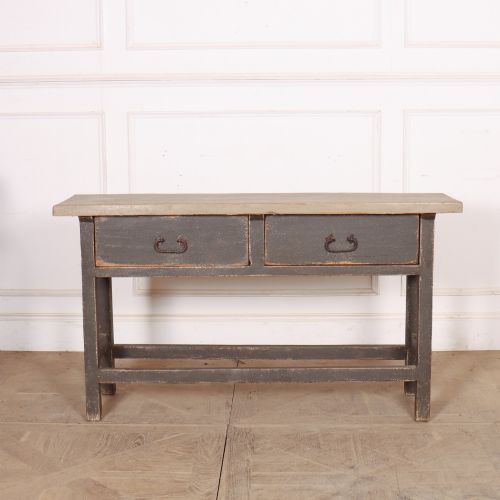
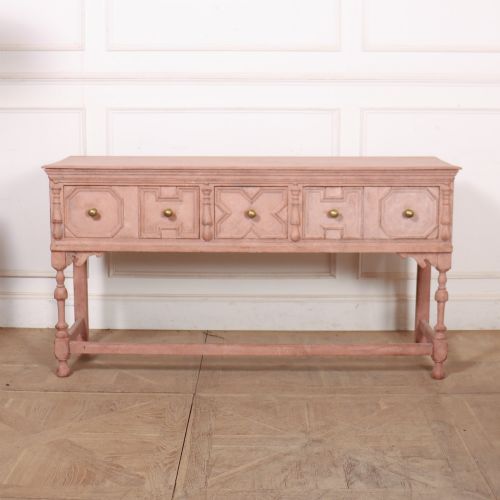
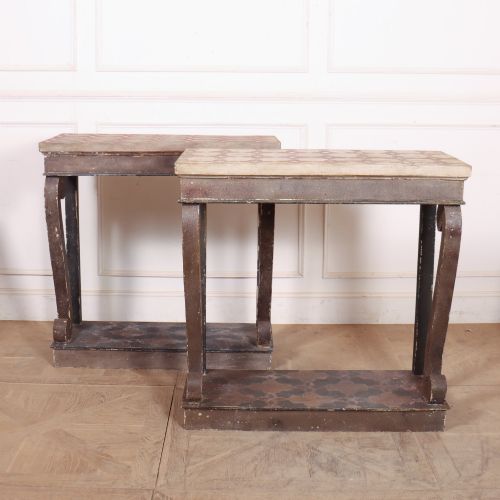
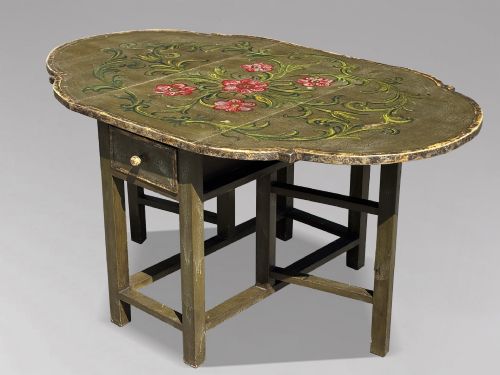
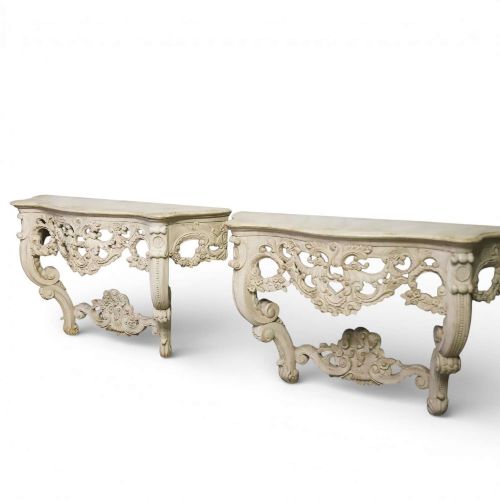
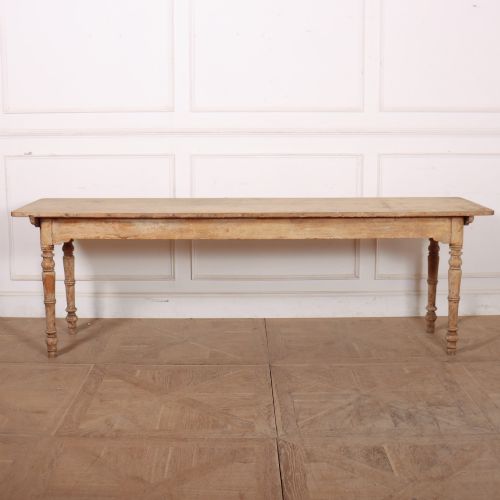
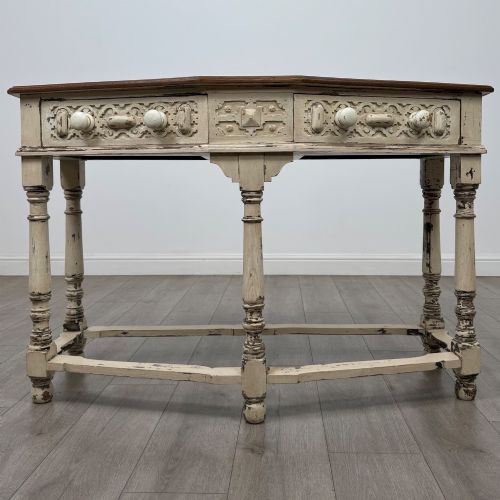
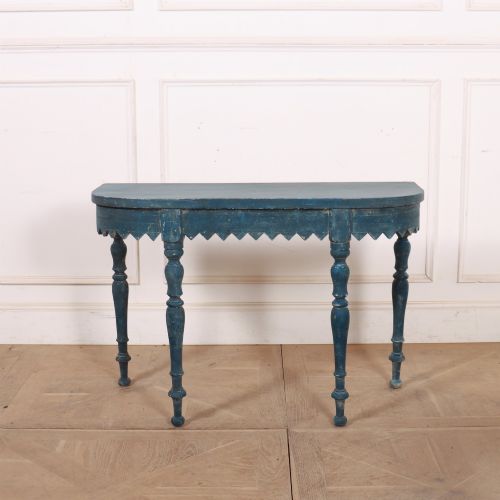
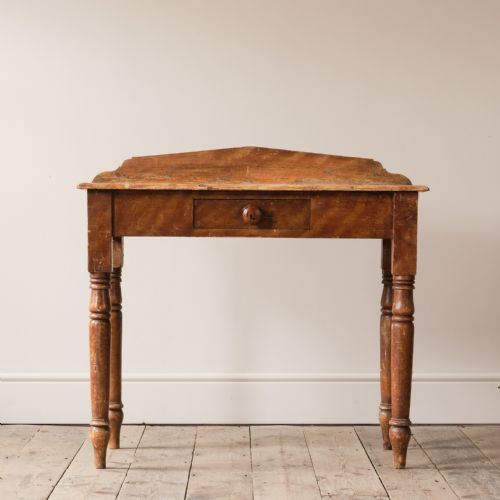
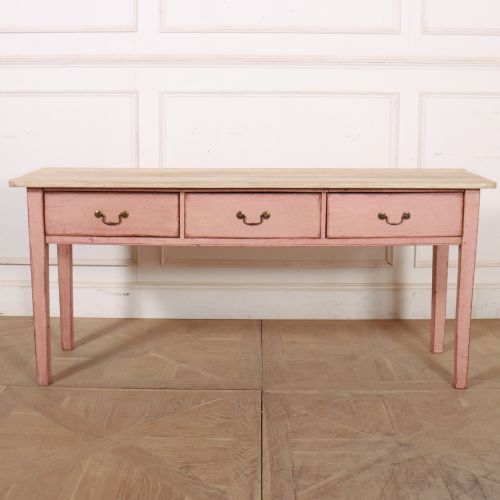
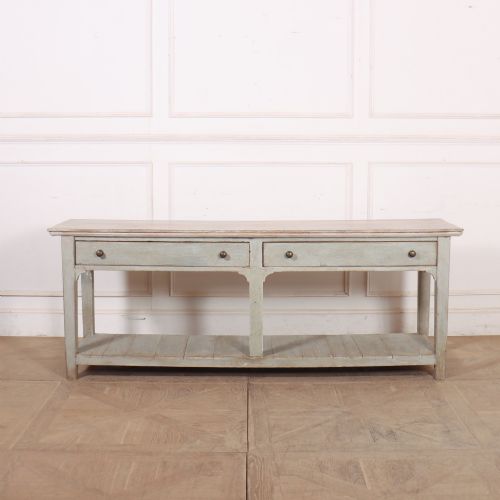
Painted Wooden Console Table
A painted wooden console table brings surface and structure to a hallway, drawing the eye with layered colour and period character.
Painted Wooden Console Table
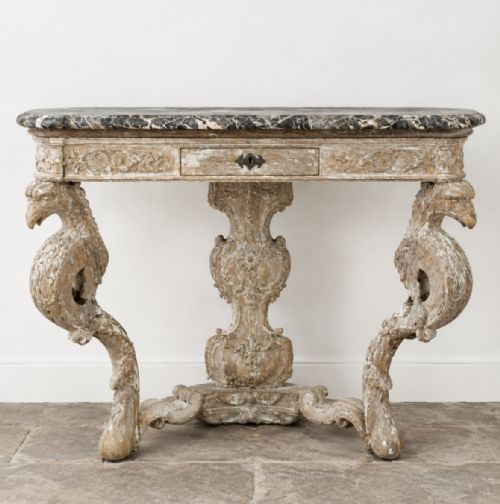
A painted wooden console table acts as a narrow surface for display, taking forms such as demi-lune, wall-mounted, and drop-leaf shapes alongside standard rectangular formats. These tables emerge from origins spanning English, French, Italian, Spanish, and Swedish workshops.
The selections encountered here draw heavily from the eighteenth and nineteenth centuries, alongside early twentieth-century examples like Edwardian and 1920s pieces. Makers produced these items for domestic utility in country houses, farmhouses, and urban dwellings alike.
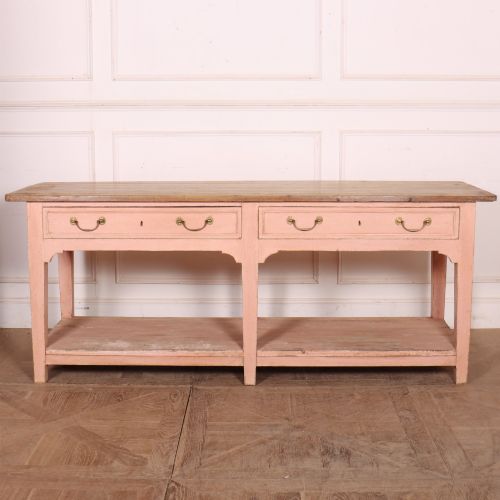
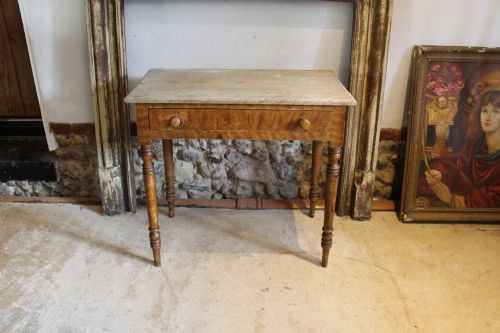
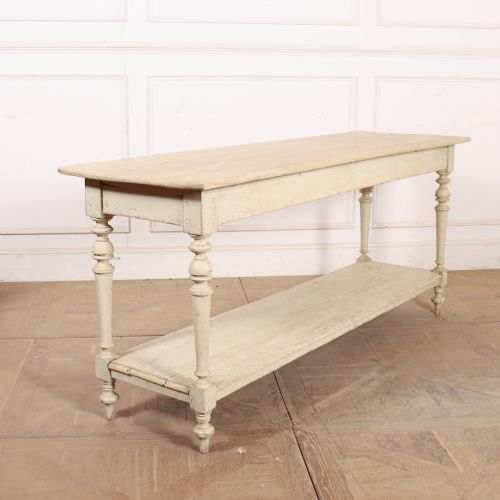
Object types often bridge categories, incorporating dresser bases, serving tables, drapers tables, and side tables alongside dedicated console tables. Pine and oak form the structural backbone of these pieces, carrying various coats of paint from original finishes to later decorative treatments.
Materials and construction methods
Makers utilised solid timbers like pine and oak for the primary carcases, tabletops, and drawer frames, sometimes pairing them with gesso or brass details. Scrubbed wooden tops frequently contrast against painted bases, while select pieces incorporate marble or specimen marble inserts.
Paint finishes range from original scumble and ochre to antique white and green pigments, applied directly to wood surfaces. Hand-carved elements appear on specific continental formats, and structural joinery includes drawers, potboards, and pot-shelves.
Painted Wooden Console Table Retail Price Guide 2026
Typical asking prices for painted wooden console table among the pieces listed under this phrase on Sellingantiques today, from the lower quarter to the upper quarter. They describe what is for sale here now, not the wider market.
The listings here span the eighteenth, nineteenth, and early twentieth centuries, encompassing English, French, Italian, Spanish, and Swedish regional styles.
Assessing quality in construction and finish
Quality rests in the survival of original paint surfaces, where untouched layers of scumble, ochre, or historic pigment distinguish a piece from later repaintings. The integrity of the underlying timber carcase, whether pine, oak, or mixed woods, dictates the structural resilience of the table.
Refinement shows in the harmony of proportions, the integration of carved details, and the presence of functional elements like dovetailed drawers or fitted marble tops. Pieces retaining their early surface wear and honest patination stand apart from heavily restored equivalents.
The Painted Wooden Console Table Glossary
- Demi-lune
- A half-moon shape used for console tables designed to sit flush against a wall. This format saves floor space while providing a decorative display area.
- Potboard
- An open lower shelf fitted beneath a dresser base or serving table. Historically, domestic staff utilised this surface to store heavy earthenware pots and kitchen utensils.
- Scumble
- A translucent layer of glaze or paint dragged over a lighter base colour to simulate wood grain or create textured depth. This technique appears frequently on nineteenth-century pieces.
- Gesso
- A plaster-like mixture applied to wood surfaces to create a smooth base for painting or gilding. It allows for crisp decorative mouldings and relief work.
- Drapers table
- A long, wide work table originally utilised in textile shops for measuring and folding cloth. These forms now serve as substantial kitchen or serving tables.
Painted Wooden Console Table: Frequently Asked Questions
Where should I place a console table?
These narrow tables suit entrance halls, narrow corridors, and reception rooms where floor space remains at a premium. Their shallow depth allows them to sit against walls without obstructing pathways.
They also function effectively behind sofas or as serving surfaces in dining spaces, providing display areas for lamps and decorative objects.
How do I care for original painted surfaces?
Dust surfaces gently with a dry, soft cloth to prevent abrasive particles from scratching fragile historic paint. Avoid chemical cleaners, modern solvents, and excessive moisture, which can lift historic pigment.
Maintain stable room humidity to protect both the underlying timber carcase and the fragile outer layers of paint or gesso.
What is the difference between a console and a side table?
Console tables traditionally anchor against a wall, sometimes relying on wall brackets for additional support, and feature decoration primarily on the front and sides. Side tables stand independently on four legs and offer all-round finished access.
In practice, historical cataloguing often overlaps these terms due to shared proportions and similar domestic uses.
How can I identify original paint from later decoration?
Original paint exhibits natural craquelure, consistent wear patterns around drawer pulls and edges, and integration with the underlying timber age. Microscopic examination often reveals historic ground layers beneath upper coats.
Later repainting tends to look uniform, lacking the subtle tonal variations and accumulative patination of centuries of use.