

French Marble Side Table
When you want a french marble side table, you are looking at centuries of cabinet-making that combined solid timber with cool stone.
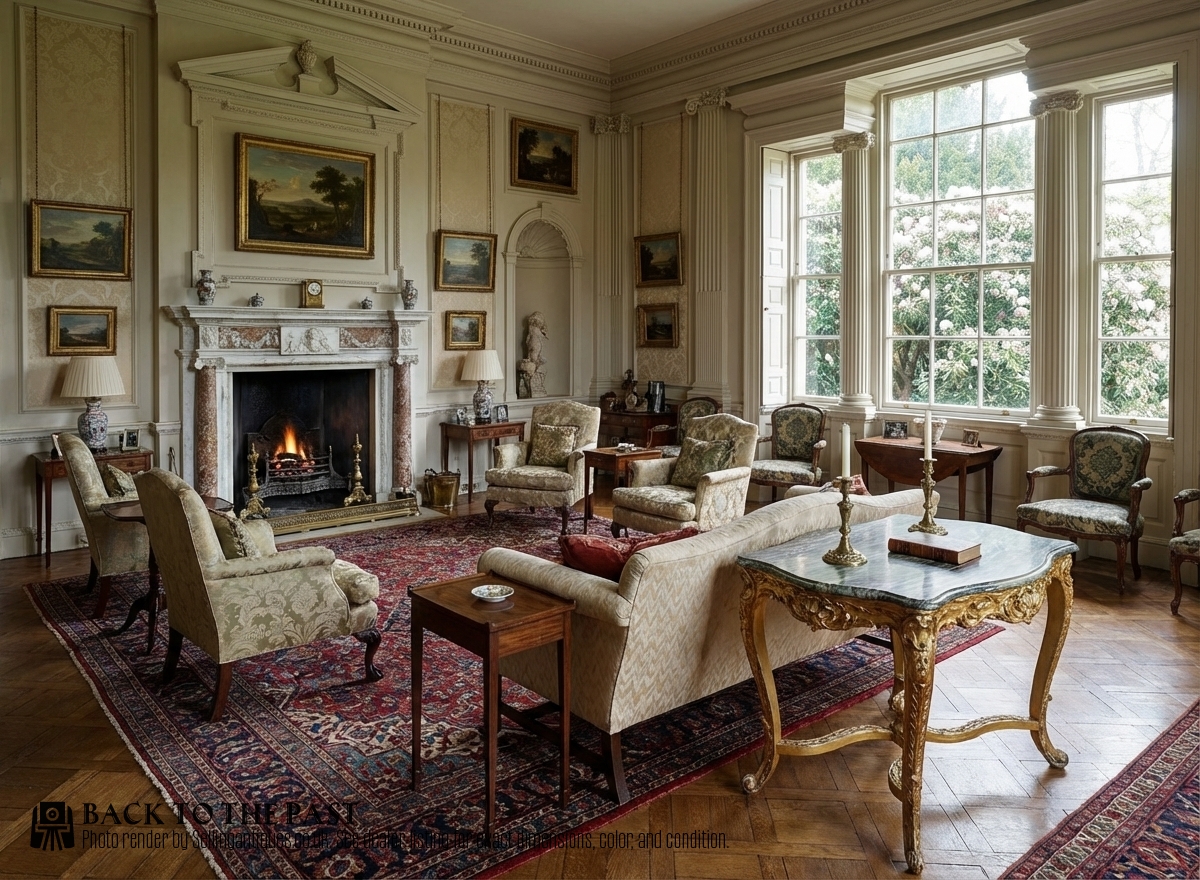
French Marble Side Table
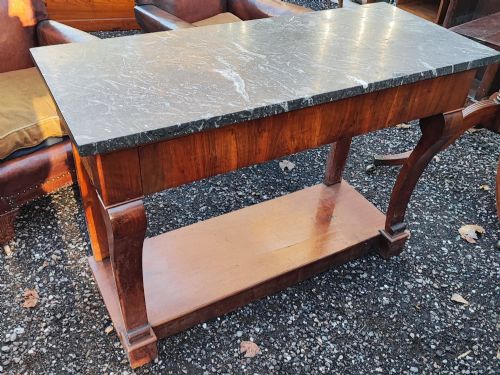
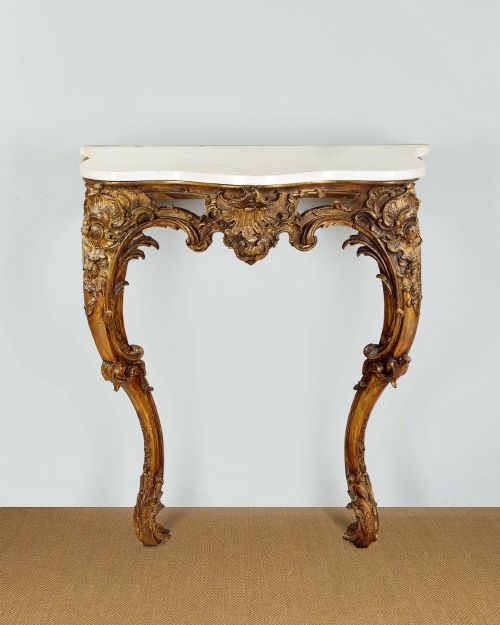
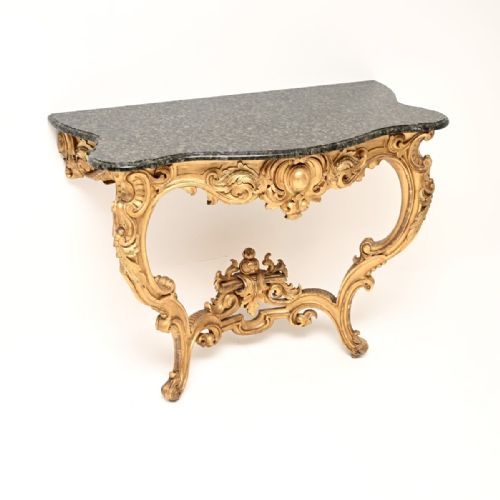
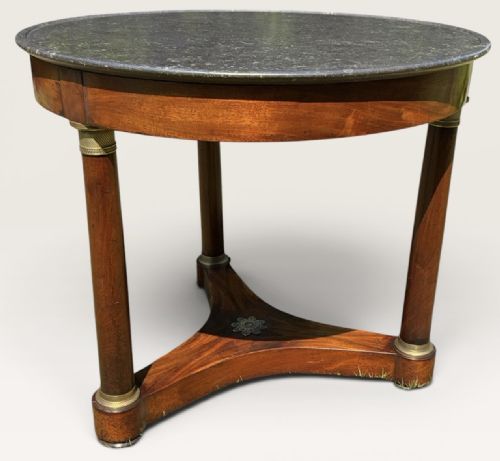
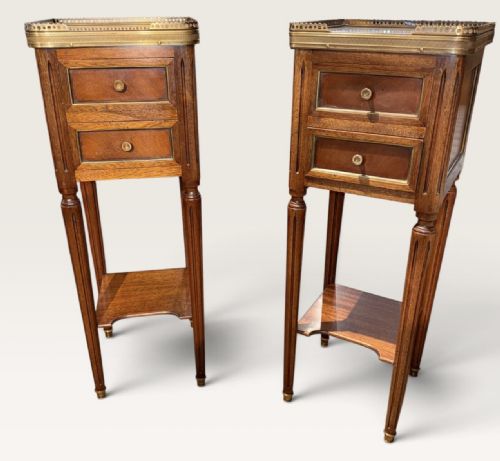
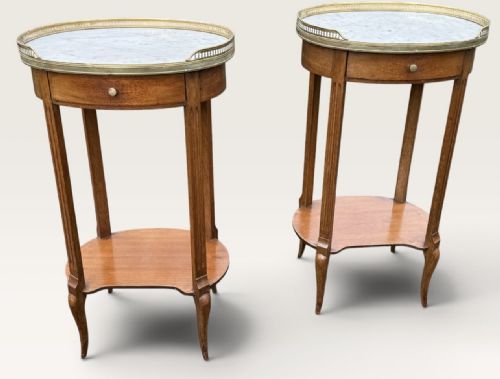
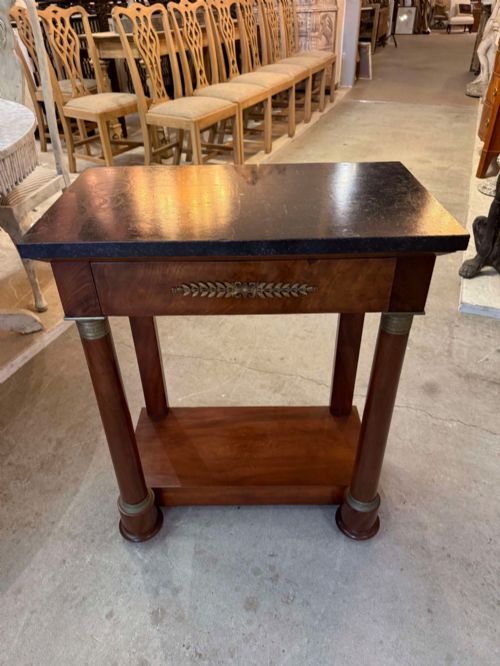
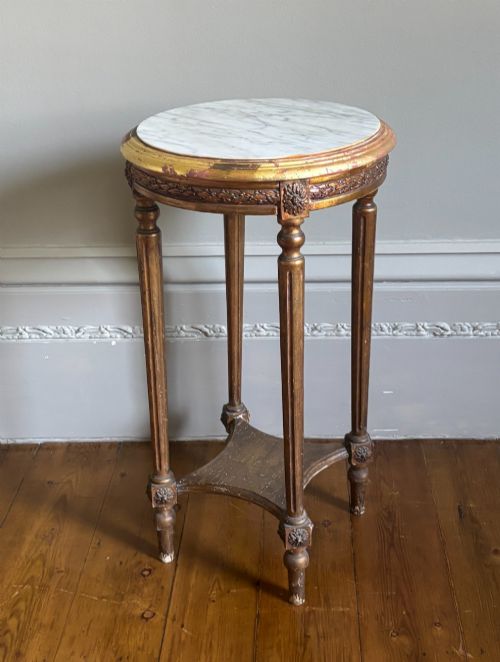
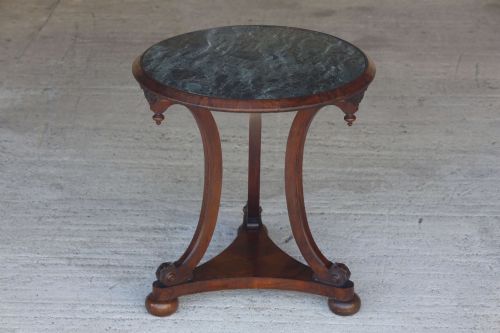
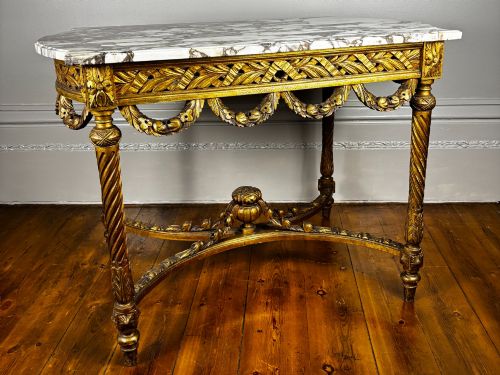
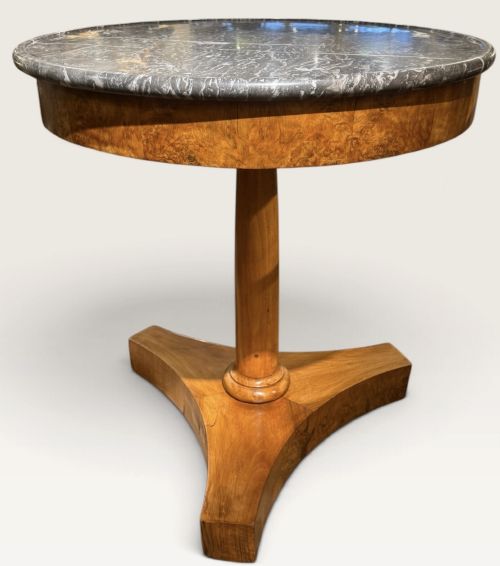
A french marble side table brings together functional surface space and decorative stone, appearing in forms ranging from tall console tables to round gueridons and low bedside cabinets. You will frequently encounter nineteenth-century interpretations of Louis styles, alongside walnut, mahogany, and kingwood pieces designed for salons and bedrooms.
The selection on this page spans slender occasional tables with slender brass galleries to heavy console tables meant to anchor a hallway. Many pieces reflect revival periods from the eighteen-eighties and nineteen-twenties, incorporating marquetry, giltwood, and wrought iron into domestic interiors.
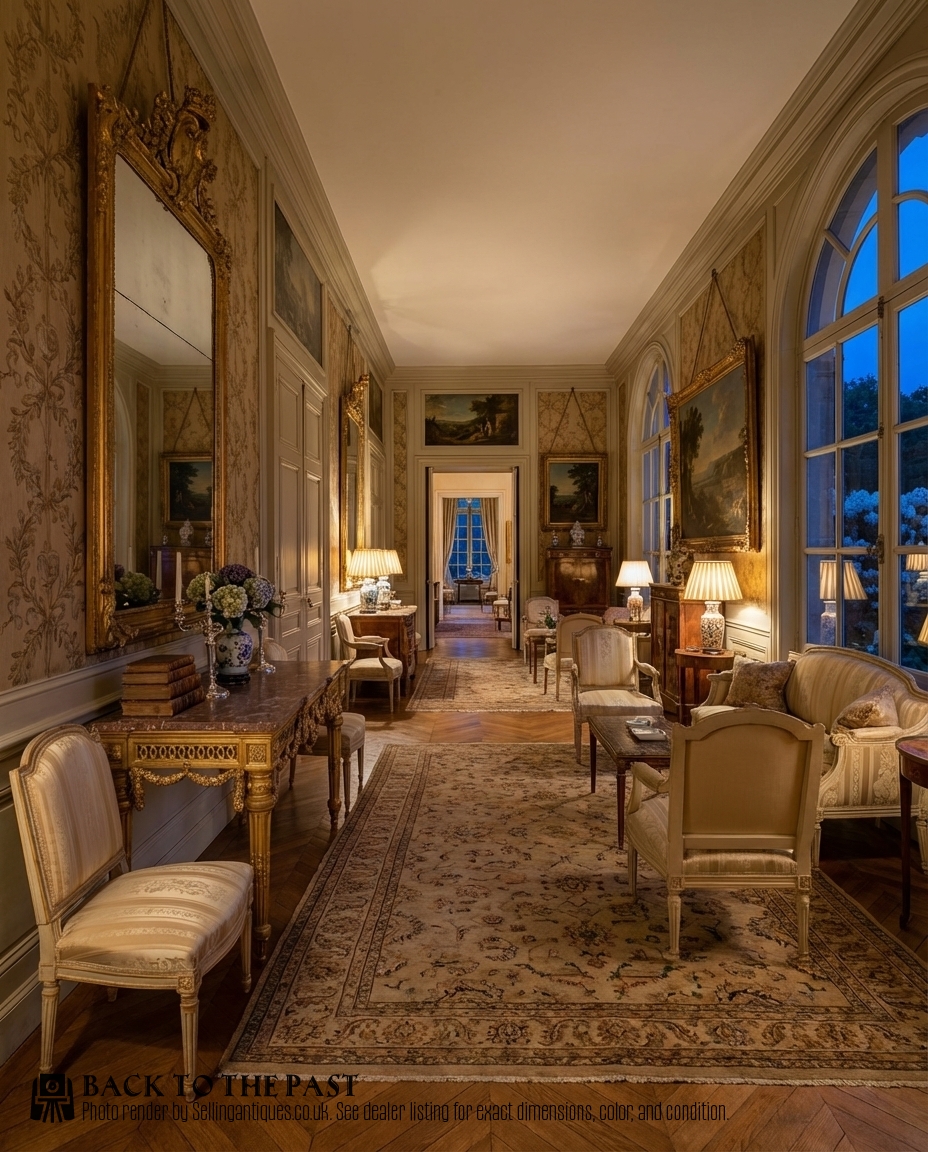
Materials and construction
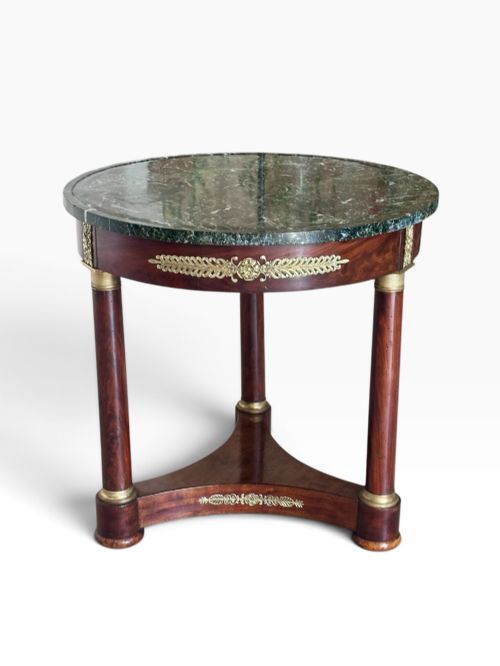
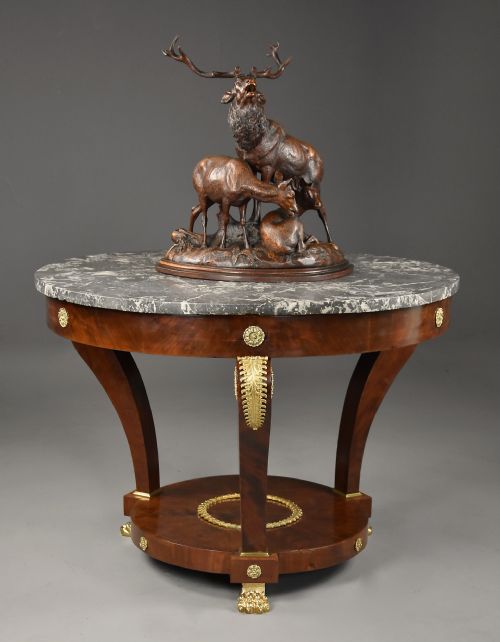
Cabinet-makers built the frames of these tables using dense hardwoods such as mahogany, walnut, and kingwood, often applying intricate marquetry or parquetry veneers to the surfaces. Ormolu and gilded brass mounts were cast and chased to edge tabletops and adorn aprons, securing the stone tops within wooden frames.
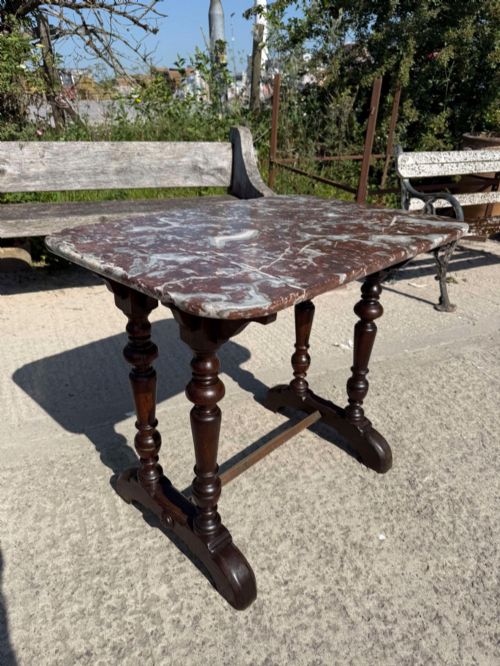
The stone itself - ranging from white varieties to figured breche d'alep and dark grey marble - was cut, shaped to fit serpentine or kidney contours, and polished by hand. Wrought iron also appears in regional and rustic pieces, forged into sturdy bases that support heavy stone slabs without auxiliary wooden casing.
French Marble Side Table Retail Price Guide 2026
Typical asking prices for french marble side table among the pieces listed under this phrase on Sellingantiques today, from the lower quarter to the upper quarter. They describe what is for sale here now, not the wider market.
Materials span plain oak and wrought iron to giltwood, ormolu, and various coloured marbles.
Indicators of quality
Quality rests in the precision of the cabinet work, the thickness and veining of the marble, and the crispness of the bronze or ormolu mounts. Finer pieces show tight joinery in the drawer linings, careful matching of wood veneers, and stones that fit their rebates snugly without excess filler.
The sophistication of the carving and the weight of the hardware distinguish ordinary production from the output of established workshops. Look at the underside of the top and the stability of the frame to understand how the maker balanced heavy stone against delicate timber supports.
Maison Millet·François Linke·Krieger Paris
The French Marble Side Table Glossary
- Gueridon
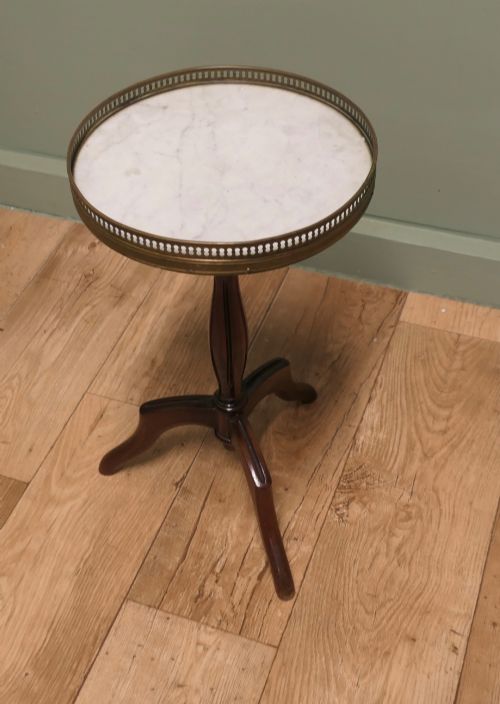
- A small round freestanding table, typically supported by a single central pillar or three legs. These tables often feature inset marble tops and originated for holding light or display objects.
- Console table
- A table designed to stand flat against a wall, frequently secured with brackets or resting on front legs. They often carry heavy marble slabs and elaborate carvings on the apron.
- Ormolu
- Gilded bronze used for decorative mounts on furniture. It provides a bright metallic contrast to dark woods like mahogany and kingwood.
- Breche d'alep
- A specific multi-coloured figured marble showing brecciated fragments in warm tones. It frequently surfaces on eighteenth-century and nineteenth-century console tables.
- Parquetry
- Geometric wood inlay patterns forming designs on table tops and cabinet doors. Makers utilised contrasting timbers like walnut and satinwood to create these optical patterns.
French Marble Side Table: Frequently Asked Questions
What is a gueridon table?
A gueridon is a circular table with a central column or tripod base, designed to hold lamps or decorative objects.
These pieces were made in various sizes for drawing rooms and boudoirs across the nineteenth century.
How do I care for marble tops?
Marble requires gentle cleaning with warm water and a soft cloth to avoid scratching the polished surface.
Acids from fruit or wine can etch the stone, so using coasters helps preserve the finish of older tops.
Were these tables used as bedside cabinets?
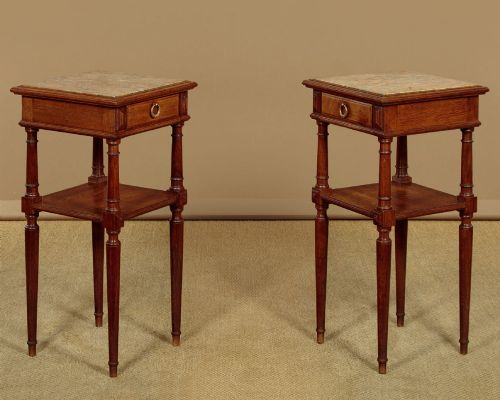
Many smaller forms served as bedside chests, enclosing storage space beneath a protective stone surface.
These pieces allowed users to place water jugs or candles on a washable stone slab next to the bed.
How do I distinguish revival styles?
Revival pieces draw on earlier Louis periods, showing specific decorative motifs like cabriole legs, acanthus carving, and ormolu mounts.
Nineteenth-century makers often reinterpreted eighteenth-century lines using modern machine tools alongside traditional hand-finishing.