



French Boudoir Table
A French boudoir table is a small, ornate piece designed for private chambers, offering a blend of intimate utility and decorative elegance.
French Boudoir Table
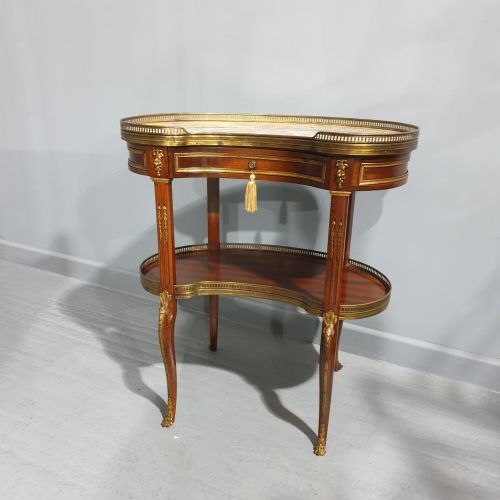
A French boudoir table represents the smaller, decorative surface furniture produced in France across the nineteenth and early twentieth centuries. These pieces were intended for private sitting rooms and bedrooms, fulfilling roles as side tables, occasional tables, or kidney-shaped surfaces.
The versions most commonly met on this page span from the mid nineteenth century through the Art Deco era, encompassing revivalist aesthetics and streamlined later forms. Alongside traditional wooden tables, the selection frequently incorporates related boudoir furnishings like small desks, cabinets, and clock sets.
Makers and designers from Paris and the broader French provinces utilised various decorative arts to elevate these domestic objects. Buyers encounter everything from simple painted stools and marble tops to intricate marquetry inlays in mahogany and rosewood.
Materials and Construction
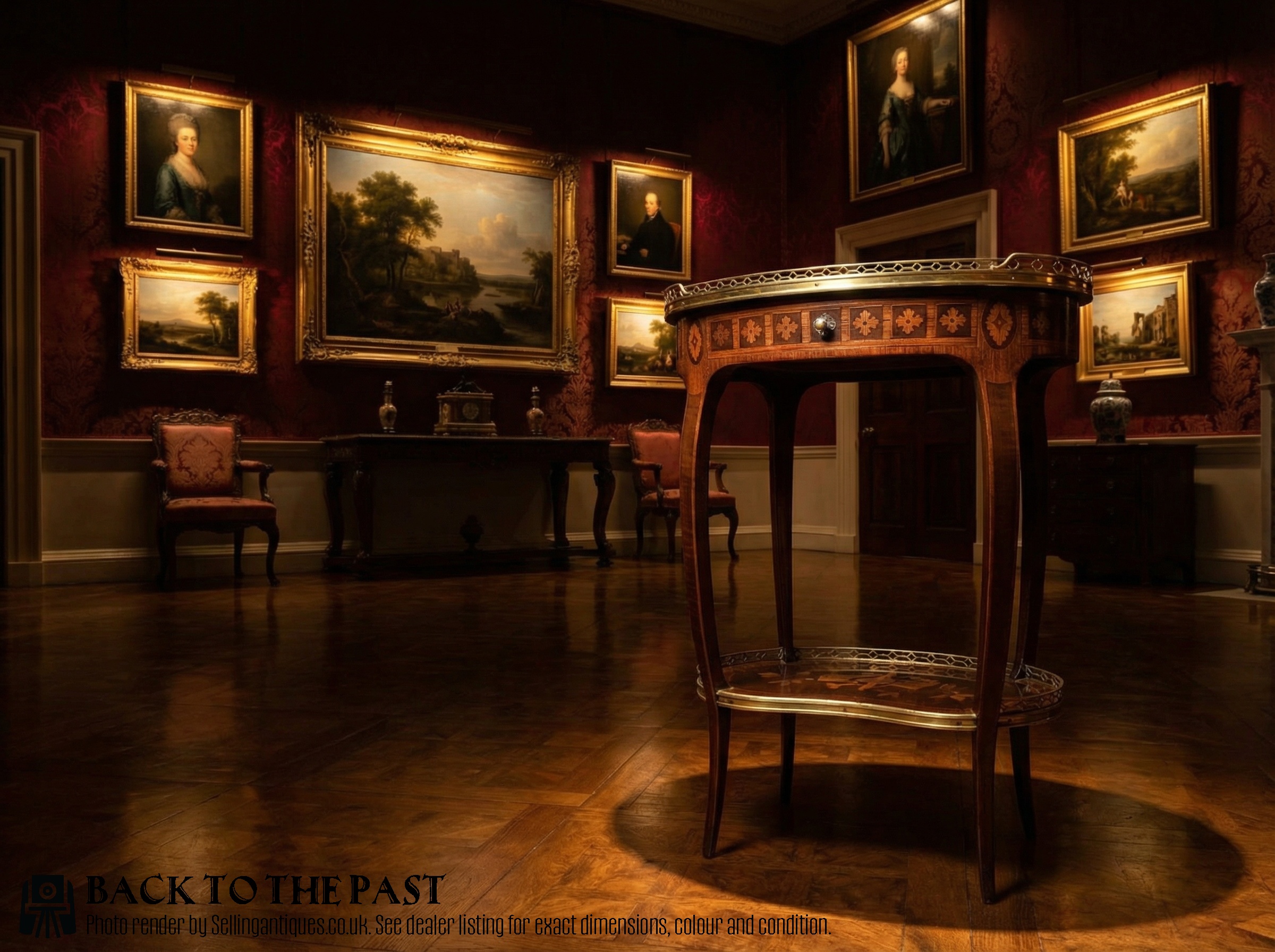
Constructed primarily using hardwoods such as mahogany and rosewood, these tables often feature complex marquetry inlay or delicate painted finishes. Artisans selected timber for its grain and colour, framing surfaces with shaped mouldings and tailored veneers.
Metalwork plays a central role, with cast or chased ormolu, gilt bronze, brass, and nickel applied for mounts and decorative accents. These metallic elements were meticulously secured to wooden frames, combining structural support with ornamental detail.
French Boudoir Table Retail Price Guide 2026
Typical asking prices for french boudoir table among the pieces listed under this phrase on Sellingantiques today, from the lower quarter to the upper quarter. They describe what is for sale here now, not the wider market.
The listings combine nineteenth-century ormolu and marble with early twentieth-century Art Deco lighting and miniature furniture.
Evaluating Quality
Quality reveals itself in the crispness of the cast metal mounts and the precision of the timber joinery. Finer examples display hand-chased detail in their ormolu and seamless matching in their marquetry veneers.
The integrity of the structural frame and the weight of the materials used distinguish superior pieces from standard production work. Substantial marble tops and well-balanced forms indicate skilled workshop output.
Georges Leleu·Muller Bros·Degue·Haentgos Freres·A. D. Mougin·Japy Freres·Samuel Marti
The French Boudoir Table Glossary
- Ormolu
- Gilded bronze used widely for decorative mounts on furniture and clocks. It was mercury-gilded to achieve a durable, warm metallic lustre.
- Marquetry
- The art of applying small pieces of veneer to a structure to form decorative patterns. Craftsmen utilised various exotic woods to create pictorial designs.
- Rococo Revival
- A nineteenth-century style that imitated the curving, asymmetrical motifs of the eighteenth century. It favoured naturalistic scrolls and shell shapes.
- Kingwood
- A dense, heavy timber with dark violet and golden-brown stripes. Cabinet makers valued it for high-status French veneer work.
French Boudoir Table: Frequently Asked Questions
What is a french boudoir table used for?
These small surfaces served private spaces for holding personal items, writing implements, or decorative clocks. They were scaled specifically for domestic rooms rather than grand reception halls.
Over time, their roles shifted as fashion changed, though their decorative appeal remained constant throughout the nineteenth and early twentieth centuries.
How do I identify a louis xv style table?
Louis XV style pieces are characterised by sweeping cabriole legs and asymmetrical scrollwork. The lines curve gently without straight angles.
Revival pieces from the nineteenth century adopted these motifs enthusiastically, combining historical forms with contemporary manufacturing techniques.
What materials are typical for these tables?
Makers relied on hardwoods like mahogany and rosewood, often enhanced with exotic veneers. Ormolu mounts and marble tops added weight and colour.
Some examples integrate porcelain plaques or brass framing to heighten the decorative effect.
Are art deco pieces included here?
Yes, later twentieth-century pieces incorporate Art Deco design alongside earlier nineteenth-century items. These present cleaner geometric lines and different metallic finishes.
Nickel and wrought iron frequently replace traditional gilt bronze in these twentieth-century interpretations.