



Marquetry Undertier Table
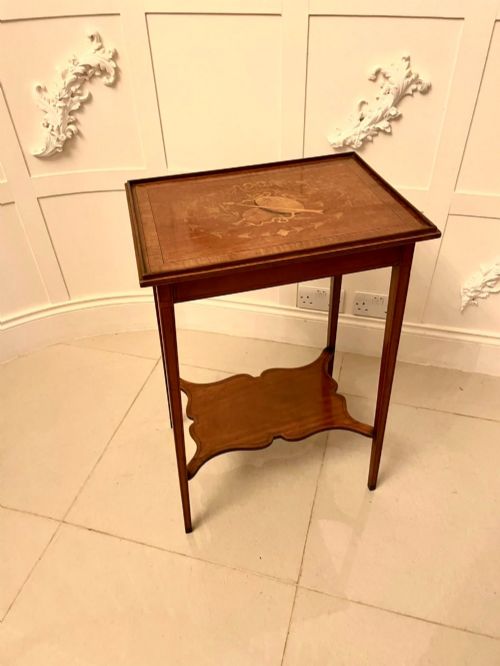
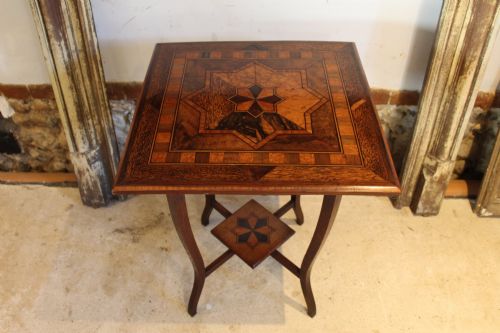
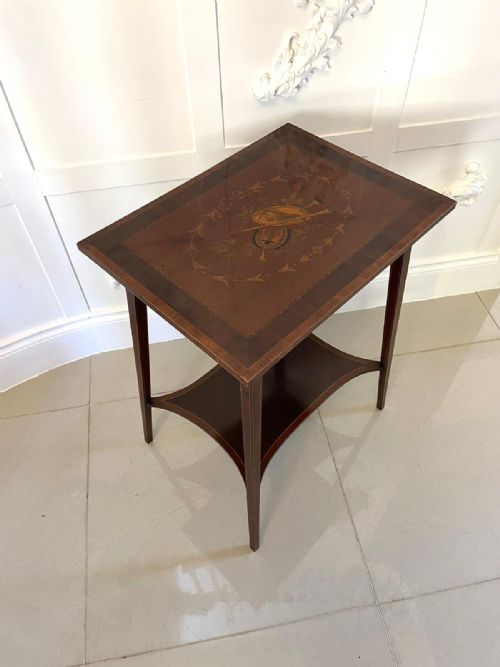
These marquetry undertier table pieces combine rich wood veneers with a lower shelf, offering both display space and decorative presence.
Marquetry Undertier Table
A marquetry undertier table is a small occasional, lamp, or side table featuring a distinctive lower shelf placed between the legs. The selection spans Victorian and Edwardian periods, stretching from eighteen seventy into the nineteen thirties.
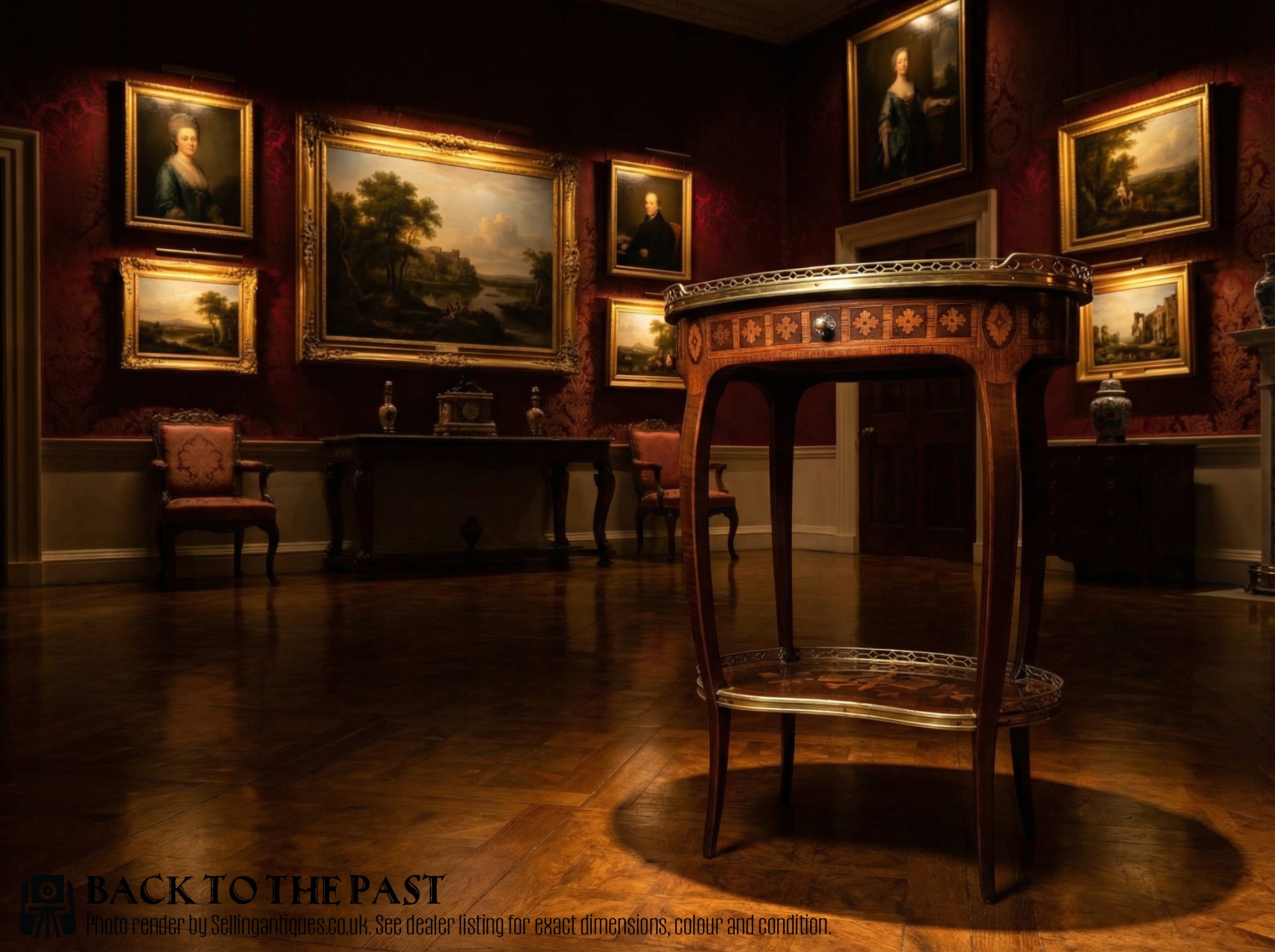
Forms include oval, rectangular, and kidney-shaped occasional tables, alongside larger centre and console pieces. Most examples belong to the Edwardian and Victorian eras, often adopting Sheraton Revival, Rococo Revival, or Louis XVI Revival styles.
Materials and construction methods
Cabinetmakers utilised rich timber grounds including mahogany, rosewood, and satinwood, frequently enhanced by intricate marquetry and boxwood stringing. Brass mounts and painted decorations appear on select pieces.
Veneers are laid carefully over solid secondary woods, creating elaborate floral and geometric patterns across the top surface and the lower undertier shelf.
Marquetry Undertier Table Retail Price Guide 2026
Typical asking prices for marquetry undertier table among the pieces listed under this phrase on Sellingantiques today, from the lower quarter to the upper quarter. They describe what is for sale here now, not the wider market.
Listings feature pieces spanning from eighteen seventy to nineteen thirty, with Edwardian and Victorian periods dominating the selection.
Judging the quality of marquetry
Quality rests in the precision of the marquetry cutting and the choice of cabinet woods. Finer examples display crisp botanical or geometric inlay using contrasting timbers like satinwood and boxwood.
Structural refinement also separates standard tables from superior pieces, seen in shaped or kidney tops, substantial turned or tapering supports, and the careful integration of the undertier shelf.
Howard & Son's·Haentgos Freres Paris
The Marquetry Undertier Table Glossary
- Undertier
- A lower shelf fitted between the legs of a table, used for storage or display. It adds structural stability and extra surface area.
- Marquetry
- Decorative veneer work forming pictures or patterns by assembling small pieces of wood. Cabinetmakers cut contrasting timbers to create elaborate floral or geometric designs.
- Satinwood
- A durable, lustrous yellow-brown tropical timber prized for its golden sheen. It frequently serves as a primary ground or inlay material in revival furniture.
- Occasional table
- A small, movable table designed for a specific, light purpose within a room. These pieces function easily beside chairs or as lamp stands.
Marquetry Undertier Table: Frequently Asked Questions
What is an undertier table used for?
These tables function as versatile occasional pieces placed beside seating or used as lamp stands. The lower shelf provides extra space for small items or decorative objects.
Their compact size allows them to fit into various corners of a room while adding a polished decorative touch through their veneered surfaces.
How do I date a marquetry table?
Dating relies on observing the prevailing style, timber choices, and construction techniques evident in the piece. Victorian and Edwardian examples often show specific revival characteristics.
Examining the secondary woods and the style of the marquetry inlay helps narrow down the decade of production between eighteen seventy and nineteen thirty.
Are these tables sturdy enough for daily use?
Most pieces are built from solid timbers with secured joints and stable undertier shelves designed for light domestic use. They handle lamps and small decorative objects comfortably.
Care should be taken to protect polished veneer surfaces from excessive moisture and direct heat to preserve the fine woodwork.
What styles are common in these tables?
The selection includes prominent Sheraton Revival, Rococo Revival, and Louis XVI Revival designs. These styles draw inspiration from earlier historical periods.
Art Nouveau and Charles X influences also appear occasionally, reflecting the diverse decorative tastes of the nineteenth and early twentieth centuries.