


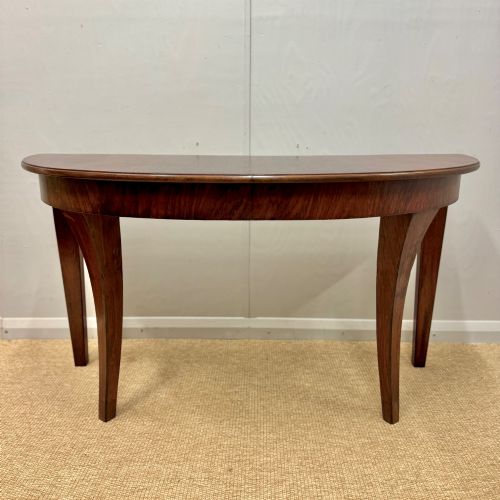
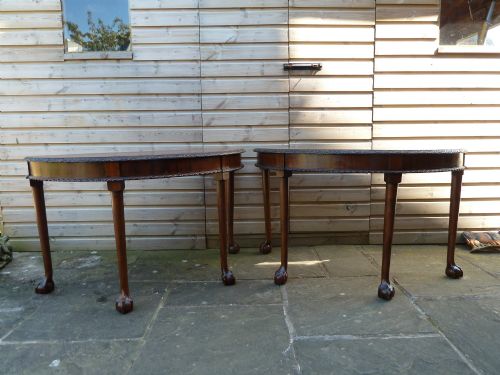
Antique Demilune Pier Table
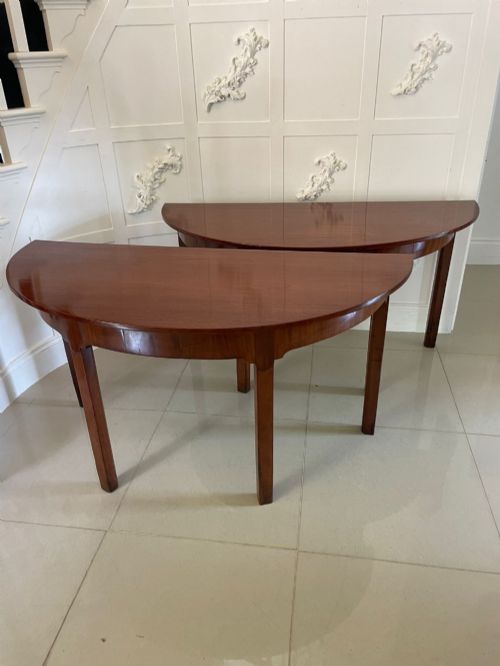
An antique demilune pier table brings a distinct half-moon silhouette to a hallway or drawing room, offering flat-wall placement with sweeping curves.
Antique Demilune Pier Table
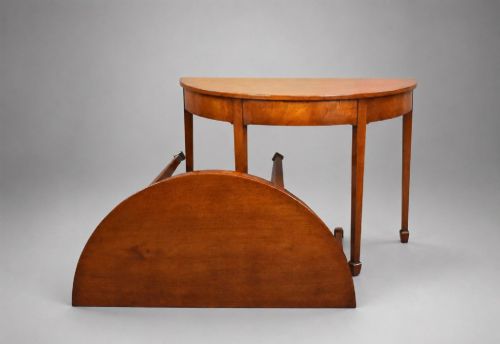
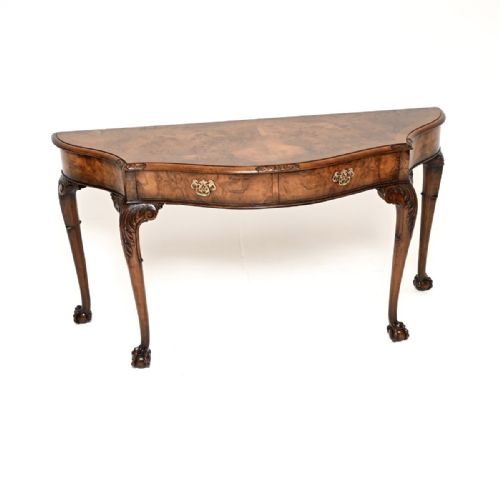
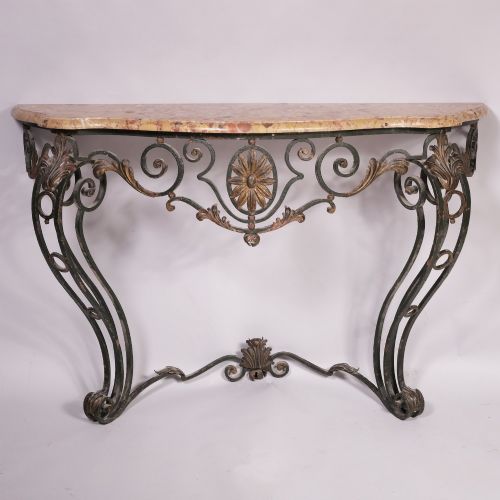
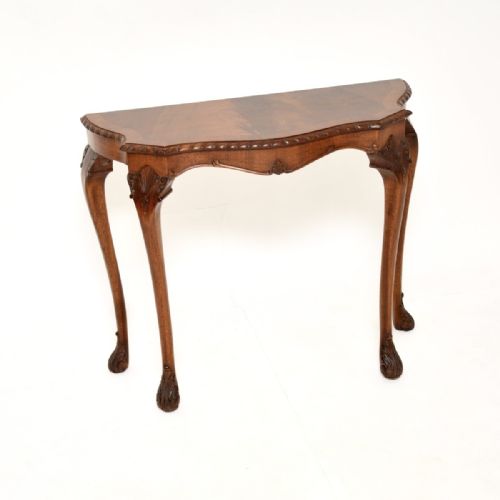
An antique demilune pier table appears across periods spanning the eighteenth through the twentieth centuries, taking the shape of a half-circle designed to stand flush against a wall. The listings here comprise console tables, side tables, and pier tables executed in forms from George III and Regency to Victorian and Edwardian iterations.
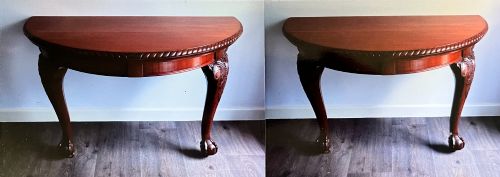
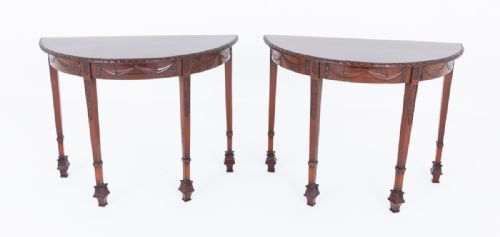
Makers fashioned these pieces in pairs or as single items, utilising mahogany, walnut, satinwood, and painted finishes. The selection includes French, Italian, and English origins, often featuring marble tops or inlaid timber surfaces suited to formal reception rooms.
Materials and construction
Cabinetmakers constructed these tables using solid timbers and veneers such as figured mahogany, burr walnut, and satinwood, frequently employing crossbanding and inlay to define the curved edges. Structural support relied on sturdy framing joined to straight or tapering legs, whilst heavier stone additions required robust underframing.
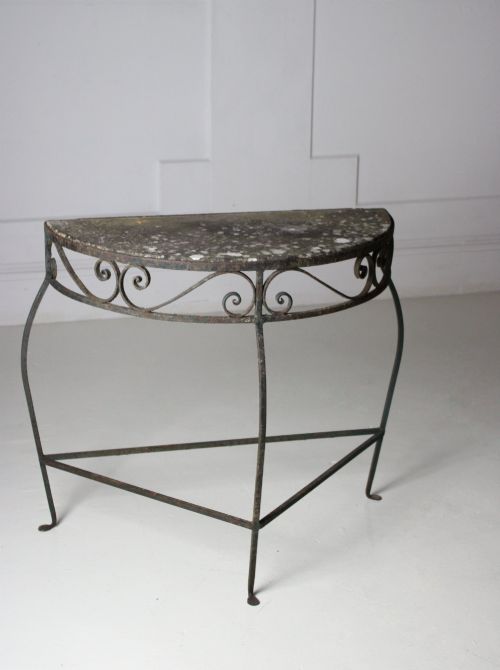
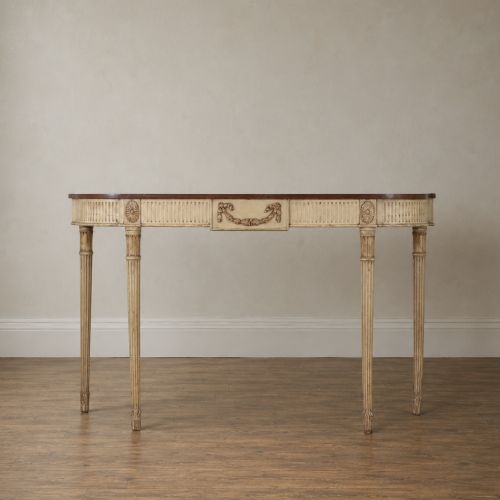
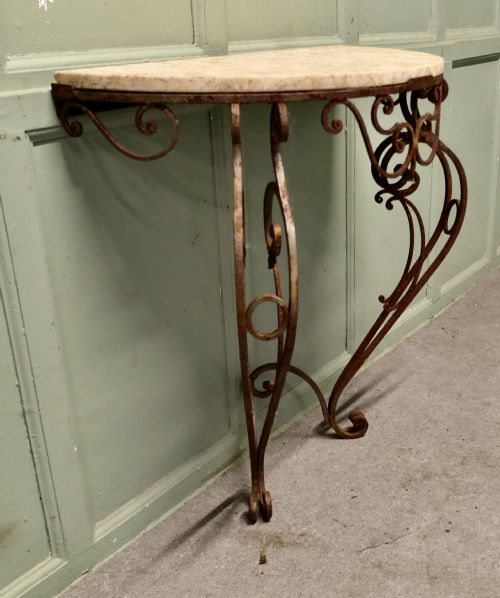
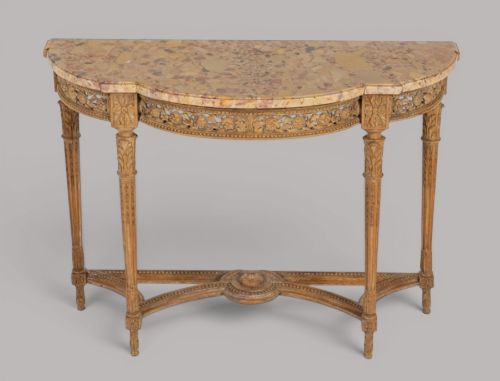
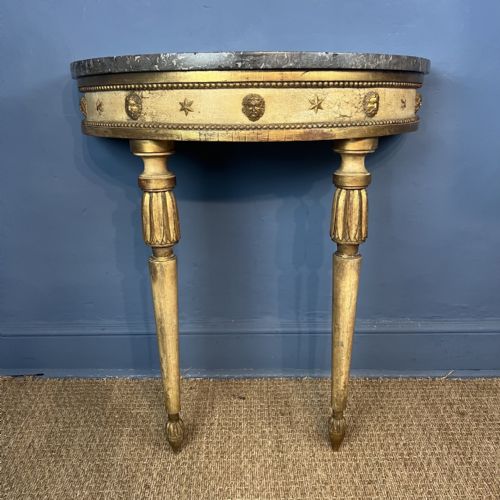
Surface decoration incorporated giltwood, gesso, and hand-painted motifs, particularly on pieces originating from French and Italian workshops. Wrought iron and marble appear in alternative regional variants designed for rustic or hallway settings.
Antique Demilune Pier Table Retail Price Guide 2026
Typical asking prices for demilune pier table among the pieces listed under this phrase on Sellingantiques today, from the lower quarter to the upper quarter. They describe what is for sale here now, not the wider market.
Listings feature eighteenth-century pieces alongside nineteenth-century Victorian and Edwardian examples, constructed from mahogany, walnut, satinwood, and wrought iron.
Assessing craftsmanship
The standard of timber selection dictates the visual appeal of each piece, with figured grains and intricate crossbanding marking superior cabinet work. Finishes range from simple painted surfaces to elaborate parcel gilt carving and dolphin-form supports.
Integration of the marble top with the wooden frieze demonstrates the precision of the maker, alongside the crispness of inlaid stringing and the stability of the half-moon frame.
The Antique Demilune Pier Table Glossary
- Demilune
- Shaped like a half-moon or semicircle. This profile allows the furniture to sit flat against a wall while projecting outward into the room.
- Pier table
- A table designed to stand against the wall between two windows, often placed beneath a mirror. These pieces frequently feature decorative marble tops and gilt frames.
- Crossbanding
- A strip of veneer laid around the border of a tabletop with the grain running perpendicular to the centre. This technique creates a distinct framing effect on mahogany and satinwood surfaces.
- Giltwood
- Timber coated with gold leaf or gold paint. It appears frequently on neoclassical and continental console tables from the eighteenth and nineteenth centuries.
Antique Demilune Pier Table: Frequently Asked Questions
Where do you put a demilune table?
A half-moon table fits neatly against a flat wall in a narrow hallway, entrance passage, or drawing room where depth is restricted. Because the back sits flush, it occupies minimal floor space whilst providing a surface for lamps or decorative objects.
In period interiors, these tables frequently stood beneath a tall mirror or between windows, forming a balanced focal point in reception spaces.
How do I identify a George III console table?
George III pieces typically date from the second half of the eighteenth century into the early nineteenth century. They often feature solid mahogany or satinwood timbers, sometimes enhanced with delicate stringing and crossbanding.
Look for classical proportions, straight or slightly tapered legs, and refined cabinetwork typical of English workshops from that era.
Are these tables sturdy enough for daily use?
Most antique demilune tables are built from dense hardwoods such as mahogany and walnut, providing a stable frame for everyday placement. Versions featuring heavy marble slabs rely on solid underframing to support the weight.
Placing them against a wall ensures stability, as the straight back edge prevents tipping during normal household activity.
What is the difference between a console and a pier table?
While both terms describe tables intended to stand against a wall, a console table traditionally relies on wall brackets or legs for support. A pier table specifically occupied the wall space between architectural openings or windows.
Over time, makers and dealers used these terms interchangeably for half-moon and side furniture.