
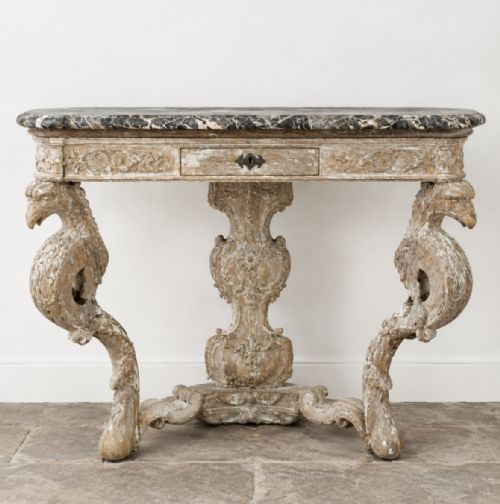
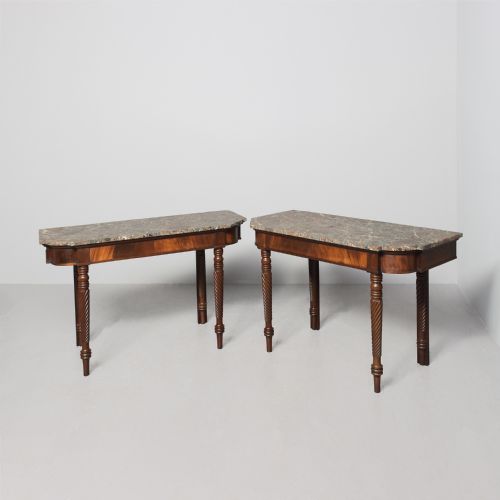
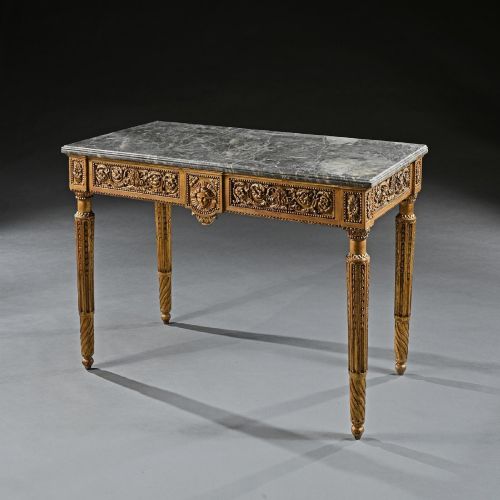
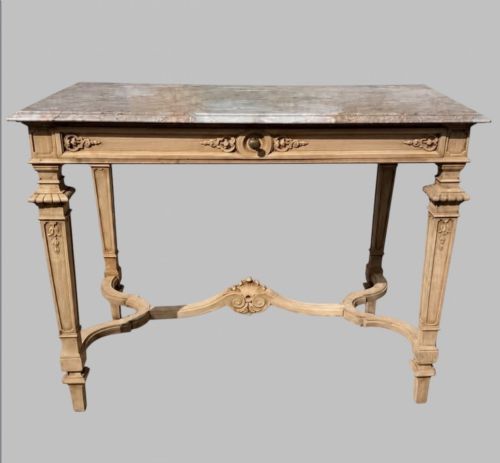
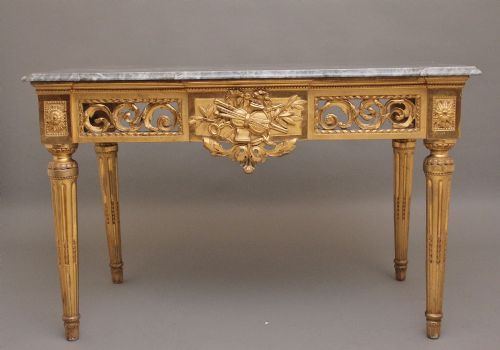
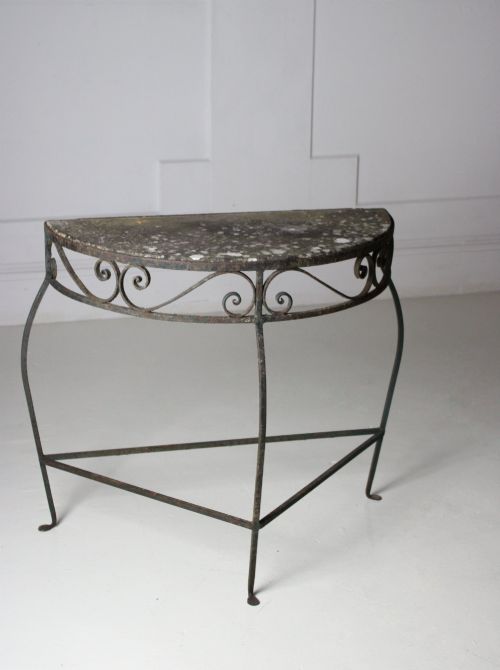
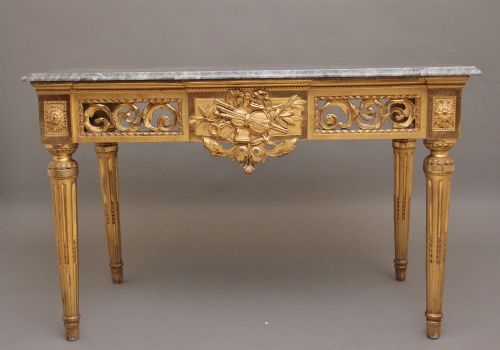
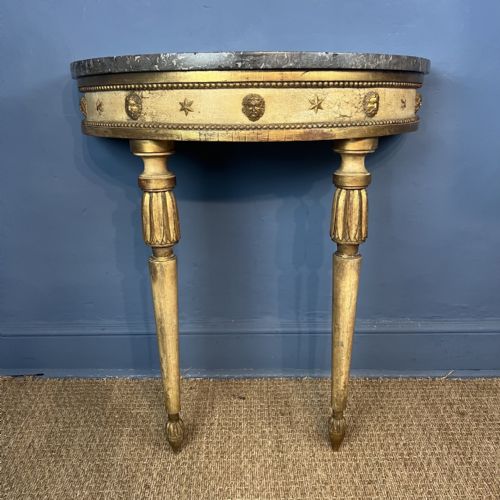
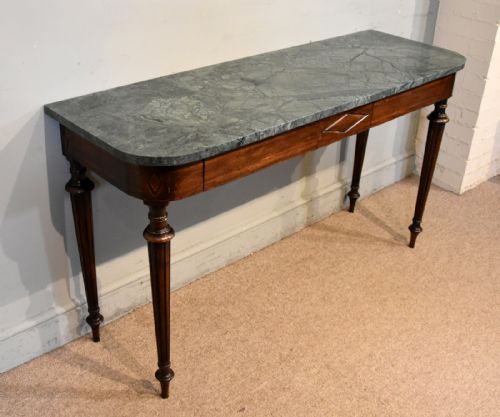
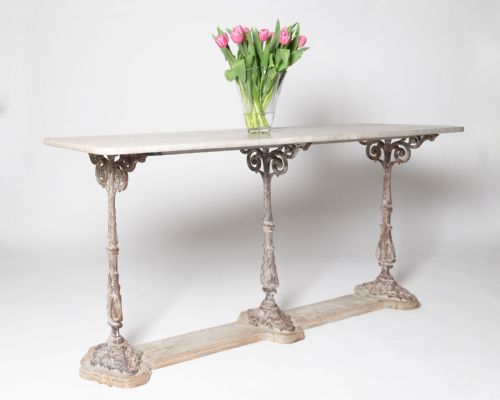


Grey Marble Console Table
These grey marble console tables combine heavy stone tops with iron or timber frames, offering a solid surface for hallways and living spaces.
Identifying grey marble console tables
A grey marble console table is a narrow support piece designed to sit against a wall, frequently topped with durable stone and raised on sturdy metal or wooden frames. The selection includes examples from the nineteenth century and the Edwardian era, showing both British and continental origins.
The forms vary from simple iron frameworks to timber structures influenced by distinct regional styles. Pieces frequently incorporate painted wood, wrought iron, or cast iron alongside the characteristic grey marble top.
Earlier archive examples demonstrate sophisticated timbers such as walnut, larchwood, and faux rosewood finishes. Buyers searching for a grey marble console table will encounter both lightweight metal supports and heavier wooden bases.
Materials and construction
The construction relies on combining cold, heavy stone with supporting bases fashioned from wrought iron, cast iron, or various woods. Artisans shaped the marble slabs to fit slender proportions suitable for placement in narrow rooms and corridors.
Wooden frames utilise traditional joinery, whilst metal variants employ forged or cast components to bear the substantial weight of the stone. Finishes range from natural timber grains and painted surfaces to faux rosewood treatments.
Retail Price Guide 2026
Typical UK retail prices for grey marble console table, calculated from the Sellingantiques database of over a million retail prices indexed since 2003. This retail price guide relies exclusively on Sellingantiques data; no external sources or auction records are used, so the figures do not describe the wider market.
Listings span the nineteenth century and the Edwardian era, featuring marble tops paired with wrought iron, cast iron, and painted wood.
Assessing quality and character
Quality reveals itself in the harmony between the stone top and its supporting base, where finer examples display precise fitting and well-proportioned framing. The depth of the grey marble figure and the integrity of the ironwork or timber determine the distinction between basic utility pieces and more ambitious decorative furniture.
Superior execution is visible in the choice of base materials, ranging from standard painted pine and basic iron to figured walnut or larchwood with specific regional characteristics. The treatment of the wooden surfaces and the complexity of the iron forging set the standard for each piece.
The Grey Marble Console Table Glossary
- Console table
- A side table designed to stand flat against a wall, frequently secured with brackets or balanced on slender legs.
- Wrought iron
- Iron beaten into shape while hot by a blacksmith, creating strong and flexible structural frames for furniture.
- Cast iron
- Molten iron poured into a mould to form rigid decorative or structural bases.
- Larchwood
- A durable softwood with a distinct grain pattern, utilised in regional British furniture making.
- Faux rosewood
- A painted or stained finish applied to common timber to imitate the appearance of expensive exotic hardwood.
Frequently Asked Questions
Where should I place a console table?
These narrow tables suit hallways, entrance passages, and reception rooms where floor space is limited. Their shallow depth allows them to sit against walls without obstructing pathways.
They also function effectively in living rooms beneath mirrors or artwork, providing a firm surface for displaying decorative items.
How do I identify a nineteenth century piece?
Nineteenth century examples typically exhibit heavier timber construction, hand-forged ironwork, or specific regional stylistic markers. Examination of the underside and joints reveals period manufacturing techniques.
Comparing the materials against documented pieces from the same era helps confirm the period of origin.
Are these tables heavy?
The weight depends primarily on the marble top, which adds substantial heft to the overall structure. Iron bases provide additional weight, whereas lighter wooden frames offer easier mobility.
Lifting and positioning usually requires two people to protect both the stone and the supporting frame.
How do I care for a marble top?
Marble requires gentle cleaning with mild soap and water, avoiding acidic substances that can etch the polished surface. Regular dusting keeps the stone clear of abrasive particles.
Using coasters and mats protects the grey marble from moisture rings and scratches during daily use.