
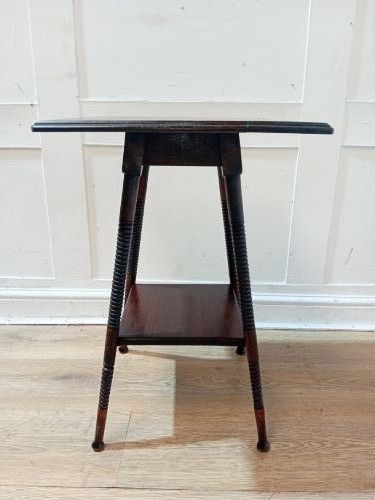
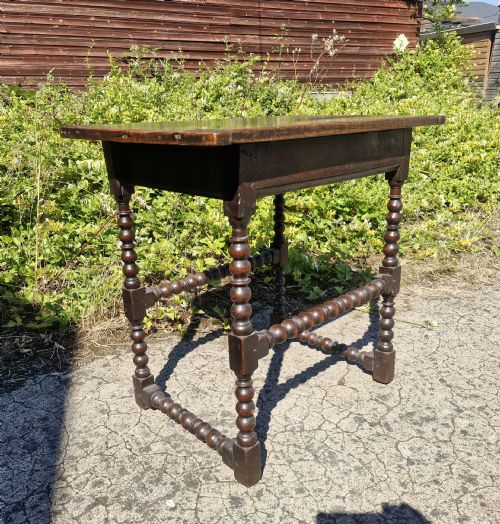
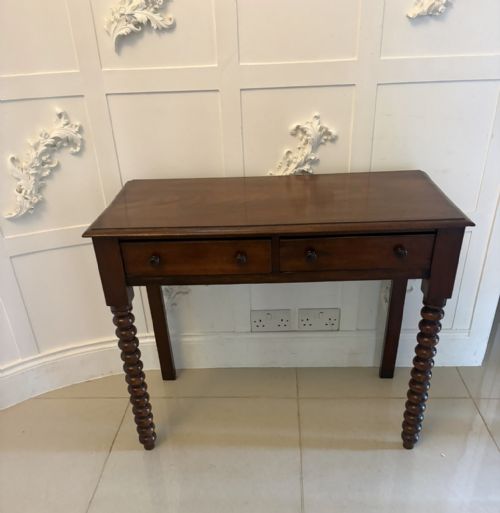
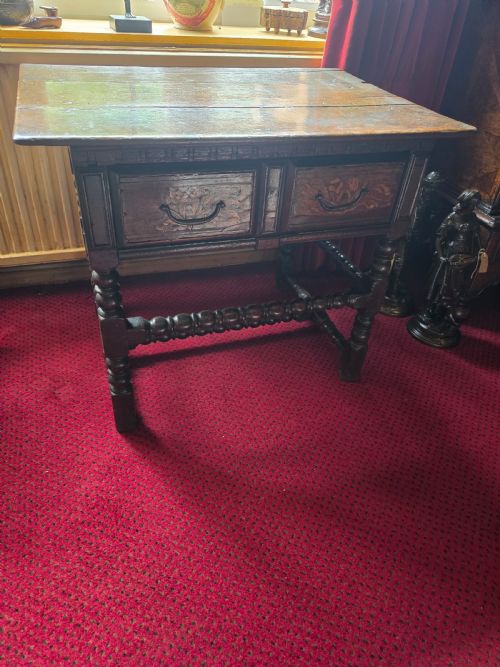
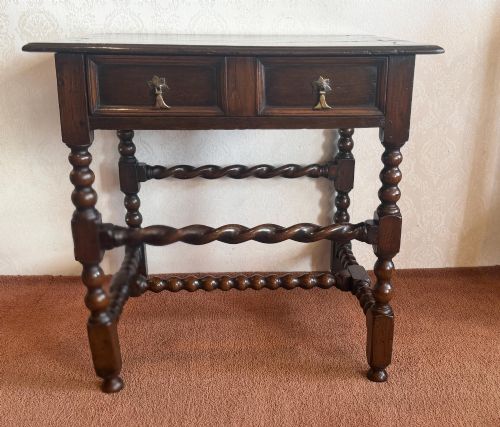
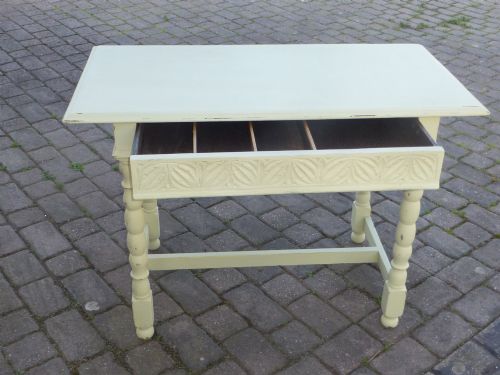


Bobbin Turned Hall Table
A bobbin turned hall table brings distinctive turned woodwork and solid timber character straight into an entranceway.
Understanding Bobbin Turned Hall Table Pieces
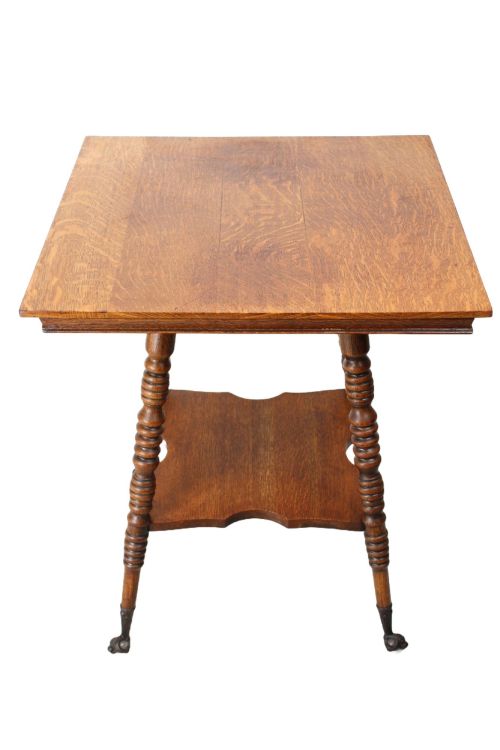
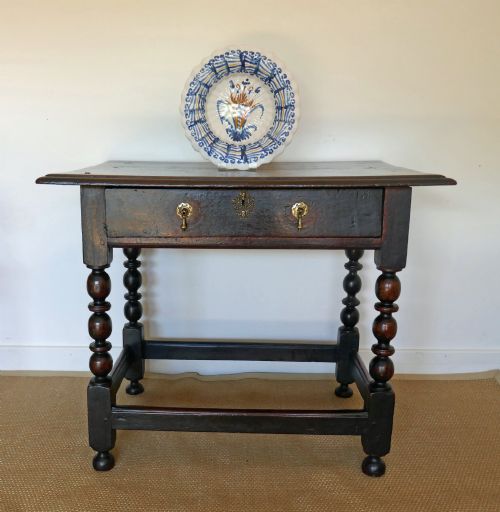
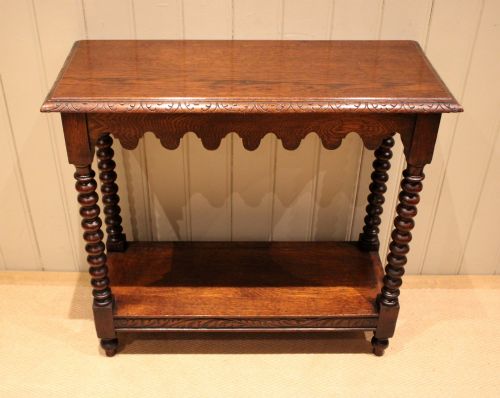
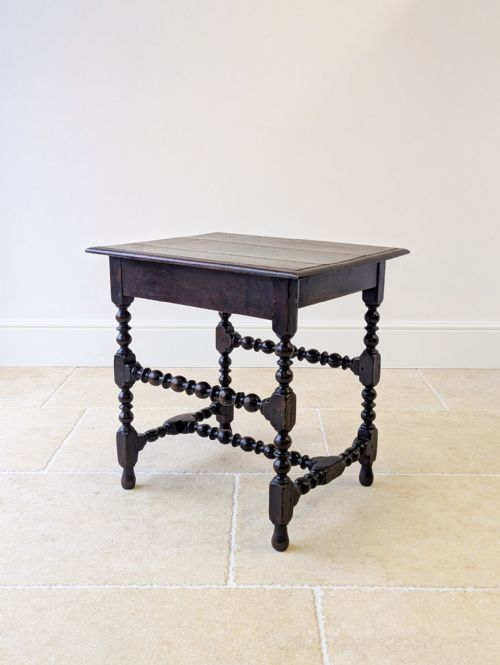
A bobbin turned hall table stands ready to anchor an entryway with sturdy proportions and distinctive silhouette. These pieces appear as console tables, side tables, and hall tables designed for narrow spaces.
The material palette centres firmly on oak alongside yew wood and painted finishes. Most examples seen across the selection date from the Victorian era and the Jacobean Revival style.
Makers and craftsmen of the nineteenth century produced these functional furnishings to handle daily use in domestic hallways. Surviving specimens range from rustic French provincial designs to late Victorian British workshop output.
Construction and Materials
Cabinetmakers utilised solid oak and yew tree timber for structural durability and rich natural grain patterns. Selected examples incorporate painted surfaces alongside exposed wood grain.
Turned legs required careful lathe work to produce the characteristic repeating spool or bobbin shapes seen on the supports. Joinery techniques relied on traditional pegged and jointed construction to ensure stability.
Retail Price Guide 2026
Typical UK retail prices for bobbin turned hall table, calculated from the Sellingantiques database of over a million retail prices indexed since 2003. This retail price guide relies exclusively on Sellingantiques data; no external sources or auction records are used, so the figures do not describe the wider market.
Assessing Quality and Character
Quality reveals itself in the crispness of the turned bobbin work and the selection of dense, figured timber. Superior examples display thoughtful proportions and harmonious integration between the top surface and the turned base.
The treatment of surfaces distinguishes standard utility items from more considered pieces, whether through careful patination on bare oak or deliberate application of historic paint finishes.
The Bobbin Turned Hall Table Glossary
- Bobbin turning
- A form of lathe work producing a series of cylindrical swellings resembling spools of thread. This decorative motif defines the distinctive leg supports found on these tables.
- Console table
- A furnishing designed to stand flat against a wall, frequently utilised in hallways and entrance passages. These items offer a surface for decorative objects while maintaining a shallow footprint.
- Yew wood
- A dense and resilient timber valued for its intricate grain and warm colouring. Cabinetmakers selected this material for high-status furniture production.
- Jacobean Revival
- A design movement that reinterprets seventeenth-century motifs, including heavy turning and dark oak finishes. This style heavily influenced nineteenth-century cabinetmaking.
Frequently Asked Questions
Where should I place a bobbin turned hall table?
These narrow tables suit entrance halls, corridors, and reception spaces where floor area is at a premium. Their shallow depth allows them to sit flush against a wall without obstructing passageways.
They also function effectively as side tables in living rooms or studies, providing a surface for lamps or small decorative items while introducing textural wood detail to the interior.
How do I date an oak hall table?
Dating relies on examining construction methods, timber characteristics, and stylistic markers such as turned leg profiles. Pieces from the eighteenth century often display hand-cut joinery and different timber preparation compared to later Victorian items.
Comparing the secondary woods, fixings, and overall wear patterns helps establish the likely period of manufacture alongside recorded stylistic trends.
What is the difference between a console and a hall table?
Console tables traditionally fix or stand flat against a wall, frequently featuring brackets or legs primarily at the front. Hall tables encompass a broader category of freestanding furniture intended specifically for entrance areas.
In practice, antique dealers and makers often used these terms interchangeably depending on the proportions and intended placement within a home.
How do I care for antique oak furniture?
Maintain antique oak surfaces by dusting with a dry, soft cloth and avoiding silicone-based polishes that build up over time. Applying occasional traditional beeswax preserves the natural moisture and sheen of the timber.
Keep these tables away from direct heat sources and strong sunlight to prevent timber movement and fading of the historic finish.