



Baroque Side Table
A baroque side table brings continental drama to a room, combining rich woods and carved ornament.
Baroque Side Table
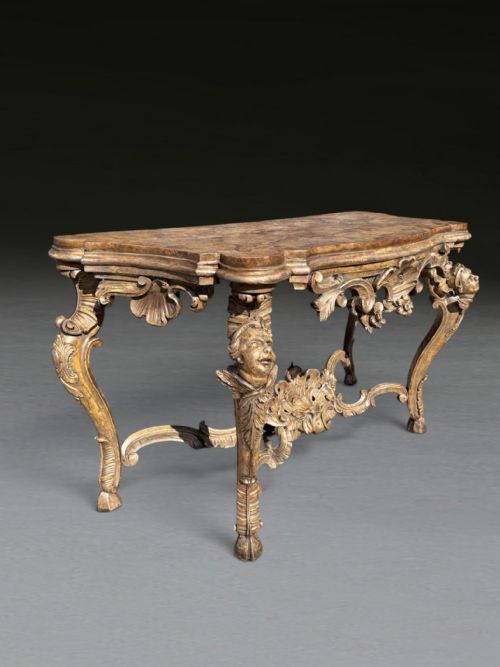
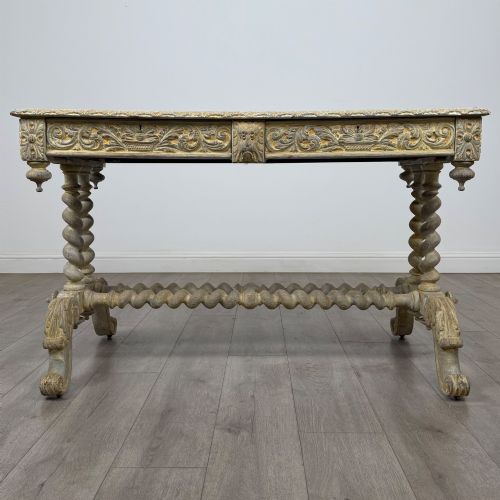
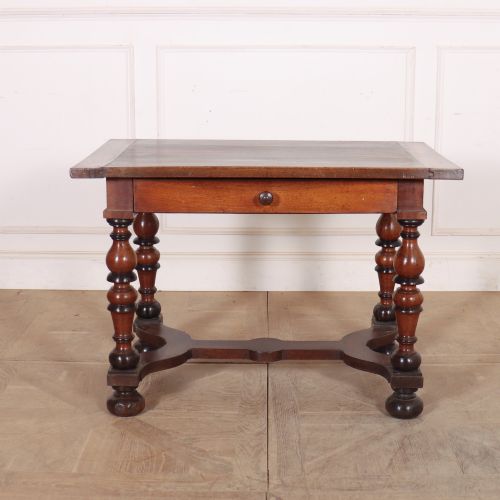
A baroque side table is a statement surface designed for display and architectural impact, appearing frequently in walnut, oak, and giltwood. Buyers searching for a baroque side table typically encounter continental examples spanning the seventeenth and eighteenth centuries, alongside later nineteenth-century revivals.
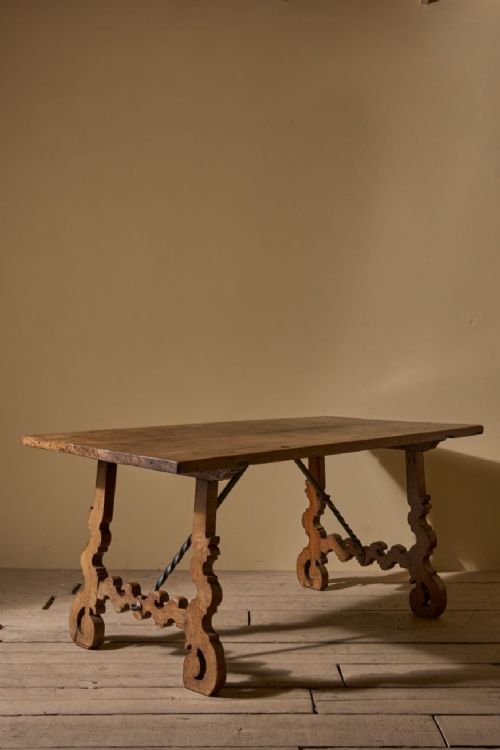
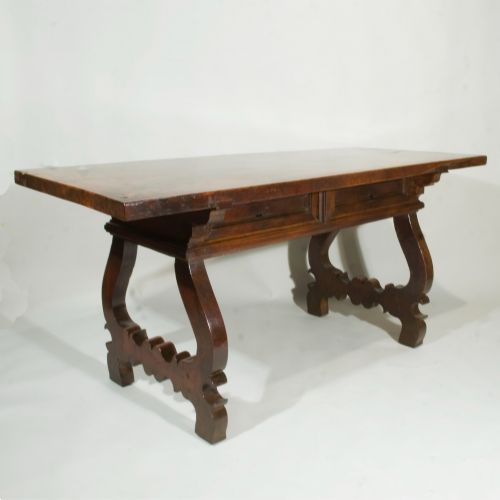
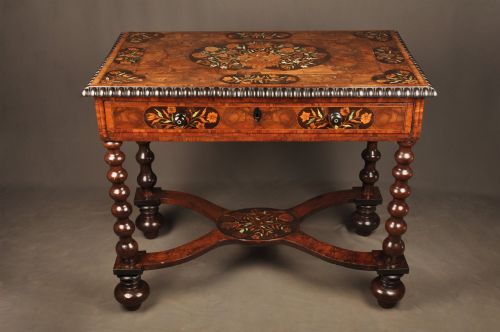
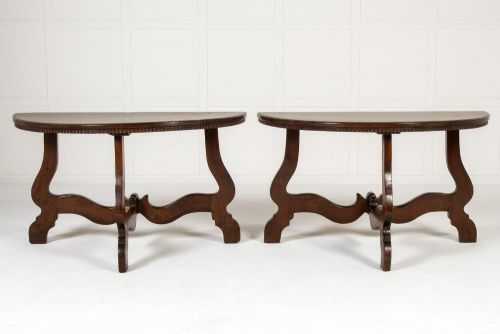
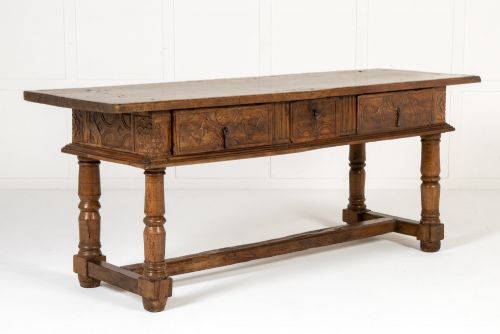
Forms on this page range from console tables and centre tables to writing desks and demi lune shapes. Spanish, Italian, and Dutch regional variations dominate the selection, showing distinct local carving habits and timber choices.
The material palette extends to marble tops, brass accents, and painted finishes, with walnut and oak providing the primary structural timbers. These pieces function equally well against a hallway wall or as a centrepiece in a principal room.
How they were made
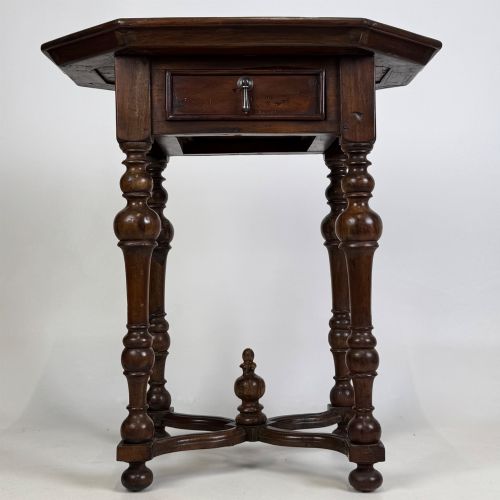
Cabinetmakers worked primarily with solid walnut and oak, often incorporating marquetry, parquetry, or bone inlay to create complex geometric and floral patterns. Timbers were selected for grain pattern and figure, then joined using traditional methods suited to heavy daily use.
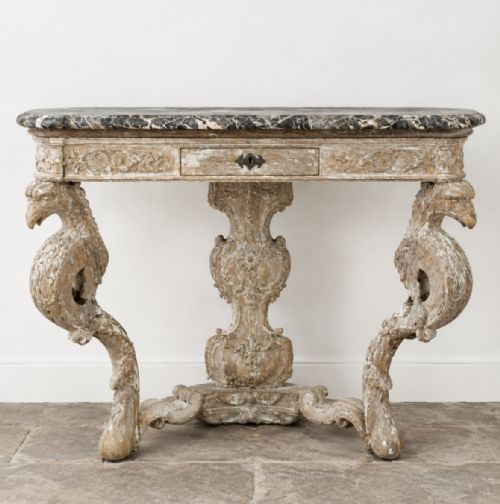
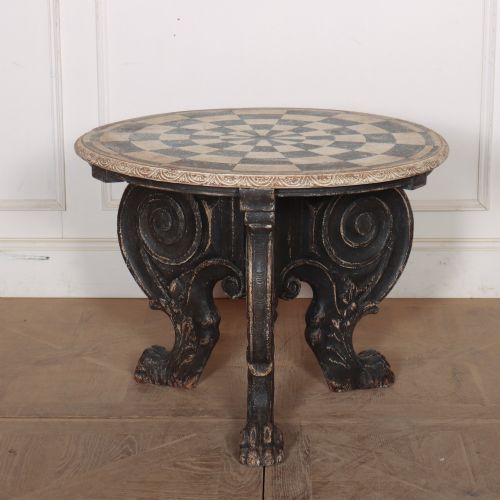
Carved ornament, parcel gilding, and giltwood applications required specialist gilders and woodcarvers who shaped acanthus leaves, lion paws, and figures directly into the solid wood or gesso layers. Marble tops, including breccia varieties, were cut and polished to fit tightly within moulded wooden frames.
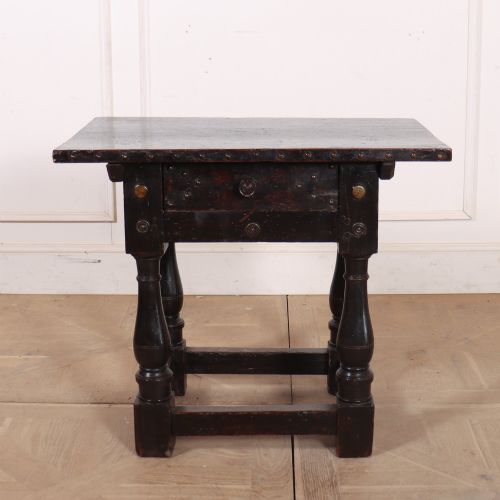
Ebonisation techniques transformed cheaper or contrasting woods to imitate ebony, while painted finishes introduced decorative polychrome details to lime wood and softwood structures.
Listings span seventeenth-century origins through to Victorian revivals, featuring walnut, oak, giltwood, and marble.
What varies in quality
Quality rests upon the crispness of the hand-carving and the depth of the original timber patina. Superior examples display spirited, undercut carving where figures and foliage stand free from the carcass, whereas lesser pieces rely on shallow surface incisions.
The integration of the top to the base dictates structural integrity, particularly where heavy marble or stone slabs meet wooden frames. Finer specimens retain their original gilding, marquetry details, and patinated hardware without extensive modern reconstruction.
The Baroque Side Table Glossary
- Console table
- A table designed to stand against a wall, traditionally supported by two or more legs or ornamental brackets.
- Giltwood
- Wood that has been covered with a thin layer of gold leaf or powder over a prepared gesso base.
- Marquetry
- Decorative veneer work arranged in intricate patterns or pictures using various coloured woods, bone, or metal.
- Demi lune
- Half-moon shape, commonly describing tables designed to sit flush against a wall.
- Breccia marble
- A composite stone made of broken fragments cemented together by a fine-grained matrix, prized for its mottled multicoloured surface.
Baroque Side Table: Frequently Asked Questions
Where should I place a baroque side table?
These tables suit hallways, landings, or principal reception rooms where their architectural presence can be appreciated. Pair them with a mirror or lamp to complete the display.
Ensure the floor is level and the piece sits flush against the wall if using a console format.
How do I clean a wooden baroque table?
Dust regularly with a dry, soft lint-free cloth to prevent particle buildup in carved recesses. Avoid silicone-based polishes that soften historic finishes.
Feed the timber periodically with appropriate beeswax to maintain the natural patina.
Are marble tops original to these tables?
Many seventeenth and eighteenth-century tables were paired with stone or marble tops to handle heavy use and display items. Replacement tops do occur during long restoration histories.
Inspect the seating of the slab within the wooden rebate to check its fit.
How do I distinguish regional styles?
Spanish examples often utilise solid walnut with restrained, robust proportions and iron stretchers. Italian and Dutch pieces frequently introduce elaborate giltwood, marquetry, and figural carving.
Examine the secondary woods and construction joints for further clues regarding origin.