

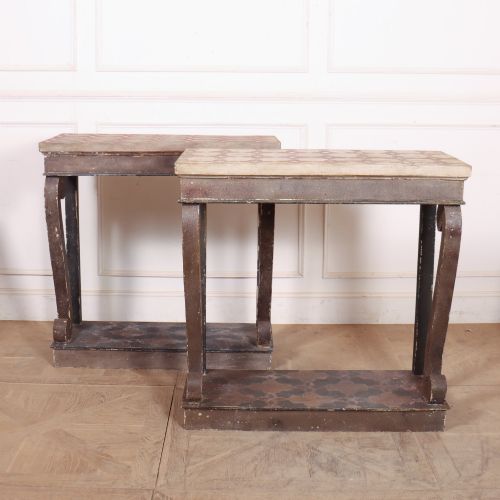
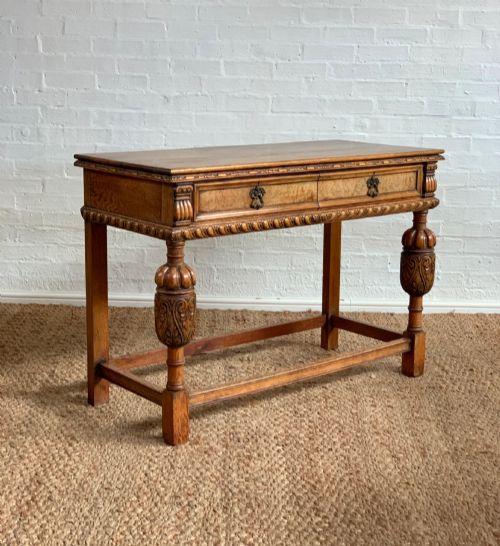


Continental Console Table
A continental console table grounds a hallway or principal room with architectural presence, offering a sturdy surface designed to stand flat against a wall.
Continental Console Table
A continental console table is a foundational piece of furniture intended for display and architectural balance, typically designed to sit flush against a wall in hallways, reception rooms, or parlours. These items present varying geometric forms, from linear rectangular shapes to curved demi-lune silhouettes built for corners.
On this page, you are most likely to meet examples drawn from the eighteenth and nineteenth centuries, spanning regional provincial workshops to grander urban ateliers. The selection ranges from robust oak and walnut timber frames to lighter painted and gilt finishes originating across European regions.
Makers adapted these forms to suit shifting domestic interiors, producing heavy baroque designs alongside restrained Biedermeier models and rustic provincial side tables. Each piece serves as a functional shelf for decorative objects, mirrors, or lighting while contributing distinct period character to a room.
How they were made
Carpenters and joiners built these frames using traditional timbers such as oak, walnut, ash, and pine, often applying veneers like masur birch or burr walnut to prominent surfaces. Structural stability relied on pegged joinery and robust timber construction capable of supporting heavy stone surfaces.
Many examples incorporate decorative surface treatments, ranging from hand-applied paint and gilt gesso to ebonised finishes that mimic more costly exotic hardwoods. Marble slabs were frequently fitted to the upper surfaces to provide a durable, cool platform for daily use.
Continental Console Table Retail Price Guide 2026
Typical asking prices for continental console table among the pieces listed under this phrase on Sellingantiques today, from the lower quarter to the upper quarter. They describe what is for sale here now, not the wider market.
Some provincial Spanish tables bear the cheerful scars of centuries of kitchen prep and family dinners.
What varies in quality
The distinction between standard and superior pieces rests on the choice of primary timber and the precision of the cabinetmaker's joinery. Finely figured veneers, such as masur birch or burr walnut, indicate a more ambitious commission than plain painted pine.
Carved ornament reveals the hand of the artisan, where crisp, deep relief work distinguishes a superior frame from simpler, mechanical production. The integration of heavy materials, such as fitted marble tops, demonstrates structural ambition and material cost.
The Continental Console Table Glossary
- Demi-lune
- A half-moon shape used for tables designed to stand flat against a wall. This profile saves floor space in narrower hallways and reception rooms.
- Gilt gesso
- A plaster-based material applied to wood surfaces and coated in gold leaf to create reflective decorative ornament. It provides a bright finish common on formal continental pieces.
- Masur birch
- A decorative timber featuring distinctive natural dark swirls and patterns caused by growing conditions. Cabinetmakers prized this wood for its striking visual grain during the nineteenth century.
- Baroque
- A heavy, theatrical style of design prominent in the seventeenth and early eighteenth centuries, characterised by dynamic curves and bold architectural details. These pieces project grandeur and visual weight.
Continental Console Table: Frequently Asked Questions
Where should I place a console table?
These tables find a natural home in entrance halls, corridors, or living rooms where floor space is limited. Their shallow depth allows them to stand against a wall without obstructing foot traffic.
Pairs of these tables often flank a doorway or sit beneath a matching wall mirror to create a balanced focal point in a reception room.
How do I clean a marble top?
Marble surfaces require gentle maintenance using a soft cloth and warm water to preserve the stone. Avoid acidic cleaning products that can etch or dull the polished finish over time.
Dry the surface thoroughly after wiping to prevent water spots from forming on older stone slabs.
Are these tables sturdy enough for daily use?
Traditional wooden frames and stone tops were built for practical endurance in busy domestic environments. Their solid construction handles everyday placement of lamps, bowls, and decorative items with ease.
Heavier models benefit from wall fixings if the floor surface is uneven, ensuring total stability for heavy marble slabs.
How do I identify a Biedermeier table?
Biedermeier furniture focuses on clean lines, minimal ornament, and the natural beauty of blonde wood veneers like birch or ash. These nineteenth-century pieces reject heavy baroque carving in favour of functional elegance.
They often feature smooth, polished surfaces and restrained geometric forms that suit contemporary interiors.