
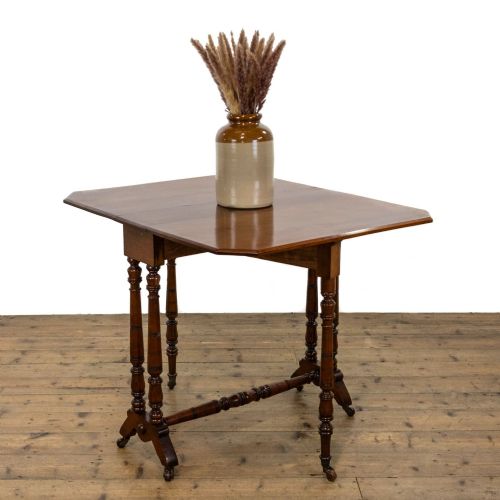
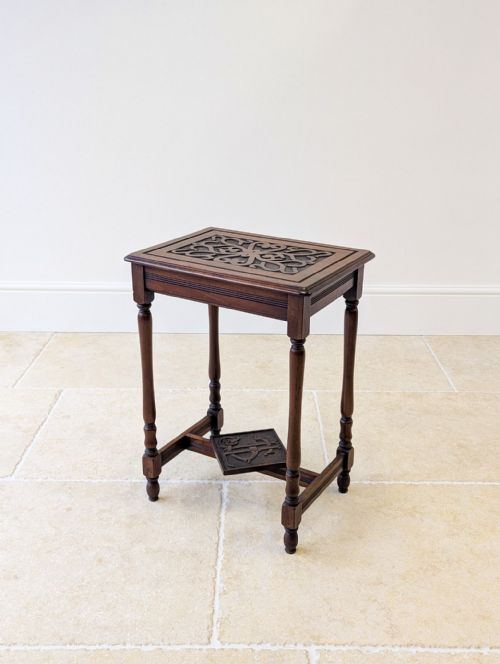
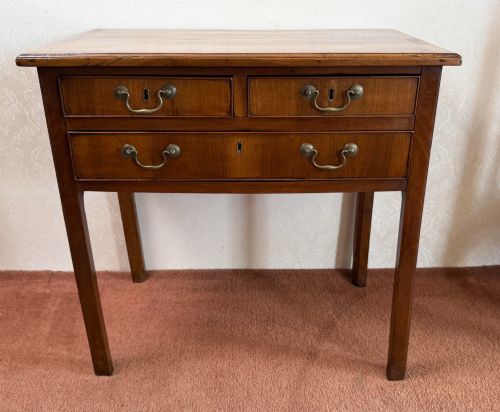
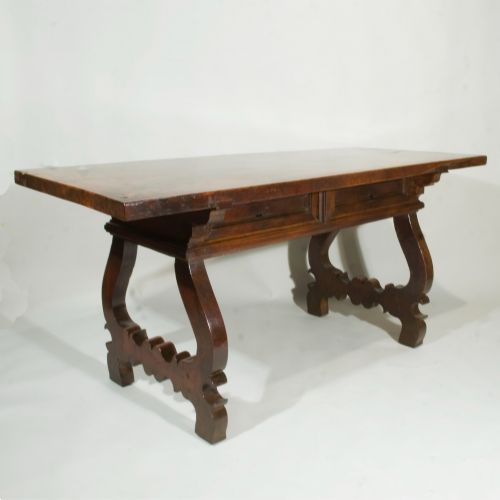


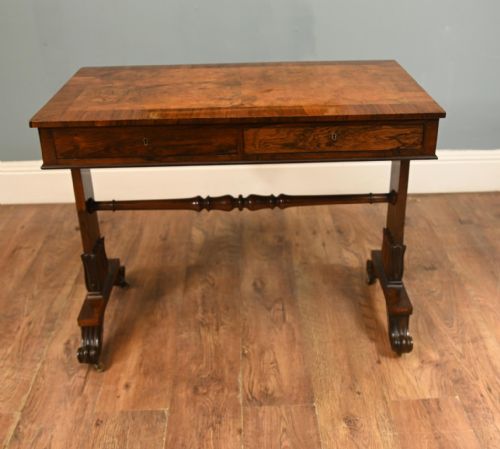

Dark Walnut Console Table
A dark walnut console table brings deep timber tones and stately proportion to an entrance hall or living space.
Dark Walnut Console Table
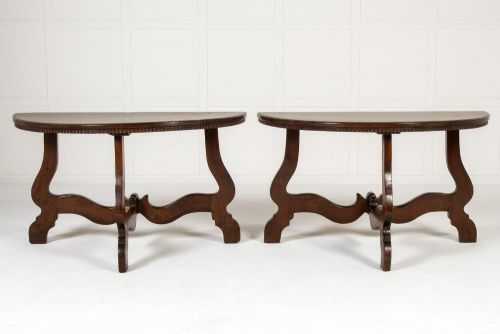
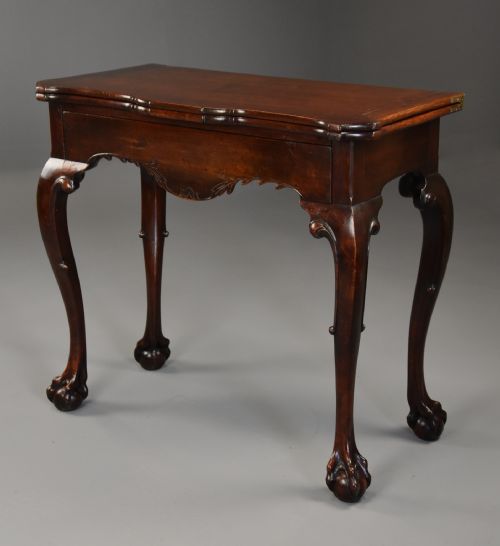
A dark walnut console table typically presents as a sturdy wall-abutting surface rooted in historical periods ranging from the seventeenth to the nineteenth centuries. Examples span Spanish Baroque designs, Georgian forms, and Victorian interpretations, reflecting various continental and English cabinet-making traditions.
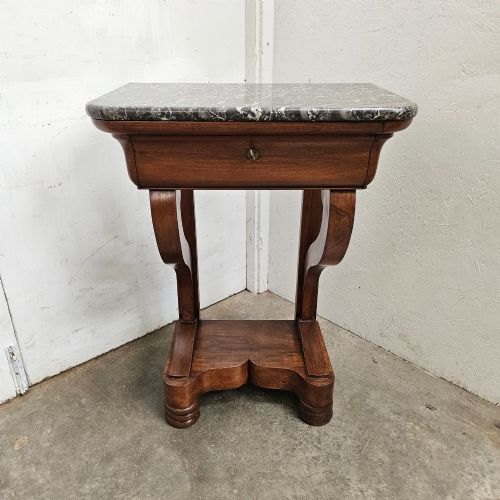
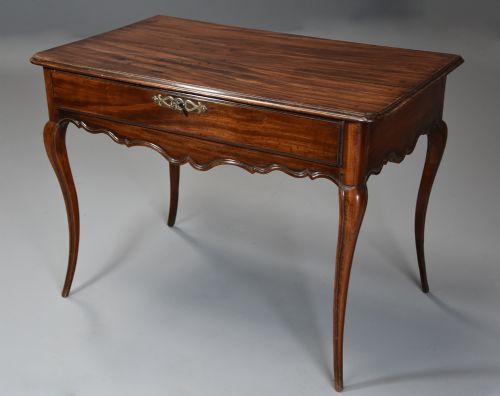
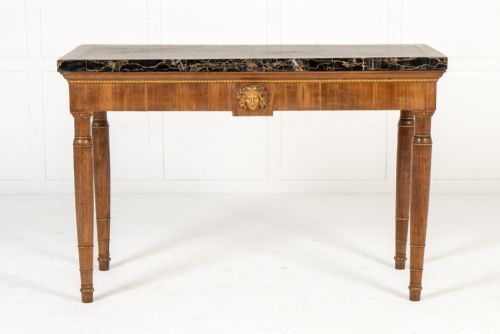
Buyers encounter console tables alongside closely related side tables, lowboys, and demi-lune formats sharing similar timber properties. These pieces often feature single drawers, carved supports, or marble tops designed to sit flush against a wall.
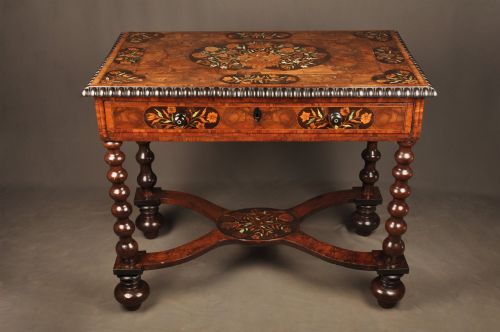
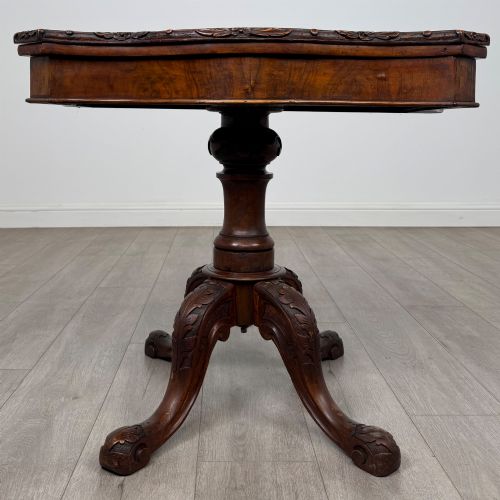
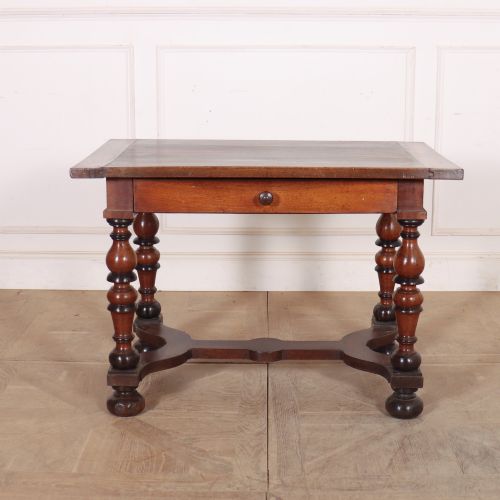
Origins stretch across Spain, Italy, France, and England, each region imparting distinct stylistic markers such as barley twist legs, marquetry inlay, or heavy Baroque carving. Solid walnut and figured veneers dominate the selection, providing rich grain patterns.
How they were made
Construction relies heavily on solid walnut and burr walnut veneers applied to secondary timbers, complemented by carved wooden ornamentation. Many specimens incorporate applied details like marquetry inlay or utilise contrasting materials such as marble inserts and brass hardware.
Joinery methods reflect the period of origin, employing traditional hand-cut joints, pegged tenons, and structural stretchers for stability. Surfaces are finished to preserve the natural grain while developing a deep patination over centuries of handling.
Dark Walnut Console Table Retail Price Guide 2026
Typical asking prices for dark walnut console table among the pieces listed under this phrase on Sellingantiques today, from the lower quarter to the upper quarter. They describe what is for sale here now, not the wider market.
Listings feature walnut alongside auxiliary materials including marble, brass, wrought iron, and ebonised wood across multiple centuries.
What varies in quality
Quality rests upon the crispness of hand carving, the depth and figuring of the walnut timber, and the preservation of original patination. Pieces exhibiting intricate marquetry or integrated marble tops command greater visual presence.
Structural integrity and the retention of original surface finishes dictate the standing of an example, distinguishing restrained provincial items from elaborate Continental Baroque commissions.
The Dark Walnut Console Table Glossary
- Demi-lune
- A half-moon shape commonly applied to console tables designed to stand flat against a wall. This format is frequently seen in eighteenth-century Italian and French dining or entrance arrangements.
- Lowboy
- A small seventeenth or eighteenth-century table with one or more drawers and relatively short legs. It functions as a dressing table or side table.
- Marquetry
- Decorative veneer work forming geometric or pictorial patterns using various coloured woods. It appears on tabletops to add ornamental complexity.
- Patina
- The surface sheen and mellowing developed by timber over long periods of use and exposure. Original patination is a key indicator of age and untampered condition.
- Barley twist
- A carved spiral column turning resembling a twisted rope, frequently utilised on table legs during the seventeenth and nineteenth centuries.
Dark Walnut Console Table: Frequently Asked Questions
Where should I place a dark walnut console table?
These tables suit narrow entrance halls, reception rooms, or landings where a shallow surface is required against a wall. Their dark timber tones anchor light-coloured interior schemes effectively.
Because many examples feature finished backs or sit flush against plaster, they create a deliberate focal point beneath mirrors or paintings.
How do I care for antique walnut furniture?
Keep wooden surfaces away from direct heat sources and strong sunlight to prevent the walnut veneer from drying or fading. Regular dusting with a soft, dry cloth preserves the finish.
Apply occasional professional wax polish sparingly to maintain the natural lustre and protect the historic patina of the timber.
Are these tables suitable for daily use?
Most antique console tables function well for holding lamps, decorative objects, or correspondence in everyday settings. Versions with drawers offer convenient storage for small household items.
Care should be taken with unsealed marble tops or antique veneer surfaces when placing wet or heavy objects directly onto the wood.
How can I tell the period of a console table?
Dating relies on examining construction techniques, joinery marks, and stylistic indicators such as Baroque carving or Victorian proportions. Timber selection and the character of the surface wear provide further clues.
Comparing leg turns, edge profiles, and hardware against known historical examples helps establish the likely decade of manufacture.