
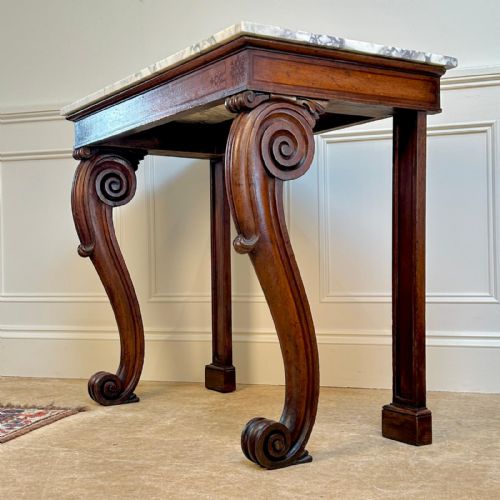
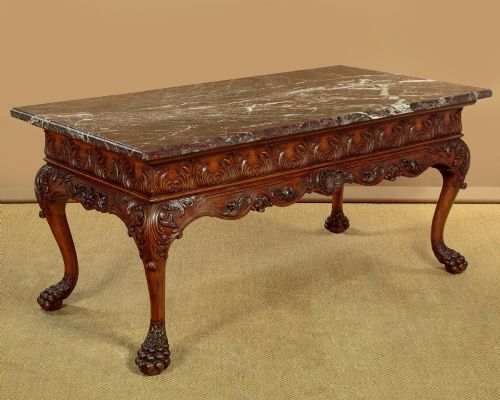
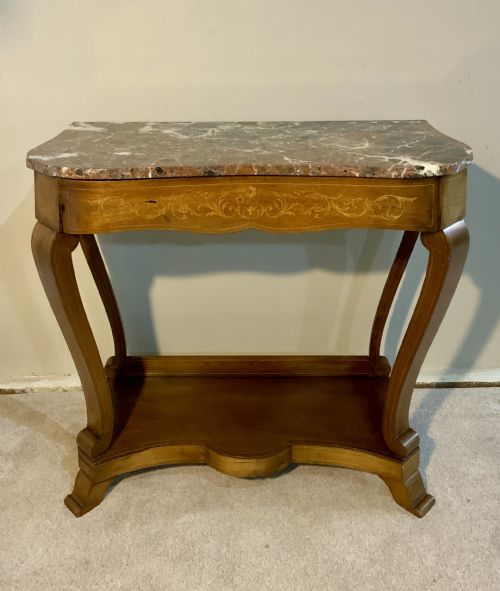
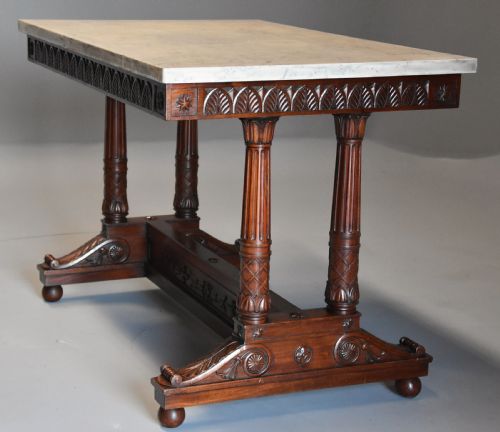

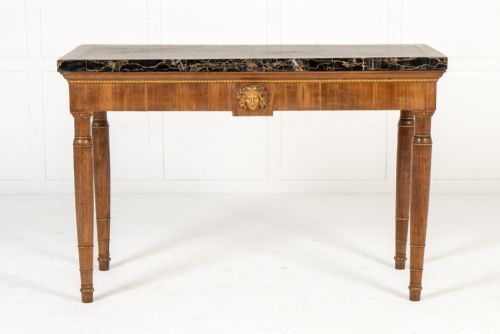


Brown Marble Console Table
A brown marble console table brings solidity and polished mineral weight to a hallway or drawing room, anchoring the space with dense stone and timber.
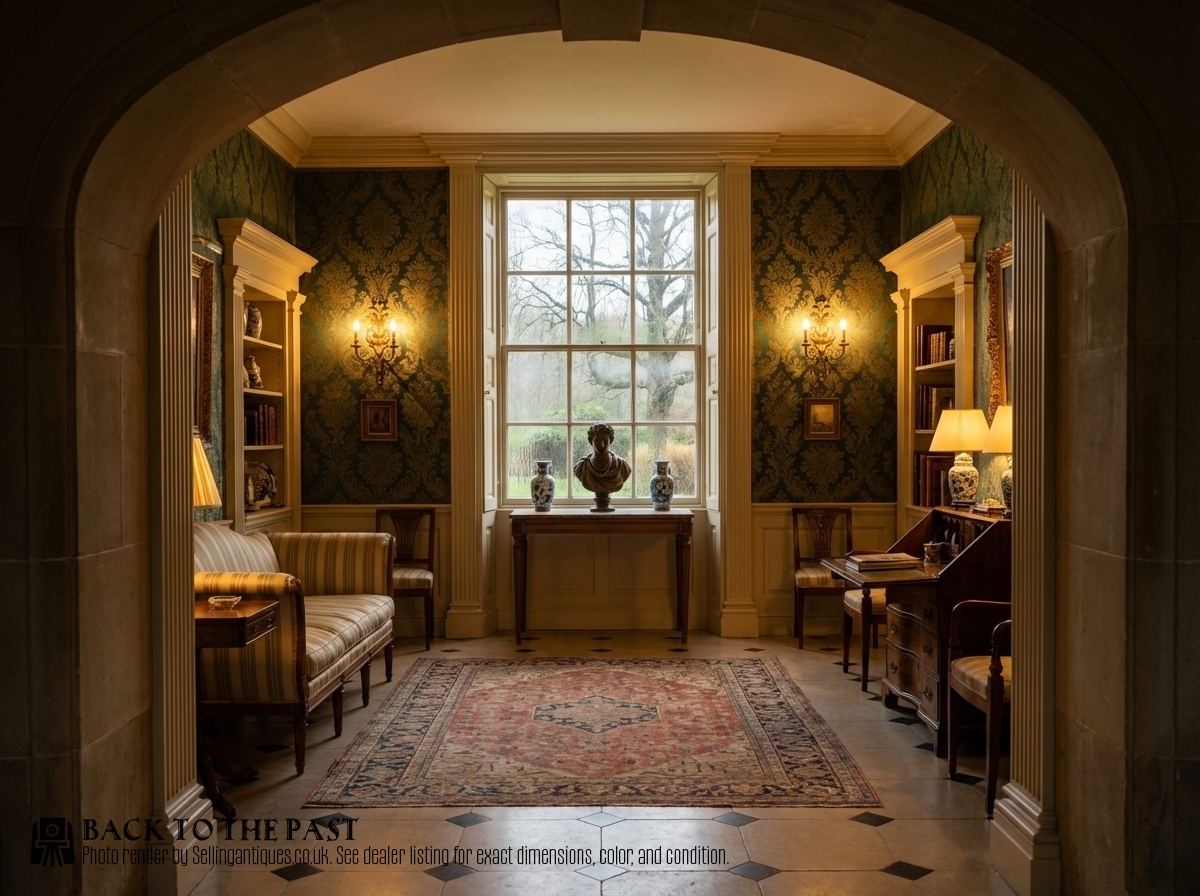
Brown Marble Console Table
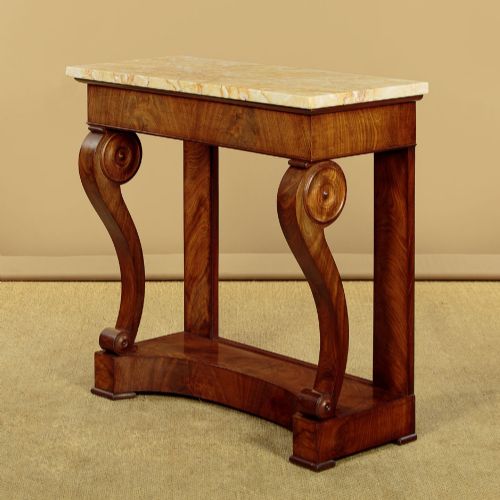
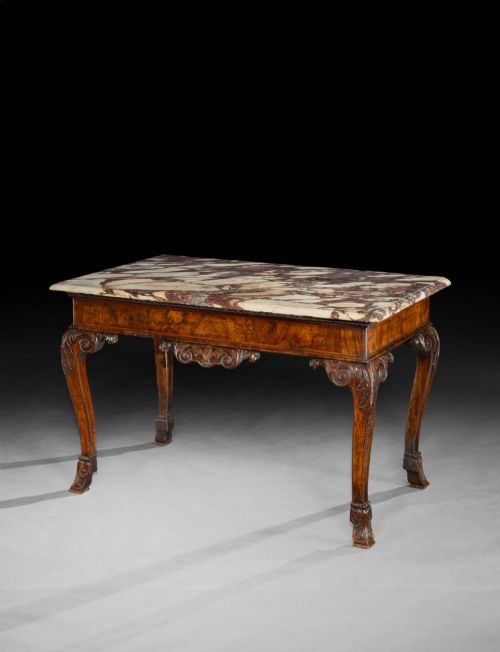
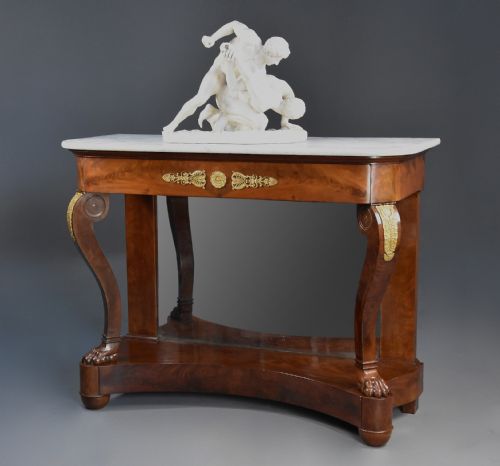
A brown marble console table combines a heavy stone slab with a timber or cast metal base designed to stand flat against a wall. The pieces listed here span the eighteenth, nineteenth, and early twentieth centuries, drawing on George II, Victorian, French Empire, and Rococo Revival styles.
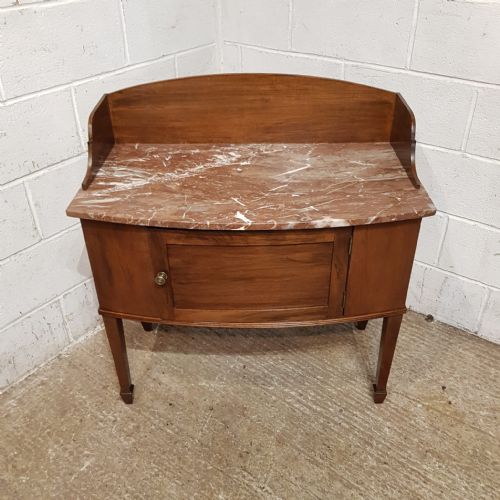
Most examples pair a polished brown marble top with mahogany, walnut, or oak frames. Alongside traditional console tables, the selection includes related forms such as side tables, pier tables, lamp tables, and washstands featuring the same characteristic stone surfaces.
Origins stretch across British, French, and Italian workshops, yielding everything from straightforward mahogany frames to heavily carved walnut and marquetry pieces.
Materials and construction
Cabinet makers utilised dense hardwoods including mahogany, walnut, oak, and satinwood to support thick marble tops that required robust joinery to bear the weight. Frames often display carved decoration, parquetry, or burr veneers, while secondary metals like brass and ormolu appear on mounts.
Marble slabs were hand-cut and polished to a smooth finish, revealing natural veining in brown and related earth tones. Structural stability relies on heavy pedestals, frieze drawers, or carved legs, sometimes reinforced with cast iron elements in later nineteenth-century pieces.
Brown Marble Console Table Retail Price Guide 2026
Typical asking prices for brown marble console table among the pieces listed under this phrase on Sellingantiques today, from the lower quarter to the upper quarter. They describe what is for sale here now, not the wider market.
Several tables disguised as formal furniture secretly doubled as washstands, proving that Victorian elegance kept a basin close at hand.
Standards of craftsmanship
Quality rests in the depth of the timber grain, the precision of carved details like acanthus leaves or eagle supports, and the harmonious thickness of the marble slab relative to the base. Finer examples display meticulous French polishing, crisp veneer work such as flame mahogany or marquetry, and stable, unwarped wooden frames.
Lesser pieces rely on simpler mechanical cuts or replacement tops that lack the tight integration seen in period originals. The integrity of the stone surface and the crispness of any applied brass or ormolu mounts further separate standard production from exceptional workshop output.
Maples·JACOB
The Brown Marble Console Table Glossary
- Console table
- A table designed to stand against a wall, traditionally fixed with brackets or supported by front legs.
- Ormolu
- Gilt bronze mounts applied to furniture frames for decorative accent during the eighteenth and nineteenth centuries.
- Marquetry
- Decorative patterns formed by fitting together thin slices of various coloured woods into a wooden surface.
- Serpentine
- A curved furniture front or marble edge that bends outward in the centre and inward at the sides.
Brown Marble Console Table: Frequently Asked Questions
What is a brown marble console table?
It is a wall-mounted or freestanding narrow table featuring a heavy polished stone top in shades of brown, paired with a wooden or metal base.
These pieces served functional display purposes in grand hallways, drawing rooms, and formal reception spaces.
How do I date a console table?
Dating relies on identifying the prevailing style, such as George II, Regency, or Victorian, alongside the joinery methods and timber species used in the frame.
Changes in carving depth, edge profiles, and the treatment of the marble slab help narrow down the decade of production.
Where should I place it?
These tables suit narrow entrance halls, living rooms, or dining areas where a shallow surface is required against a wall.
They frequently sit beneath mirrors or paintings, providing a stable platform for lamps, decorative objects, or occasional use.
How do I care for the marble?
The stone surface requires gentle cleaning with a damp cloth and mild soap, avoiding acidic liquids that can etch the polish.
Periodic waxing of the wooden base helps preserve the finish without affecting the stone top.