
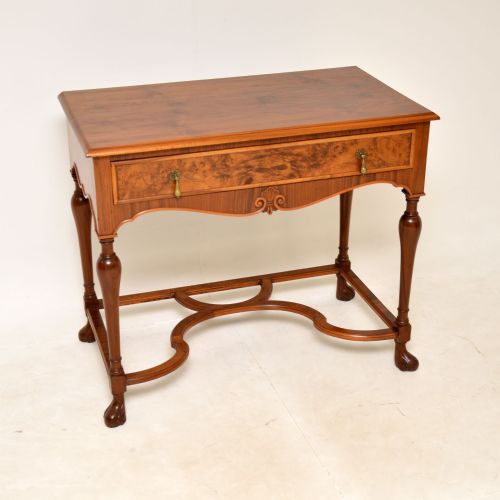
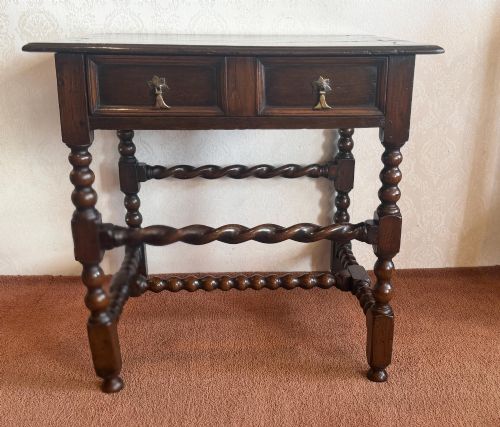

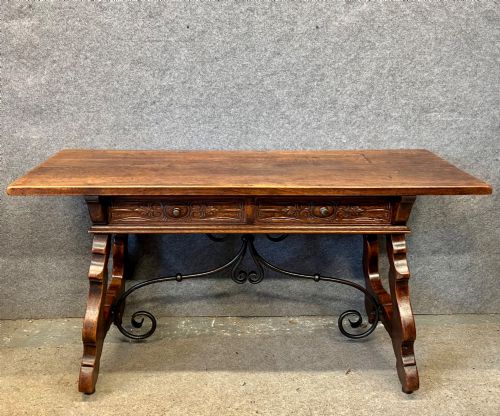
Carved Stretcher Side Table
When you handle a carved stretcher side table, you find a sturdy timber frame built to stand firm without a wobble.
Carved Stretcher Side Table
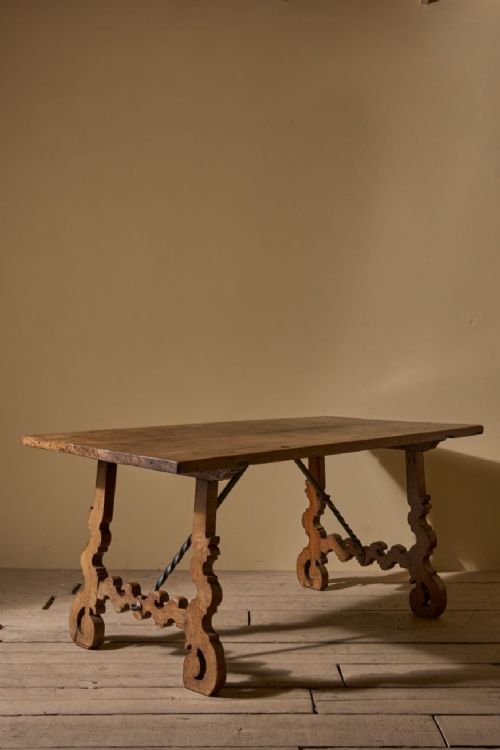
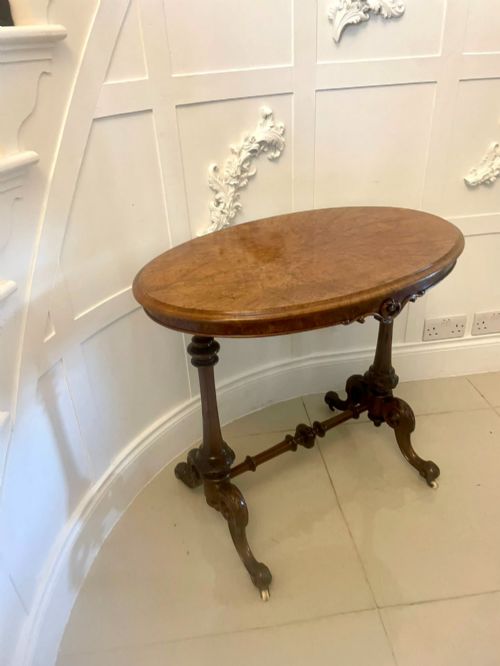
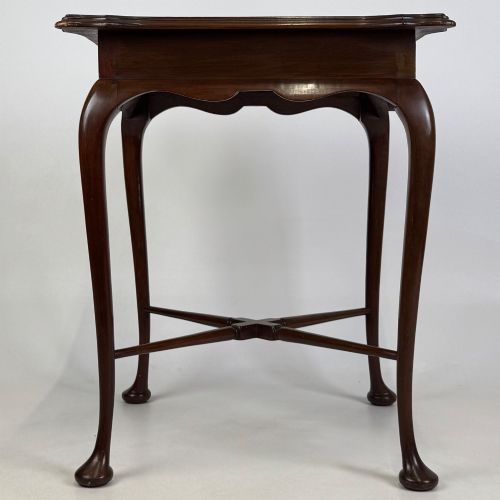
A carved stretcher side table brings a practical surface and architectural timber framing into a room. These pieces appear across the seventeenth, eighteenth, and nineteenth centuries, taking forms such as lamp tables, occasional tables, and hall tables.
Most examples you meet on this page lean heavily into Victorian revival styles or span the solid oak and walnut periods of earlier centuries. They serve as compact surfaces for lamps, books, or hallways where floor space remains at a premium.
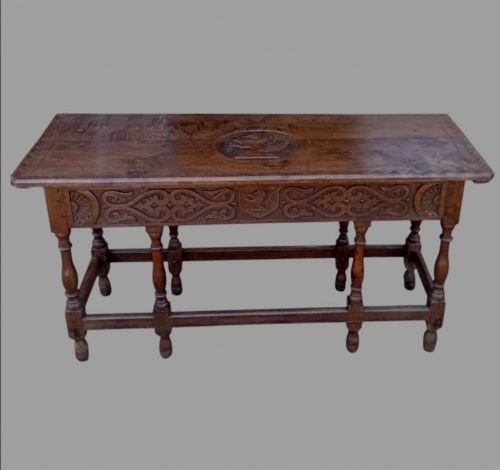
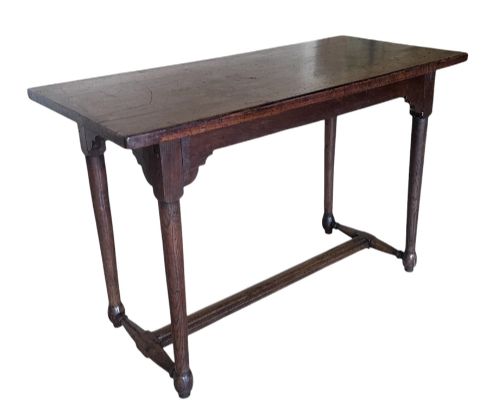
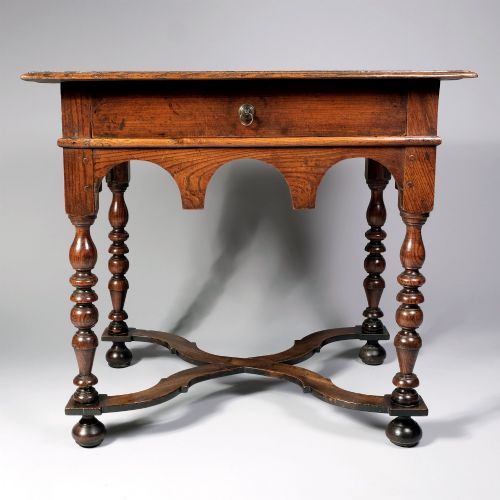
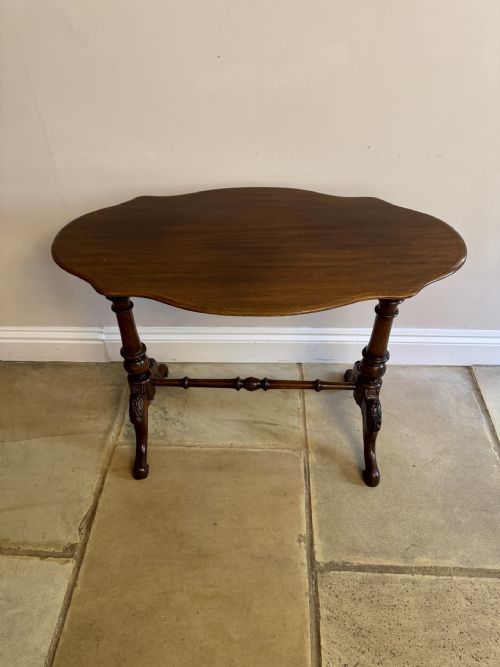
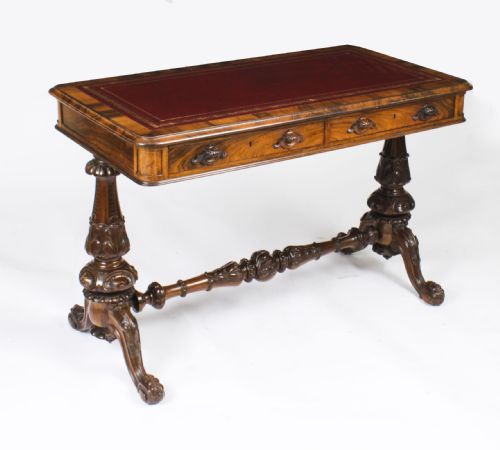
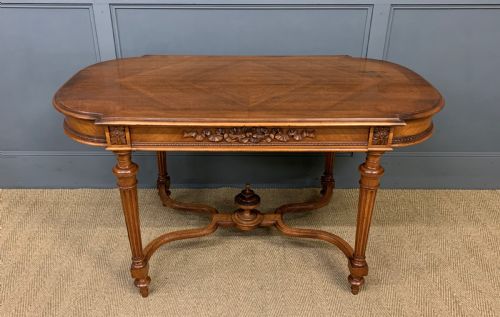
The defining feature across the selection is the structural bracing near the floor, which ties the legs together and often bears decorative carving. This layout gives the form its characteristic stability and visual weight.
How they were made
Cabinetmakers relied on dense hardwoods like oak, walnut, and mahogany, selecting burr varieties or yew tree timber for decorative tops. These woods were joined using traditional methods that allowed the timber to breathe and settle over centuries.
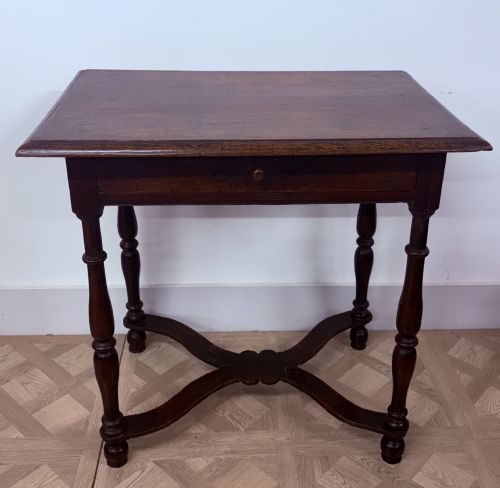
Turned elements such as bobbin or barley twist legs appear frequently alongside hand-carved stretcher rails. Metal fittings in brass sometimes accent the drawers or trims, while original patinas develop naturally from decades of surface wax and handling.
Listings span walnut, oak, mahogany, and rosewood, with periods reaching from the seventeenth century through the Edwardian era.
What varies in quality
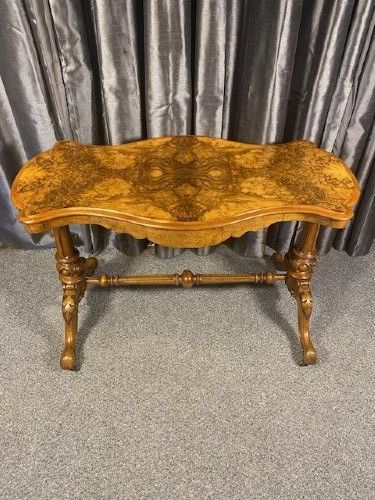
The distinction between ordinary and exceptional work lies in the selection of timber figures and the crispness of the hand-carving on the stretchers. Burr walnut and figured oak veneers display deliberate grain matching that elevates the visual impact of the top surface.
Joinery execution dictates longevity, visible in how tightly the stretcher rails meet the legs and whether the timber frame remains true. Pieces bearing maker signatures or originating from established workshops display superior refinement in every turned detail.
Edwards and Roberts·W J Mansell·Gillows
The Carved Stretcher Side Table Glossary
- Stretcher
- A horizontal timber beam connecting the legs of a table near the floor to provide structural rigidity. This component often receives decorative turning or carving.
- Barley Twist
- A spiral turning technique applied to table legs or upright supports resembling a twisted rope. This detail became particularly popular during seventeenth and nineteenth-century revival periods.
- Burr Walnut
- A specialised wood cut from the abnormal growth of a walnut tree, yielding a swirling, highly decorative grain pattern. Cabinetmakers used it for prominent surfaces on high-end tables.
- Bobbin Turning
- A method of woodturning that creates a series of rounded, bead-like shapes along the length of a leg or stretcher. It appears frequently on seventeenth-century joined furniture.
- Patina
- The deep, lustrous surface sheen developed on old wood through age, handling, and regular polishing. This quality serves as a key indicator of genuine historical age.
Carved Stretcher Side Table: Frequently Asked Questions
What is a carved stretcher side table used for?
These tables provide a convenient surface for daily items like table lamps, decorative objects, or correspondence in hallways and sitting rooms.
Their sturdy lower bracing allows them to carry weight without losing stability, making them practical for active living spaces.
How do I identify a 17th-century table?
Seventeenth-century pieces typically feature heavy solid oak construction, hand-carved details, and pegged joinery rather than modern fixings.
Look for structural elements like bobbin turnings and deep patinas acquired over centuries of use.
Where should I place a side table?
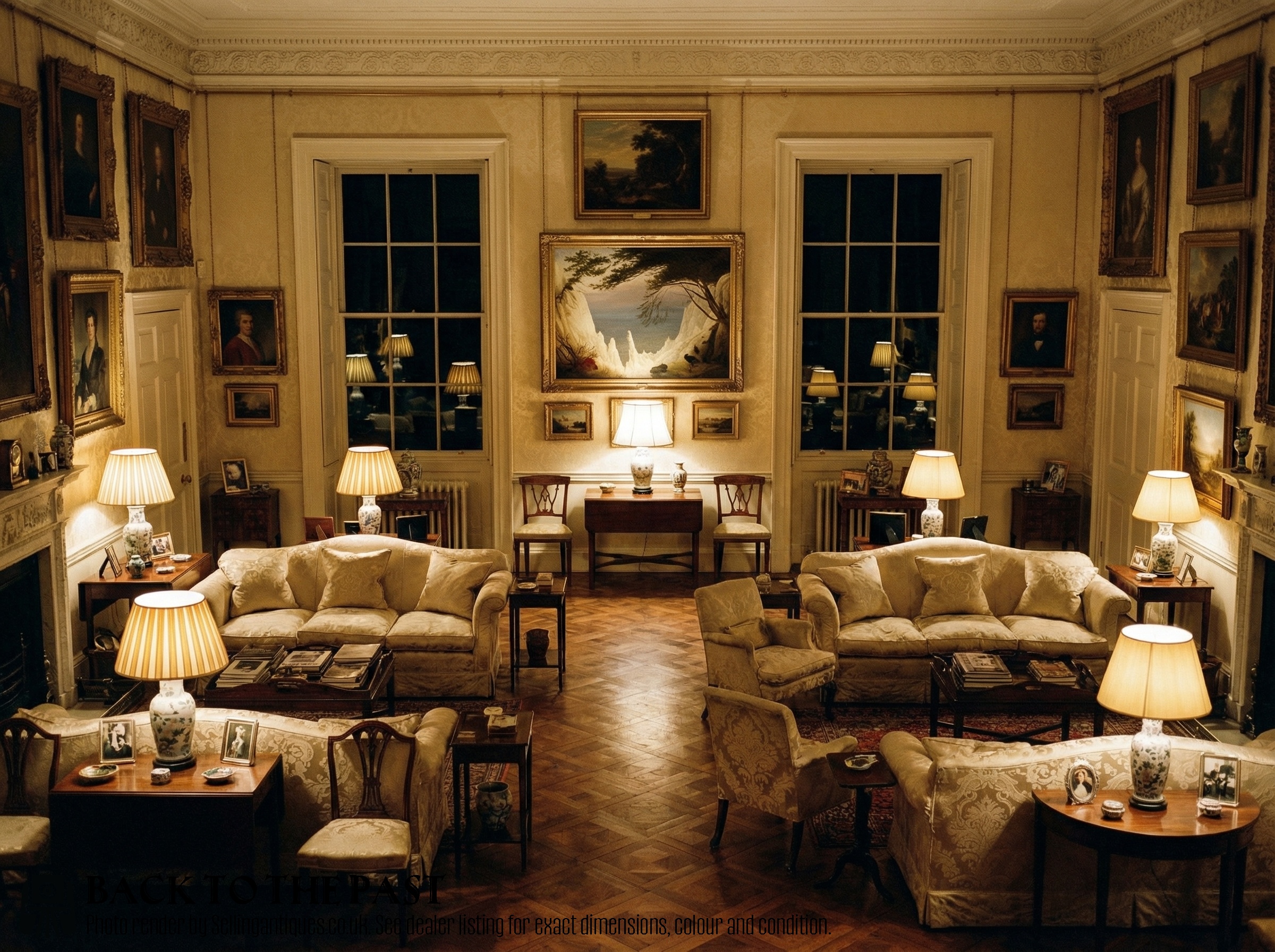
They fit naturally alongside seating furniture, against hallway walls, or beneath windows where a narrow surface is required.
The decorative stretcher base looks best when left visible rather than hidden behind large chairs or drapery.
What is burr walnut?
Burr walnut comes from a tree excrescence that produces intricate, swirling patterns in the wood grain.
Cabinetmakers prized this material for table tops to showcase exceptional natural decoration.