


Rococo Coffee Table
A rococo coffee table brings flamboyant curves and intricate French revival elegance into a modern sitting room.
Rococo Coffee Table
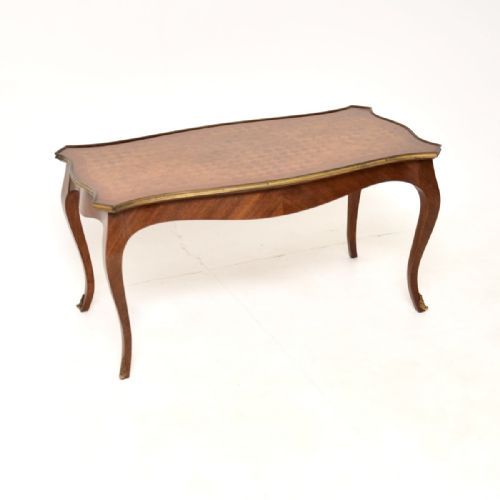
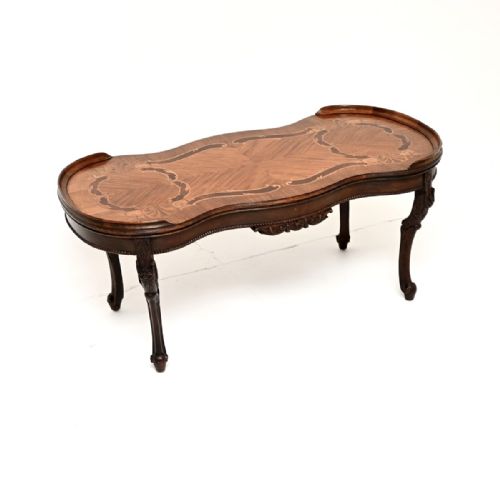
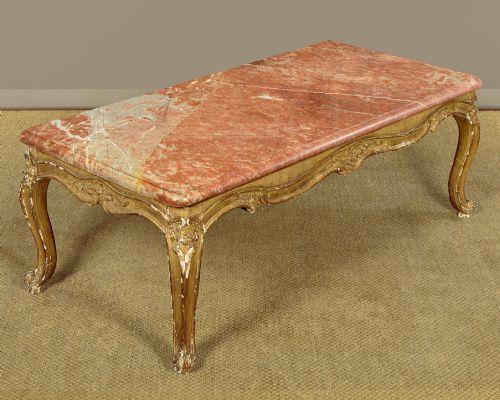
A rococo coffee table draws on nineteenth-century revivals of Louis XV and Baroque styles, utilising low profiles adapted from older centre tables, side tables, and occasional tables. These pieces emerge in walnut, kingwood, and mahogany, often featuring serpentine lines and elaborate carving suited to sophisticated interiors.
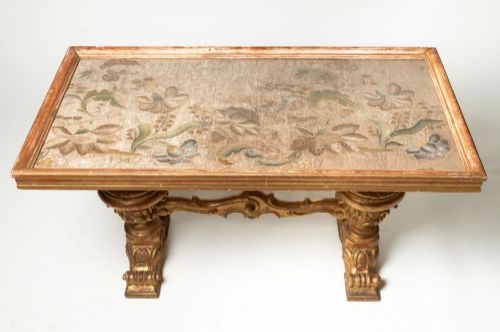
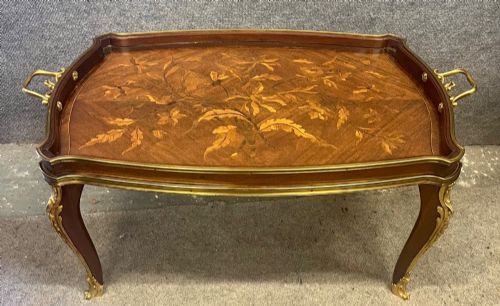
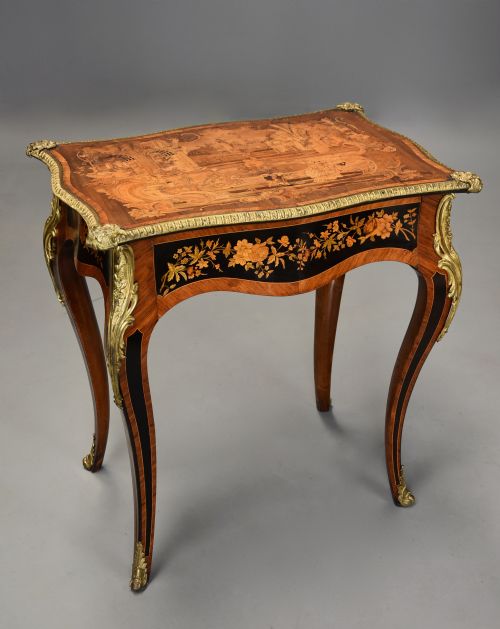
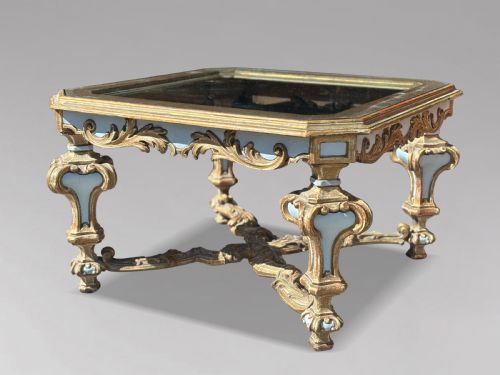
The most common forms on this page include French-inspired marquetry and parquetry low tables, alongside Italian painted and giltwood variants. Makers frequently modified nineteenth-century occasional and centre tables or utilised tray top designs to serve contemporary coffee table heights.
Materials and construction methods
Construction relies heavily on walnut, kingwood, rosewood, and mahogany as foundational timbers, frequently enhanced by intricate parquetry and marquetry inlay. Artisans applied giltwood, ormolu mounts, and brass detailing to accentuate the flowing, organic lines characteristic of the revival styles.
Surfaces often incorporate inset marble slabs, glass, or hand-painted decoration, supported by carved cabriole legs. Specialised techniques such as black lacquer and porcelain mounting appear across French and Italian workshop examples from the nineteenth and early twentieth centuries.
Listings span the nineteenth century up to the 1930s, featuring walnut, kingwood, marble, and giltwood across French and Italian revival styles.
Distinctions in craftsmanship
Quality rests upon the precision of the cabinetmaker's marquetry work and the depth of hand-carving in the wood or gilt framing. Superior examples display seamless timber matching in figured walnut and kingwood, alongside crisply cast ormolu mounts rather than mass-produced metal elements.
The integration of materials also dictates standing, such as heavy, solid marble tops set properly within carved wooden rebates instead of superficial surface placement. Finer tables maintain structural integrity in their serpentine rails and delicate cabriole legs despite the inherent challenges of low-table adaptations.
Zwiener·B Battioli, Varese·Harrods
The Rococo Coffee Table Glossary
- Marquetry
- Decorative veneer work arranged in pictorial or geometric patterns using various coloured woods. This technique requires exceptional precision from the cabinetmaker.
- Ormolu
- Gilded bronze mounts applied to furniture for ornamentation. The finish involves mercury gilding on older pieces or electroplating on later revivals.
- Cabriole leg
- A furniture leg that curves outward and then tapers inward, mimicking animal legs. It forms a defining feature of Louis XV style furniture.
- Parquetry
- Geometric wood mosaic work used for tabletops and flooring. It relies on contrasting timber grains to create repeating patterns.
- Giltwood
- Wood that has been coated with gold leaf or gilt paint. This finish catches the light to highlight elaborate carved scrollwork.
Rococo Coffee Table: Frequently Asked Questions
Are these original eighteenth-century tables?
Most pieces date from the nineteenth century through the 1930s, constructed during revivals of earlier French and Italian styles. Many low tables are nineteenth-century centre or occasional tables subsequently adapted for modern coffee table use.
Craftsmen of this later era utilised traditional techniques and luxury timbers like kingwood and walnut, maintaining the aesthetic of the Louis XV period.
How do I care for a marble top?
Marble surfaces require gentle cleaning with a damp cloth and mild, pH-neutral soap to preserve the polish and prevent staining. Avoid acidic liquids and harsh chemical cleaners that can etch the stone.
Using coasters and mats protects the polished marble from rings and scratches during daily use in a sitting room.
Where were these tables made?
The listings show regional origins primarily spanning France and Italy, alongside examples from Sweden, the Netherlands, and Britain. French workshops focused on marquetry and kingwood, while Italian pieces often featured painted finishes and giltwood.
Department stores like Harrods also retailed high-end Italian Baroque revival furniture during the early twentieth century.
How do I distinguish revival periods?
Nineteenth-century pieces generally exhibit heavier proportions and deeper hand-carving, utilising dense hardwoods like rosewood and burr walnut. Tables from the 1920s and 1930s sometimes incorporate simpler lines, lighter pine construction, or specific lacquer and tray top forms.
Maker signatures, hardware styles, and specific revival markers such as Régence or Louis XVI details help narrow down the exact decade of manufacture.