


Gold Gilt Coffee Table
A gold gilt coffee table brings gilded luxury and striking surface reflection to a room, drawing on centuries of European design traditions.
Gold Gilt Coffee Table
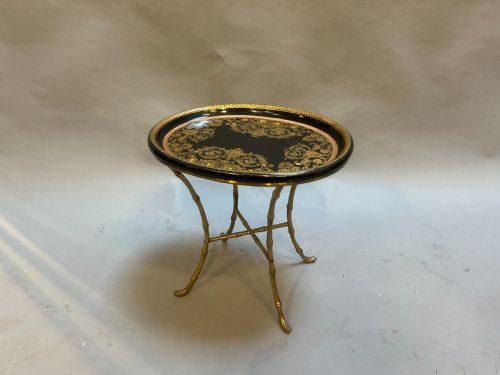
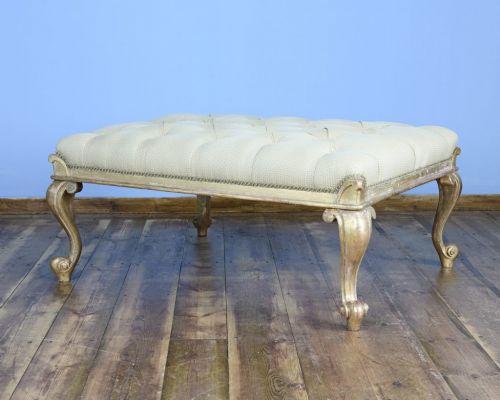
A gold gilt coffee table encompasses low display surfaces and adapted serving pieces from the Georgian, Regency, and Victorian eras through to the early twentieth century. Buyers encounter a diverse range of forms, from carved wooden frames to adapted trays mounted on custom stands.
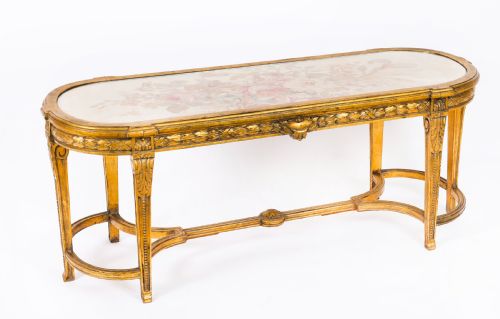
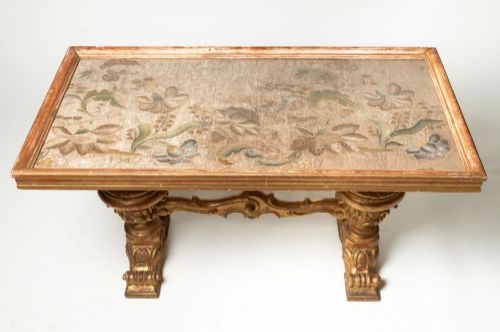
The aesthetic leans heavily into revival movements, incorporating French Rococo, Louis XVI, and Italian Baroque styles. These pieces often feature ornate giltwood carvings, delicate paintwork, or lacquered finishes designed to catch the light.
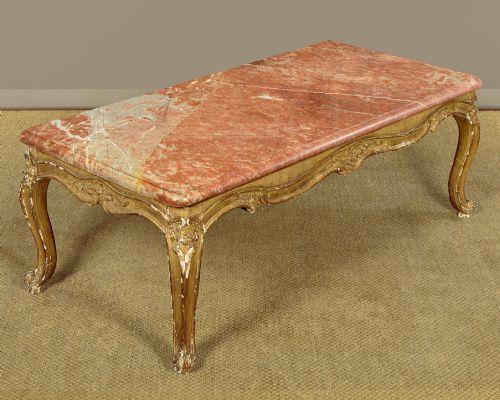
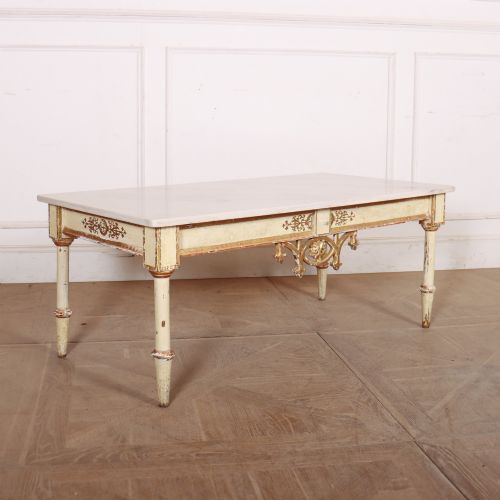
Beyond traditional low tables, the selection includes nests of tables, occasional tables, and side tables that serve a similar functional purpose in a modern sitting room. Many incorporate contrasting elements such as marble tops or inset porcelain plaques.
Materials and construction
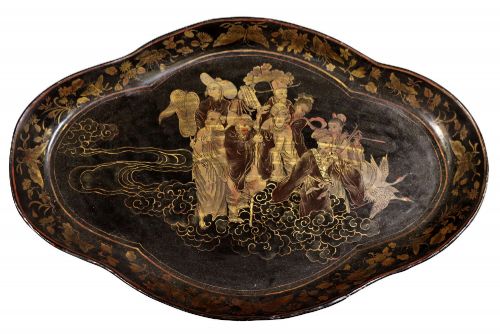
Makers utilised wood as the primary structural foundation, shaping giltwood frames or applying gesso and gold leaf to create a brilliant metallic sheen. Papier-mâché also served as a durable base for surfaces, particularly for trays later mounted onto timber stands.
Decorative detailing often involved hand-painted motifs, lacquer work, and specialised gilding techniques using gold and silver leaf. Marble tops and inset porcelain plaques provided heavy, durable surfaces that contrasted with the gilded woodwork.
Listings feature 19th Century, Regency, and early 20th Century pieces incorporating giltwood, marble, lacquer, and papier-mâché.
Evaluating quality and craftsmanship
Quality rests in the precision of the hand-carved woodwork and the application of the gold leaf or paint finish. Finer examples display crisp detail in Rococo and Regency motifs without heavy restoration or flattening of the carved edges.
The integrity of the top surface dictates much of the distinction between pieces, whether dealing with heavily veined marble, smooth lacquer, or intricate Chinoiserie decoration. Signed works and retained maker signatures on specialised pieces point to superior workshop origin.
Jennens And Bettridge·E Daligny
The Gold Gilt Coffee Table Glossary
- Giltwood
- Timber that has been coated with gold leaf or a gold-coloured finish. This technique creates a luminous metallic effect on carved frames and furniture mouldings.
- Chinoiserie
- European interpretations of Chinese and East Asian artistic traditions, popular in lacquer work and painted tray designs. It typically depicts landscapes, figures, and architectural motifs in gold and contrasting colours.
- Papier-mâché
- A composite material made from paper pulp or layers of paper bound with glue, pressed and dried. It formed a sturdy, lightweight base for decorative painted and lacquered serving trays.
- Gesso
- A plaster-like mixture applied to wood as a smooth base before gilding or painting. It provides the foundation for intricate relief carving details.
- Parcel gilt
- A finishing method where only specific parts of an object are highlighted with gold leaf while the rest shows painted or natural wood.
Gold Gilt Coffee Table: Frequently Asked Questions
What periods do these tables come from?
The pieces span from the Georgian and Regency eras through the nineteenth century and into the early decades of the twentieth century. Makers drew heavily on historical revivals like Louis XVI and Rococo.
Designs reflect shifting aesthetic preferences across these periods, moving from heavy carved giltwood to lacquered Chinoiserie surfaces and papier-mâché trays.
How were tray tables originally used?
Many tables started as serving trays or breakfast trays before being mounted onto low stands for domestic use. This adaptation turned portable serving ware into permanent low furniture.
Craftsmen built custom wooden frames to elevate these decorated surfaces to a comfortable height for a sitting room.
How do I care for a giltwood surface?
Giltwood requires gentle dusting with a soft, dry cloth to protect the delicate gold leaf layer. Avoid liquid cleaners and harsh chemicals that can strip the finish.
Keep these tables away from direct sunlight and excessive moisture to preserve the underlying gesso and wood.
Are marble tops original to these tables?
Marble tops frequently appear on French and Italian low tables from the nineteenth and early twentieth centuries. They provided a durable, cooling surface that contrasted with gilded frames.
Some pieces pair heavy stone slabs with carved wooden bases designed specifically to bear the weight.