


Vintage Italian Side Table
These vintage Italian side table pieces bring decorative carved wood, marble, and painted surfaces directly into your interior.
Vintage Italian Side Table
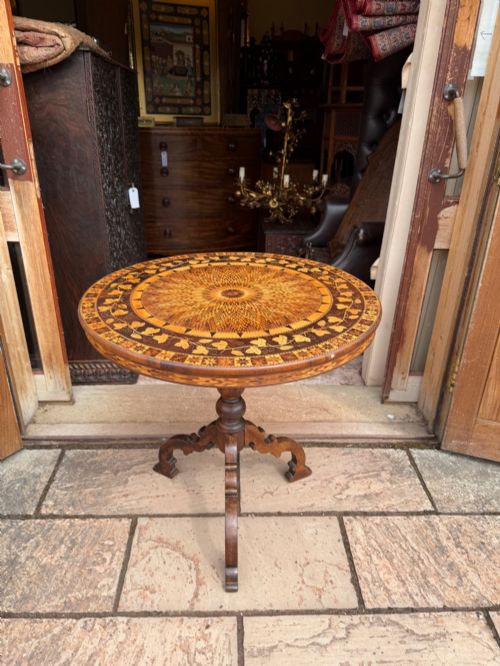
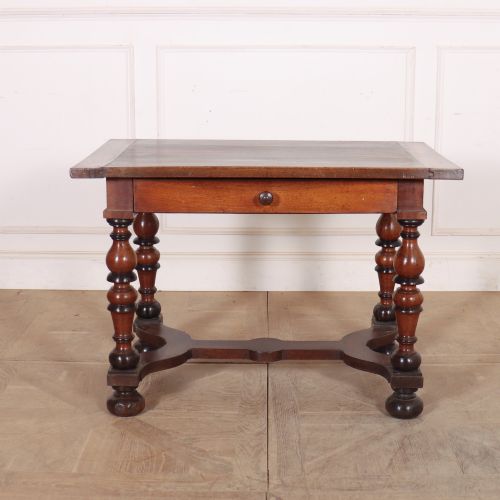
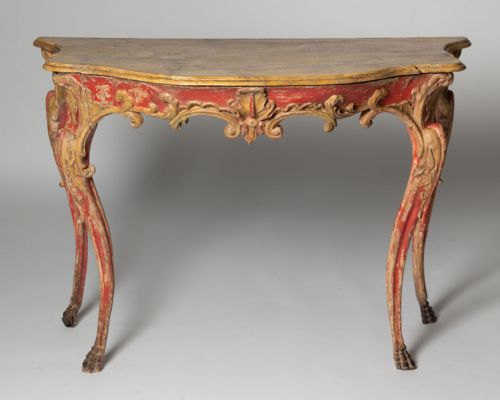
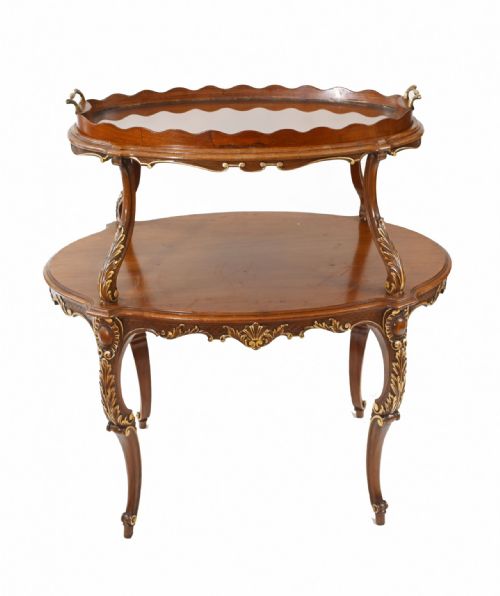
A vintage Italian side table brings ornate continental craftsmanship into a room, spanning forms from console tables and bedside cabinets to tiered etageres and occasional tables. The selection ranges widely across centuries, incorporating 18th-century painted consoles, 19th-century Sorrento marquetry pieces, and 1920s Art Deco walnut designs.
Buyers encounter numerous variations in object types, including drop-leaf tables, tilt-top tables, tray tables, and coffee tables. Materials shift from European walnut and kingwood to gesso, giltwood, and painted finishes reflecting Venetian and Florentine tastes.
How They Were Made
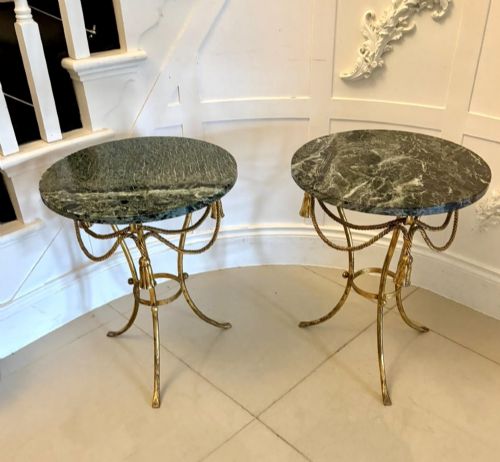
Cabinetmakers utilised dense hardwoods such as walnut, satin birch, and kingwood, often pairing timber frames with heavy stone surfaces like pink Salome marble, verde marble, and onyx. Construction frequently involved intricate marquetry and inlay work, particularly seen in Sorrento ware specimens.
Surface ornamentation relied heavily on hand painting, gesso, gold leaf, and silver gilt to achieve the dramatic effects characteristic of Rococo Revival, Baroque, and Neoclassical styles. Metal components such as brass, gilt metal, and engraved copper appeared on tray tops, bases, and lamp fittings.
Carved wooden dolphins happily double up as table legs and lamp bases across the 19th-century selections.
What Varies In Quality
Quality rests upon the precision of the cabinetwork and the finesse of the surface decoration, whether hand-carved dolphins, painted Venetian motifs, or detailed wood inlays. Finer examples display superior alignment in serpentine forms and well-chosen marble or onyx inserts.
The integrity of the original giltwood, paintwork, and gesso distinguishes standard production from exceptional decorative pieces. Patina on the timber and the crispness of carved details reveal the underlying hand of the maker.
The Vintage Italian Side Table Glossary
- Sorrento Ware
- A style of decorative woodwork originating from Sorrento featuring intricate micro-mosaic marquetry and geometric inlays. This technique decorated tea trays, low tables, and occasional furniture.
- Giltwood
- Timber that has been coated with a thin layer of gold leaf or powder over a prepared gesso ground. It provides a brilliant metallic sheen on carved consoles and side cupboards.
- Serpentine
- A gentle undulating convex and concave curve shape frequently utilised on the front edges of console tables and cabinets. It demands high carpentry skill to execute properly.
- Etagere
- A set of tiered open shelves designed for displaying small decorative objects or lamps. These multi-level pieces appeared frequently in 1930s interiors.
- Gesso
- A plaster-like mixture applied to wood surfaces to create a smooth base for painting or gilding. It allows craftsmen to model sharp relief details before finishing.
Vintage Italian Side Table: Frequently Asked Questions
What periods do these Italian tables cover?
The selection encompasses items from the 18th century, 19th century, and various decades of the 20th century. Pieces frequently reflect distinct historic movements including Baroque, Rococo, Neoclassical, and Art Deco.
Craftsmen across these periods utilised traditional regional techniques, maintaining characteristic motifs like carved dolphins and painted Venetian scenes.
How do I identify a Venetian painted table?
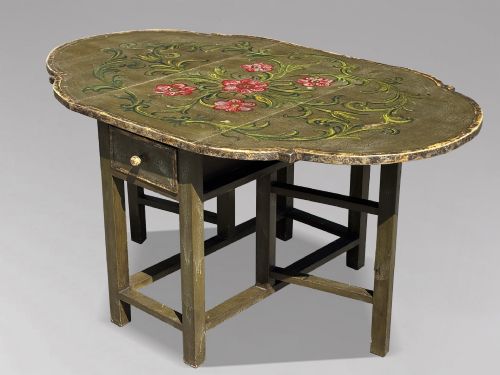
Venetian painted tables typically feature distinctive floral or figurative polychrome artwork upon distressed painted backgrounds, often executed in shades of green or cream. These pieces capture the ornate decorative aesthetics associated with Venetian interiors.
Many examples incorporate serpentine shaping and gilt accents to enhance their theatrical appearance.
What are Sorrento ware tables used for?
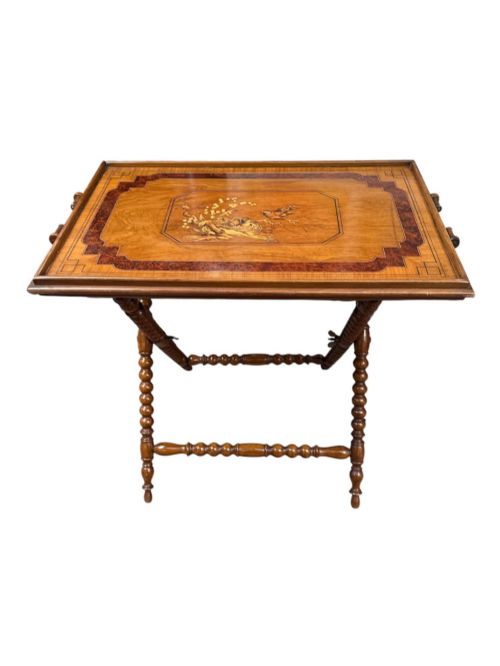
Sorrento ware tables served as decorative occasional pieces, butler's trays, or low tables designed for displaying items in reception rooms. Their detailed inlaid wooden surfaces showcased scenic views or geometric patterns.
These functional items doubled as portable trays or stable platforms for entertaining guests.