





18th Century Italian Table
When you search for an 18th century italian table, you enter a world of carved walnut, gilded console pieces, and marble surfaces shaped by Baroque and Neoclassical hands.
18th Century Italian Table
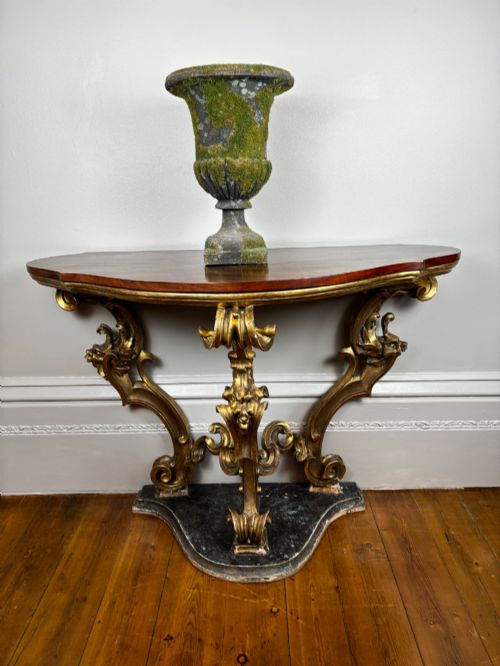
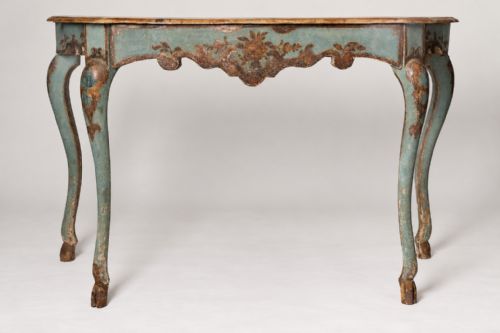
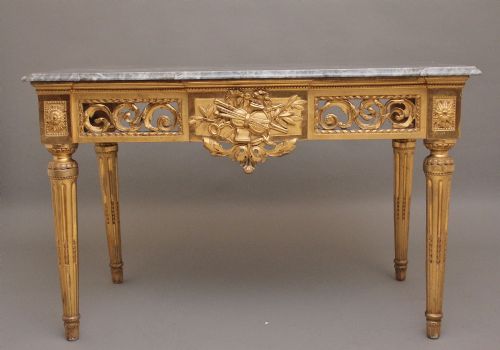
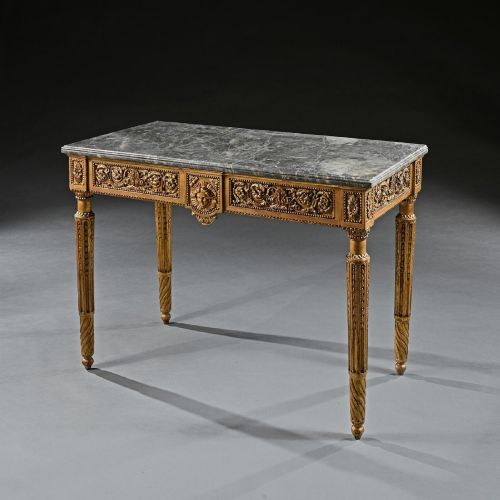
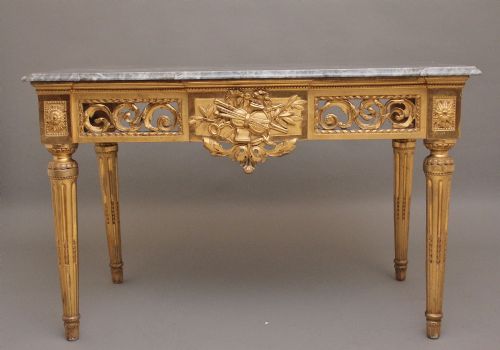
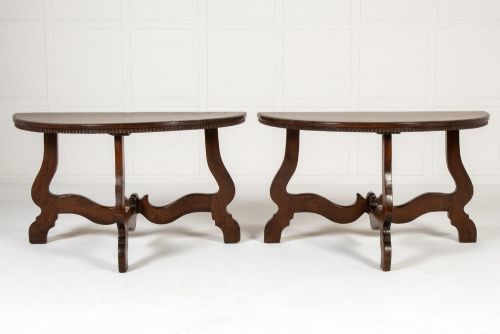
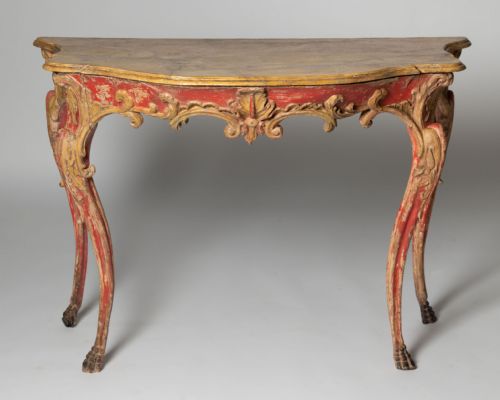
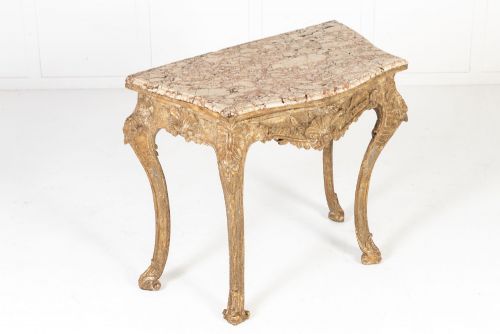
An 18th century italian table encompasses a grand variety of forms designed for formal rooms, domestic living, and religious interiors. The console table dominates the selection, frequently paired with marble tops and decorative carved giltwood or painted finishes.
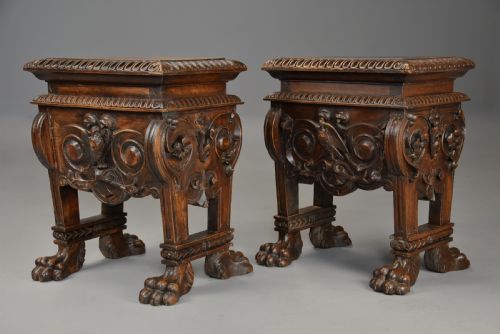
Beyond wall-mounted consoles, buyers encounter side tables, occasional tables, games tables, and larger dining or centre pieces. Walnut and giltwood appear most often, reflecting the decorative priorities of Venetian, Tuscan, and general Italian workshops from the period.
How They Were Made
Cabinetmakers utilised dense timbers such as walnut, fruitwood, and elm, often constructing tops from single planks or laying down intricate marquetry and specimen marble panels. Carved elements relied on soft woods suitable for deep relief work, primed with gesso before receiving layers of gold leaf, silver gilt, or paint.
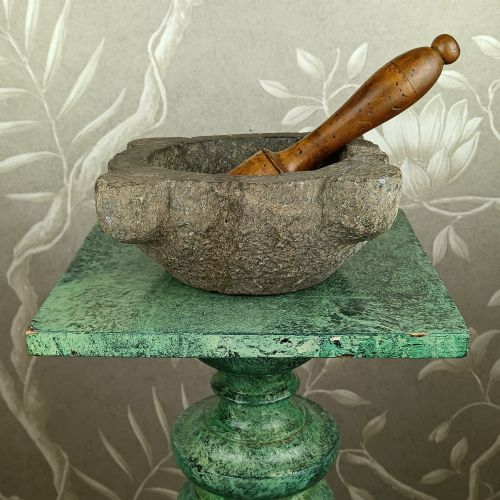
Decorative surfaces frequently incorporated scagliola or faux porphyry finishes to imitate costly stone. Joinery methods matched the heavy weight of marble slabs, securing wooden pedestals, demi-lune frames, and console bases with traditional pegged and tenoned joints.
18th Century Italian Table Retail Price Guide 2026
Typical asking prices for 18th century italian table among the pieces listed under this phrase on Sellingantiques today, from the lower quarter to the upper quarter. They describe what is for sale here now, not the wider market.
Materials span carved giltwood, burr walnut, lime wood, copper, and faux porphyry across the Italian regions.
What Varies in Quality
The standard of carving distinguishes standard domestic items from high-status commissions, where deep undercutting and crisp detailing bring acanthus leaves and scrollwork to life. Originality of surface finish, such as untouched giltwood or period painted decoration over gesso, dictates the historical integrity of the piece.
The choice of top material also elevates a piece, with inlaid specimen marbles, scagliola work, or heavy veined slabs marking out superior workshops. Structural balance within complex console frames and demi-lune shapes reveals the confidence of the original maker.
The 18th Century Italian Table Glossary
- Console table
- A table designed to stand against a wall, frequently supported by two or four carved legs and requiring wall fixation for stability.
- Giltwood
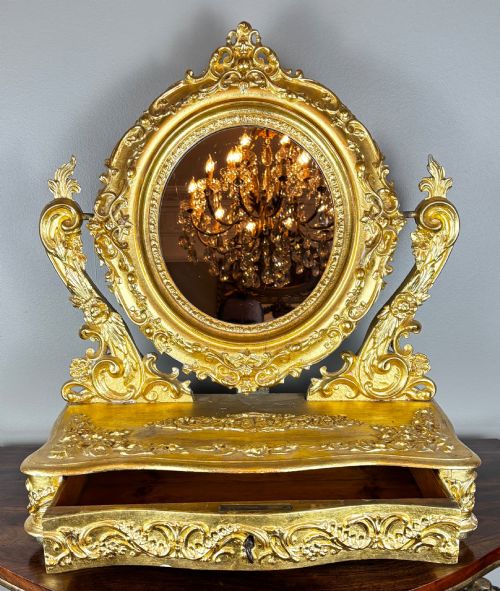
- Timber coated with fine gold leaf applied over a prepared gesso ground. This technique creates a brilliant reflective surface common on Italian Baroque and Rococo furniture.
- Scagliola
- A composite material made from pigmented selenite, glue, and plaster, applied to resemble inlaid marble and hardstones. Artisans polished the surface to achieve a stone-like sheen.
- Demi-lune
- Half-moon shaped, describing tables constructed with a straight back edge to sit flush against a wall and a curved front.
- Gesso
- A plaster mixture applied to wood surfaces as a smooth base for gilding and painting. It allows intricate low-relief ornamentation to be carved before the final metallic leaf is laid.
18th Century Italian Table: Frequently Asked Questions
Where did these tables stand?
Console tables stood against drawing room and hallway walls, frequently positioned beneath matching mirrors. Other forms served in dining rooms, antechambers, and bedchambers.
Larger walnut and side tables occupied the centres of grand rooms or served practical administrative duties in studies and palazzos.
How do I spot Neoclassical style?
Neoclassical pieces feature straight tapered legs, restrained symmetry, and classical motifs like urns and swags. This aesthetic replaced the curving asymmetry of the earlier Rococo period.
Proportions became more architectural and balanced towards the later decades of the century.
Are marble tops original?
Many console and centre tables retain their original heavy stone surfaces, though stone tops were heavy and vulnerable to cracking. Replacements occurred over centuries of domestic use.
Examining the rebate and underside of the frame helps determine whether the marble has belonged to the base since manufacture.
How do I clean giltwood?
Giltwood requires dusting with a very soft, dry brush to protect the delicate gold leaf layers. Moisture and modern cleaning chemicals damage the underlying gesso.
Professional conservation is recommended for any deeper cleaning or consolidation of flaking surfaces.