
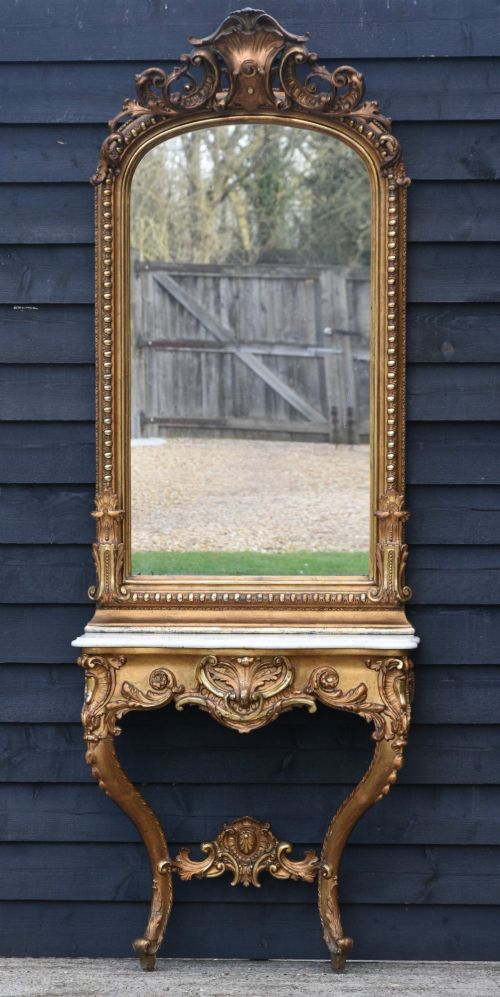
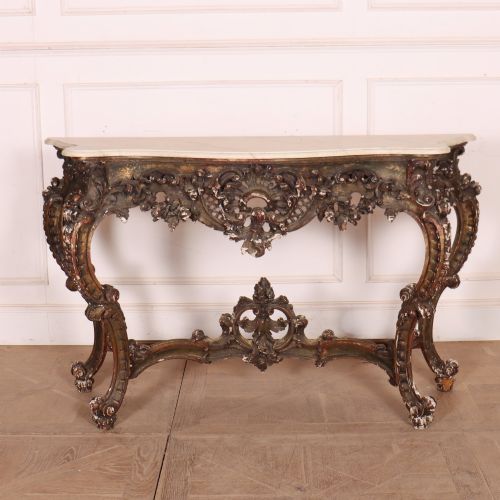
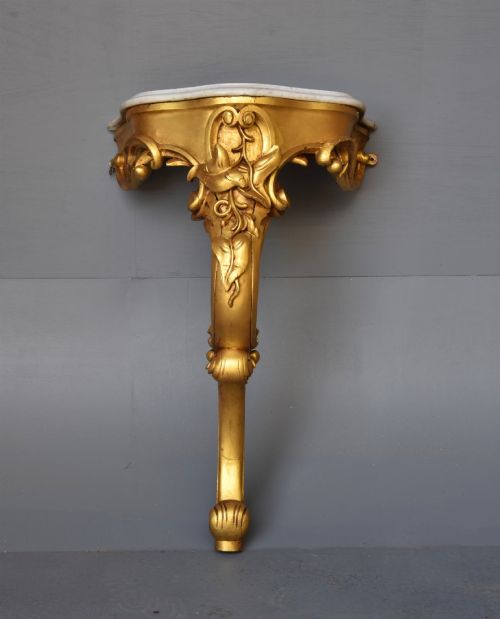
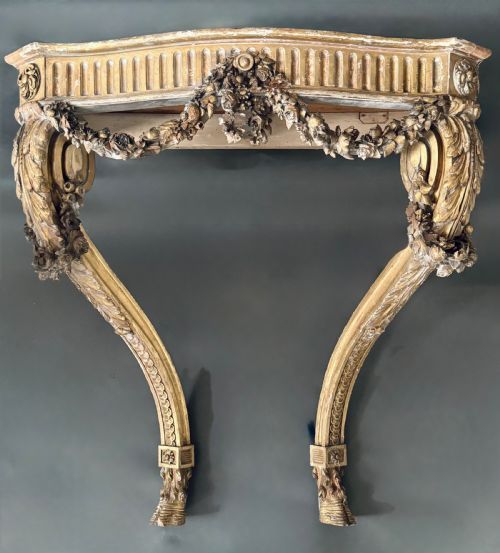

Carved Giltwood Wall Table
These carved giltwood wall tables bring grand proportion and reflective warmth to a room, holding their surface against a wall with architectural presence.
Defining the carved giltwood wall table
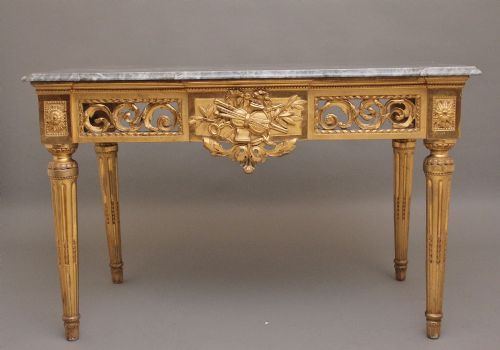
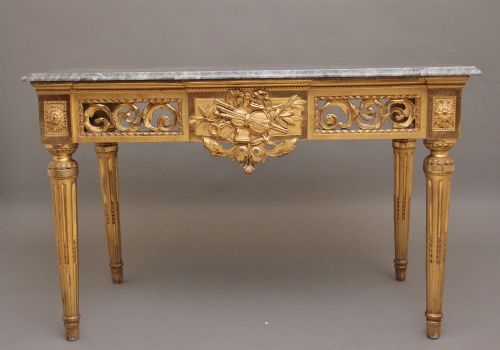
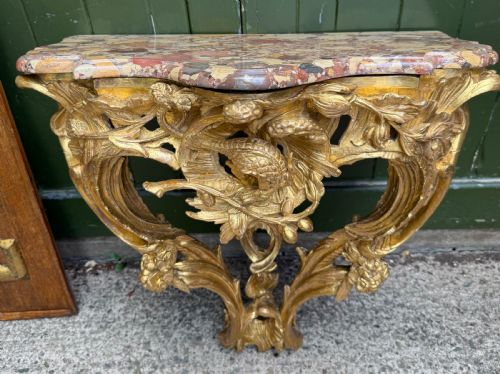
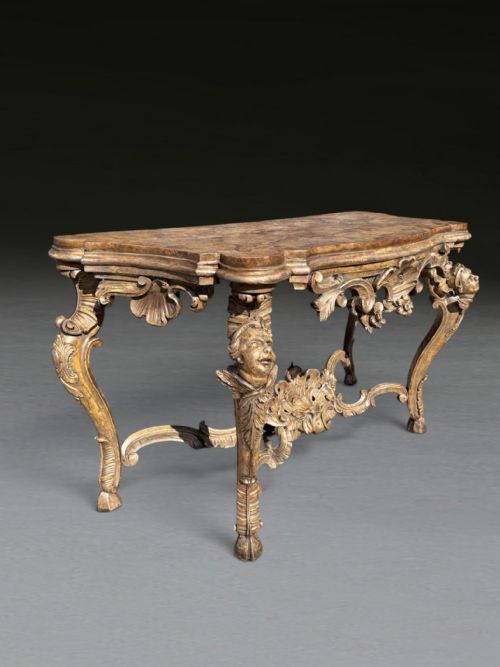
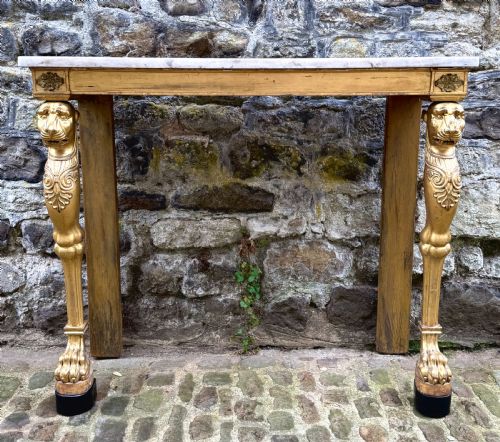
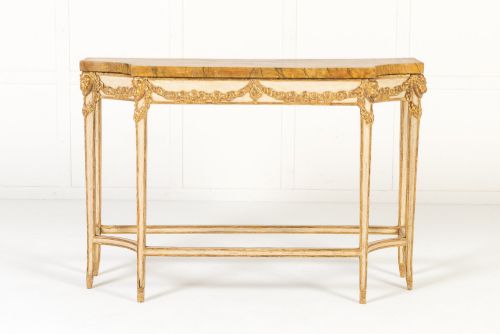
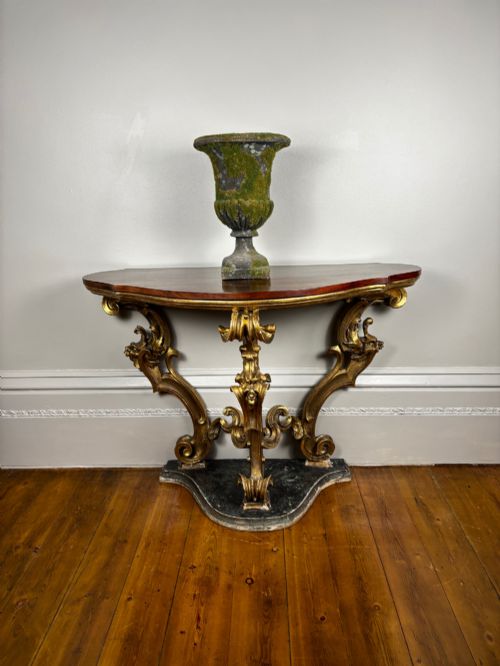
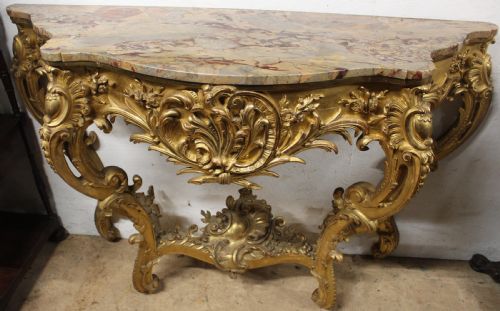
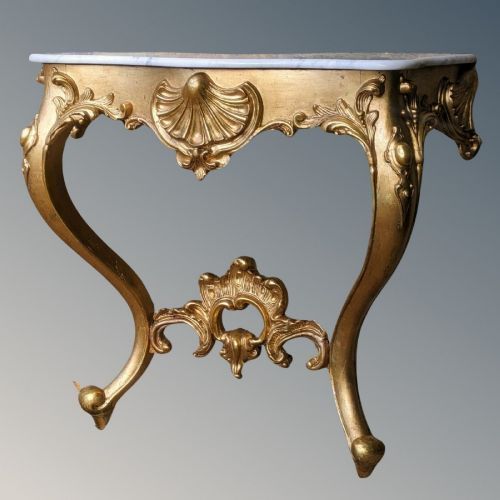
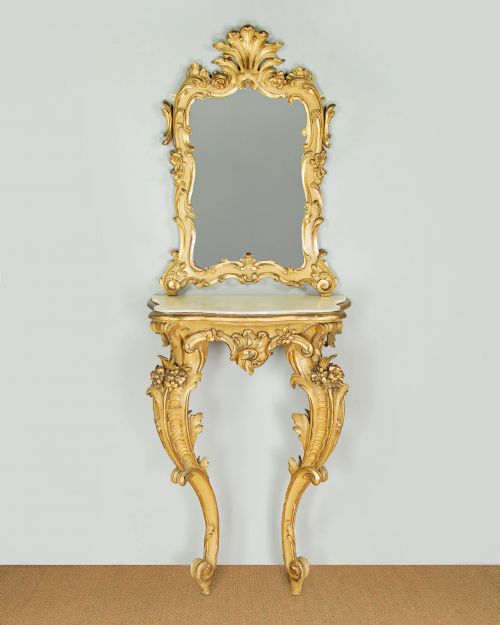
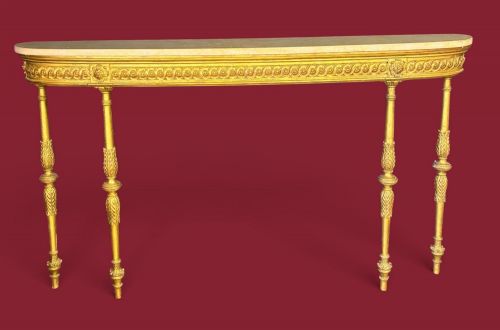
A carved giltwood wall table is a console designed to be mounted against a wall, frequently paired with a marble top and substantial carved decoration. These pieces originate in the eighteenth and nineteenth centuries, spanning distinct decorative movements from French Rococo to Italian Neoclassical designs. They serve as striking focal points in reception rooms, combining functional display surfaces with sculptural woodcarving.
The examples recorded here include both eighteenth-century Italian consoles and nineteenth-century variations. Buyers encounter pieces featuring traditional marble tops supported by heavily carved giltwood frames. Their scale and wall-mounted format distinguish them from freestanding tables, requiring secure fixing to architectural masonry or studwork.
Materials and construction methods
The construction relies on timber frames prepared with layers of gesso before the application of gold leaf. Carvers work directly into the wood to create elaborate scrolls, foliage, and structural supports characteristic of the period. Gesso acts as a smooth preparation layer, ensuring the metallic leaf catches the light evenly across the carved surface.
Marble slabs form the integral upper surfaces of these consoles, fitted directly onto the carved wooden rails. The combination of heavy stone and gilded timber creates a stable architectural unit designed for permanent placement against a wall. Gilding techniques involve the meticulous laying of gold leaf over the prepared gesso ground.
Retail Price Guide 2026
Typical UK retail prices for carved giltwood wall table, calculated from the Sellingantiques database of over a million retail prices indexed since 2003. This retail price guide relies exclusively on Sellingantiques data; no external sources or auction records are used, so the figures do not describe the wider market.
One recorded wall console includes a hidden drawer tucked neatly beneath the marble top, offering a secret spot for correspondence.
Assessing quality and craftsmanship
Quality reveals itself in the depth and crispness of the woodcarving. Superior examples exhibit undercut foliage and sharply defined motifs executed by skilled hands, whereas lesser pieces display softer, shallower relief work. The handling of the gesso and gold leaf also dictates visual success, with finer pieces showing subtle burnishing against matte details.
The integration of the marble top with the wooden base indicates the level of bespoke carpentry involved. Original stone slabs that follow the exact contours of the carved frame elevate the integrity of the piece. The overall proportion and balance of the carved supports determine the visual weight of the console in an interior space.
The Carved Giltwood Wall Table Glossary
- Giltwood
- Timber that has been decorated with gold leaf applied over a prepared gesso ground. This finish provides a luminous metallic surface that reflects ambient light.
- Console table
- A table designed to be fixed against a wall, frequently supported by ornamental brackets or legs at the front. These pieces rely on the wall for structural stability.
- Gesso
- A plaster mixture applied to wood surfaces as a smooth base for gilding and painting. It allows carvers to achieve sharp detail before the gold leaf is laid.
- Neoclassical
- A style spanning the eighteenth and nineteenth centuries drawing inspiration from classical antiquity. It introduces symmetry, straight lines, and classical motifs to furniture design.
Frequently Asked Questions
How do I secure a wall table?
Console tables designed for wall mounting require proper fixing to masonry or reinforced wall studs to bear the weight of the heavy marble top. Brackets or hidden fixings attached to the upper frame ensure stability against the wall.
Professional installation is recommended due to the combined weight of the timber frame and stone slab. The wall structure must be assessed to safely support the downward and outward pressure of the console.
Are these tables freestanding?
These pieces are designed specifically as wall-mounted consoles and typically lack rear legs, relying on the wall for support. They must be anchored correctly to remain upright and stable during use.
Freestanding capability is absent in these specific forms, which distinguishes them from dining or side tables. Their architectural design integrates them directly into the wall elevation of a room.
What maintenance does giltwood need?
Giltwood surfaces require gentle dusting with a soft, dry cloth to prevent the accumulation of particles without disturbing the delicate gold leaf. Moisture and harsh cleaning agents must be avoided entirely to protect the underlying gesso.
Placement away from direct sunlight and strong heat sources preserves the stability of the wood and the brilliance of the gilding. Careful handling ensures the metallic finish remains intact over generations of use.
How do I distinguish eighteenth and nineteenth-century pieces?
Eighteenth-century examples often exhibit the fluid asymmetry of Rococo carving or the early restraint of Neoclassical proportion. The handling of the wood and the specific depth of the gesso layers reflect the working methods of the period.
Nineteenth-century pieces frequently reinterpret these earlier styles with heavier proportions or slightly different construction details. Comparing the joinery and stylistic motifs helps establish the chronological origin of the console.