
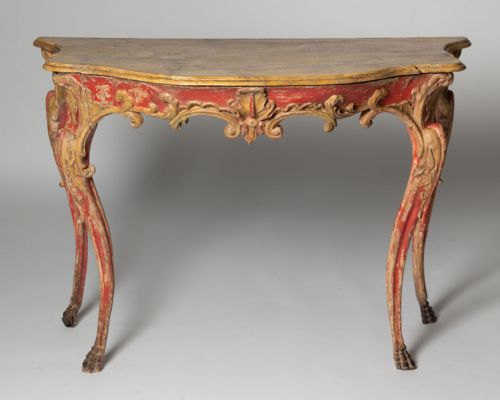
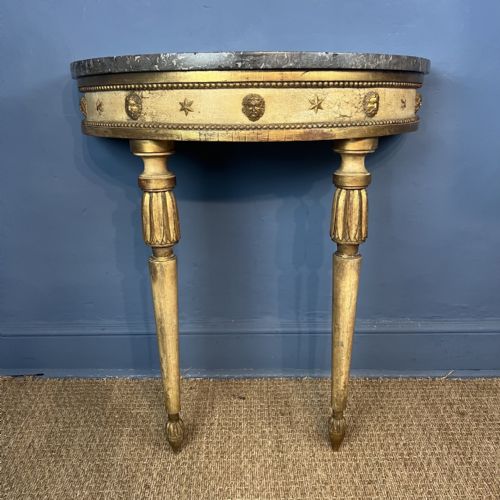


Gilt Wood Pier Table
When you search for a gilt wood pier table, you are looking at grand decorative furniture designed to sit against a wall beneath a mirror.
Gilt Wood Pier Table
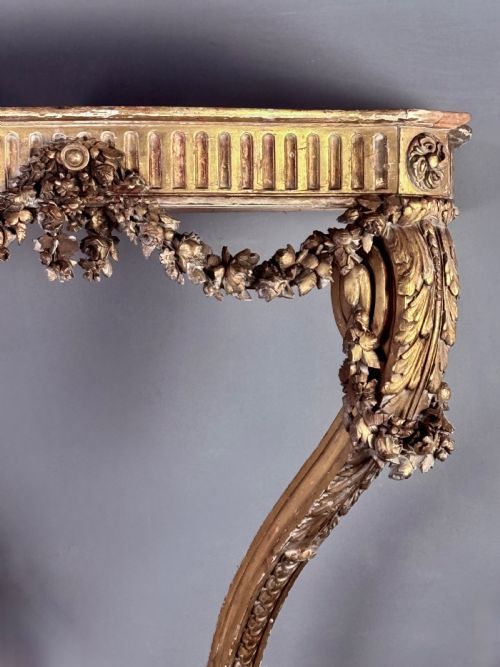
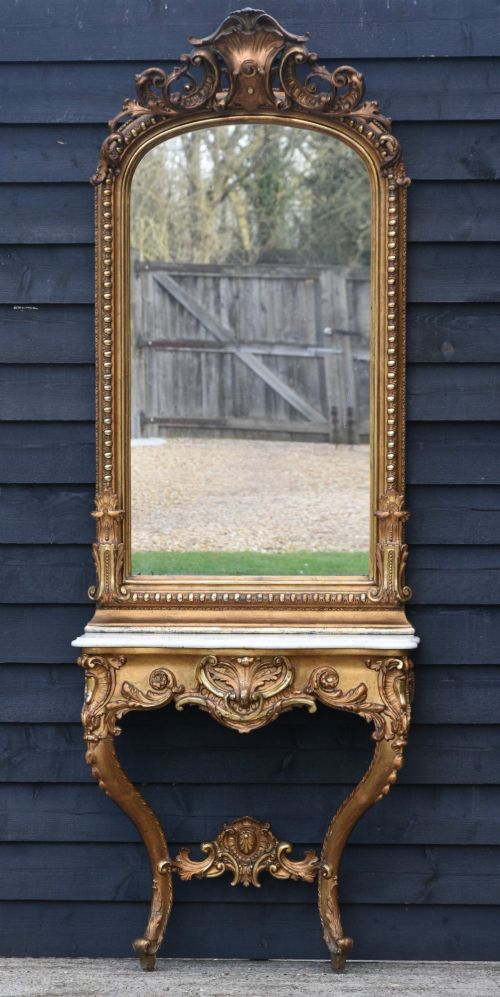
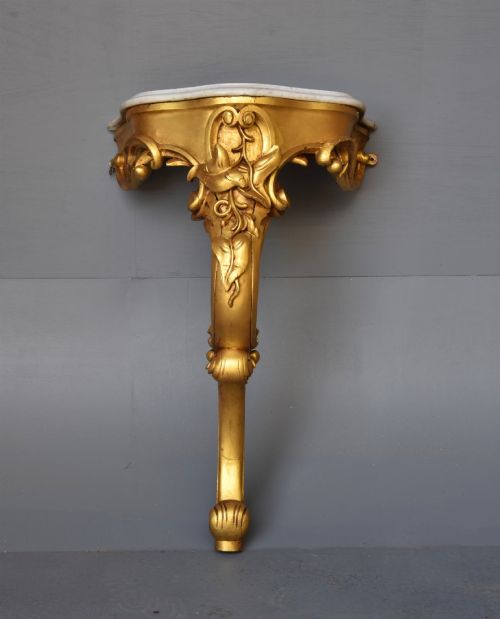
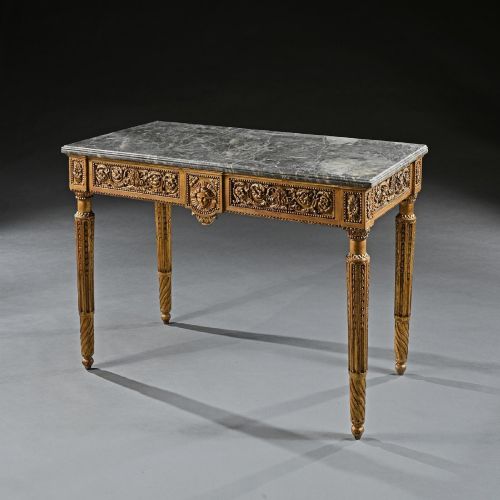
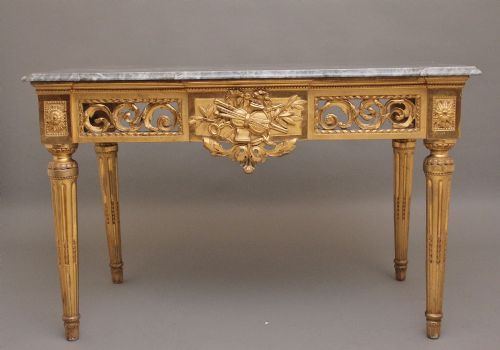
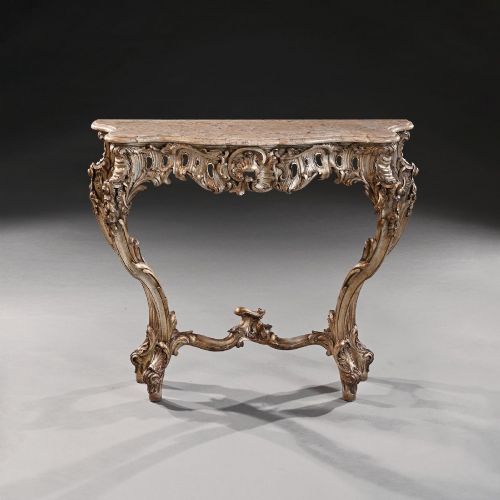
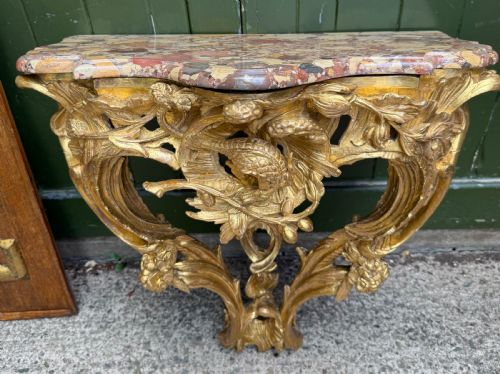
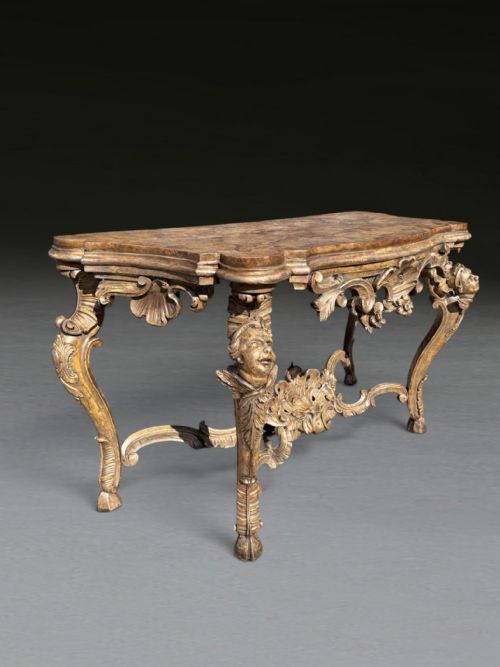
A gilt wood pier table is a console or side table typically designed to stand against the architectural pier between windows. These pieces appear frequently from the eighteenth and nineteenth centuries, spanning French, Italian, and English workshops.
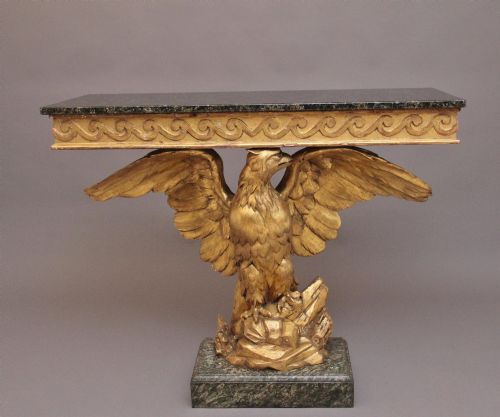
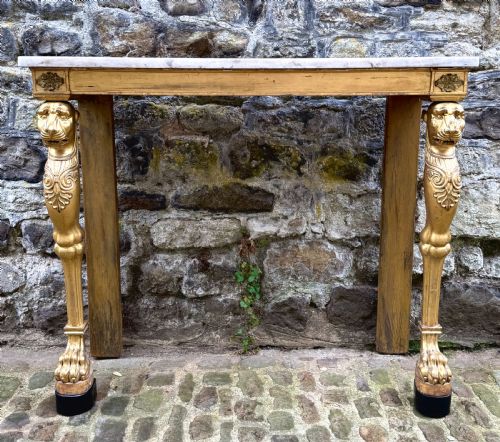
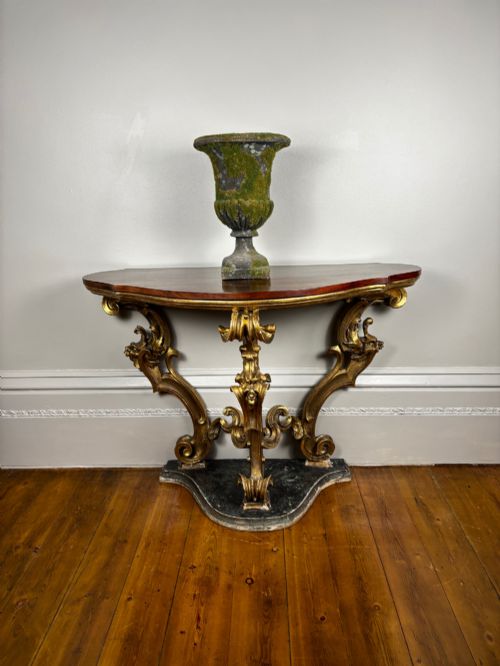
The form usually combines a heavily carved wooden base with a heavy stone top, often paired with a matching wall or pier mirror above. Examples range from compact small tables to monumental architectural pairs resting on lion paw supports.
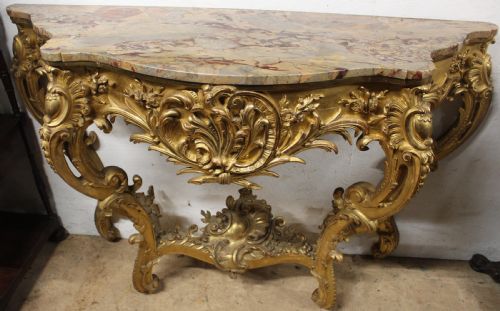
Surviving pieces reflect distinct regional decorative movements, including French Rococo, Italian Neoclassical, and Venetian styles. Many examples utilise painted and parcel gilt surfaces alongside traditional solid carving.
How they were made
Craftsmen shaped the structural frames from timber, applying layers of gesso to smooth the surface before laying fine gold or silver leaf. This metallic skin was often burnished to catch the light within a drawing room or hall.
Marble slabs formed the heavy upper surfaces, utilising figured varieties such as breccia and white Carrara. These stone tops rested directly upon the carved timber console bases without mechanical fixings.
Lion paws occasionally hold up the eighteenth century.
What varies in quality
The depth and crispness of the hand carving dictate the primary visual distinction between workshop tiers. Sharp undercut foliage and sculptural figures show superior sculptural execution compared to softer, flatter moulding.
The selection and thickness of the marble top also separate standard examples from finer commissions. Dense figuring and harmonious colouration in the stone indicate a more considered material choice during initial manufacture.
Felix Alfred Ternisien
The Gilt Wood Pier Table Glossary
- Giltwood
- Timber that has been coated with thin leaves of gold or metal alloy over a prepared gesso ground. This finish provides the characteristic metallic sheen seen on period furniture.
- Console table
- A table supported by wall brackets or console legs, designed to stand flat against a vertical surface. They often carry heavy marble slabs.
- Pier glass
- A tall wall mirror manufactured to hang in the wall space between two windows, frequently positioned directly above a matching console table.
- Gesso
- A plaster mixture applied to wooden furniture frames as a smooth preparation layer before gilding. It holds crisp relief detail during the carving process.
- Breccia
- A marble variety composed of broken fragments cemented together in a fine matrix, producing richly patterned stone tops.
Gilt Wood Pier Table: Frequently Asked Questions
Where should I place a gilt wood pier table?
These tables suit hallways, reception rooms, and drawing spaces where they sit flat against a wall. They traditionally occupy the narrow wall space between two windows beneath a matching mirror.
Because of their shallow depth, they provide a surface for decorative objects without blocking interior traffic flow.
Did these tables always have marble tops?
Most surviving examples feature heavy stone surfaces, including white Carrara and figured breccia marbles. These cool, hard tops contrasted with the warm metallic gleam of the gilded frames beneath.
Alternative surfaces include painted wood or faux porphyry finishes, though stone remains the predominant material found across the historical inventory.
How do I identify a nineteenth century piece?
Nineteenth century examples frequently draw inspiration from earlier eighteenth century Louis movements, incorporating revival styling such as Rococo curves and classical motifs. Workshops during this era often produced matched console and mirror sets.
Construction details, timber shrinkage, and the wear patterns on the gesso and gold leaf help distinguish nineteenth century output from later reproductions.
What is the difference between a console and a pier table?
The terms often overlap because many console tables were specifically designed to occupy the pier wall between architectural windows. Historically, a pier table relied partly on the wall for structural stability.
Both forms serve the same decorative function of displaying ornamental objects against a domestic wall.