




Painted Wood Wall Table
A painted wood wall table brings architectural presence and surface utility to a hallway or reception room.
Painted Wood Wall Table
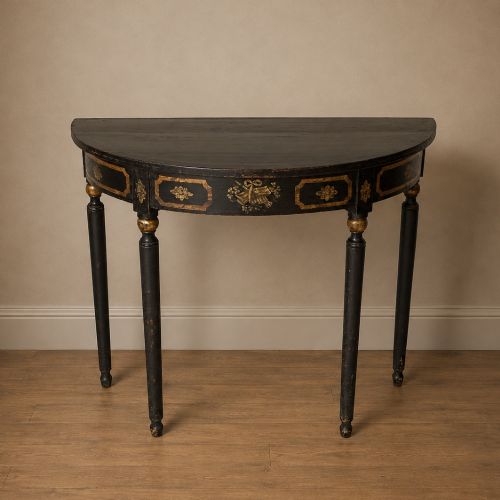
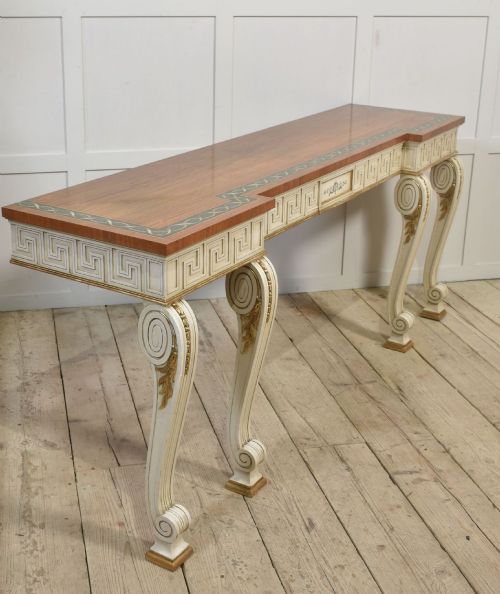
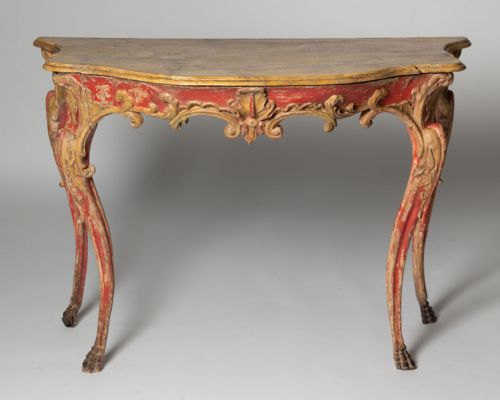
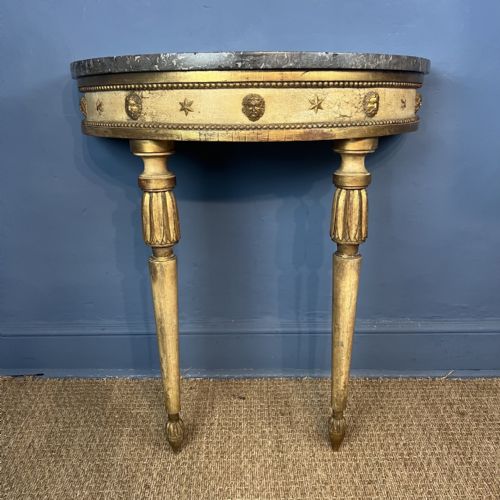
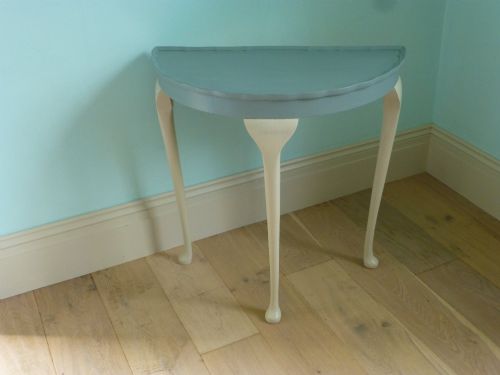
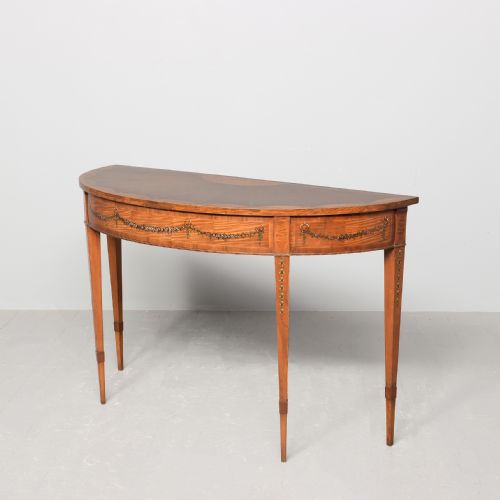
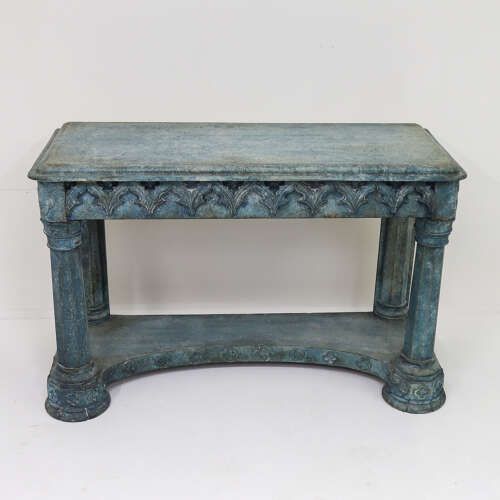
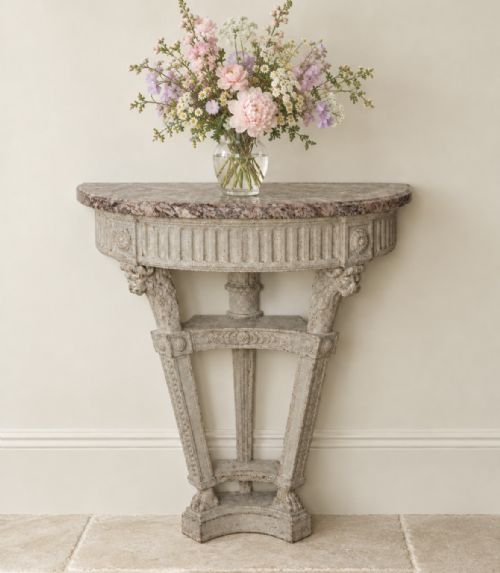
A painted wood wall table is primarily represented here by console tables designed to sit flush against a wall, frequently taking a demi-lune or serpentine profile. These pieces emerge across the eighteenth and nineteenth centuries, alongside examples from the early twentieth century.
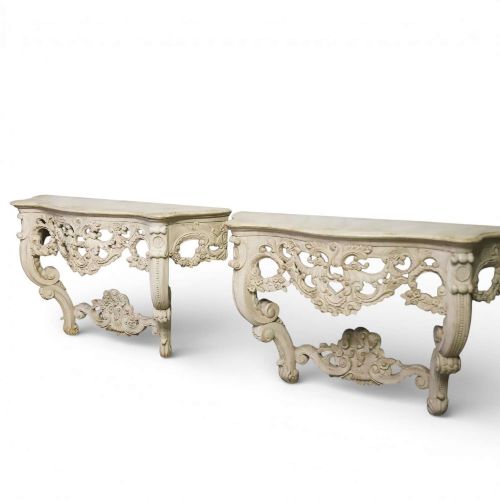
Origin points span from Sweden and France to Italy and England, encompassing styles such as Gustavian, Neoclassical, and French Rococo. Buyers will encounter both single tables and matched pairs finished in antique white, cream, or black paint.
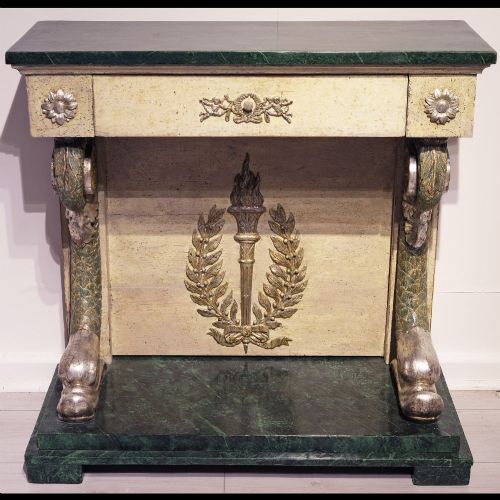
Console tables and wall-mounted side tables form the bulk of the selection, sometimes paired with marble tops or parcel gilt details.
Distinguishing quality and execution
Quality rests upon the crispness of the hand-carved woodwork and the integrity of the original paint surface rather than applied decoration alone. Period execution shows harmony between the proportions of the console frame and the weight of any fitted marble top.
Regional variations, such as the restrained elegance of Swedish Gustavian pieces or the ornate curves of Italian Rococo work, dictate the depth of detail in the carving and the subtlety of the parcel gilt highlights.
Listings span multiple centuries, uniting eighteenth-century Italian neoclassical works with nineteenth-century Swedish demi-lune designs and 1930s French hand-carved interpretations.
The Painted Wood Wall Table Glossary
- Demi-lune
- Having a half-moon shape with a flat back designed to sit directly against a wall. This profile is common among eighteenth and nineteenth-century console tables.
- Console table
- A table supported by wall brackets or console legs, requiring attachment to the wall for stability. These pieces function as decorative side tables in halls and reception rooms.
- Parcel gilt
- Partially gilded with gold leaf to highlight specific carved details against a painted wood background. This technique accents mouldings and floral motifs.
- Faux porphyry
- A decorative paint finish designed to imitate the deep reddish-purple igneous rock prized in antiquity. It appears on Italian neoclassical furniture surfaces.
- Gesso
- A plaster-like mixture applied to wood surfaces to provide a smooth base for painting or gilding. It allows for crisp carved relief work under the final finish.
Painted Wood Wall Table: Frequently Asked Questions
How do I secure a wall console table?
These tables are designed to bear weight against a vertical surface and typically require structural fixings into the wall for safe support. Professional installation ensures the frame remains stable, particularly when carrying heavy marble tops.
Placement depends on the clearance of the hallway or room, as demi-lune and serpentine shapes project outward from the wall by varying distances.
What is the difference between Gustavian and French console tables?
Gustavian pieces originate from Sweden and tend to feature simpler, neoclassical lines with restrained carvings and pale, matte painted finishes. French tables from periods like Louis XVI or the Rococo style often display more elaborate ornamentation, gilding, and serpentine contours.
Both regional traditions utilise painted wood frames, but the Swedish aesthetic leans toward functional symmetry while the French focus on decorative flourish.
Can I place a marble top table in a hallway?
Marble tops offer a hard, durable surface suited to the daily use of an entrance hall or reception space. The stone adds significant weight, which helps anchor the wall table in position.
Maintenance involves wiping the stone with a damp cloth and avoiding acidic cleaners that might etch the polished surface.
How do I identify an 18th-century piece?
Eighteenth-century examples often exhibit hand-cut joinery, older paint layers showing natural craquelure, and specific stylistic markers such as neoclassical drapery or restrained rococo curves. Woods beneath the paint typically include pine, oak, or fruitwood depending on the region of origin.
Comparing the construction methods on the underside of the table helps verify the period against later twentieth-century revivals.