



Cream French Console Table
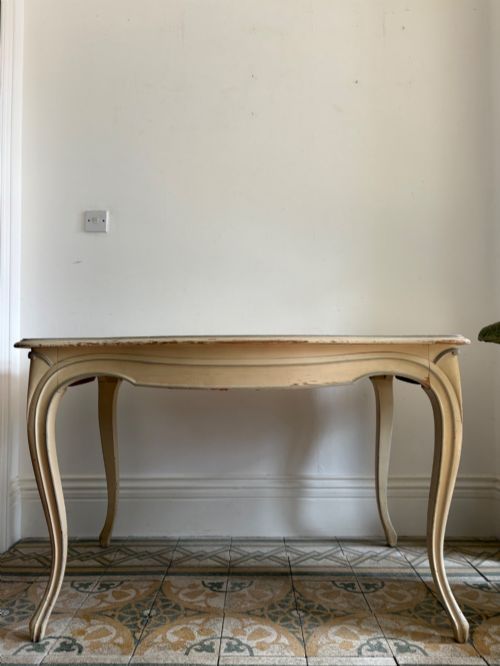
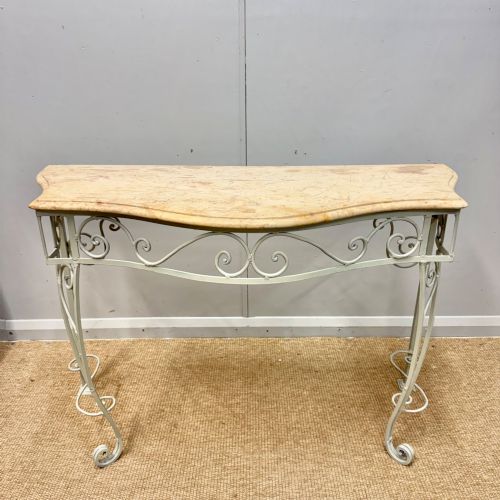
A cream french console table brings architectural grace to a hallway or drawing room through serpentine lines and carved details.
Cream French Console Table
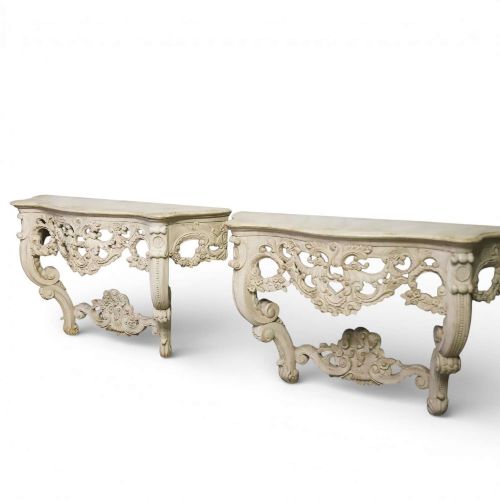
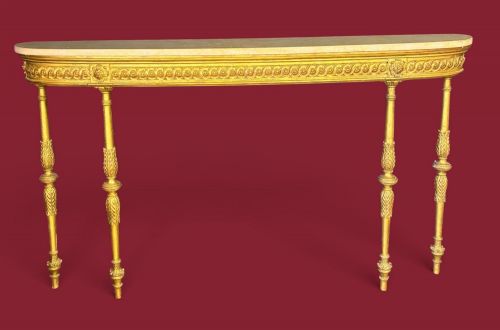
A cream french console table is primarily found in forms dating from the eighteenth century through to the 1930s, encompassing styles such as Rococo, Neoclassical, and French Provincial. These pieces serve as narrow side tables designed to stand against a wall, frequently displaying demi-lune or serpentine fronts.
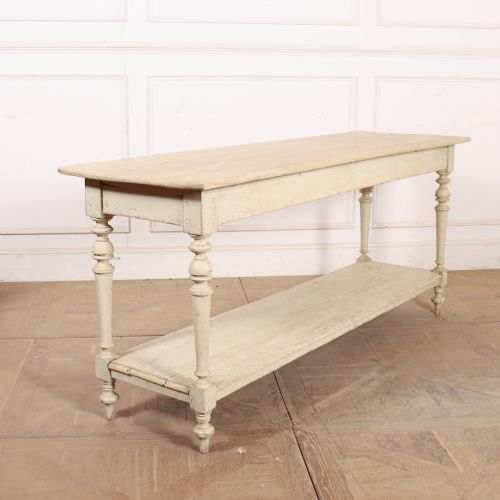
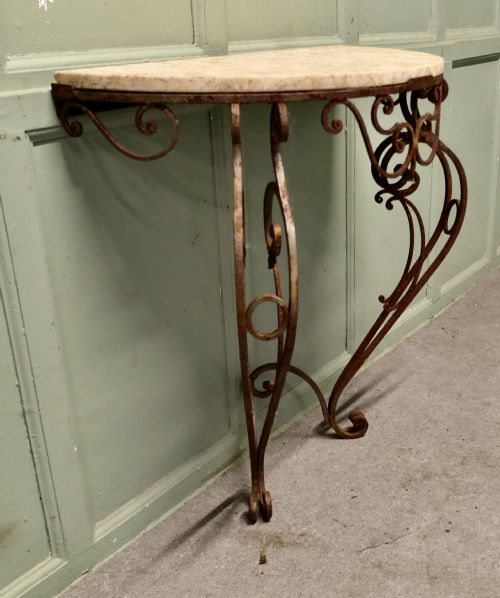
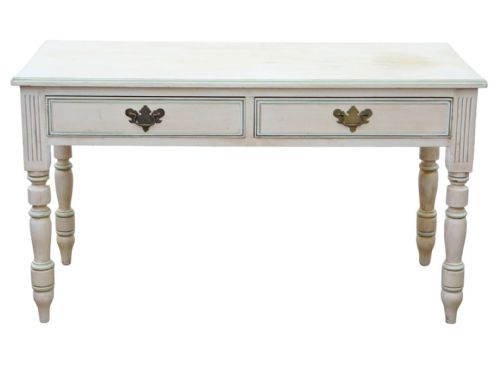
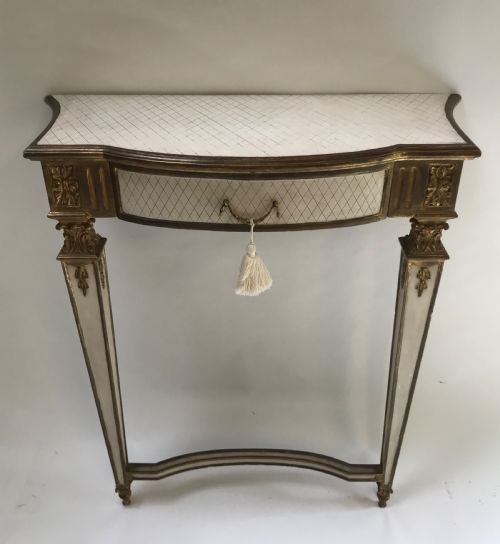
The selection includes specific variations such as wall-mounted console tables, drapers tables, and writing tables adapted for decorative placement in domestic interiors. While the majority originate from French workshops, related continental pieces also appear within the inventory.
Makers and artisans utilised traditional forms including cabriole legs and parcel gilt decoration to create surfaces suited for display. Buyers encounter items ranging from simple painted wood constructions to elaborate carved pieces featuring marble tops.
What varies in quality
Quality rests in the crispness of the hand-carved wooden details and the integration of the marble top with the wooden base. Pieces featuring deep, deliberate carving on cabriole legs and friezes demonstrate superior craftsmanship compared to simpler moulded examples.
The handling of the painted finish dictates visual success, with original layered paint and parcel gilt accents holding more distinction than flat modern repainting. Structural integrity in the joints and the weight and figuring of the inset marble also separate standard examples from finer works.
Listings span from the eighteenth century to the 1930s, uniting painted wood, wrought iron, and marble in various regional French styles.
The Cream French Console Table Glossary
- Cabriole leg
- A furniture leg that curves outward and then tapers inward, mimicking an animal's leg. This form is typical of eighteenth-century design and later French revivals.
- Demi-lune
- A half-moon shape applied to table tops and frames. These tables sit flush against a wall in narrow spaces.
- Giltwood
- Timber coated with gold leaf or gold paint to create a lustrous decorative surface. It often highlights carved mouldings on formal tables.
- Serpentine front
- A furniture front characterised by a undulating line, curving outward in the centre and inward at the sides. This contour adds movement to console tables.
- Parcel gilt
- A decorative technique where only specific portions of an object are gilded, leaving the underlying painted wood visible. This creates contrast on carved details.
Cream French Console Table: Frequently Asked Questions
Where should I place a console table?
These narrow tables suit hallways, entryways, and living rooms where floor space is limited. Their shallow depth allows them to sit against walls without obstructing pathways.
They also function effectively beneath mirrors or artwork in dining spaces and bedrooms, providing a surface for lamps and decorative objects.
How do I care for a marble top?
Marble requires protection from acidic substances such as wine, citrus, and vinegar, which can etch the polished surface. Wipe spills promptly with a damp cloth and mild soap.
Avoid placing abrasive items directly onto the stone to prevent scratching the polished finish over time.
Are these tables sturdy enough for daily use?
Most console tables are designed primarily for display rather than heavy weight-bearing tasks. Wooden frames with fixed wall attachments or robust wrought iron structures offer reliable stability for everyday items.
Checking the joints and leg stability helps determine the functional capacity of older pieces.
How do I distinguish regional styles?
French Provincial and country styles feature simpler, heavier construction with restrained carving and rustic painted finishes. In contrast, Rococo and Neoclassical examples display refined ornamentation, slender cabriole legs, and sophisticated parcel gilt details.
Examining the depth of the carving and the complexity of the silhouette clarifies the stylistic origin.