
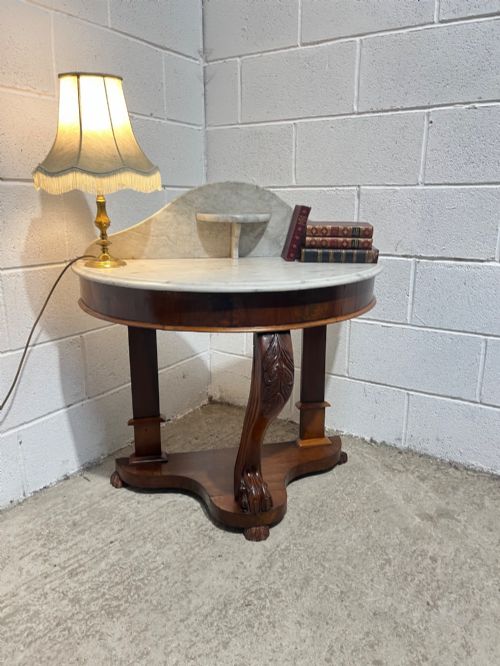
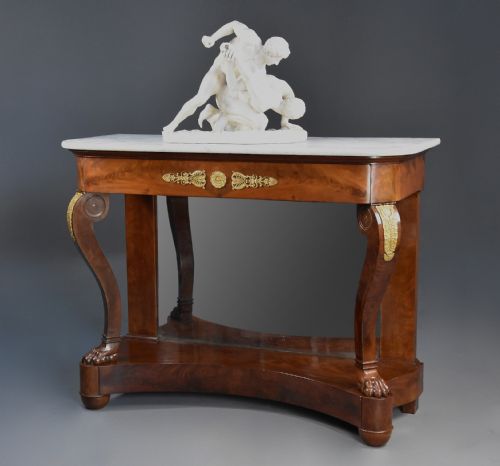
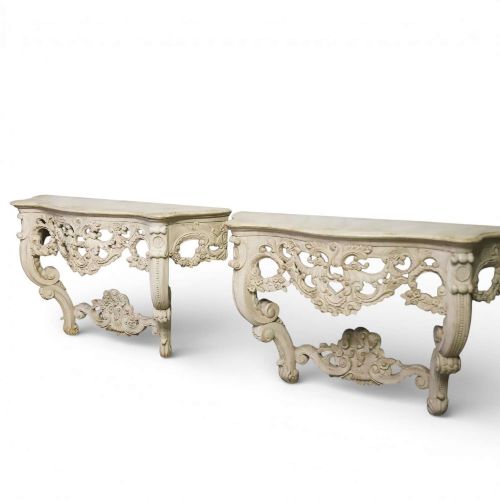
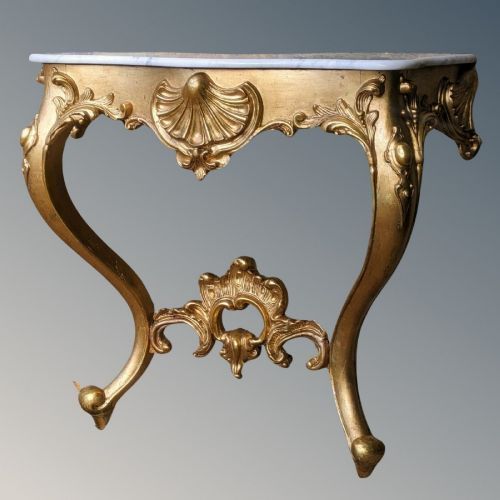


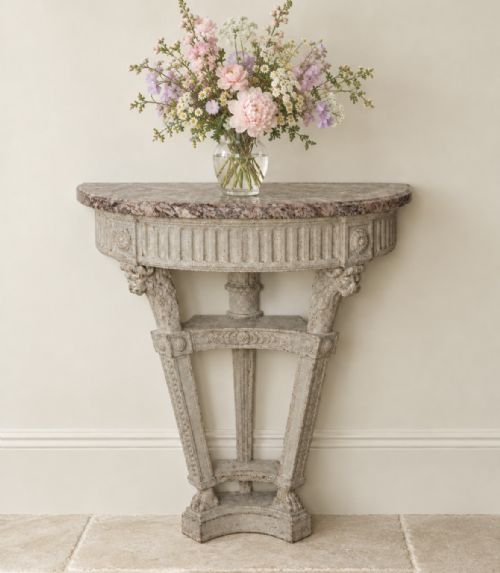


Antique White Wall Table
An antique white wall table brings architectural grace to a hallway or drawing room, offering a slender profile designed to anchor a mirror.
Antique White Wall Table
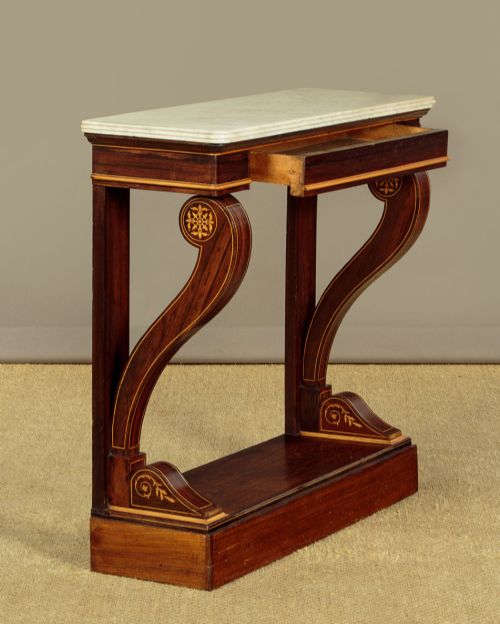
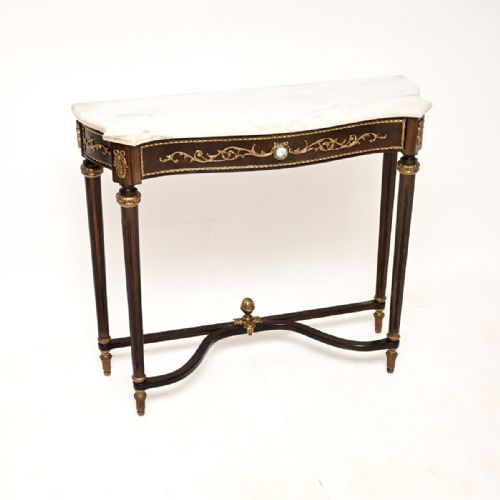
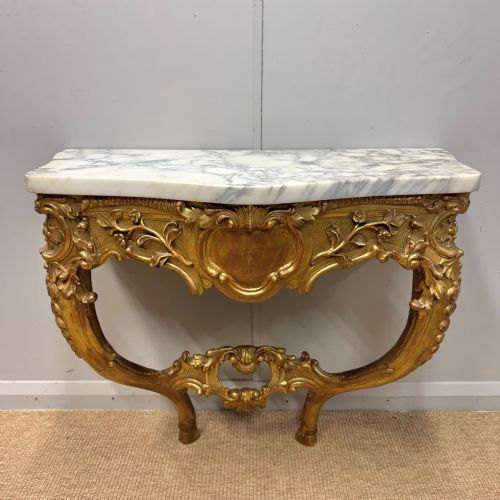
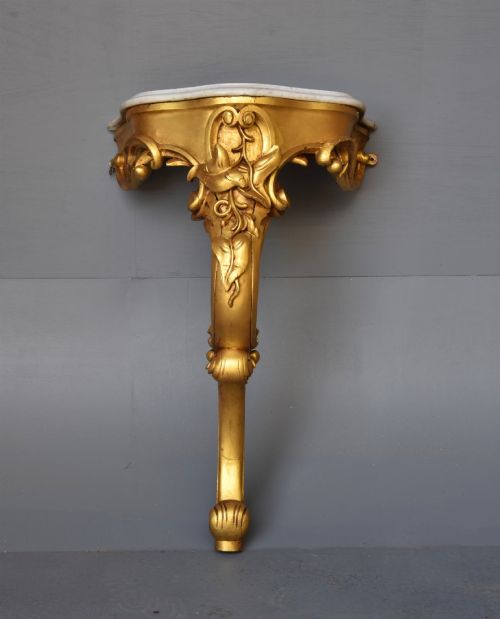
When you search for an antique white wall table, you encounter console and pier tables designed to stand flush against a wall, frequently supported by brackets or front legs because their weight relies partly on wall fixings. The examples meeting this description on this page span the eighteenth, nineteenth, and early twentieth centuries, drawing on French Rococo Revival, Gustavian, and Victorian traditions.
You are most likely to meet painted wood finishes and antique white surfaces alongside giltwood and mahogany variants, often topped with heavy slabs of white Carrara or coloured marble. These pieces include both single tables and matched pairs, ranging from small nineteenth-century formats to large nineteenth-century examples and nineteen-thirties hand-carved interpretations.
Console tables and pier tables serve primarily as decorative ledges beneath wall mirrors, originally positioned between windows or along empty expanses of panelling to reflect light and display ornamental objects.
Materials and Construction
Cabinetmakers constructed the foundational frames from timber such as mahogany, carved wood, and painted wood, applying gesso layers to build up intricate relief ornaments before finishing the surfaces with paint or gilding.
Heavy marble slabs, particularly white Carrara, were cut and polished to form the inset tops, resting directly upon the wooden frames to provide a stable, cool surface suited to interior display.
The object forms on this page include console tables, pier tables, console and pier tables, and sauce boats.
Factors of Quality
The distinction between standard execution and high quality lies in the depth and sharpness of the hand-carving within the gesso and wood, where crisp relief work reflects superior craftsmanship rather than mechanical moulding.
The integration of the marble top with the wooden frieze dictates overall cohesion, with superior pieces featuring perfectly fitted stone slabs that match the exact contours of the carved aprons below.
The Antique White Wall Table Glossary
- Console table
- A wall-mounted or bracket-supported table designed to stand against a vertical surface, frequently paired with a matching mirror.
- Pier table
- A specific type of side table made to fit the pier space between two windows, typically surmounted by a tall mirror.
- Gesso
- A plaster-like mixture applied to wood frames and carved or moulded into intricate decorative reliefs before gilding or painting.
- Carrara marble
- A type of white or blue-grey marble quarried in Italy, commonly utilised for classical tabletop surfaces.
- Demi-lune
- A half-moon shape characteristic of semicircles used for console table tops and their supporting frames.
- Rococo Revival
- A nineteenth-century design movement resurrecting the asymmetrical scrolls, shell motifs, and natural curves of the eighteenth-century French style.
Antique White Wall Table: Frequently Asked Questions
What is an antique white wall table?
An antique white wall table is a console or pier table finished in historic white paint or gesso, designed to stand flat against a room's wall.
These pieces typically feature heavy marble tops and decorative carved wooden frames originating from nineteenth-century or earlier European workshops.
How were wall tables used historically?
Historically, these tables stood in grand hallways, saloons, and drawing rooms, positioned to display porcelain, clocks, or decorative ornaments.
They were frequently placed beneath large wall mirrors between windows to bounce natural light around dimly lit period interiors.
Do wall tables require wall fixing?
Many traditional console tables rely on wall brackets or structural fixings for complete stability because their slender front legs alone cannot support heavy marble tops safely.
Securing the frame to the wall prevents tipping, especially given the substantial weight of the stone slabs resting on top.
How do I identify Rococo Revival styles?
Rococo Revival pieces show characteristic asymmetrical C-scrolls, floral garlands, and naturalistic shell motifs carved into the wooden or gesso frame.
Originating in the nineteenth century, this style reinterprets eighteenth-century French aesthetics with heavier timbers and pronounced sculptural depth.