

Rococo Style Console
These rococo style console pieces bring swirling carved ornamentation and grand display to a room, drawing the eye instantly.
Rococo Style Console
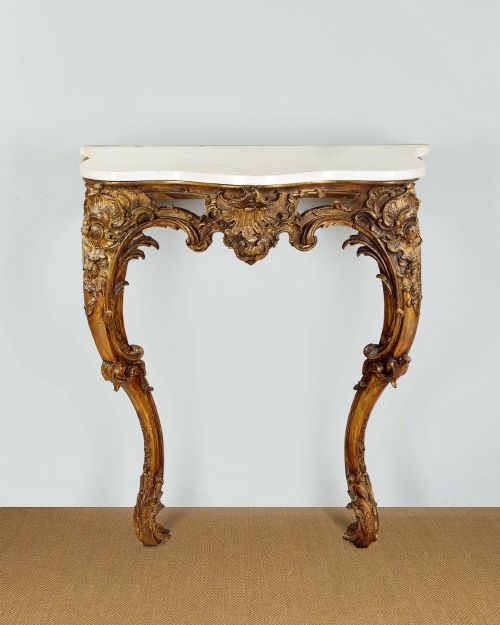
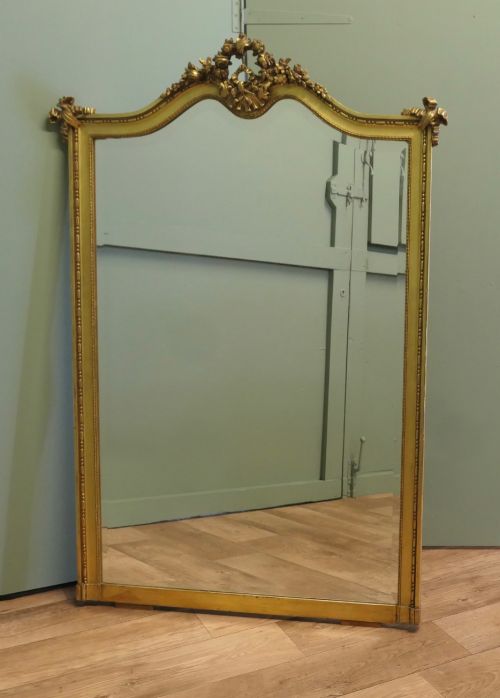
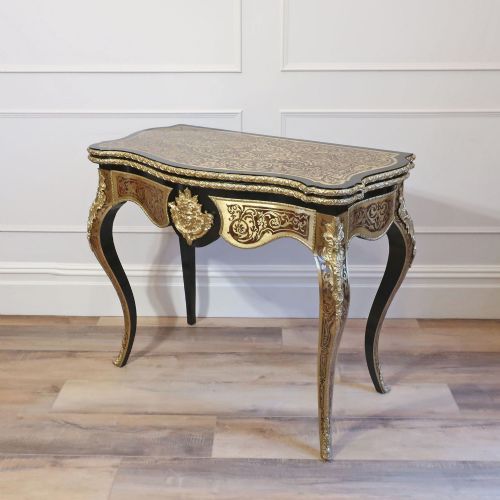
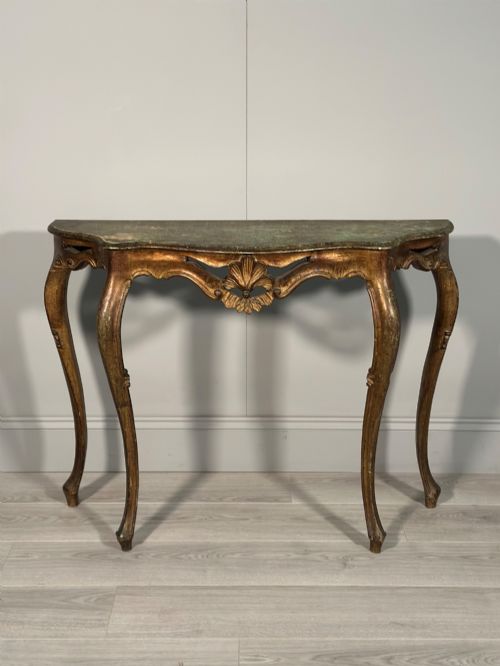
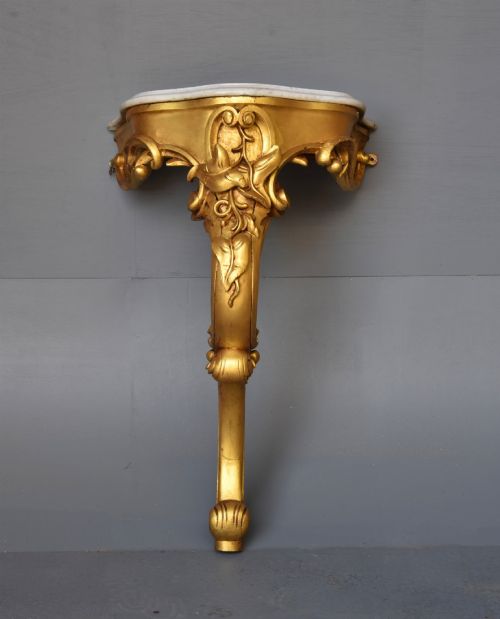
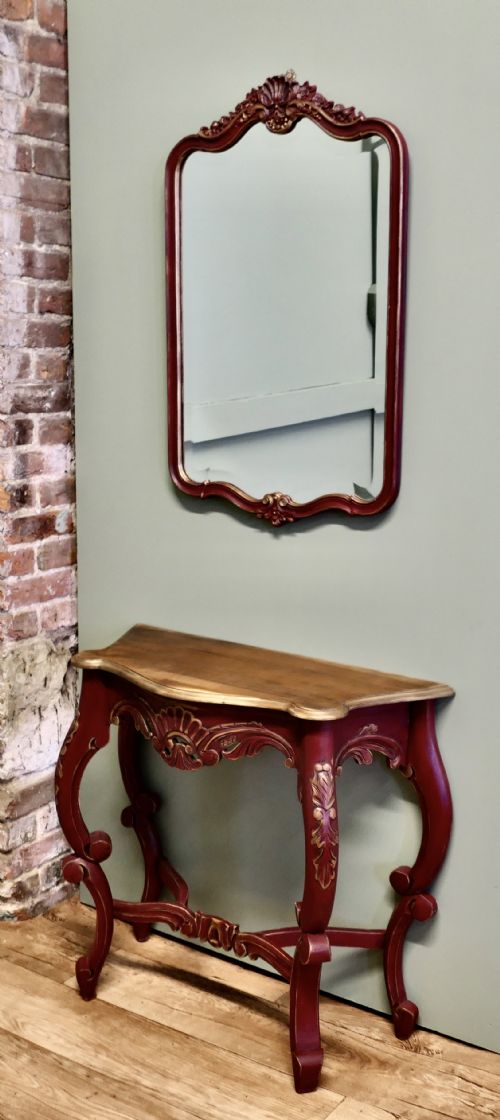
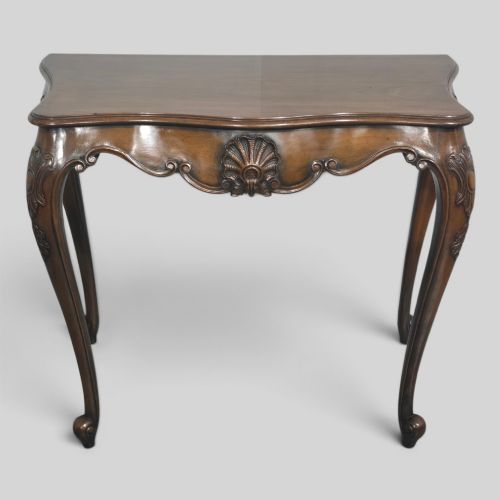
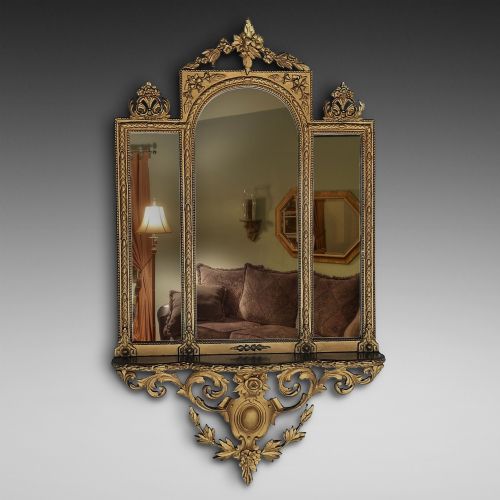
A rococo style console represents a decorative furniture form designed to sit against a wall, frequently accompanied by a matching wall mirror or bracket. The selection draws on pieces originating from the eighteenth century through to the nineteenth and early twentieth centuries, capturing the fluid movement and asymmetrical flourishes of the revival periods.
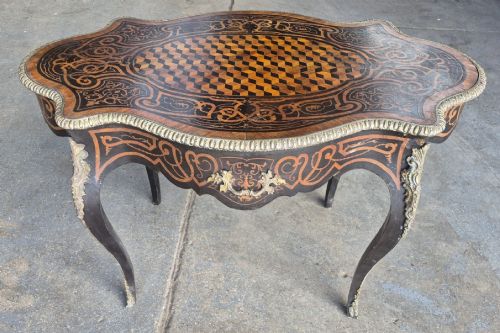
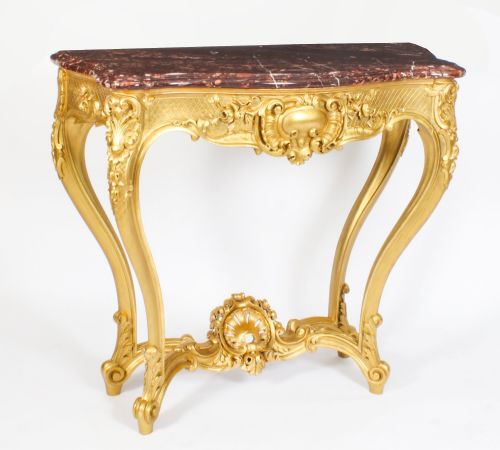
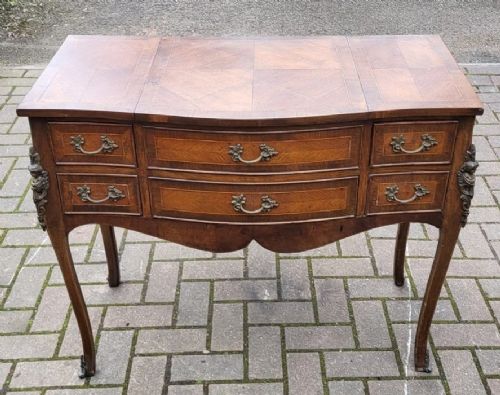
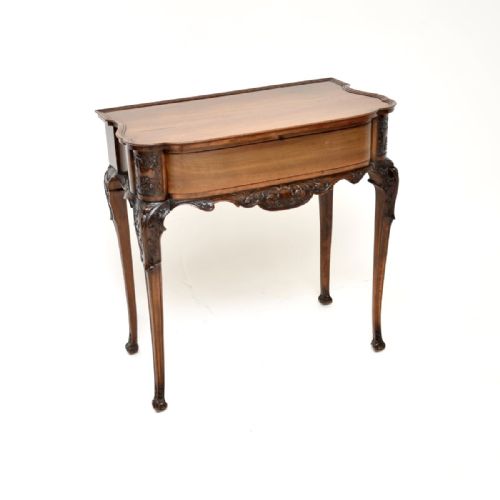
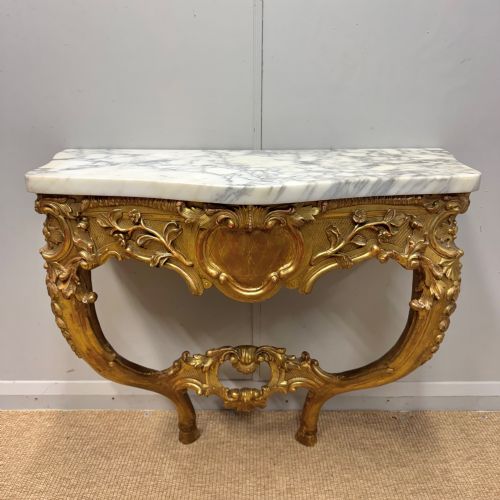
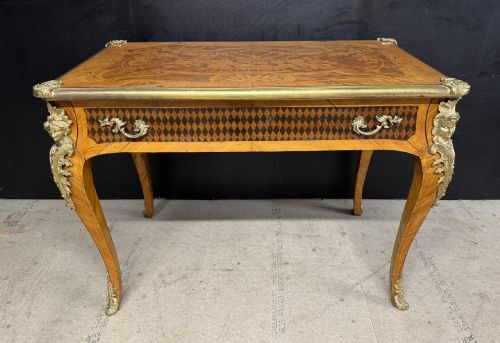
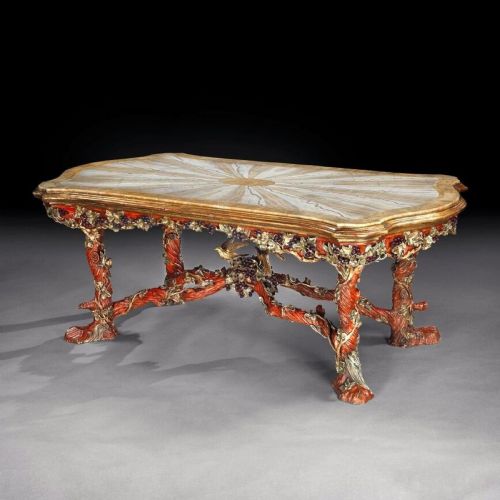
The most common formats met here include marble-topped console tables executed in gilded or carved wood, alongside side tables, centre tables, and card tables bearing similar stylistic traits. Makers and workshops across France, Italy, and Britain embraced these ornamental vocabulary shifts, producing items suited for formal reception rooms and hallways.
Materials and construction
Makers utilised solid timbers such as walnut, oak, and mahogany for the underlying framework, often applying burr walnut or marquetry veneers to flat surfaces. Structural elements received elaborate hand-carved details in wood or built up layers of gesso to create high-relief scrolls, acanthus leaves, and floral motifs.
Finishes relied heavily on hand-gilding with leaf, parcel-gilt highlights over painted white or coloured grounds, and ebonised treatments. Heavy stone surfaces in white Carrara, rouge marble, and onyx were cut and polished to fit precisely onto the wooden bases.
Rococo Style Console Retail Price Guide 2026
Typical asking prices for rococo style console among the pieces listed under this phrase on Sellingantiques today, from the lower quarter to the upper quarter. They describe what is for sale here now, not the wider market.
Materials recorded across these listings include solid carved wood, giltwood, gesso, marble, walnut, brass, and ormolu.
Judging the work
Quality rests in the crispness and depth of the hand-carving, where sharp undulations and undercut foliage separate superior items from softer, mechanically churned decoration. The integration between the stone top and the wooden underframe demonstrates the skill involved in the original commission.
The application of the surface finish further distinguishes the grade of an item, with burnished gold leaf and hand-mixed patination holding up differently over time compared to heavy modern repaintings. Structural integrity within the joinery of the serpentine aprons and cabriole legs determines how well the piece bears the weight of heavy marble.
Amleto Bertoni·Maison Millet·Edwards & Roberts
The Rococo Style Console Glossary
- Console table
- A table designed to be fixed against a wall, frequently supported by two front legs and relying on the wall for balance. They often feature shaped marble slabs.
- Giltwood
- Timber that has been coated with a thin layer of gold leaf over a prepared gesso base. This technique creates a bright, reflective metallic surface.
- Gesso
- A plaster mixture applied to wood surfaces to provide a smooth base for gilding or painting. It can be built up and carved in relief.
- Ormolu
- Gilded bronze used for decorative mounts and accents on furniture. The technique involves applying a gold-mercury amalgam to shaped metal.
- Marquetry
- Inlaid pieces of veneer fitted together to form decorative pictures or geometric patterns on furniture surfaces. Woods of contrasting colours provide the visual variation.
Rococo Style Console: Frequently Asked Questions
What is a rococo style console?
A rococo style console is an ornate table built to stand against a wall, characterised by C-scrolls, asymmetric curves, and naturalistic plant motifs. They frequently feature decorative wooden frames paired with heavy stone tops.
These pieces were developed to provide decorative surface space in formal reception rooms and parlours. Many were manufactured during revival periods in the nineteenth and early twentieth centuries.
How do I date a rococo console?
Dating relies on examining the timber construction underneath, the tool marks left by the maker, and the style of the gesso and gilding. Eighteenth-century examples display different joinery methods compared to nineteenth-century revival pieces.
Comparative study of hardware, secondary woods, and marble thickness also helps narrow down the decade. Makers' stamps or signatures, where present, offer a direct link to a specific workshop.
Where should I place a console table?
Console tables sit flush against a wall in hallways, drawing rooms, or dining spaces where floor space is at a premium. They provide a surface for lamps, decorative objects, or clocks.
Because many of these tables were designed to accompany wall mirrors or brackets, pairing them creates a balanced focal point in a room. Their shallow depth ensures they do not obstruct walking routes.
Are marble tops original to these tables?
Original marble tops fit the specific serpentine or breakfront contours of the wooden frame precisely. They sit directly upon the structure, secured by their own weight or traditional rebates.
Replacements often show discrepancies in edge profiling or stone type compared to the era of the base. Examining the underside reveals how the marble rests against the supporting timber.