
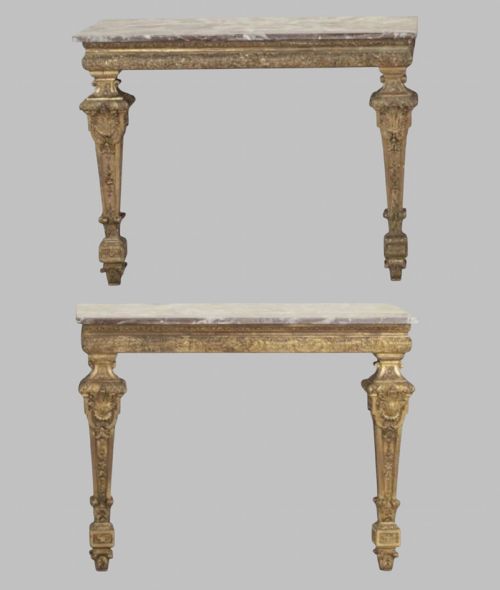
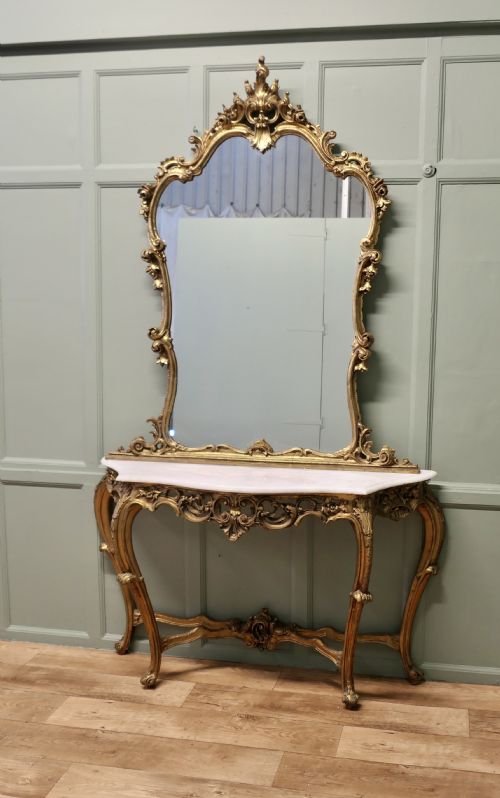
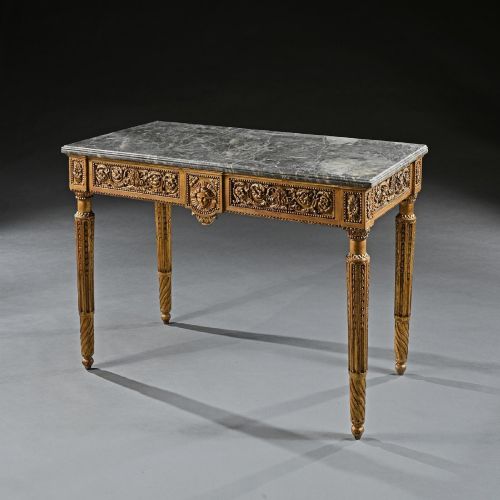
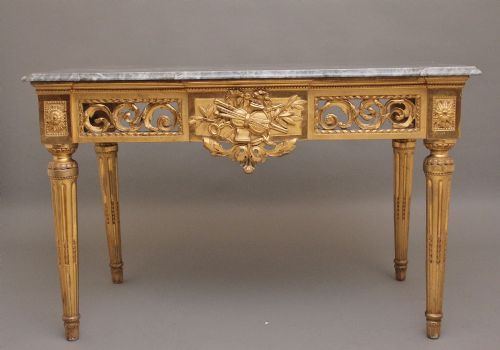
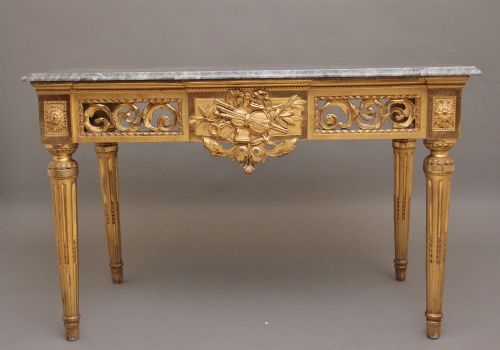
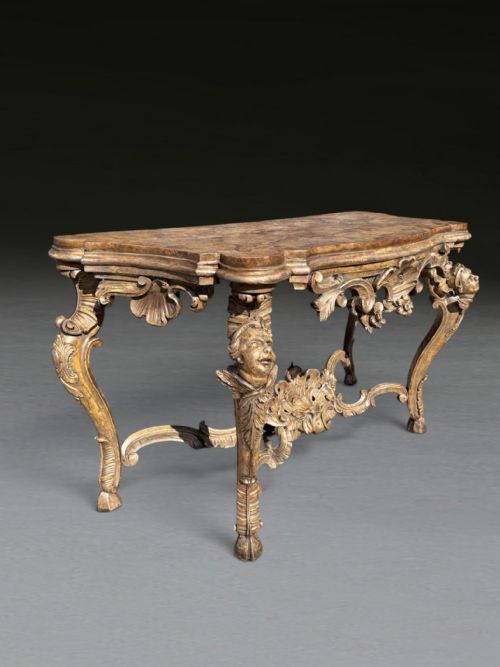
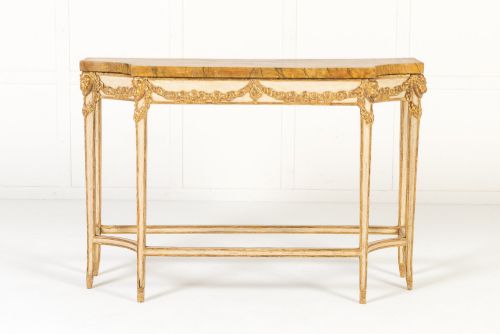
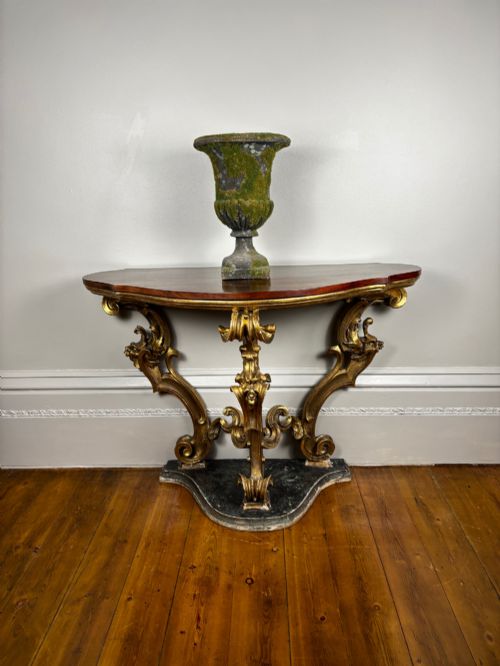


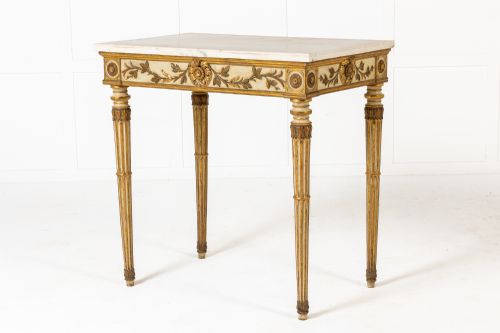
Italian Giltwood Console Table
An Italian giltwood console table brings dramatic architectural presence to a room, offering a carved gilded surface paired with marble.
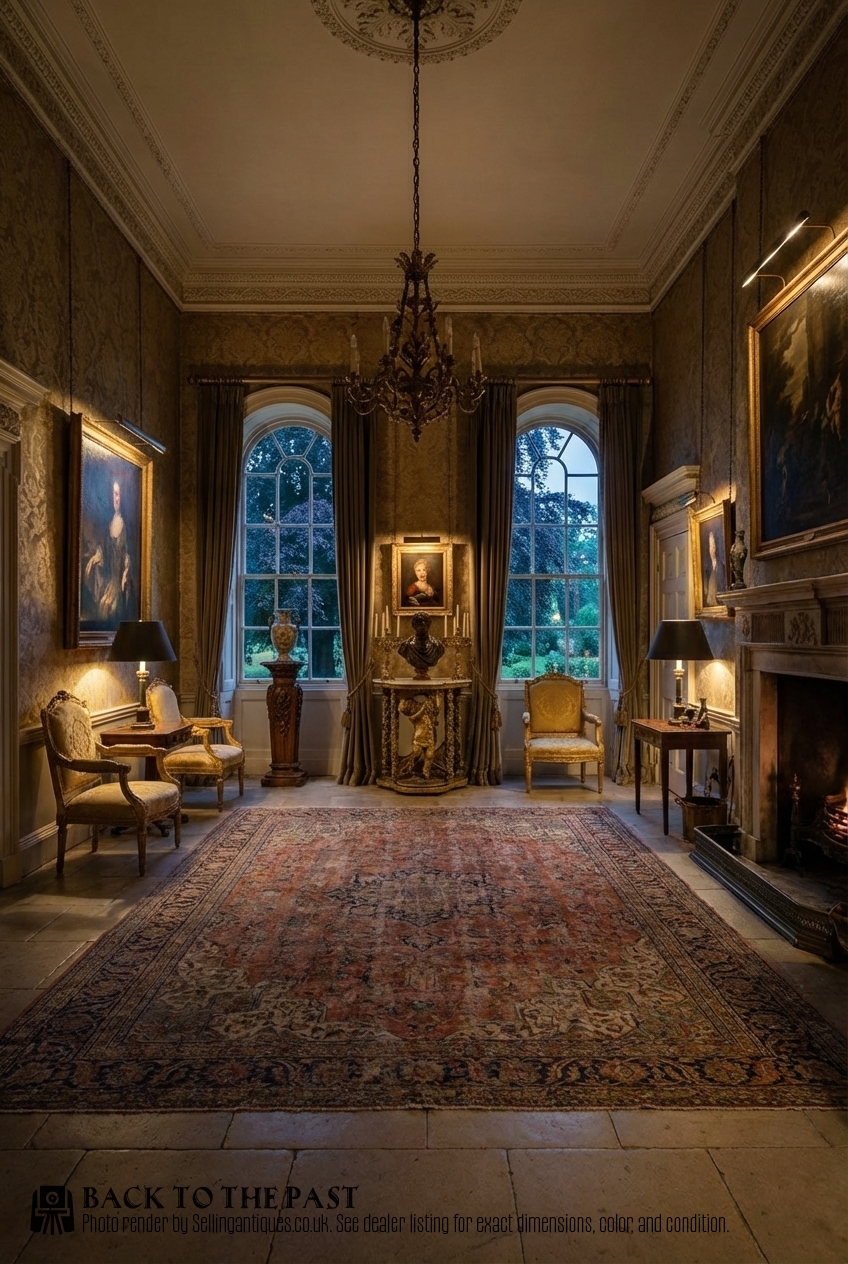
Italian Giltwood Console Table
An Italian giltwood console table is a decorative wall-mounted or freestanding table designed to stand against a wall, frequently topped with marble. The selection spans the eighteenth century through to the twentieth century, incorporating periods like the Victorian era alongside revival movements.
Buyers encounter distinct regional and stylistic iterations, including Venetian Rococo, Italian Baroque, and Neoclassical designs. Forms range from monumental carved console tables with lion's paw supports to smaller side tables and wall consoles.
The materials visible across these pieces combine carved wood, gesso, and gold leaf, often complemented by painted surfaces and marble tops. These tables function as striking focal points in hallways, reception rooms, and grand drawing rooms.
How they were made
The construction relies on timber frameworks shaped by hand carving, providing the intricate scrolls, foliage, and figural supports seen on Baroque and Rococo examples. Artisans applied layers of gesso over the wood to create a smooth, dense foundation for subsequent gilding.
Gold leaf was meticulously laid over the prepared gesso base, capturing the complex relief work of the carving beneath. Many pieces also integrate painted wood elements and flame mahogany veneers, whilst heavy marble slabs form the durable upper surfaces.
What varies in quality
The depth and crispness of the hand carving dictate the visual impact, as master carvers achieved sharper undercut foliage, more expressive putti, and more naturalistic animal supports than routine workshops. The quality of the gilding also differs, with burnished gold leaf reflecting light with greater warmth and depth than flat metallic paint.
The choice of upper surface contributes significantly to the standing of a piece, with fine breccia marble tops offering superior geological colour and figuring compared to plain alternatives. Furthermore, the integrity of the underlying wooden frame and the survival of the original gesso layers determine the structural authenticity of the piece.
Pauly et Cie
The Italian Giltwood Console Table Glossary
- Giltwood
- Wood that has been decorated with gold leaf applied over a prepared gesso ground. This technique provides the characteristic brilliant metallic sheen seen on antique furniture.
- Gesso
- A plaster mixture applied to wood surfaces to create a smooth base for carving and gilding. It allows for sharp, crisp relief details before the gold leaf is laid.
- Console table
- A table supported by wall brackets or console legs, designed to stand flat against a wall. They frequently feature decorative aprons and marble tops.
- Breccia marble
- A type of marble composed of angular rock fragments embedded in a fine-grained matrix. It presents a rich, multicoloured patterned surface on table tops.
- Neoclassical
- A style inspired by the classical art and architecture of ancient Greece and Rome. It emphasises symmetry, straight lines, and classical motifs.
Italian Giltwood Console Table: Frequently Asked Questions
Where should I place a console table?
These tables sit flush against a wall in hallways, reception rooms, or living spaces, frequently paired with a matching wall mirror above.
Because they were designed to anchor architectural wall space, they perform best as focal points in rooms with high ceilings.
How do I care for giltwood surfaces?
Giltwood requires gentle dusting with a soft, dry cloth and must be kept away from direct sunlight and moisture. The delicate gold leaf and gesso ground can be easily damaged by liquid or aggressive cleaning products.
Maintaining a stable room temperature prevents the underlying wood from expanding and cracking the historic finish.
Are the marble tops original?
Many tables retain their original marble slabs, such as breccia marble or plain white variants fitted to the wooden frame. Replacement marble tops do occur due to the fragile nature of stone over centuries of use.
Examining the underside of the top and its fit against the carved gesso rail helps determine its history.
How do I distinguish Baroque from Rococo styles?
Baroque designs tend to be heavier, more symmetrical, and monumental, featuring robust elements like lion's paw supports, rams' heads, and strong architectural presence. Rococo pieces embrace asymmetry, fluid C-scrolls, and lighter, more exuberant ornamentation.
Comparing the carved motifs reveals whether the maker prioritized grand symmetry or playful, undulating curves.