


Gilt Wall Table
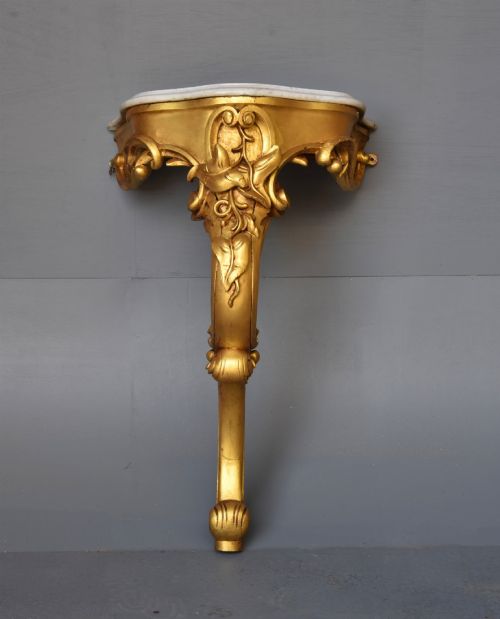
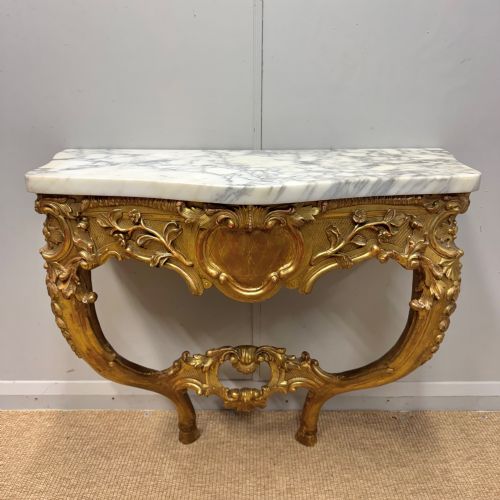
When you search for a gilt wall table, you encounter decorative console tables finished in gold leaf or paint designed to anchor a room.
Gilt Wall Table
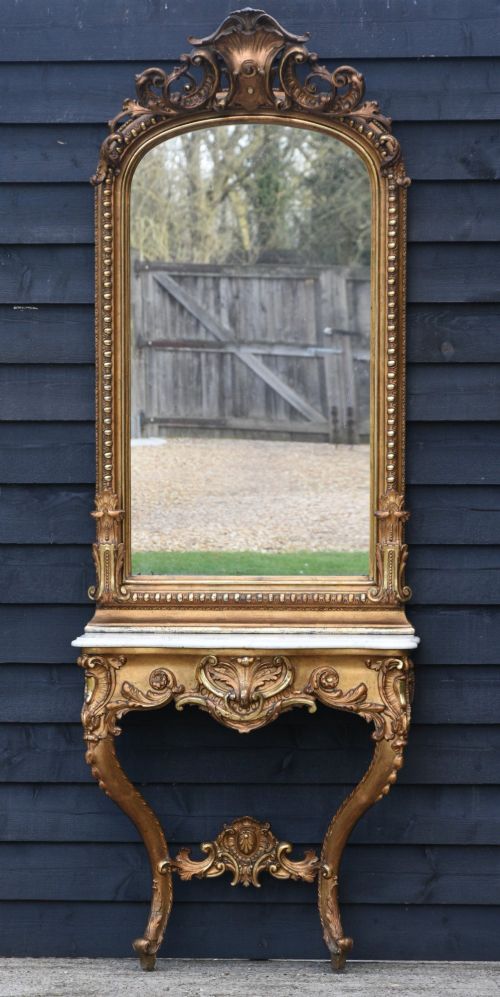
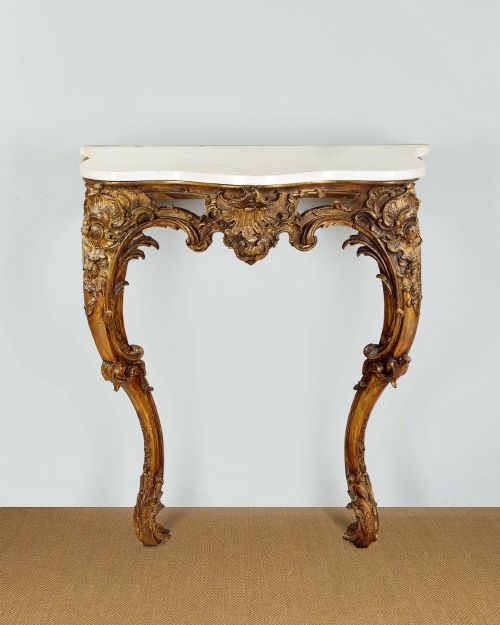
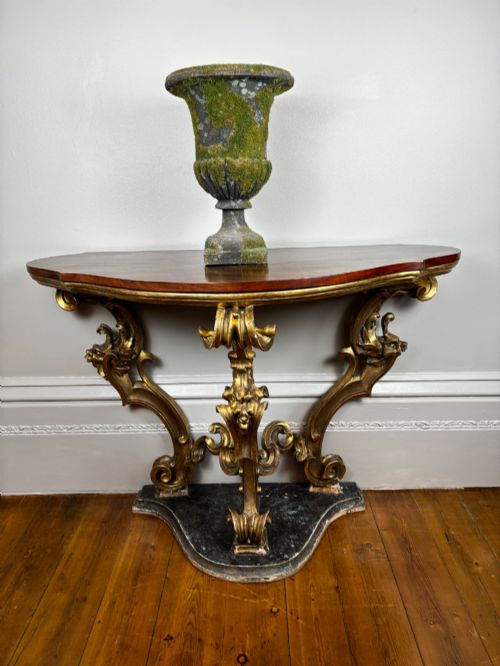
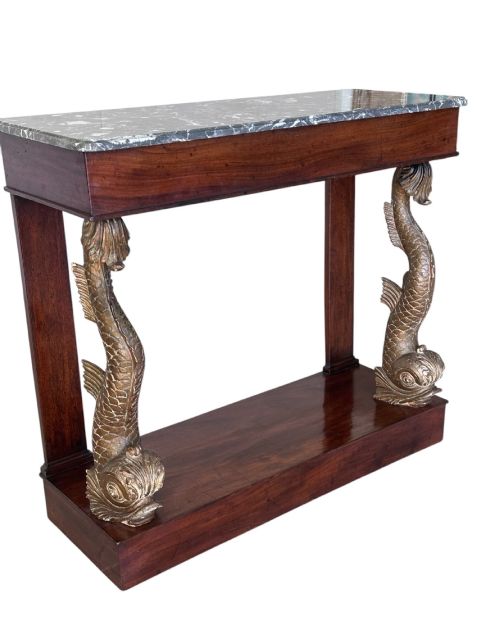
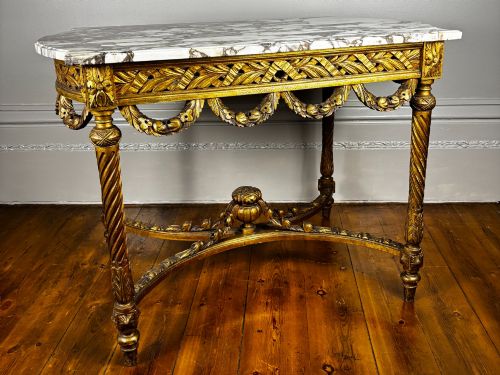
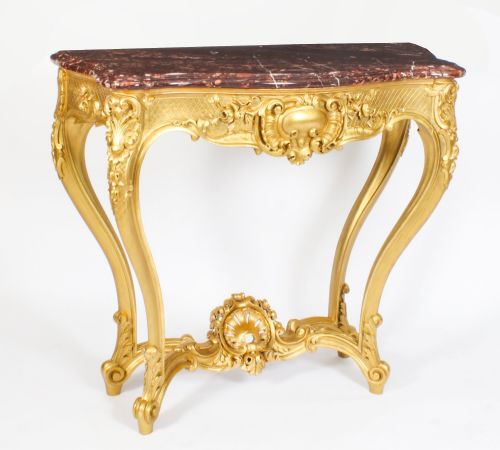
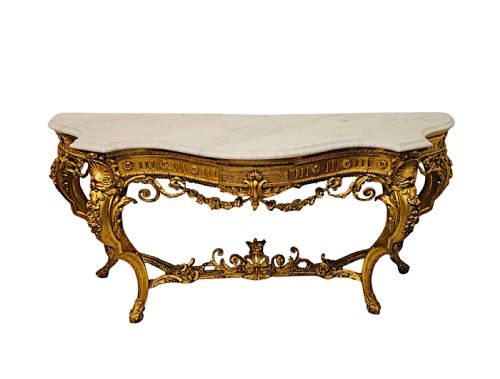
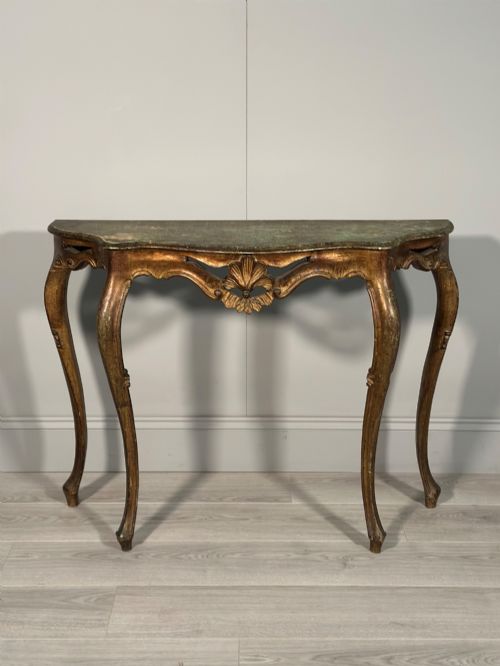
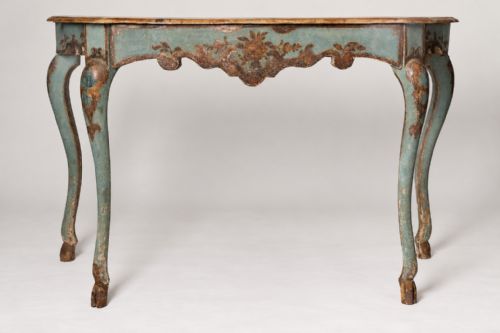
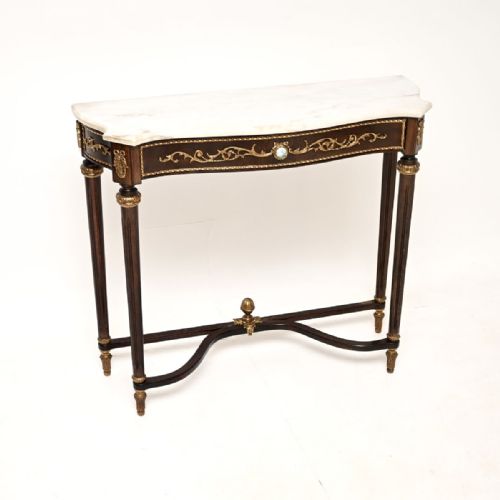
A gilt wall table is typically a console table designed to sit flush against a wall, frequently paired with a matching pier mirror above it. The selection spans centuries from the eighteenth through to the early twentieth century, taking forms such as demi-lune, serpentine, and rectangular side tables.
Origins heavily lean towards continental workshops, with Italian and French pieces appearing alongside English examples. Styles range from French Rococo and Italian Neoclassical to Regency and Baroque Revival, reflecting distinct regional tastes in carving and ornamentation.
Beyond standard console tables, the category encompasses wall brackets, side tables, and combined console table and mirror sets. These pieces served primarily in grand reception rooms, halls, and parlours to display ornaments and reflect light.

How they were made
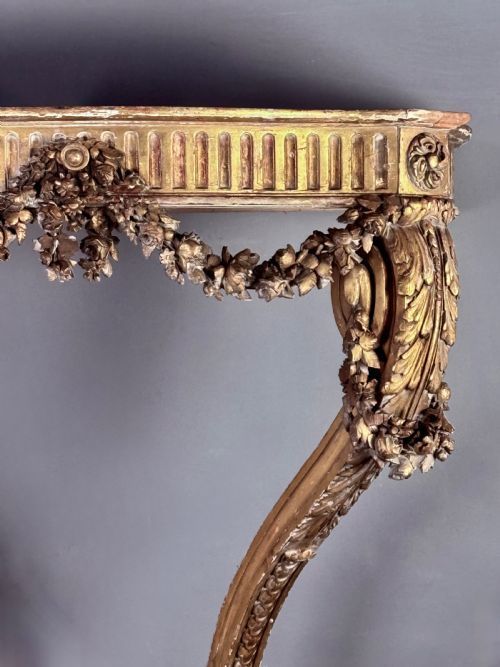
Carved wood forms the structural base for most pieces, utilising woods such as walnut, mahogany, and painted softwood, overlaid with gesso to prepare surfaces for gilding. Artisans applied gold leaf or silver gilt manually, creating the characteristic reflective metallic finish.
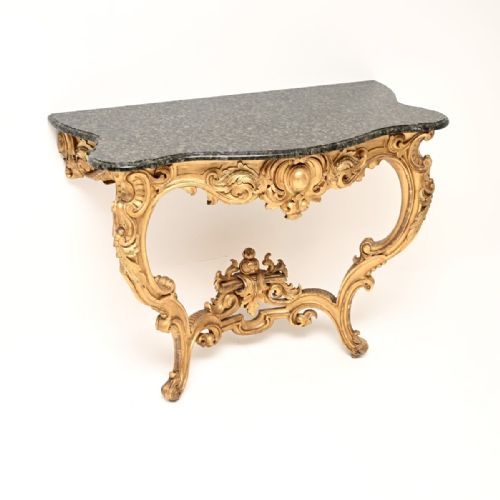
Marble provides the primary surface material for the tops, featuring varieties such as breccia and figured marble like breche d'alep, cut and polished to fit the table contours. Faux finishes also occur, with painted faux porphyry and marble effects applied to wood to simulate solid stone.
Gilt Wall Table Retail Price Guide 2026
Typical asking prices for gilt wall table among the pieces listed under this phrase on Sellingantiques today, from the lower quarter to the upper quarter. They describe what is for sale here now, not the wider market.
Several tables come with matching wall mirrors, ensuring your reflection is framed by carved wood just as it was in a royal French chateau.
What varies in quality
The depth and crispness of the wood carving distinguish the standard production from exceptional work, particularly in the rendering of scrolling foliage, human figures, and animal supports like lion's paw feet. Hand-applied gesso and leaf show subtle variations in texture and burnishing that separate master workshops from provincial joinery.
The selection of the top dictates much of the visual weight, with thick, figured, or brecciated slabs of marble representing a higher grade of manufacture than simple timber or thin stone inserts. Structural integrity under wall-mounted conditions relies on the original bracket fixings and joinery strength.
Felix-Alfred Ternisien
The Gilt Wall Table Glossary
- Console table
- A table designed to be fixed against a wall, often supported by front legs or wall brackets with the rear resting on the wall structure.
- Giltwood
- Timber that has been gilded with gold leaf applied over a prepared gesso ground.
- Gesso
- A plaster-like mixture applied to wood surfaces as a smooth base before gilding or painting.
- Pier mirror
- A tall mirror designed to hang on the pier, the section of wall between windows, frequently positioned directly above a console table.
- Breccia marble
- A composite marble made of angular rock fragments embedded in a fine-grained matrix, prized for multicoloured visual patterns.
- Parcel gilt
- Woodwork where only specific carved details or highlights are gilded while the rest of the surface is painted or polished.
Gilt Wall Table: Frequently Asked Questions
Where did people place gilt wall tables?
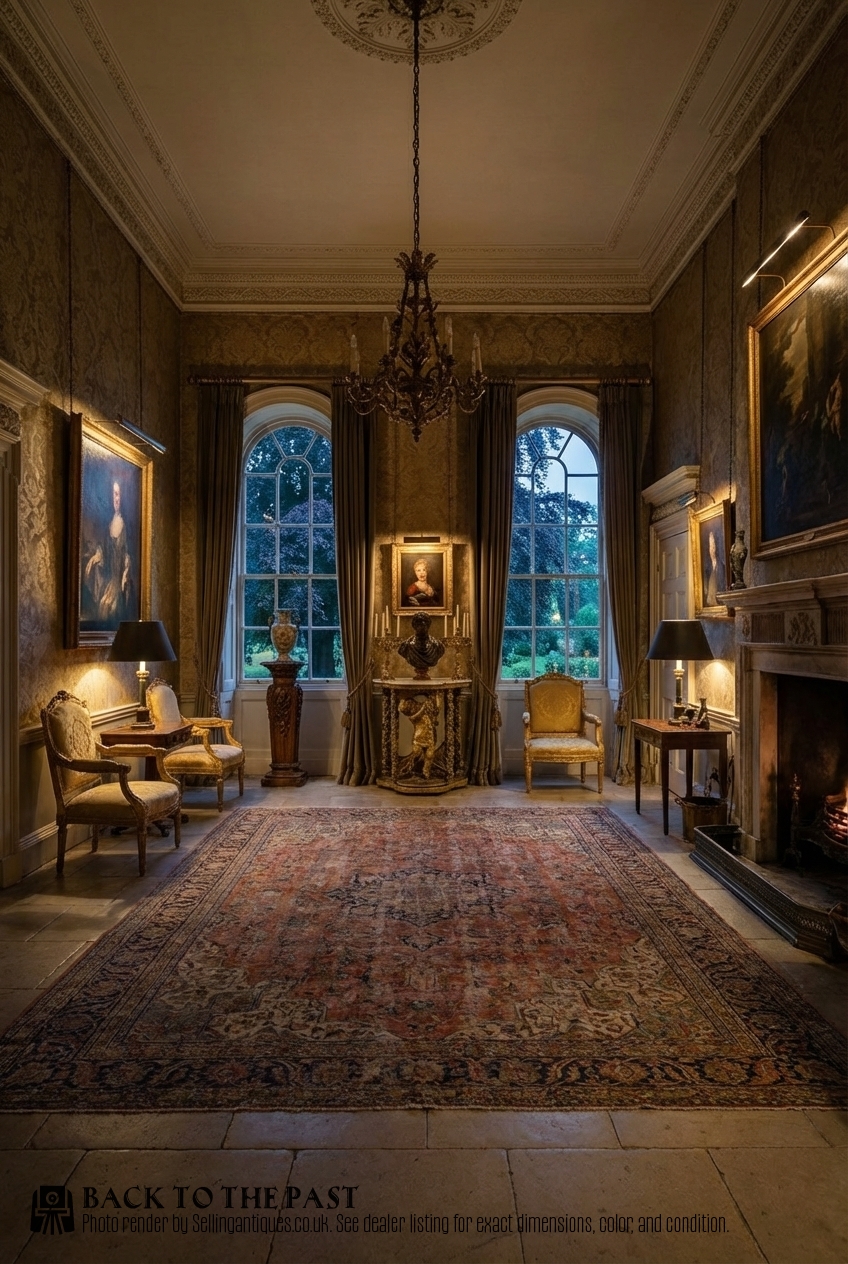
These tables traditionally stood in formal reception rooms, entrance halls, and drawing rooms against flat wall spaces. They frequently sat beneath tall pier mirrors to maximise light and create a sense of expanded space in the interior.
Because they attach to or rest securely against a wall, they functioned primarily for display rather than heavy dining use. Owners placed decorative objects, porcelain, and candelabras on their marble tops.
Are all gilt wall tables made of solid gold?
No solid gold is involved in these pieces, which are constructed from carved wood such as oak, walnut, or pine. Artisans applied thin sheets of beaten gold leaf over a prepared gesso layer to achieve the metallic surface.
Some examples use silver gilt or paint finishes designed to mimic metallic lustre. The underlying wood remains visible only where the surface has worn away over time.
How do I tell an eighteenth-century table from a later revival piece?
Eighteenth-century examples display hand-carving techniques unique to period tool marks, alongside natural wear patterns in the gesso and underlying timber. The joinery methods, such as hand-cut dovetails and older fastening nails, differ from nineteenth-century production standards.
Revival pieces from the Victorian era or around nineteen-hundred often heavier wood stock and machine-assisted preparation. Comparing the specific style markers, such as Rococo asymmetry or Neoclassical symmetry, helps clarify the manufacturing era.
Why do many tables have marble tops?
Marble provided a durable, cool surface that resisted heat from candles and moisture from decorative displays. The weight of the stone also helped anchor free-standing console bases against the wall.
Quarried stones like breccia and figured marble introduced natural colour and pattern variations to complement the gilded wood frames. This combination of stone and gold leaf defined grand interior decoration across multiple centuries.