
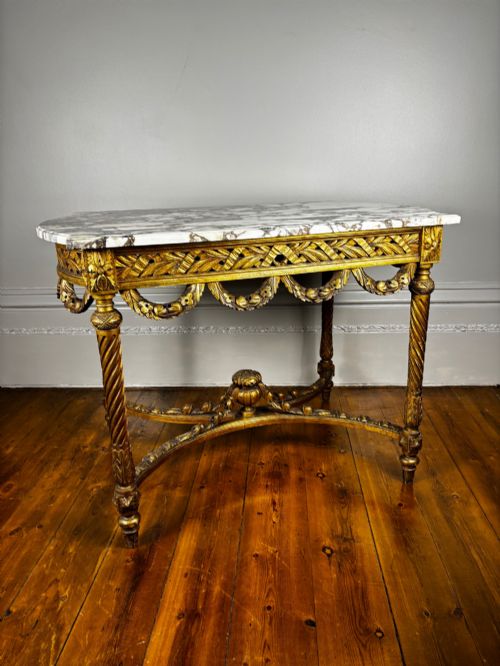
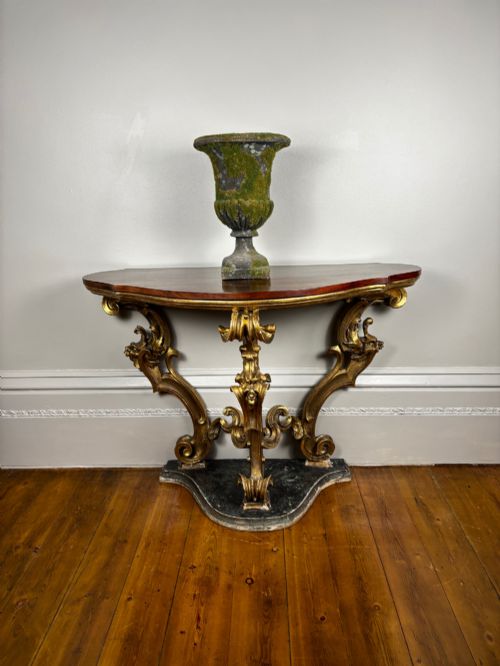
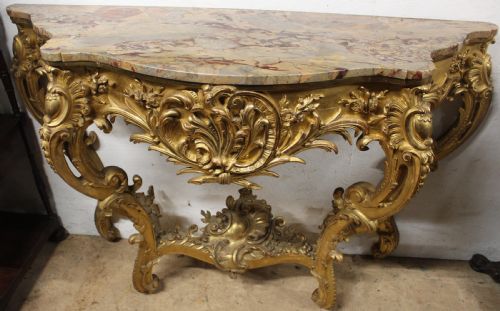
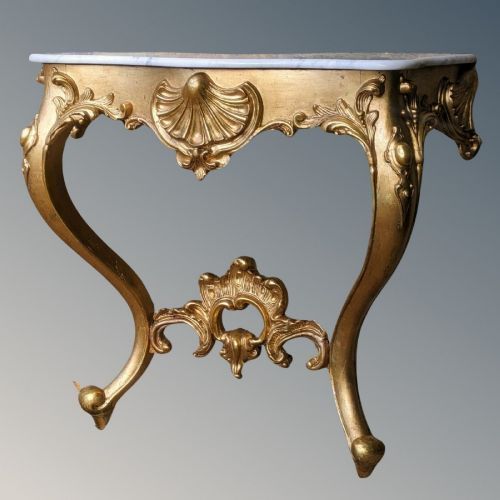
Gold Giltwood Console Table
A gold giltwood console table brings architectural presence to a hall or drawing room, combining carved timber with reflective metallic leaf.
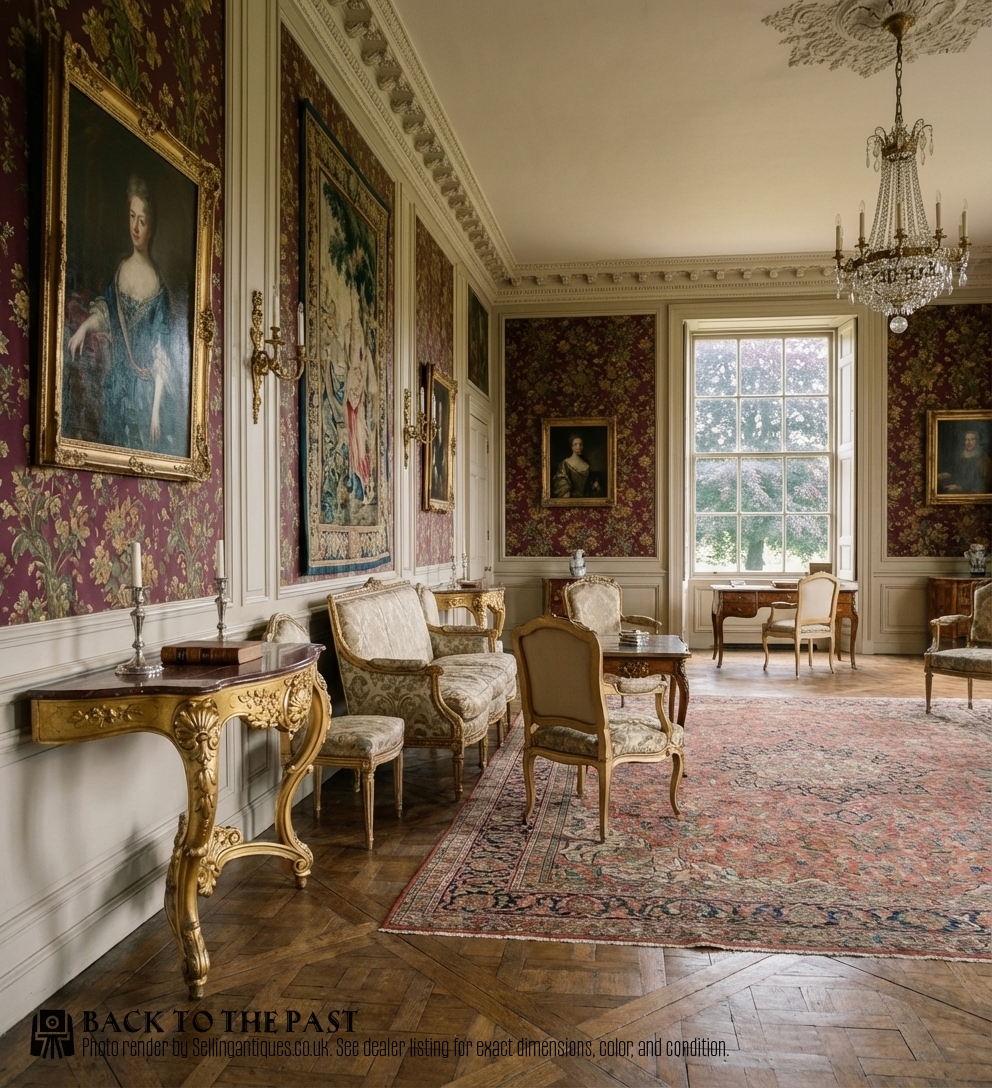
Gold Giltwood Console Table
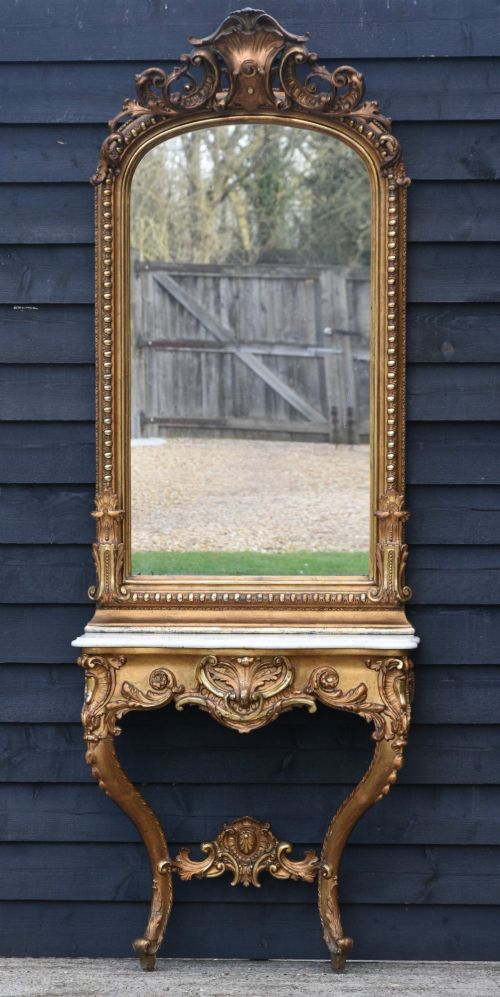
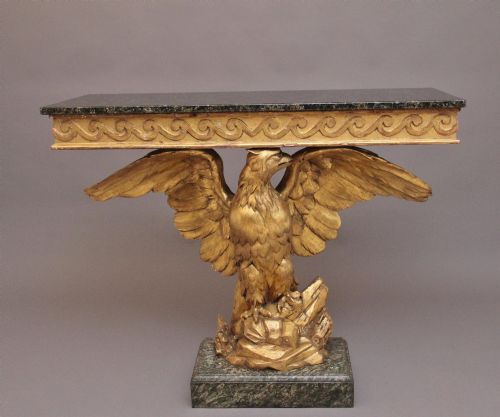
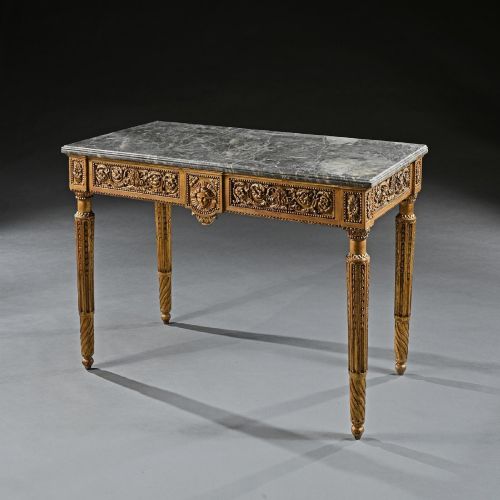
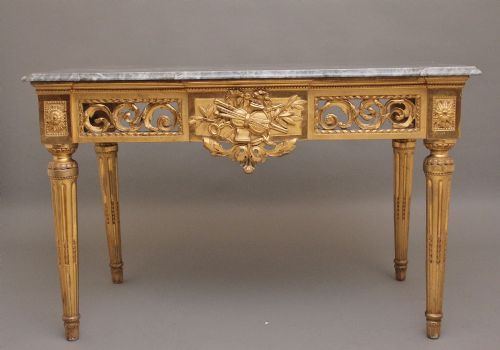
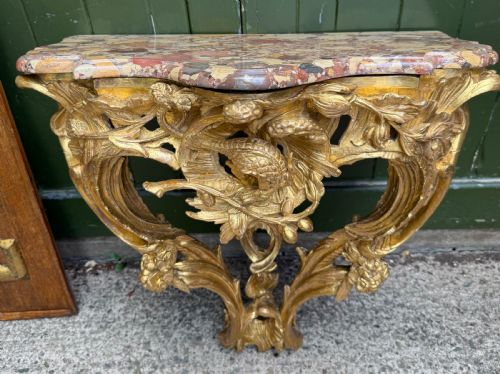
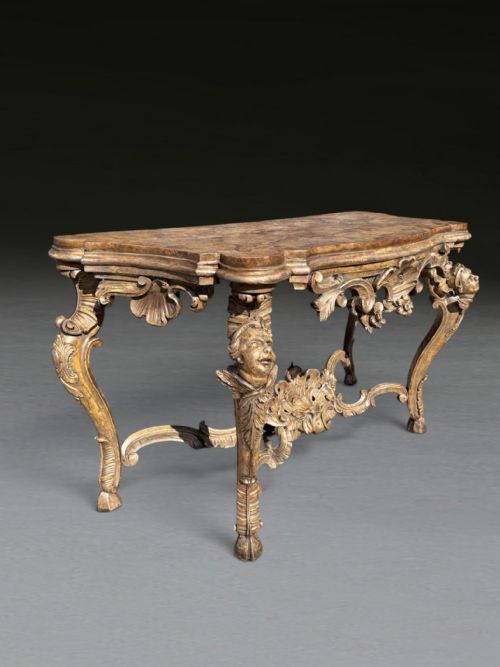
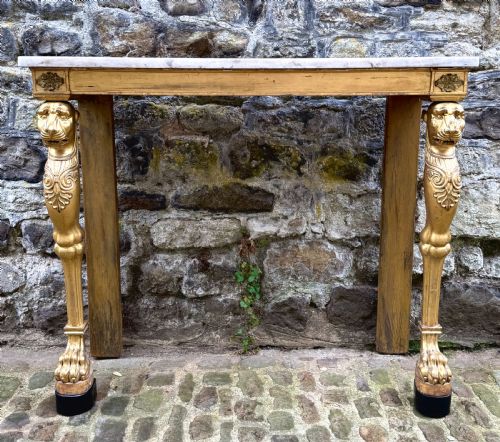
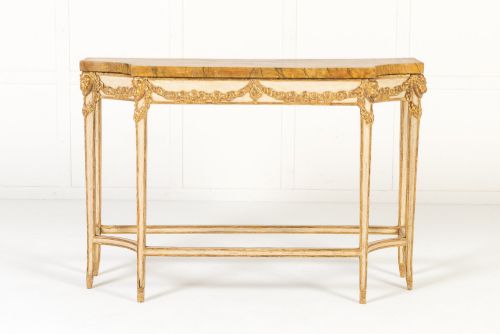
A gold giltwood console table stands against a wall, frequently paired with a matching pier mirror to complete a grand interior scheme. These wall tables appear in forms ranging from monumental Italian Baroque revivals to restrained neoclassical designs.
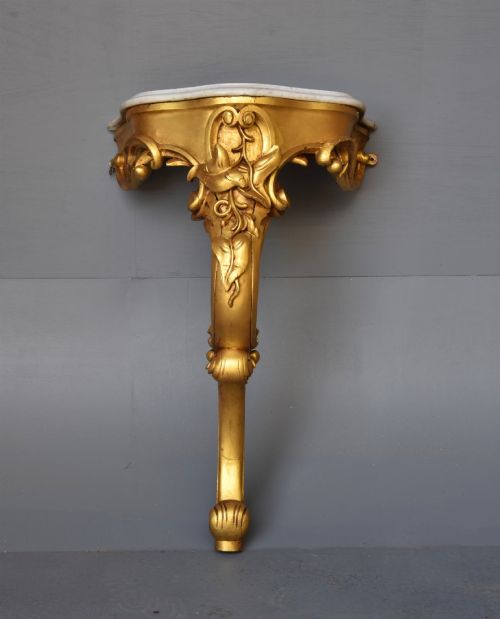
The most common examples on this page date from the eighteenth and nineteenth centuries, originating from French and Italian workshops. Makers often shaped timber into serpentine outlines or demi-lune forms designed to fit specific architectural spaces.
How they were made
Wood serves as the primary structural carcase, shaped by carving and reinforced with gesso before application of gold leaf. Artisans laid fine metallic sheets over prepared grounds to create a luminous surface that catches ambient light.
Heavy marble tops, including varieties such as Carrara, breccia, and breche d'alep, rest directly upon the timber bases. These stone surfaces provide weight and contrast to the gilded framework beneath.
Listings feature Italian and French origins spanning the eighteenth century through the 1920s, utilising materials like Carrara marble, gesso, and gold leaf.
What varies in quality
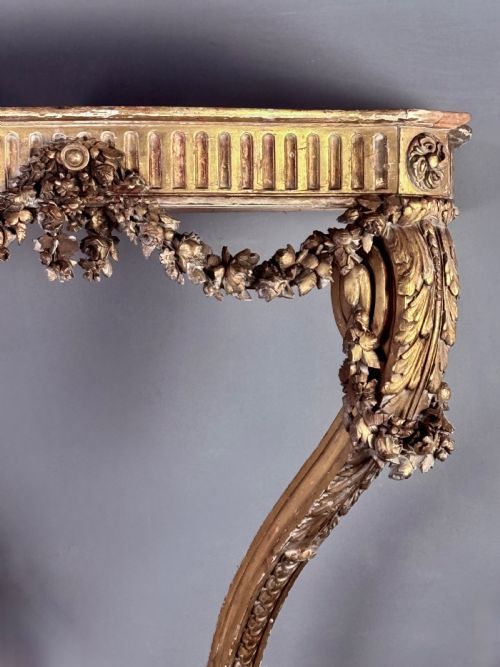
Depth and sharpness of the hand-carving separate standard pieces from exceptional examples, particularly in the rendering of foliage, scrolls, and animal supports. Crisp detailing in the wooden groundwork shows through the layers of gilding.
The choice and thickness of the marble slab dictate the dignity of the piece, with figured and coloured stones indicating higher ambition. Integration between the wall-fixing stability and the proportions of the base completes the assessment.
Felix-Alfred Ternisien
The Gold Giltwood Console Table Glossary
- Giltwood
- Timber coated with gold leaf applied over a prepared gesso ground. This technique creates a rich metallic finish without solid metal construction.
- Console table
- A table designed to stand against a wall, traditionally supported by two front legs or brackets fixed to the masonry. These pieces often feature shallow depths to suit narrow hallways.
- Demi-lune
- A half-moon shape characteristic of side and console tables produced during the eighteenth and nineteenth centuries. This curved profile allows the furniture to fit snugly against flat walls.
- Gesso
- A plaster mixture applied to wood surfaces as a smooth base for gilding and painting. Artisans carved intricate details directly into this built-up layer before laying gold leaf.
- Pier mirror
- A large looking glass designed to hang on the wall space between windows, frequently positioned directly above a console table. The combination unifies the decorative scheme of a formal room.
Gold Giltwood Console Table: Frequently Asked Questions
What is a gold giltwood console table used for?
These tables served as ornamental surfaces in formal reception rooms and entrance halls, holding decorative objects like porcelain and clocks. Their shallow proportions allowed them to occupy wall spaces without obstructing foot traffic.
Today, they function as striking focal points in hallways or living spaces beneath large mirrors or artwork. Their reflective surfaces brighten darker corners of a room.
How do I style a console table?
Pairing the table with a matching wall mirror creates a balanced vertical composition, echoing historical domestic arrangements. Placing symmetrical lamps or urns on the marble top enhances the architectural symmetry.
Keep the floor space beneath clear to let the carved legs and stretcher work remain visible. Let the natural grain of the marble and the texture of the gilding stand without overcrowding.
How can I tell the period?
Examine the underlying carving styles, noting whether the piece follows Louis XIV symmetry, Rococo asymmetry, or neoclassical restraint. Eighteenth-century models display hand-cut joinery and aged gesso grounds beneath the gold leaf.
Nineteenth-century revival pieces often adopt heavier proportions and combine motifs from earlier reigns. Material choices, such as specific Italian marbles, also offer clues to geographic origin and date.
Are these tables fixed to the wall?
Many historical examples relied on wall brackets or fixings for stability because the heavy marble tops outweighed the slender wooden legs. This structural requirement kept the furniture secure during daily use in grand houses.
Modern placement may require discrete wall anchors to ensure safety, particularly with heavy stone slabs. Checking the rear frame reveals the original fixing points used by historical joiners.