

French Giltwood Table
A french giltwood table brings a warm metallic gleam and carved theatrical flourish to a room, offering a surface of marble or wood framed in gilded splendour.
French Giltwood Table
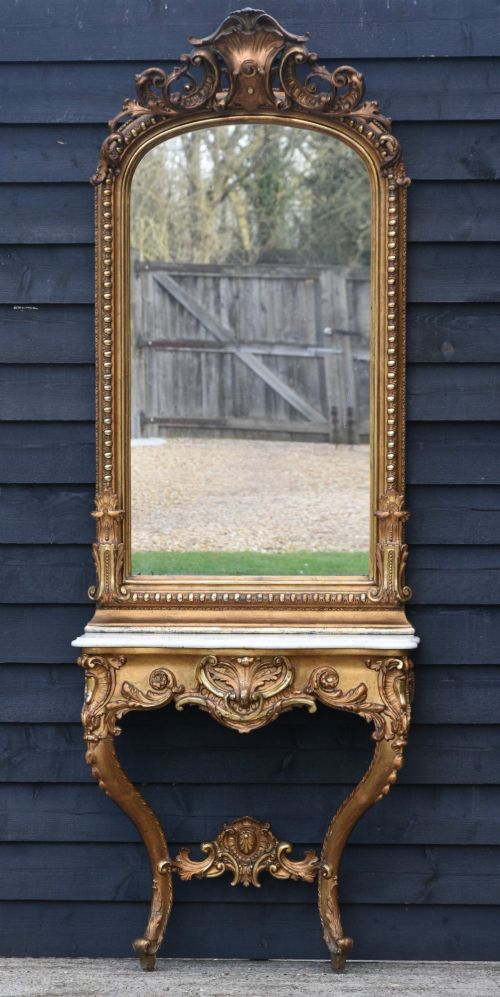
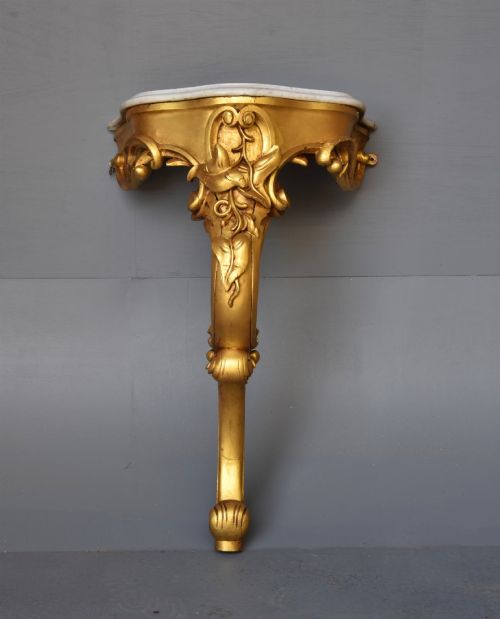
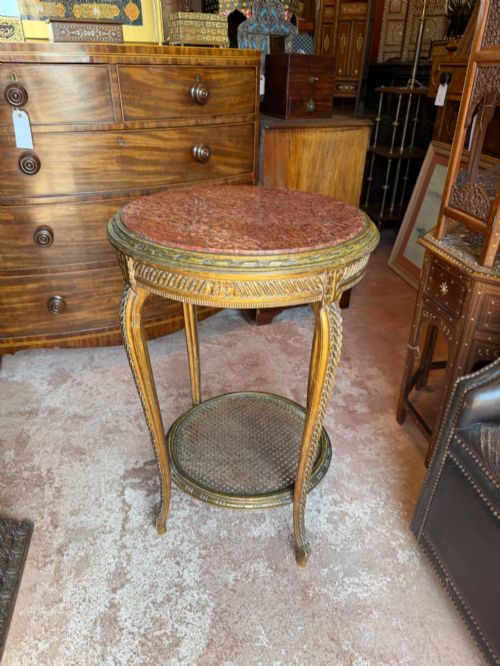
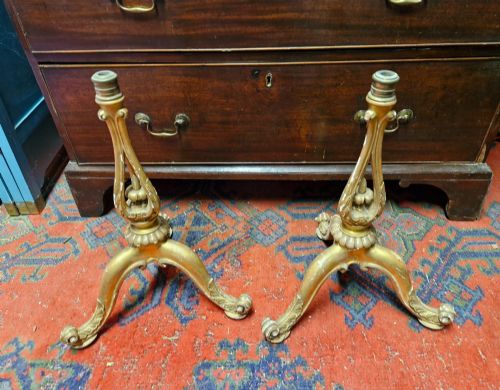
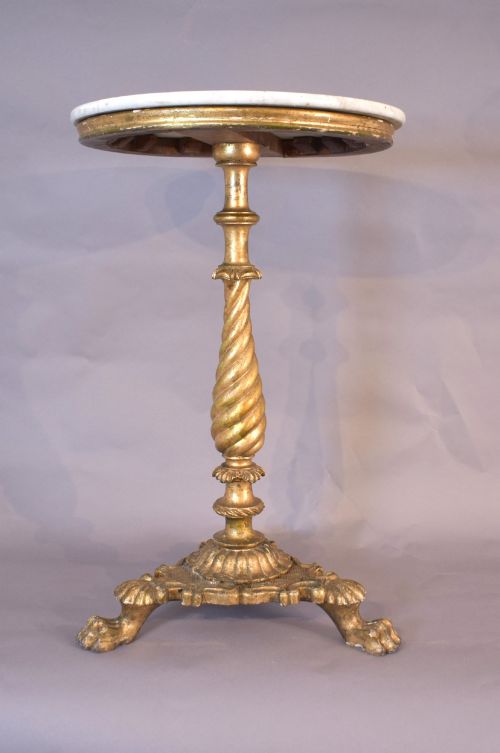
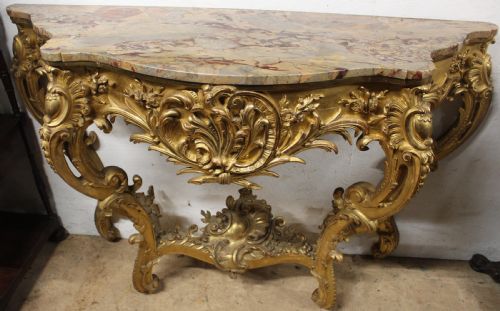
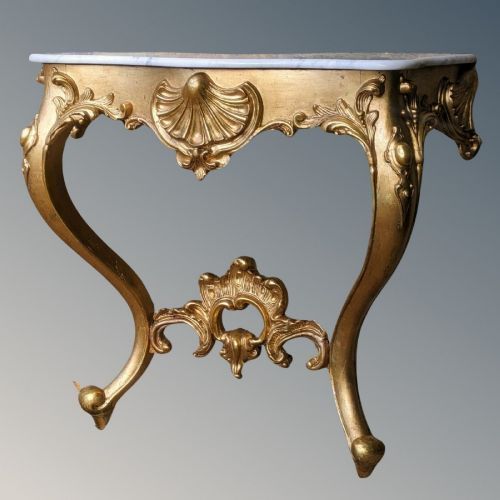
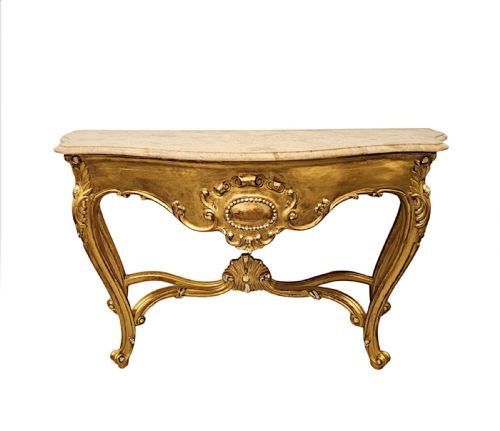
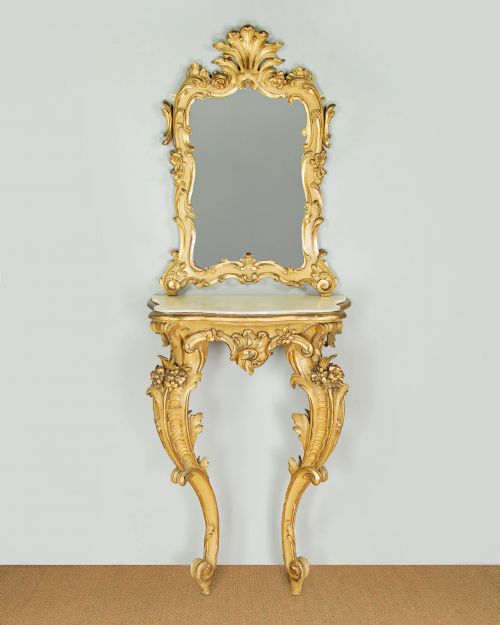
A french giltwood table encompasses a variety of forms designed for display and utility, dominated here by console tables intended to sit flat against a wall often paired with matching pier mirrors. Side tables and smaller occasional tables also appear frequently alongside specialised pieces like table lamps and jardinières.
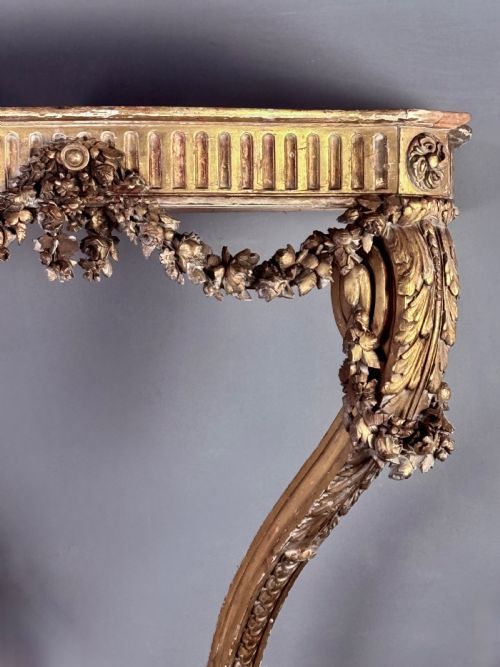
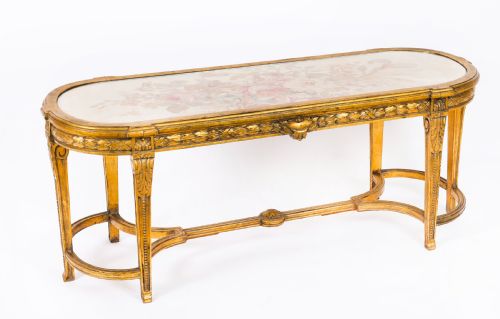
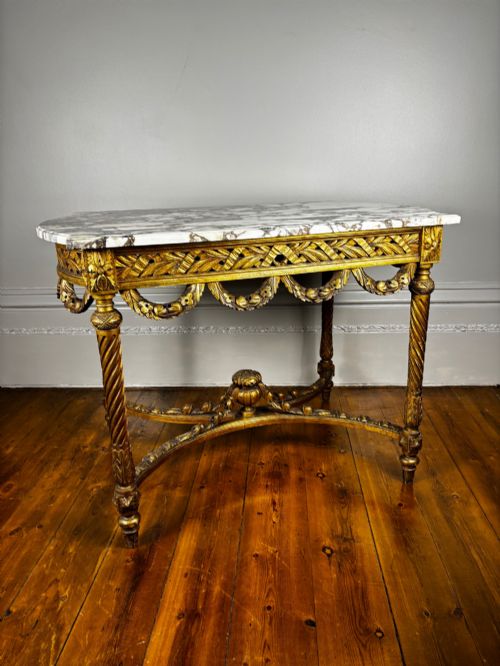
The objects span multiple centuries from the eighteenth century through the nineteenth century and into the early twentieth century. Rococo Revival and Louis XVI styles prevail, showing curved serpentine fronts, ornate floral mouldings, and classical symmetry.
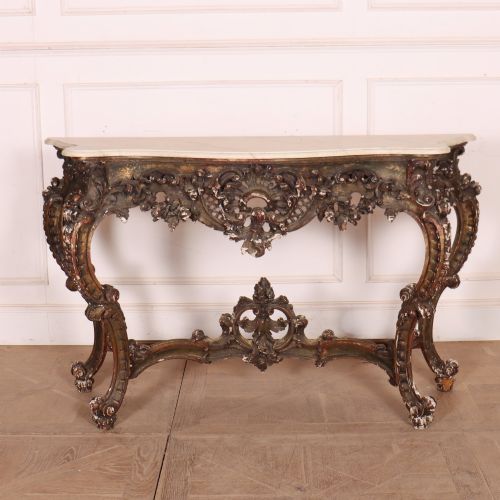
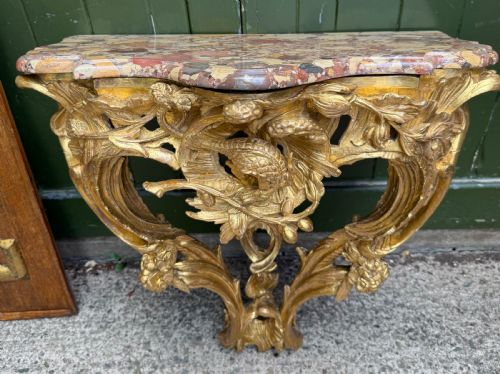
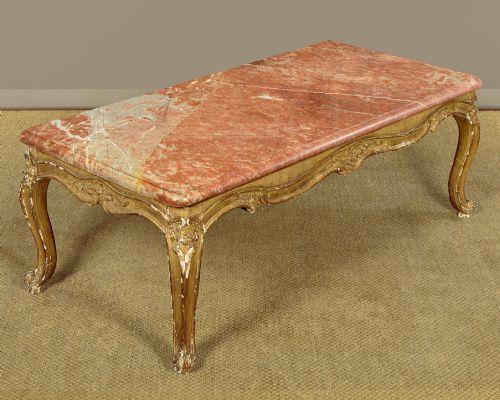
Console tables with shaped marble tops represent the most common configuration in this selection. These pieces frequently exhibit carved wooden frames finished with gold leaf applied over a gesso ground.
How they were made
Carved timber forms the foundational structure of these pieces, providing the deep relief work seen on cabriole legs and aprons. Artisans applied gesso over the wood to create a smooth, dense layer capable of holding sharp carved details before gilding.
Gold leaf provides the brilliant metallic finish characteristic of these tables, laid down by hand over the prepared gesso base. Marble tops, including varieties such as breche d'alep and green marble, sit loose or fixed upon the wooden frames to supply a cool, heavy counterpoint to the gilded structure.
Listings feature items spanning from the 18th century to the 1930s, utilising materials including marble, brass, and gold leaf.
What varies in quality
The depth and crispness of the hand-carving distinguish finer examples from simpler production. Work executed with sharp, undercut foliage and scrolls demonstrates superior craftsmanship compared to soft, cast ornamentation.
The quality of the gilding and the preparation of the underlying gesso layer dictate the visual richness of the surface. Original leaf surfaces that have aged with honest wear show subtle tonal shifts, whereas heavy or later over-gilding flattens the underlying carved contours.
Felix-Alfred Ternisien
The French Giltwood Table Glossary
- Giltwood
- Wood covered with thin sheets of gold leaf. This finish creates a reflective and opulent surface popular in formal European interior design.
- Console table
- A table supported by wall brackets or front legs designed to stand against a vertical surface. These often feature shaped marble tops and accompany large wall mirrors.
- Gesso
- A plaster mixture applied to wood to create a smooth surface for carving and gilding. It allows craftsmen to achieve sharp, intricate relief details.
- Serpentine front
- A furniture front curving inward centrally and outward at the ends. This flowing contour characterises many Rococo revival designs.
- Louis XVI style
- A neoclassical design movement marked by straight lines, symmetry, and classical motifs. Pieces from this aesthetic display restrained elegance compared to earlier curving styles.
French Giltwood Table: Frequently Asked Questions
Where should I place a console table?
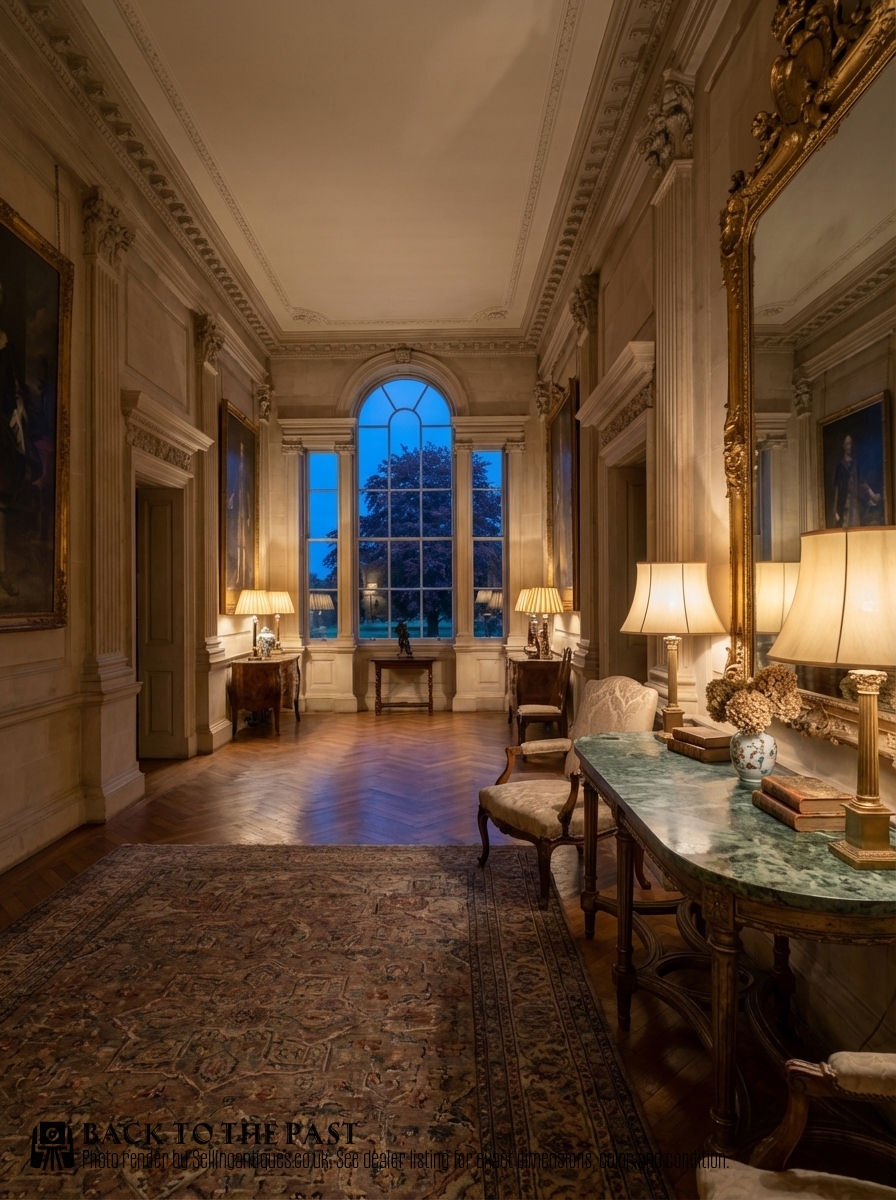
Console tables function best against a primary wall in an entrance hallway, living room, or dining space. Their shallow depth allows them to occupy narrow walkways without obstructing traffic.
Pairing a console table with a matching wall mirror or placing a decorative lamp upon the marble surface completes the traditional arrangement seen in period interiors.
How do I care for giltwood surfaces?
Giltwood requires gentle maintenance to protect the delicate gold leaf layer. Dusting should be done lightly with a soft brush rather than a cloth that might catch on raised edges.
Moisture and harsh cleaning agents will damage the underlying gesso and metal leaf, so liquids must be kept away from the carved wooden frames entirely.
Are the marble tops original?
Many tables retain their original stone tops, which often show natural veining and period-appropriate wear. Heavy marble slabs were cut specifically to fit the serpentine or rectangular frames of individual tables.
Differences in marble types, such as sienna or breche d'alep, reflect the specific geological preferences and workshop origins of different decades.
How do I distinguish Rococo from Louis XVI style?
Rococo design relies on asymmetrical curves, C-scrolls, and exuberant natural motifs like flowing leaves and floral garlands. These pieces feel organic and dynamic in their outline.
Louis XVI style shifts toward geometric order with straight tapered legs, fluting, and classical architectural elements that provide a more balanced appearance.