







Louis XVI Coffee Table
A louis xvi coffee table brings neoclassical French proportion and marble into a modern room with unmistakable restraint.

Louis XVI Coffee Table
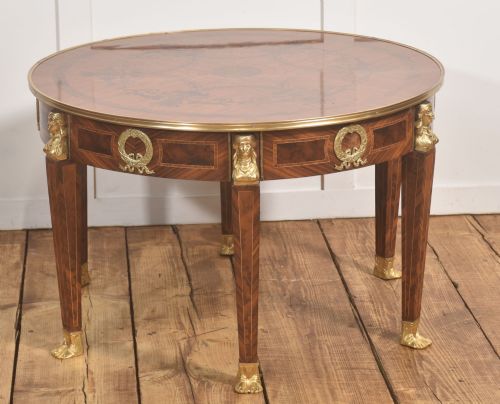
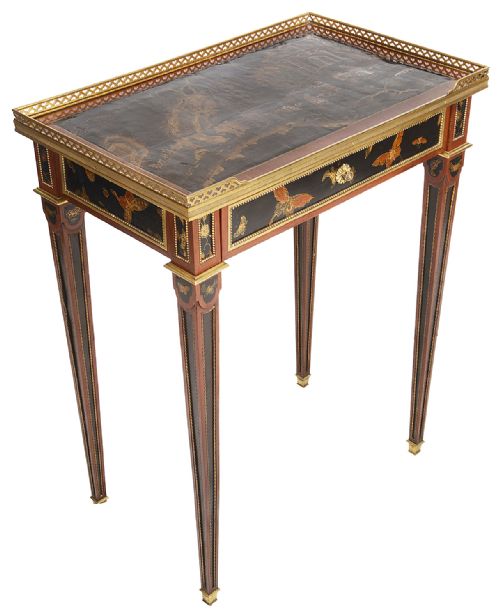
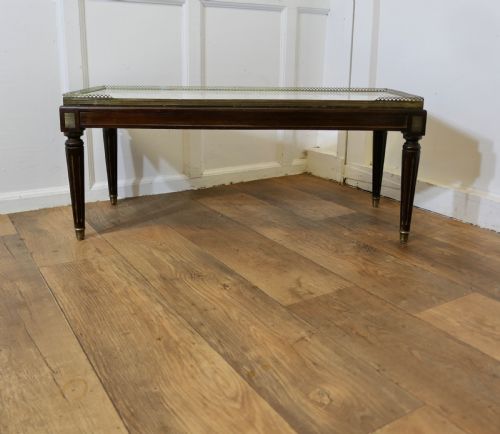
A louis xvi coffee table is typically encountered in French styles dating from around nineteen hundred to nineteen thirty, drawing on earlier neoclassical forms. These low tables frequently pair imported marble tops with timber frames and classical brass or ormolu mounts.
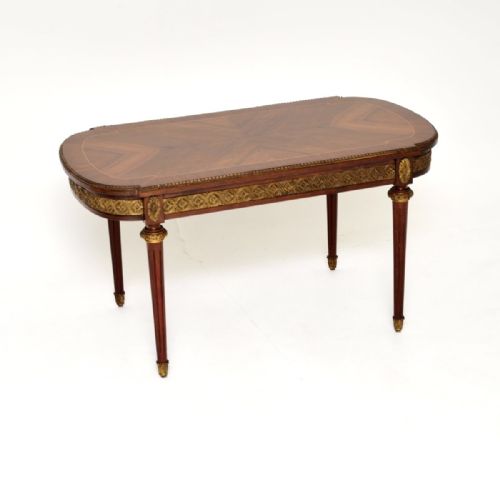
The recorded examples show variations from simple painted wood and satinwood through to burr walnut frameworks. Architectural lines and restrained ornament define the group, whether described simply as low tables or designated specifically in the Louis XVI style.
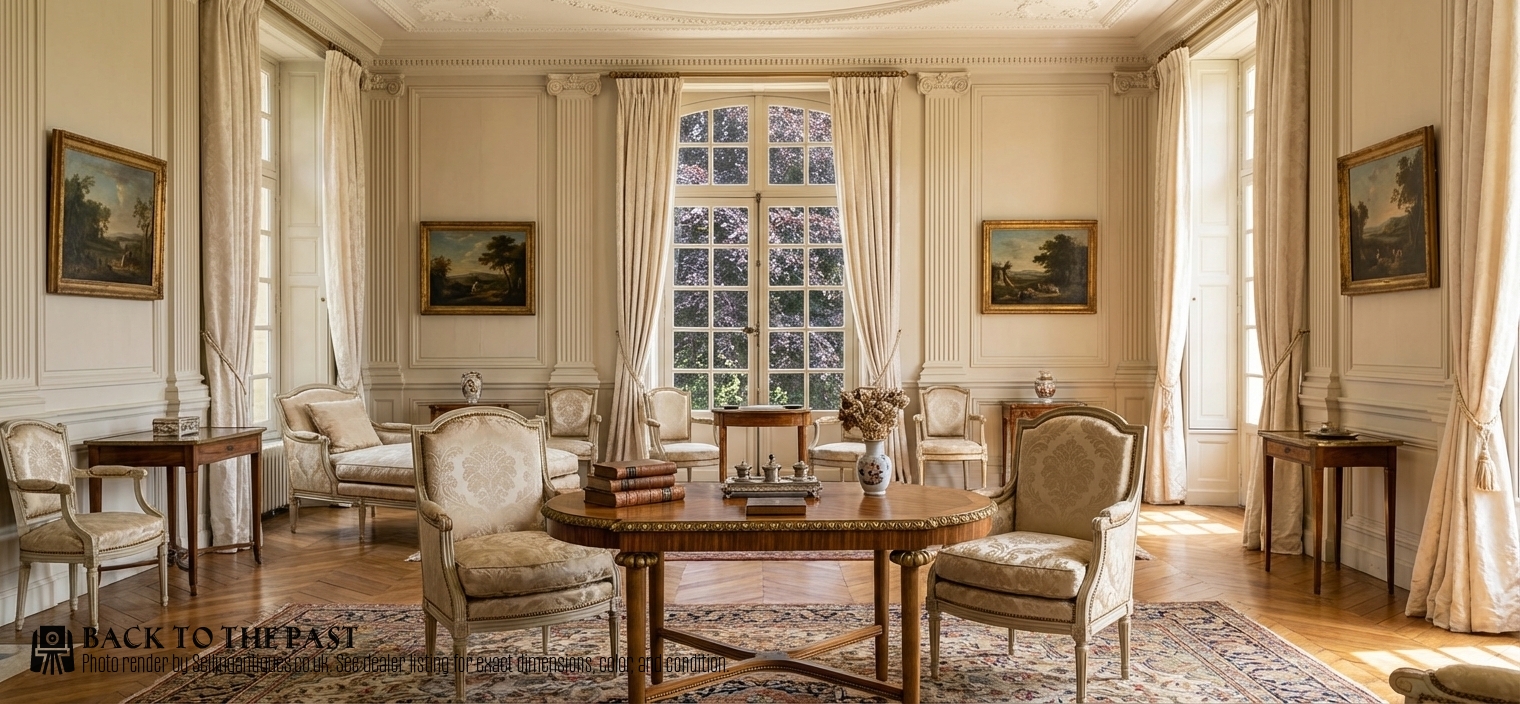
Construction and materials
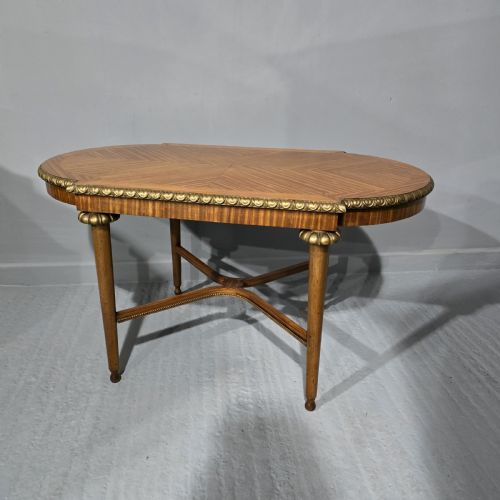
Cabinetmakers utilised timber carcasses of walnut, satinwood, and painted wood, often enhanced by marquetry inlay or brass stringing. Ormolu mounts are cast and applied to accentuate the structural joints and corners of the framework.
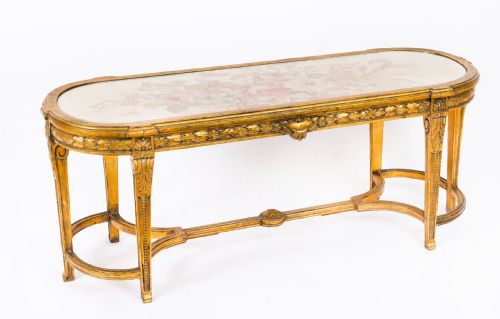
Stone tops in marble were cut and polished to fit precisely within the wooden borders, providing a durable and cool surface. Giltwood finishes appear on frames where carved detail requires a brilliant metallic surface layer.
Louis XVI Coffee Table Retail Price Guide 2026
Typical asking prices for louis xvi coffee table among the pieces listed under this phrase on Sellingantiques today, from the lower quarter to the upper quarter. They describe what is for sale here now, not the wider market.
Recorded materials strictly alternate between natural stone, cast metal mounts, and fine cabinet timbers.
Assessing quality
Quality rests upon the crispness of the timber inlays and the weight and chasing of the ormolu or brass mounts. Finer pieces display seamless integration between the marble slab and the wooden rebate supporting it.
The choice of cabinet wood dictates visual depth, with burr walnut and figured satinwood sitting above simpler painted finishes. Structural harmony between the neoclassical legs and the apron separates standard decorative items from superior examples.
The Louis XVI Coffee Table Glossary
- Ormolu
- Gilded bronze applied as decorative mounts on furniture. This technique was widely utilised in French cabinetmaking to highlight structural lines.
- Marquetry
- Decorative patterns formed by inserting thin pieces of wood into a veneer. Walnut and other timbers create contrasting tones across the table surface.
- Giltwood
- Timber coated with gold leaf or gold paint. It provides a bright reflective finish on carved framework.
- Neoclassical
- A style reviving classical architectural motifs such as straight lines and symmetry. It underpins the entire aesthetic of these tables.
Louis XVI Coffee Table: Frequently Asked Questions
Are these actual eighteenth-century tables?
The pieces recorded here date from the twentieth century, specifically between nineteen hundred and nineteen thirty. They interpret earlier French neoclassical design rather than originating in the reign of Louis XVI.
Cabinetmakers of the early twentieth century revived these classical proportions to suit contemporary drawing rooms while retaining traditional hand-crafting methods.
How do I care for the marble top?
Marble requires simple wiping with a damp cloth and mild soap to maintain its polish. Avoid acidic liquids which can etch the polished stone surface over time.
Because the stone sits loose or fixed within a wooden frame, gentle handling during movement prevents chipping around the delicate edges.
What woods are most common?
Walnut and burr walnut dominate the record, offering rich grain patterns and deep natural colour. Satinwood and painted wood also appear frequently among the listed examples.
Inlayers often combined these timbers with contrasting brass stringing to accentuate the geometric form of the table top.
Where were these tables made?
The surviving evidence points to French workshops producing these items for domestic and export markets during the early twentieth century. Makers adhered closely to traditional Parisian aesthetic models.
French chateau and Louis XVI styling guided the proportion of the legs and the selection of decorative ormolu mounts.