
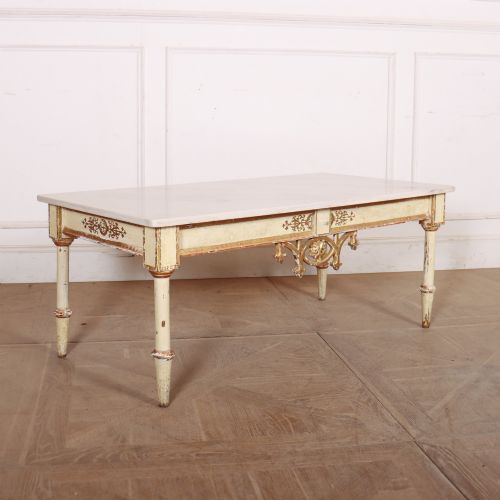
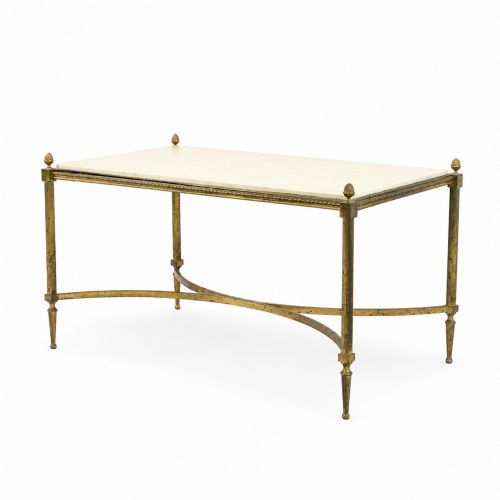

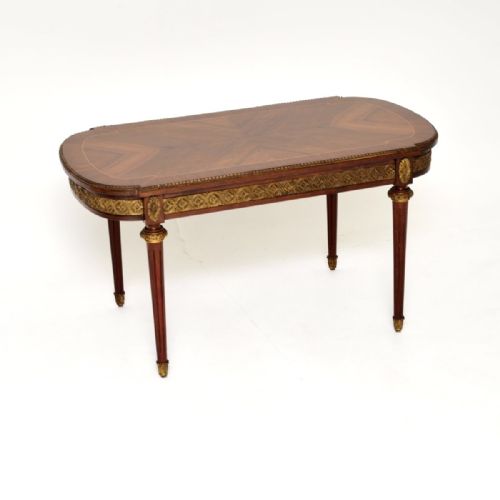


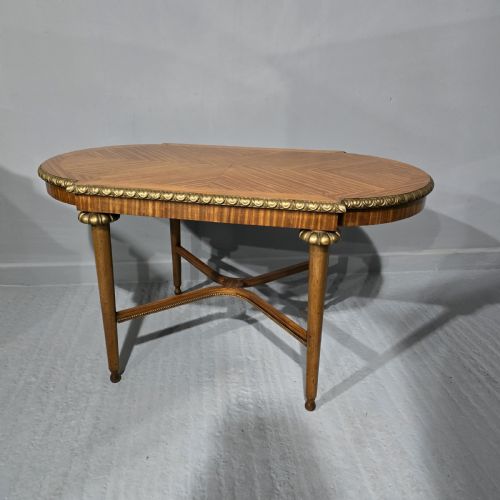
Neoclassical Coffee Table
These neoclassical coffee tables bring architectural restraint and classical proportions into a modern room, offering a structured surface with enduring presence.
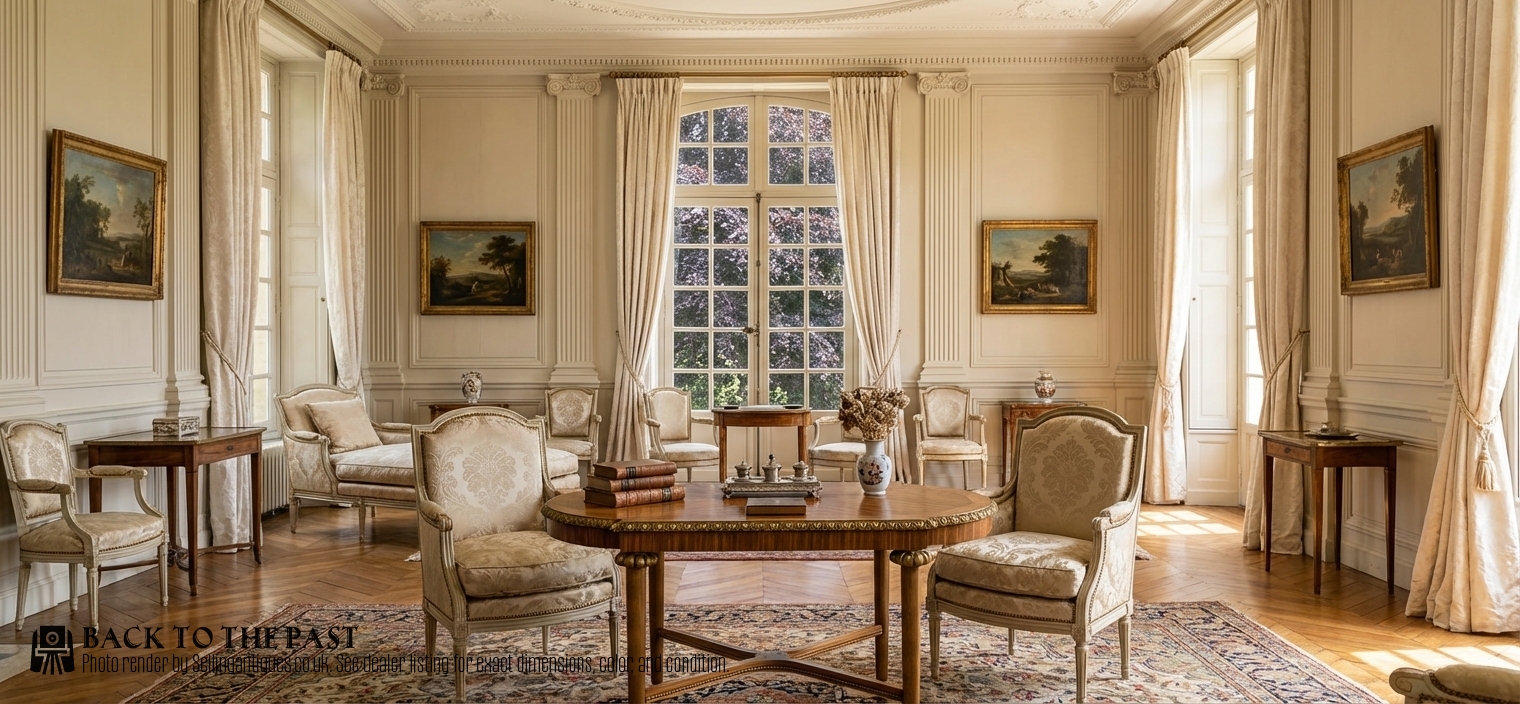
What a neoclassical coffee table is
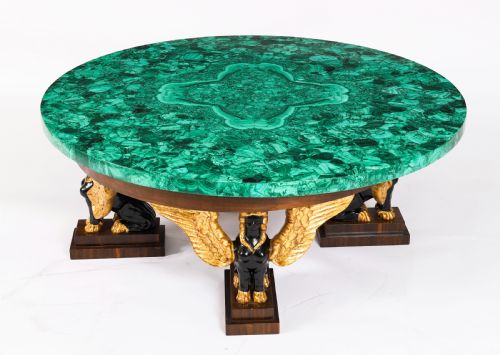
A neoclassical coffee table takes its design cues from classical antiquity, interpreted through various European revivals spanning the twentieth century. These pieces translate ancient architectural motifs into domestic furniture suitable for formal or contemporary reception rooms.
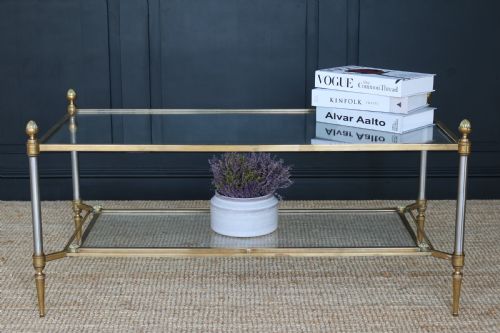
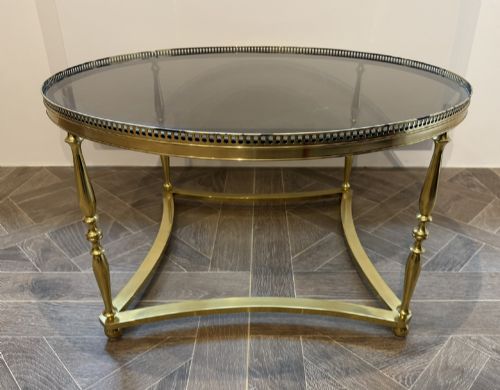
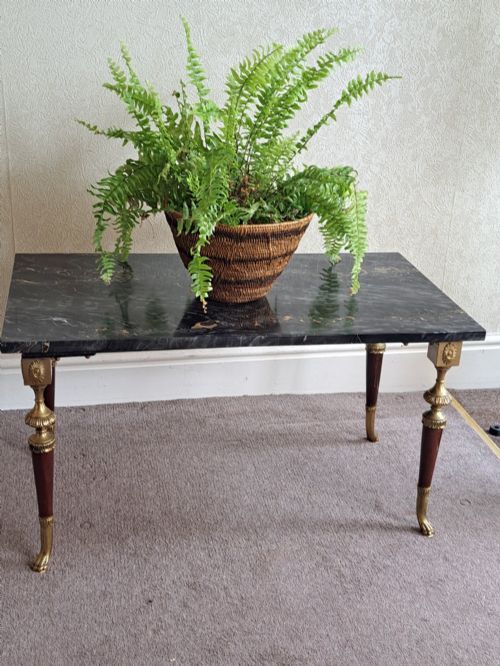
The selections available here include French neoclassical interpretations, Empire revival pieces, Louis XVI style designs, and Hollywood Regency adaptations. Forms range from compact square designs to elongated rectangular tables, often standing on slender, tapered legs.
Most examples originate from the early twentieth century, alongside later twentieth-century interpretations. They function primarily as central low tables, anchoring a seating arrangement while displaying the characteristic restraint and symmetry of the style.
Materials and construction
Construction relies upon a mixture of traditional cabinet woods and decorative metals, utilising walnut, satinwood, and ebonised wood alongside solid bronze and brass. Surfaces frequently incorporate inset slabs of marble or decorative panels of malachite.
Finishing techniques involve meticulous patination, gilding, and French polishing to highlight the grain of the timber and the metallic lustre of the bronze or brass mounts. Joinery is concealed to maintain clean, classical lines across the apron and legs.
Retail Price Guide 2026
Typical UK retail prices for neoclassical coffee table, calculated from the Sellingantiques database of over a million retail prices indexed since 2003. This retail price guide relies exclusively on Sellingantiques data; no external sources or auction records are used, so the figures do not describe the wider market.
The inventory spans the twentieth century, featuring pieces from 1900 through the 1930s and into the post-1960 period.
Assessing quality
Quality rests upon the weight and purity of the materials, distinguishing solid cast bronze or heavy brass mounts from lighter plated alternatives. The presence of genuine decorative stones like marble and malachite elevates a piece beyond standard timber construction.
The refinement of the carving and the crispness of the casting separate standard production from masterwork execution. Superior examples display balanced proportions, fine joinery in woods such as satinwood and walnut, and hand-finished patination.
Maison Jansen·Masion Ramsay
The Neoclassical Coffee Table Glossary
- Neoclassical
- A style reviving the architectural forms of ancient Greece and Rome. It prioritises symmetry, straight lines, and classical motifs.
- Giltwood
- Timber treated with gold leaf or gold paint. This technique adds reflective warmth to carved details and mounts.
- Patinated
- A surface altered by age, wear, or chemical treatment to produce a lustrous appearance. It enhances the depth of woods and metals.
- Satinwood
- A durable hardwood with a natural sheen resembling satin. It is prized for fine veneer work and smooth finishes.
Frequently Asked Questions
How do I clean a marble topped coffee table?
Use a soft, damp cloth with mild soap to wipe the surface, avoiding acidic cleaners that can etch the stone.
Dry the marble thoroughly afterwards to prevent water marks and maintain its natural polish.
Are these tables sturdy enough for daily use?
These tables are built with solid timber frames and heavy metal supports, making them durable for everyday living.
Their robust construction of brass, bronze, and hardwood handles normal domestic use while retaining stability.
How do I identify a Louis XVI style piece?
Look for straight, fluted legs, restrained geometric shapes, and classical architectural details rather than curved rococo lines.
They frequently feature bronze mounts, satinwood or walnut veneers, and symmetrical rectangular forms.
Will a bronze coffee table fit a modern interior?
The clean architectural lines of these tables complement contemporary spaces by adding a touch of classical structure.
Materials like brass, marble, and ebonised wood mix easily with neutral upholstery and minimalist surroundings.