


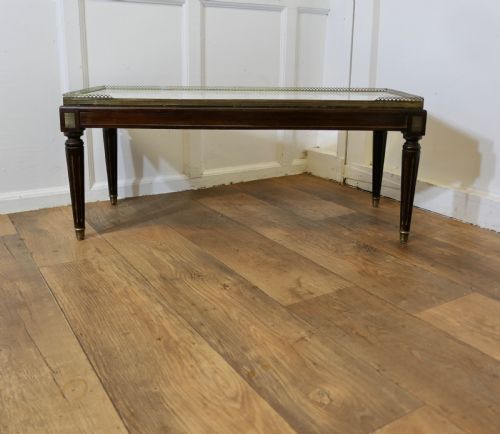


Louis XVI Low Table
A louis xvi low table brings formal French neoclassical restraint to a room, offering a low surface of marble or wood carried on disciplined legs.
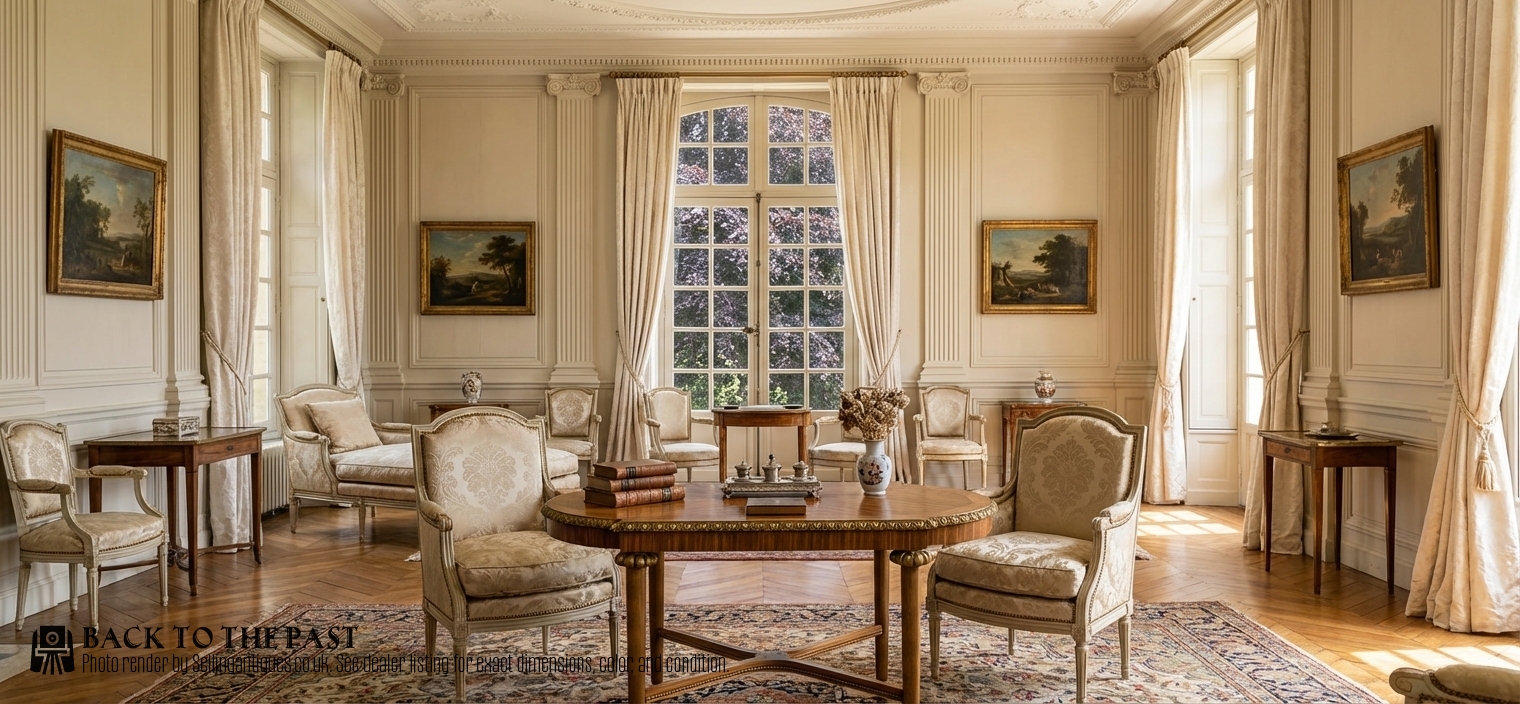
Louis XVI Low Table
When you search for a louis xvi low table, you encounter low coffee tables and centre tables that draw on French revival designs from the nineteenth and early twentieth centuries. These pieces translate classical architectural proportions into domestic furniture suited to seating areas.
You are most likely to meet Edwardian and early twentieth-century interpretations here, alongside nineteenth-century examples. They emerge in forms such as coffee tables with inset marble slabs or low stands adapted for modern use.

How they were made
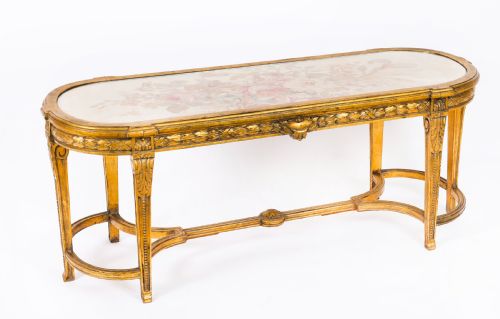
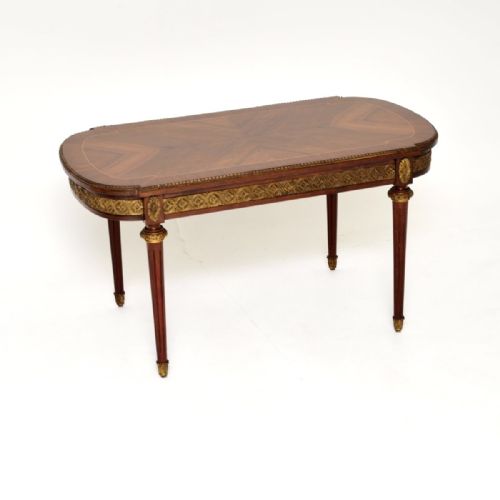
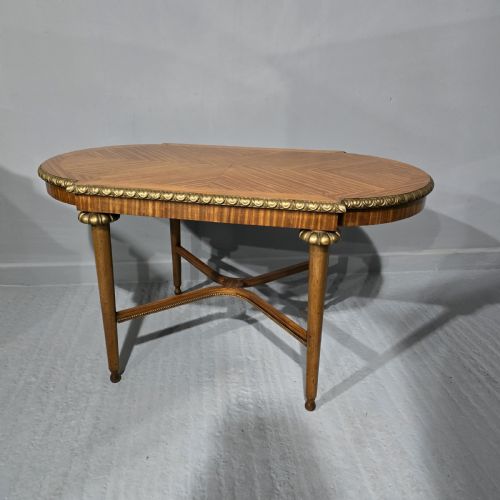
Maker construction relies on cabinet timbers like mahogany, walnut, and satinwood, frequently shaped into painted and parcel-gilt or giltwood frames. Metal mounts in brass or ormolu accent the structural lines and corners.
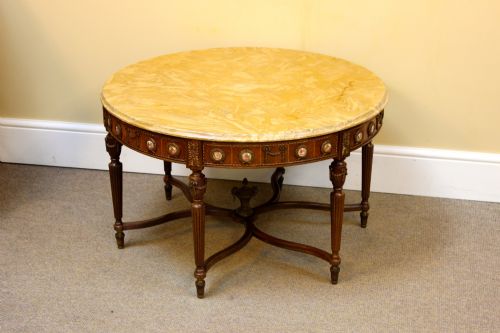
Insets of polished marble provide durable top surfaces, occasionally paired with textile elements such as tapestry or glass. Joinery is concealed to maintain the clean neoclassical profile characteristic of the style.
Listings feature periods spanning from the nineteenth century through the 1930s, including Edwardian interpretations.
What varies in quality
Quality separates in the precision of the carving and the weight of the materials used in the frame. Hand-carved giltwood and crisp ormolu mounts indicate higher workshop standards than simpler painted wood equivalents.
The choice of inset top also distinguishes pieces, with substantial marble slabs showing finer veining standing apart from simpler glass or wooden panels. Proportional harmony and restraint in ornament define the better examples.
The Louis XVI Low Table Glossary
- Ormolu
- Gilt bronze mounts applied to furniture. This technique gives metallic enrichment to wooden frames.
- Parcel-gilt
- Partially gilded woodwork where gold leaf highlights specific carved details. It contrasts with painted or polished surfaces.
- Aubusson
- Woven textile associated with French tapestry production. Such panels occasionally appear integrated into furniture tops.
- Neoclassical
- A style drawing on classical Greek and Roman architecture. It prioritises straight lines, symmetry, and restrained ornament over baroque curves.
Louis XVI Low Table: Frequently Asked Questions
How were marble tops used?
Marble slabs were inset directly into the wooden frames of tables to provide a smooth, durable surface. This material added weight and a formal appearance.
White or veined marble is commonly paired with giltwood, mahogany, or painted wood structures.
How do I spot revival pieces?
Revival pieces from the nineteenth and twentieth centuries adopt the vocabulary of eighteenth-century France. They use period woods, brass mounts, and classical motifs like fluting.
Construction methods and timber conditioning often reveal the later date of manufacture while retaining the visual style.
Where do these tables fit?
These tables suit sitting rooms as low coffee tables placed before upholstery. Their compact height and open legs keep rooms feeling spacious.
The combination of marble and giltwood introduces a formal accent to both traditional and modern interiors.