
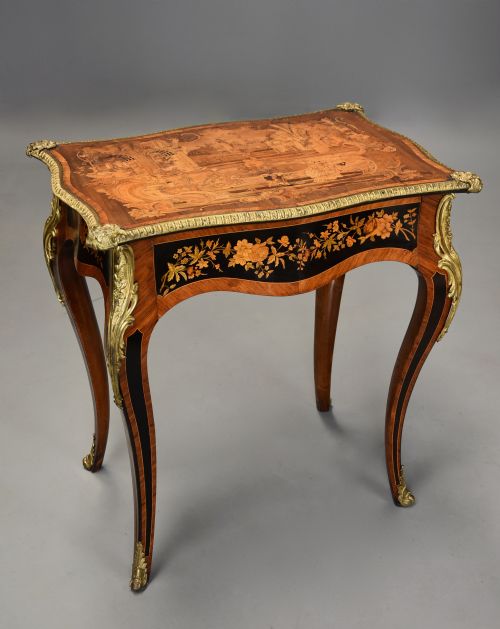
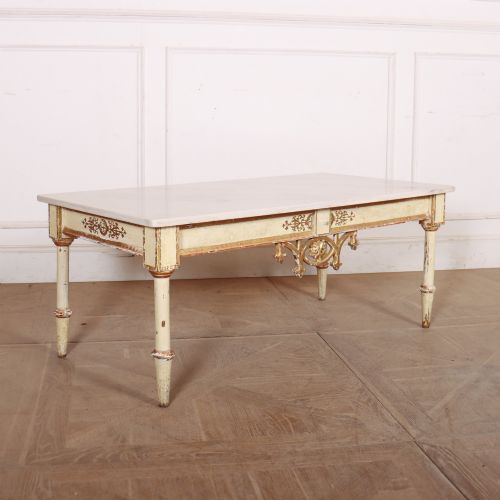


French Style Coffee Table
A french style coffee table brings continental elegance to a sitting room, offering useful surface space with distinct historical character.
What these tables are
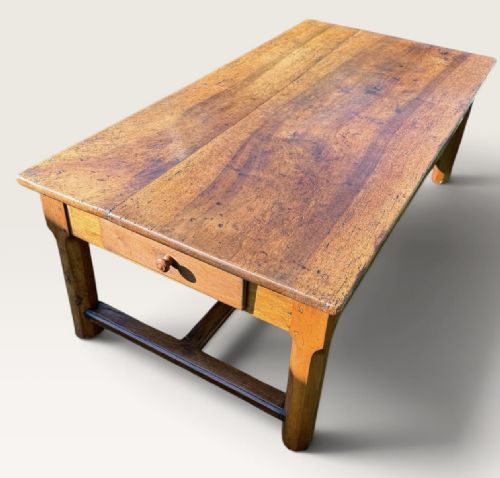
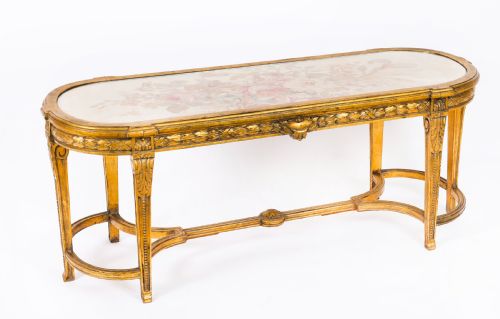
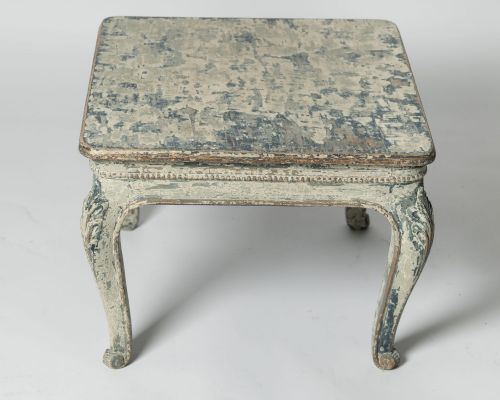
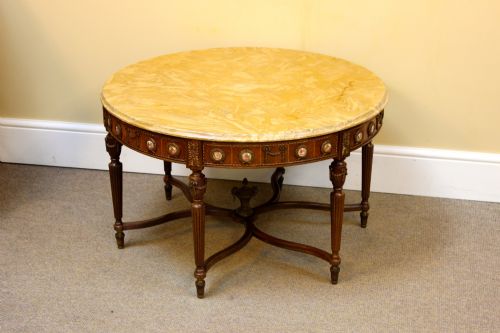
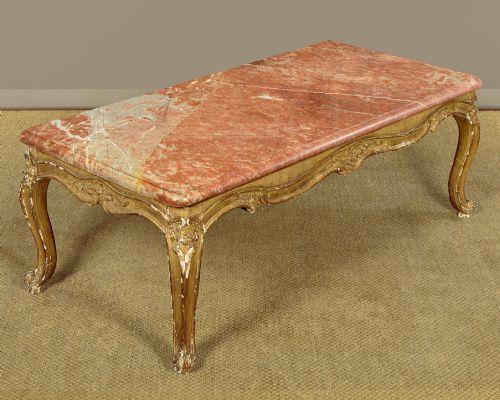
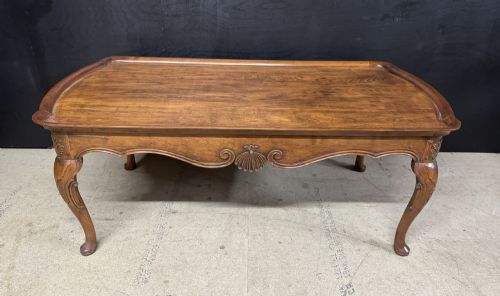
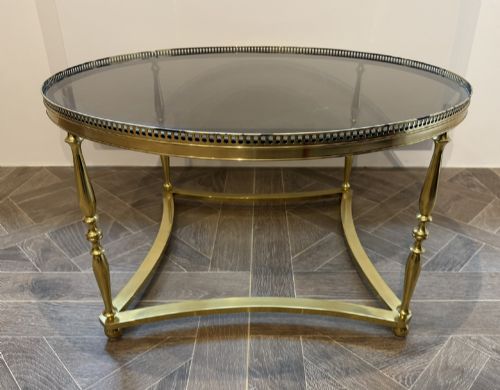
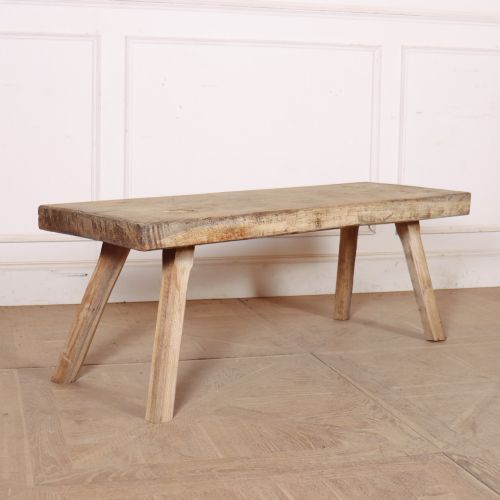
When you search for a french style coffee table, you encounter low tables drawn from various continental design traditions spanning the late nineteenth and early twentieth centuries. The selection includes pieces reflecting Louis XVI style, Rococo revival, and French chateau aesthetics, alongside rustic and bleached pine interpretations.
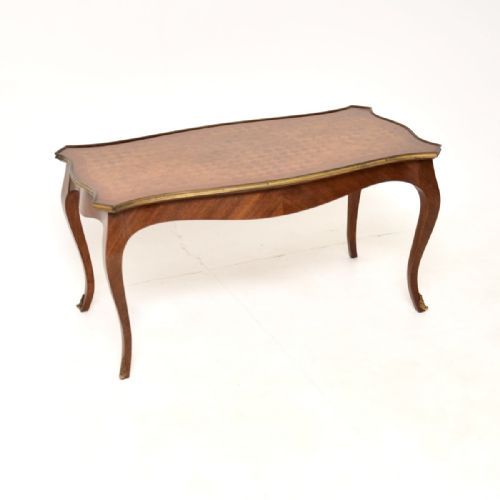
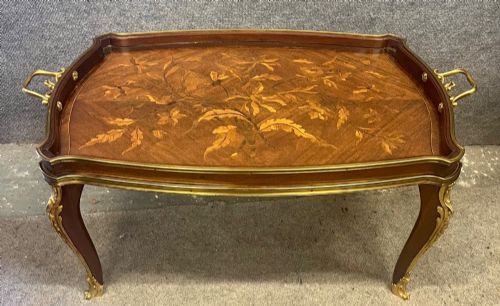
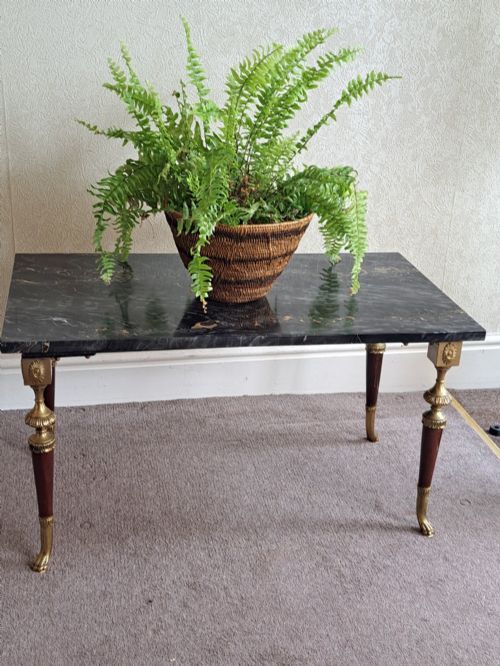
The most common versions met on this page are walnut and burr walnut constructions, often featuring marquetry inlays or brass mounts. You also find satinwood and mixed wood inlaid examples, alongside occasional two-tier formats and round tabletops suited to central placement.
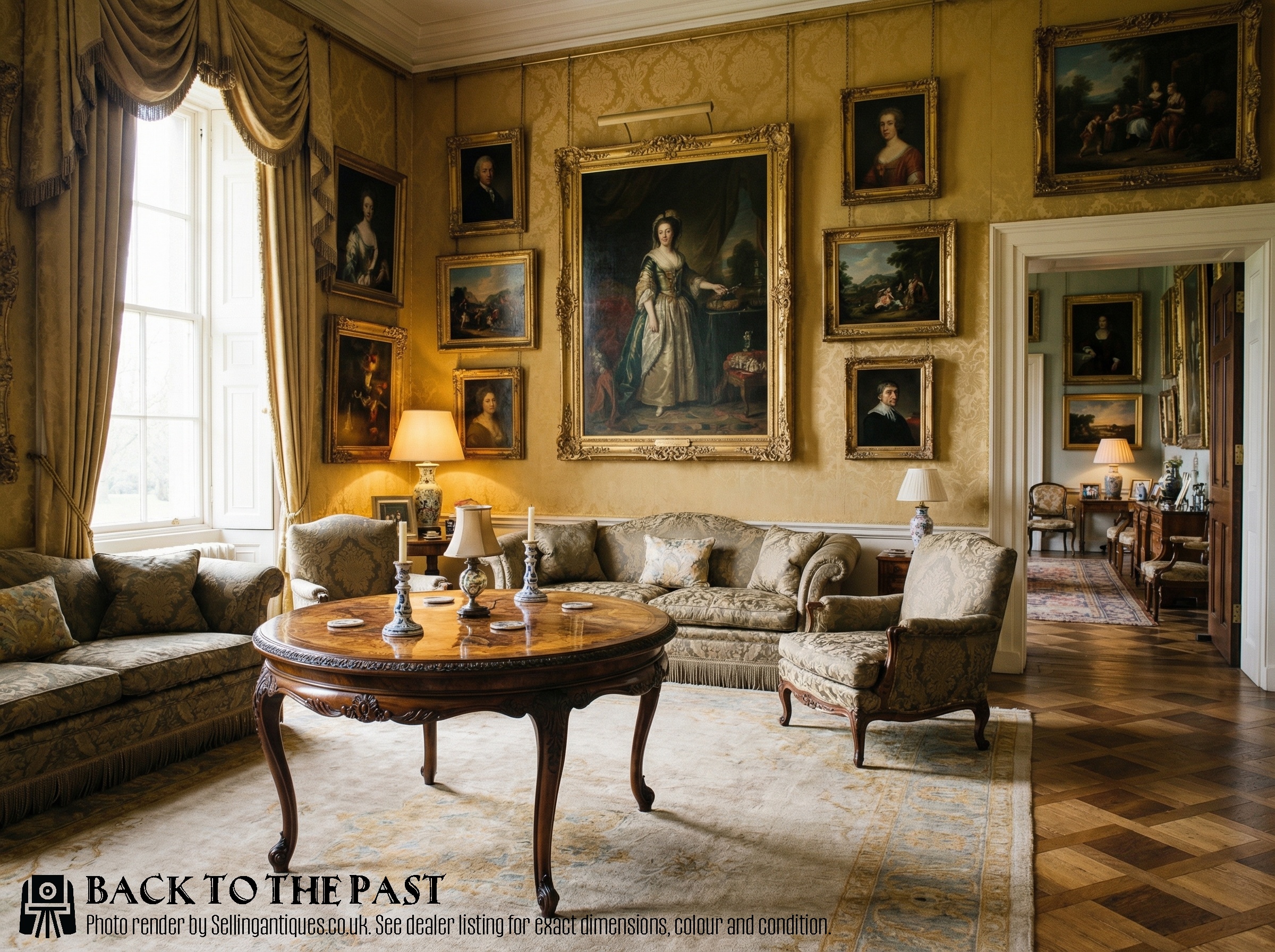
These low tables adapt historical drawing room designs for modern living spaces while retaining traditional proportions and decorative motifs. Their origins draw on distinct nineteenth and twentieth century revival movements that prized continental craftsmanship.
How they were made
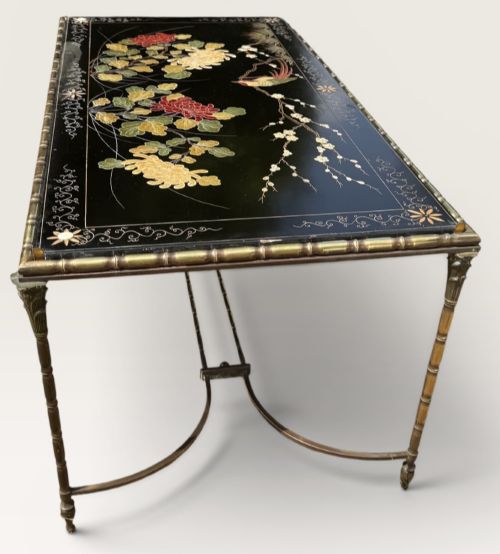
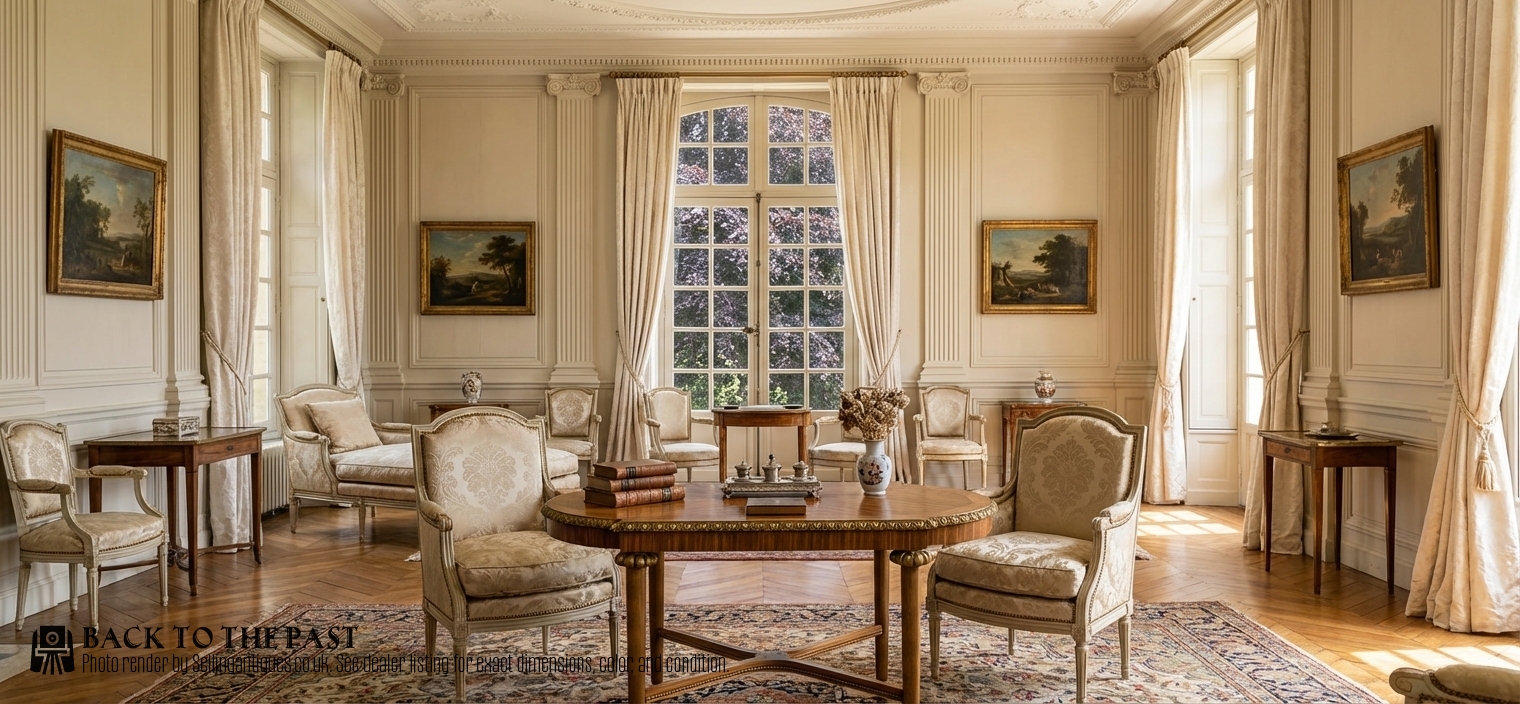
Cabinet makers utilised solid timbers alongside timber veneers, selecting walnut, burr walnut, satinwood, and pine as foundational materials. Mixed wood inlays and detailed marquetry decorated the tabletops, creating intricate geometric or floral patterns across the wooden surfaces.
Structural embellishments incorporated cast brass mounts and fine carving work directly into the wood. Tables frequently employed a two-tier format or round top configuration, relying on traditional joinery techniques to secure the legs and frames.
Retail Price Guide 2026
Typical UK retail prices for french style coffee table, calculated from the Sellingantiques database of over a million retail prices indexed since 2003. This retail price guide relies exclusively on Sellingantiques data; no external sources or auction records are used, so the figures do not describe the wider market.
Travellers once repurposed a nineteenth-century luggage trunk into a low table, proving that even baggage can settle down.
What varies in quality
The standard of a french style coffee table rests upon the precision of its timber veneers and the intricacy of its mixed wood inlays. Finer examples display expertly matched burr walnut and detailed marquetry work that commands the eye across the tabletop.
Construction methods and hardware selection further separate everyday items from superior pieces. Well-cast brass mounts and careful carving integrated directly into walnut or satinwood elevate a table above simpler pine or plain timber versions.

The French Style Coffee Table Glossary
- Marquetry
- Decorative veneer work arranged in intricate patterns on a wooden surface. Craftsmen assemble thin slices of various timbers to create pictorial or geometric designs.
- Burr walnut
- Highly figured wood harvested from walnut tree growths, featuring swirling grain patterns. This material creates richly textured tabletops prized for decorative depth.
- Louis XVI style
- A neoclassical design movement characterised by straight lines, symmetry, and classical restraint. It contrasts with the earlier sweeping curves of rococo decoration.
- Two-tier
- A furniture configuration featuring a primary surface supported above an additional lower shelf. This design provides extra display or storage space within a compact footprint.
Frequently Asked Questions
How do I date a french style coffee table?
Dating relies on examining the timber veneers, construction methods, and stylistic revival cues present in the piece. Pieces span periods from eighteen ninety through nineteen thirty.
Specific design details, such as marquetry inlays or brass mounts, often reflect the manufacturing preferences of their particular decade.
Where should I place a round coffee table?
Round tables work effectively in the centre of a seating arrangement to ease movement around the room. Their curved perimeters soften angular upholstery layouts.
They also suit smaller spaces where sharp corners might otherwise restrict walking paths.
What is burr walnut?
Burr walnut is a specialised timber cut from tree growths that produce dense, swirling grain patterns. It provides a highly decorative surface for tabletops.
Cabinet makers use these distinct veneers to create visual movement and depth across the wood.
How do I clean satinwood?
Satinwood surfaces require gentle dusting with a soft, dry cloth to prevent the accumulation of grit. Avoid harsh chemical cleaners that can strip historical finishes.
Occasional application of appropriate furniture wax helps nourish the timber veneer.