



Inlaid Walnut Coffee Table
An inlaid walnut coffee table brings rich timber figure and intricate contrasting detail into a sitting room.
Forms and Origins
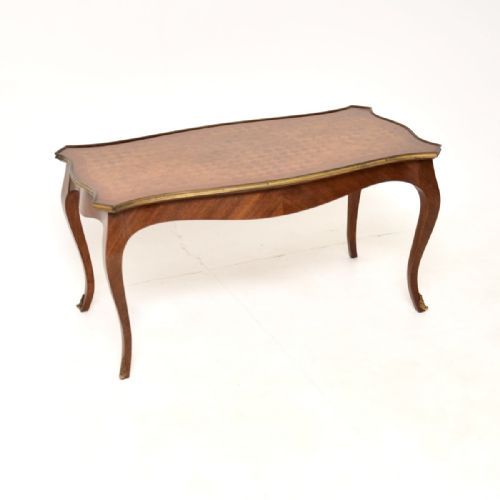
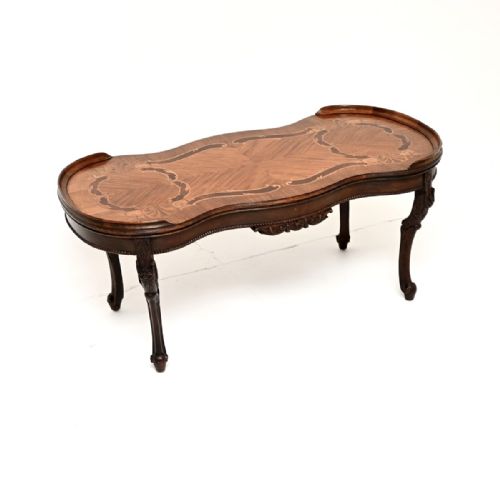
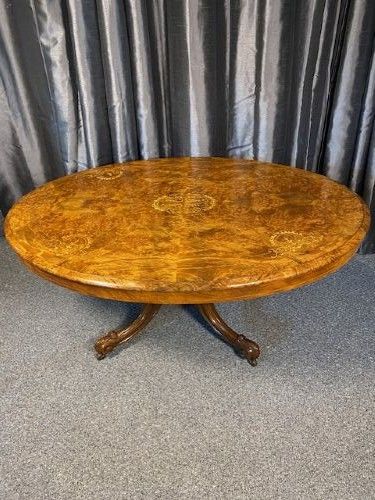
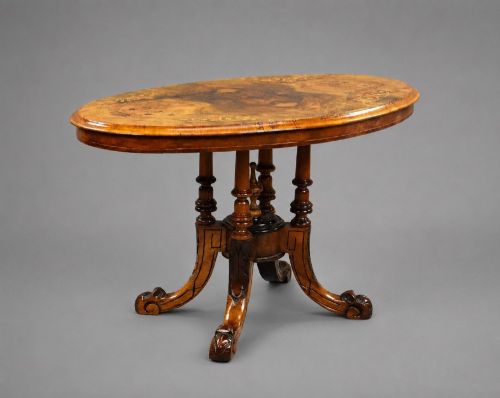
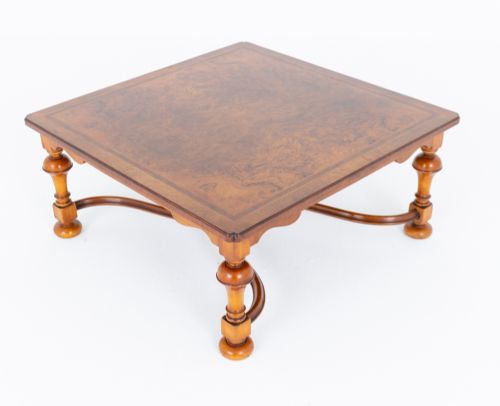
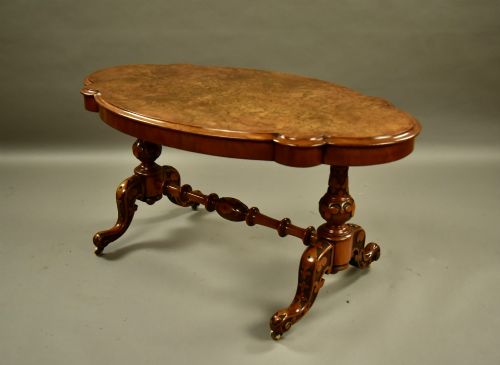
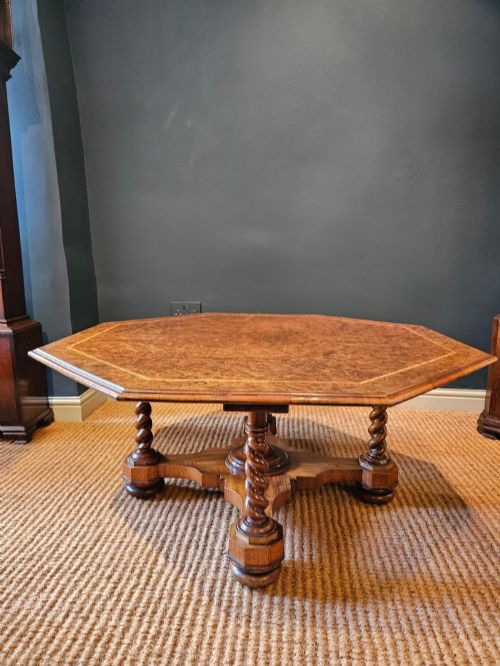
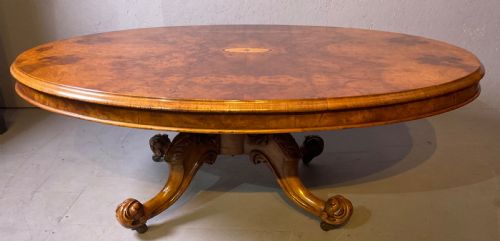
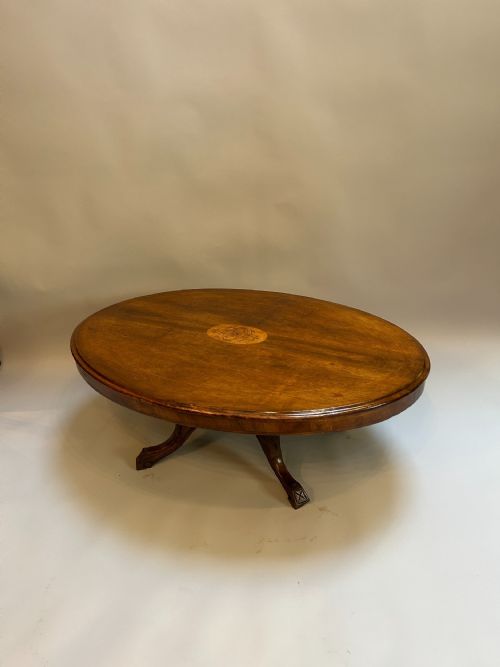
An inlaid walnut coffee table is typically encountered as a Victorian piece, alongside examples from the 1920s and 1930s. The evidence shows these tables appear in octagonal, round, oval, and dropleaf formats, often serving as occasional or low lamp tables.
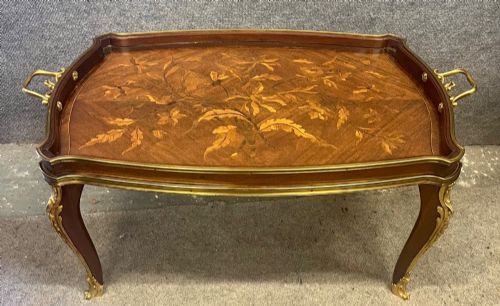
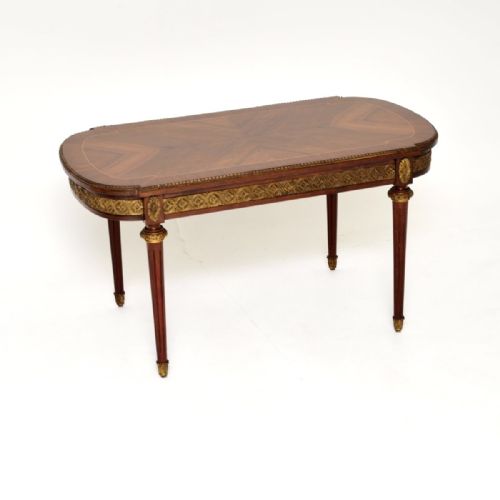
Victorian examples dominate the record, frequently utilising burr walnut combined with marquetry. Later pieces from the interwar decades bring different stylistic influences, including French Louis XV Revival, Rococo Revival, and Queen Anne style interpretations.
The selection ranges from small occasional items to larger proportions. Buyers often find specialised variants such as nesting tables and low sutherland formats within the historical archive.
Materials and Technique
Construction relies heavily on walnut and burr walnut, valued for their distinctive grain patterns and warm tones. Artisans integrated contrasting timber species such as boxwood and fruitwood to create detailed inlaid patterns and marquetry motifs.
Surface decoration frequently includes intricate floral or geometric inlay work set into the timber top. Selected examples incorporate supplementary elements like brass, ormolu mounts, and castors to complete the construction.
Retail Price Guide 2026
Typical UK retail prices for inlaid walnut coffee table, calculated from the Sellingantiques database of over a million retail prices indexed since 2003. This retail price guide relies exclusively on Sellingantiques data; no external sources or auction records are used, so the figures do not describe the wider market.
Several low sutherland and nesting variants prove that Victorians liked their walnut multi-tasking long before modern flats were invented.
Judging the Standard
Quality in these tables rests upon the selection of the timber veneer and the precision of the marquetry work. Burr walnut with a deeply figured grain and crisp, tight inlay denotes a higher standard of manufacture.
The sophistication of the silhouette and the integration of carved elements, hand-carved bases, or gilt mounts separate standard production items from more ambitious workshops.
The Inlaid Walnut Coffee Table Glossary
- Burr walnut
- A specialised timber cut from the abnormal growth of a walnut tree, yielding a swirling, highly figured grain pattern. It is prized for tabletop surfaces.
- Marquetry
- Decorative veneer work forming pictures or geometric patterns using various woods. Craftsmen cut thin slices of contrasting timber to fit precisely into a design.
- Ormolu
- Gilt bronze mounts applied to furniture edges and legs. This decorative technique appears on French revival pieces.
- Dropleaf
- A table design featuring hinged side flaps that fold down. This mechanism allows the surface area to adjust according to space.
Frequently Asked Questions
How do I clean an inlaid walnut coffee table?
Dust gently with a soft, dry cloth to protect the delicate veneer and timber surface. Avoid harsh chemical cleaners that can damage the polish and dry out the old wood.
Apply a traditional beeswax polish occasionally to nourish the walnut and maintain its natural lustre. Buff lightly after application to preserve the sheen without building up excess residue.
Are these tables sturdy enough for daily use?
Most surviving examples were built to handle the demands of a Victorian or early twentieth-century drawing room. Their solid construction generally supports typical daily living requirements.
Care should be taken with moisture and heat, as older polished surfaces react poorly to damp cups or direct hot plates. Using coasters helps protect the delicate marquetry and inlay work.
How can I tell a Victorian table from a 1930s one?
Victorian examples frequently showcase heavy burr walnut veneers combined with elaborate marquetry and hand-carved wooden bases. Their proportions often reflect nineteenth-century revival styles like Rococo or French Louis XV.
Tables from the 1930s tend to reflect simpler geometric lines or different proportions. They sometimes show influences from Art Deco design alongside traditional walnut construction.
What is the difference between an occasional table and a coffee table?
Occasional tables were originally designed for specific, intermittent uses around a room, such as holding a lamp or a book. Many historical pieces now function readily as low coffee tables.
Lower heights and broader surface areas distinguish pieces adapted or built specifically as coffee tables. Both types rely on the same decorative walnut and inlay techniques.