

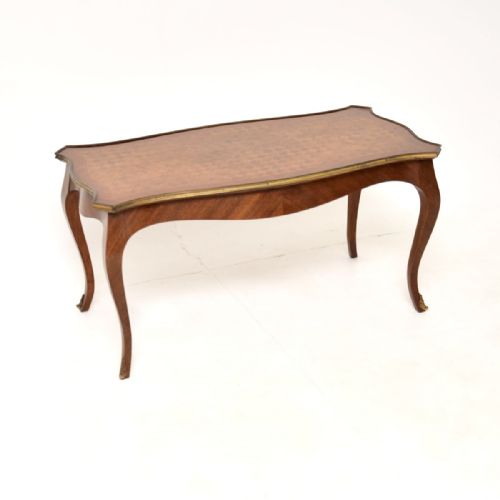
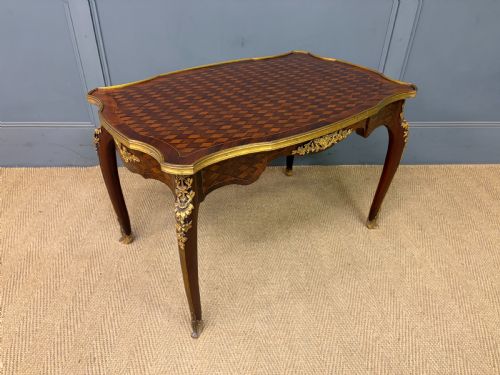
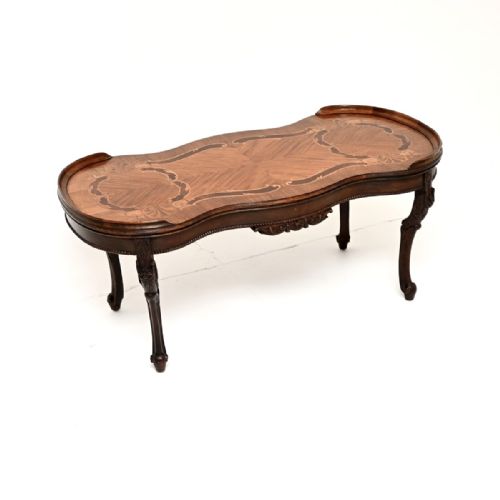
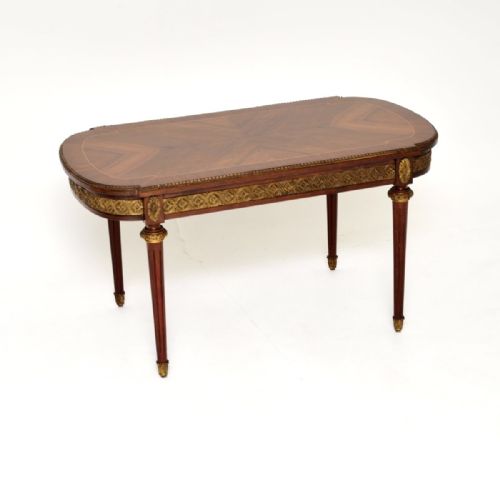




Parquetry Low Table
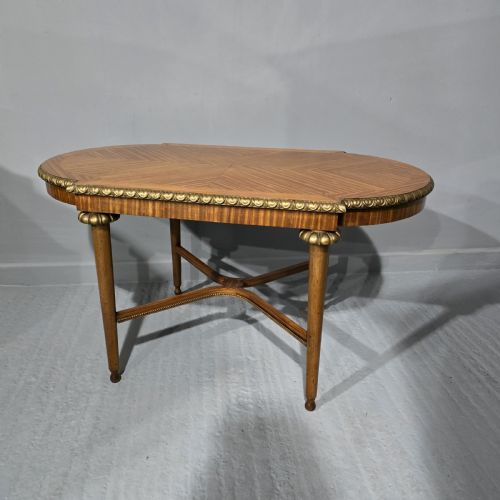
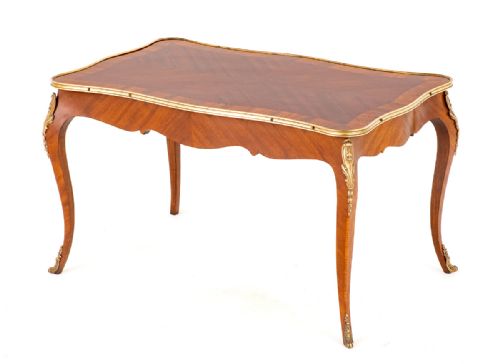
These parquetry low table pieces bring intricate geometric wood patterns and low proportions to a room, offering both surface utility and decorative warmth.
Parquetry Low Table
A parquetry low table combines low proportions with geometric wood veneers arranged in patterns like cubes or herringbone. These pieces function as coffee tables and occasional tables in sitting rooms.
The pieces seen here span the nineteenth century through the mid twentieth century, drawing heavily on French Louis styles and Victorian tastes. Buyers frequently encounter French revival designs alongside walnut and satinwood surfaces.
How they were made
Cabinetmakers constructed these tables using solid carcase woods overlaid with finely cut veneers of walnut, kingwood, satinwood, and burr yew. Artisans arranged these contrasting timbers by hand to form precise geometric parquetry patterns across the top.
Many examples incorporate cast brass or ormolu mounts to accent the legs and borders, paired with boxwood and fruitwood stringing lines. This combination of fine timber selection and metal mountings defines the construction of the period.
Parquetry Low Table Retail Price Guide 2026
Typical asking prices for parquetry low table among the pieces listed under this phrase on Sellingantiques today, from the lower quarter to the upper quarter. They describe what is for sale here now, not the wider market.
Cabinetmakers occasionally hid subtle irregularities within complex geometric parquetry patterns, proving that even meticulous craftspeople enjoyed a quiet puzzle.
What varies in quality
Quality rests upon the precision of the veneer work and the choice of timbers used in the geometric layout. Dense woods like kingwood and burr yew paired with crisp boxwood stringing indicate finer workshop output.
The sophistication of the frame design and the integration of cast ormolu mounts elevate certain pieces above standard production. Strong architectural proportions and clean lines distinguish the better examples.
The Parquetry Low Table Glossary
- Parquetry
- A geometric mosaic of wood pieces used for decorative floors and furniture surfaces. It relies on contrasting timber colours to create an optical sense of depth.
- Ormolu
- Gilt bronze mounts applied to furniture edges and legs during the eighteenth and nineteenth centuries. This technique adds metallic contrast to wooden surfaces.
- Kingwood
- A dense, richly grained timber native to Brazil, often utilised in fine French cabinetmaking. Its dark violet-brown tones feature striking lighter streaks.
- Burr Yew
- Wood taken from the growth excrescences of the yew tree, showing swirling knot patterns. Cabinetmakers prize it for creating highly decorative table tops.
Parquetry Low Table: Frequently Asked Questions
What is a parquetry low table?
A parquetry low table is a low-standing surface decorated with geometric wood veneer arrangements. These pieces serve as coffee tables or occasional tables in reception spaces.
They draw on historical French and Victorian revival styles, incorporating materials such as walnut, satinwood, and ormolu mounts.
How do I date these tables?
Dating relies on timber choices, construction methods, and stylistic cues from the nineteenth and twentieth centuries. Pieces often reflect Victorian or French revival influences characteristic of their production era.
Examining the underside and secondary woods helps clarify the manufacturing period when markers are absent.
Where were these tables made?
Many examples originate from French workshops following Louis styles, alongside British Victorian production. Cabinetmakers across Europe utilised native and exotic timbers for these designs.
The materials and mounting techniques often point directly to these regional manufacturing centres.
How do I care for the surface?
Maintain the wood veneers by avoiding direct sunlight and excessive moisture. Regular dusting with a soft cloth preserves the polish of walnut and satinwood.
Applying suitable wax periodically keeps the timber nourished without building up heavy residue.