






Satinwood Coffee Table
A satinwood coffee table brings pale, lustrous grain and neoclassical lightness to a room, offering both surface utility and period elegance.
Satinwood Coffee Table
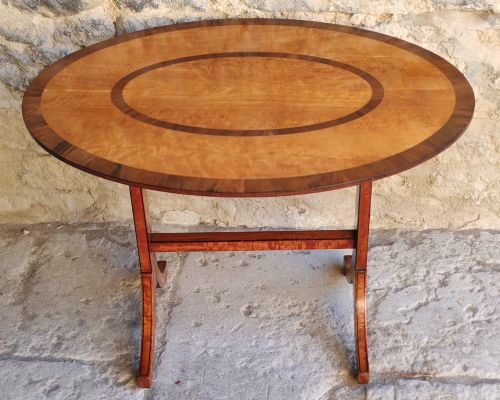
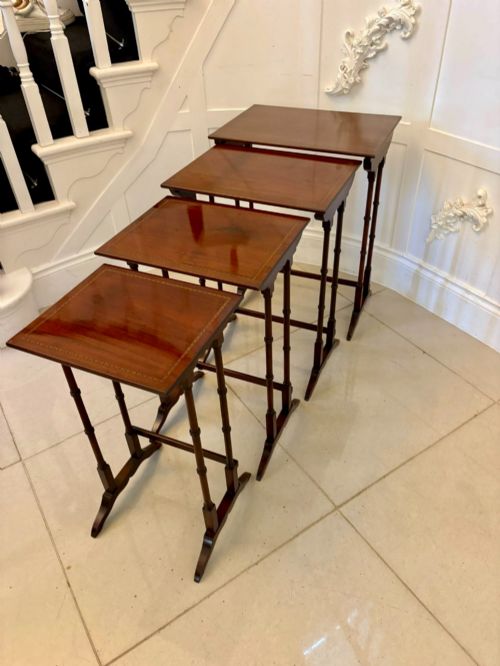
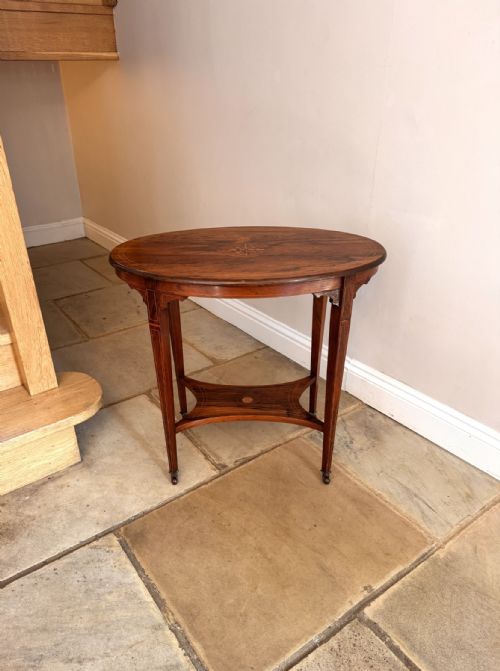
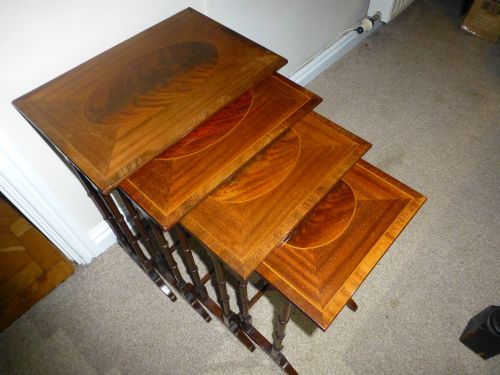
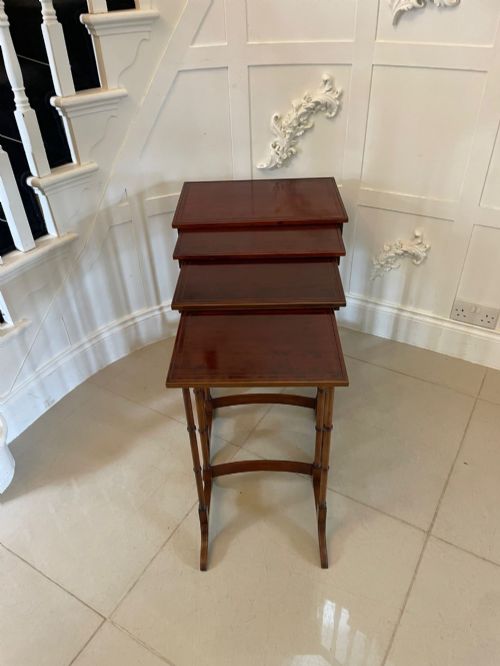
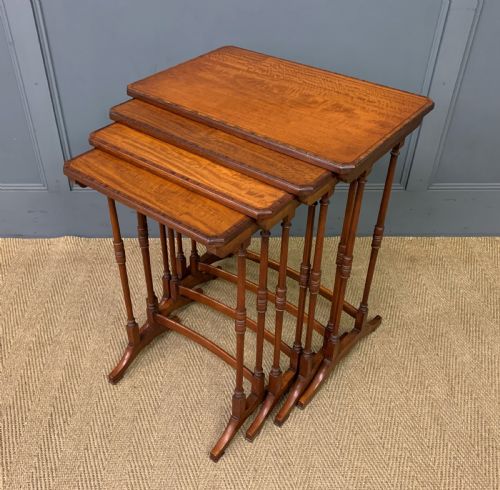
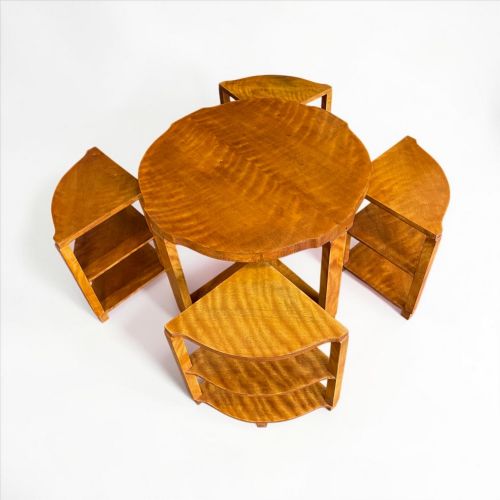
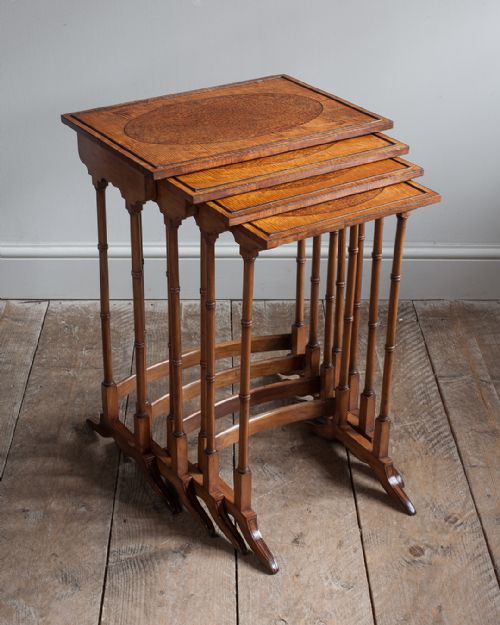
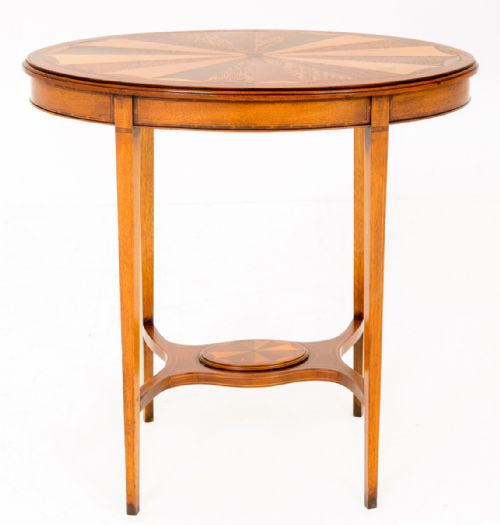
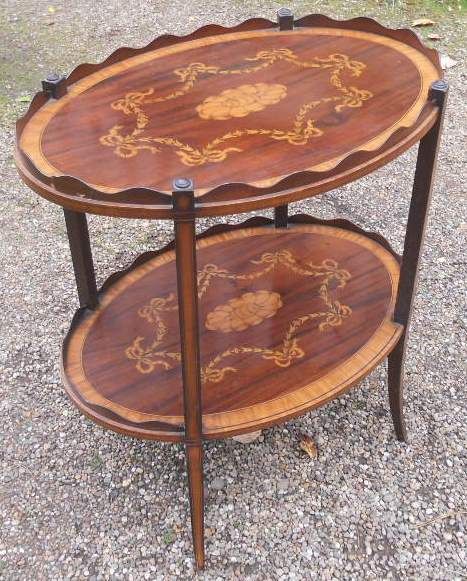
When buyers search for a satinwood coffee table, they encounter low tables adapted from earlier forms, including nests of tables, occasional tables, etageres, and trays on stands. Many pieces carrying this description originate from the Edwardian era and the Sheraton Revival period, alongside examples from the nineteenth century and the Art Deco decades.
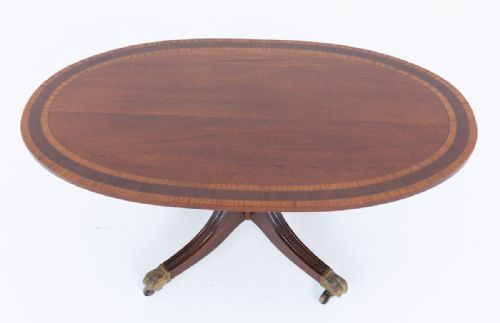
The most frequent forms found here are nests of four stacking tables, oval occasional tables, and two-tier low tables. Makers often combined satinwood with mahogany, incorporating boxwood inlay and brass mounts to achieve the refined aesthetic characteristic of these periods.
Materials and construction
Cabinetmakers used figured satinwood veneers and solid timbers, frequently banding them with contrasting woods like mahogany, tulipwood, and amboyna. Boxwood stringing and elaborate marquetry inlay defined the decorative surfaces of Edwardian and Sheraton Revival pieces.
Structural elements incorporated brass framing, particularly on tiered etageres and side tables, while turning and joinery adhered to traditional workshop practices of the nineteenth and early twentieth centuries.
Satinwood Coffee Table Retail Price Guide 2026
Typical asking prices for satinwood coffee table among the pieces listed under this phrase on Sellingantiques today, from the lower quarter to the upper quarter. They describe what is for sale here now, not the wider market.
Listings feature satinwood combined with mahogany, amboyna, and tulipwood, spanning Victorian, Edwardian, and Art Deco periods.
Distinctions in quality
Quality rests in the selection of the timber grain, the precision of the boxwood inlay, and the crispness of the marquetry work. Pieces by documented makers display superior balance and finer detailing in their brass mounts and leg turnings.
Finer examples maintain structural integrity in their stacking mechanisms and joints, whereas ordinary pieces show simpler construction and less varied timber selection.
Edwards and Roberts·Waring and Gillow·Gillows
The Satinwood Coffee Table Glossary
- Satinwood
- A hard, durable timber with a natural golden sheen and a lustrous grain. It served as a primary veneer for high-status furniture during the eighteenth and nineteenth centuries.
- Quartetto
- A matching set of four stacking tables that slide neatly beneath one another. They gained popularity during the Victorian and Edwardian periods for entertaining.
- Sheraton Revival
- A late nineteenth and early twentieth-century style imitating the neoclassical designs of Thomas Sheraton. It utilises delicate legs, satinwood veneers, and classical inlay motifs.
- Marquetry
- The art of applying pieces of veneer to a structure to form decorative patterns and pictures. Makers used contrasting woods to create floral or geometric designs.
- Etagere
- A set of open shelves or tiers designed for displaying small objects. Low versions frequently function as coffee tables in modern interiors.
Satinwood Coffee Table: Frequently Asked Questions
What periods do these tables date from?
The pieces span the late nineteenth century through to the Art Deco period of the 1930s. Edwardian and Sheraton Revival examples from around 1900 appear most frequently in the current selection.
Earlier nineteenth-century pieces and later twentieth-century interpretations also occur, reflecting shifting revivalist tastes across decades of British cabinetmaking.
How were nests of tables used originally?
Nests of four tables, often termed quartetto sets, were designed to be pulled apart when guests required surfaces for tea or drinks. They saved floor space by stacking vertically when not in use.
Cabinetmakers engineered them to slide smoothly, allowing multiple people in a drawing room to have an independent surface close at hand.
How do I care for satinwood surfaces?
Satinwood benefits from gentle dusting with a soft, dry cloth and occasional applications of microcrystalline wax to preserve the sheen of the timber. Avoid placing these tables in direct sunlight or near heat sources to prevent the veneer from drying out.
Using coasters protects the polished top from moisture rings and heat marks, maintaining the clarity of the figured grain.
How can I tell Sheraton Revival from original pieces?
Sheraton Revival pieces generally date from the 1880s to the Edwardian era, employing machine-sawn veneers and specific secondary timbers typical of that period. Original eighteenth-century pieces display hand-cut construction markers and different internal framing methods.
Examining the underside, drawer linings, and block construction helps reveal the true age and manufacturing techniques of the table.