


Faux Bamboo Table
When choosing a faux bamboo table, buyers encounter nineteenth-century painted side pieces and occasional forms designed to bring playful exoticism into domestic interiors.
Faux Bamboo Table
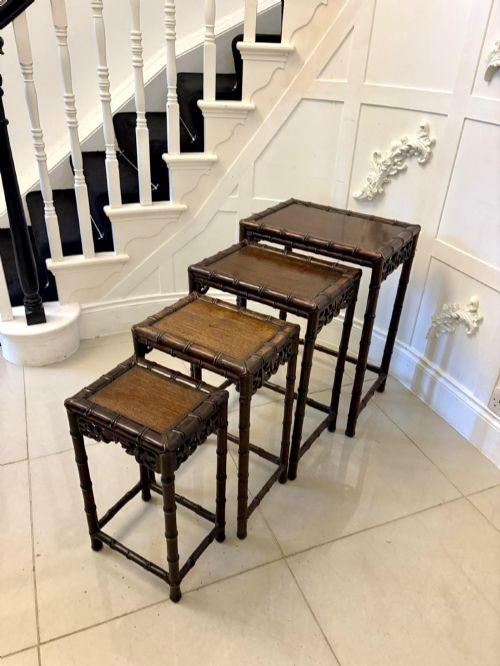
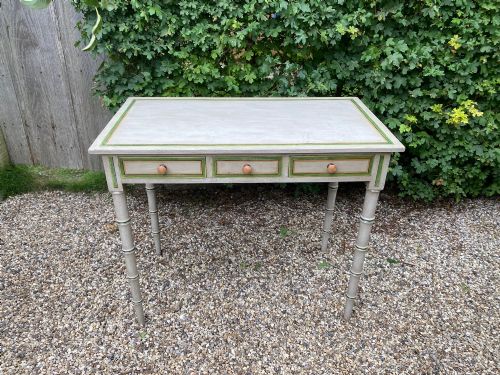
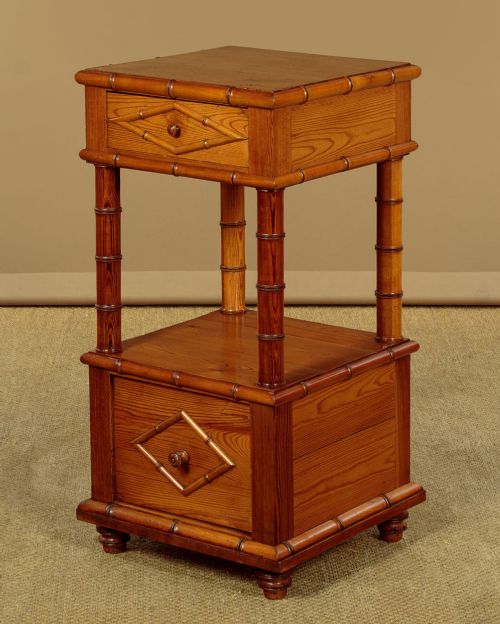
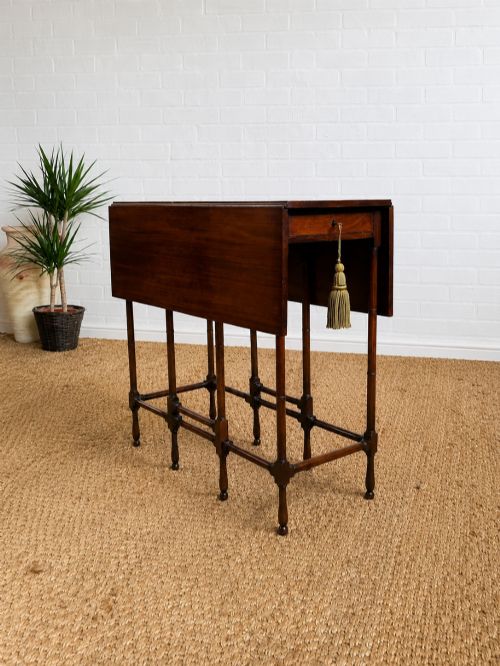
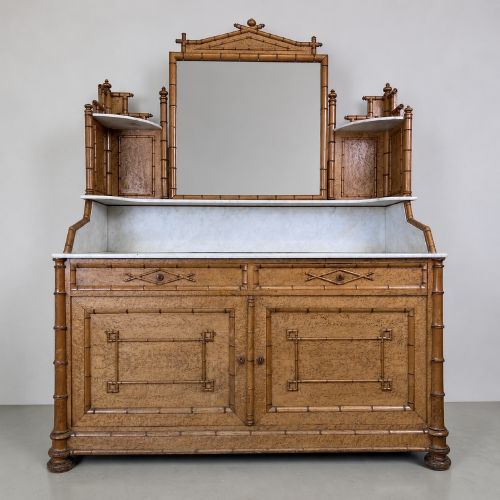
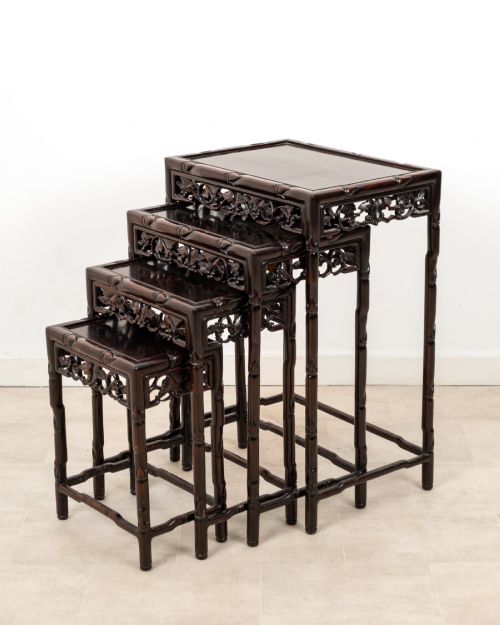
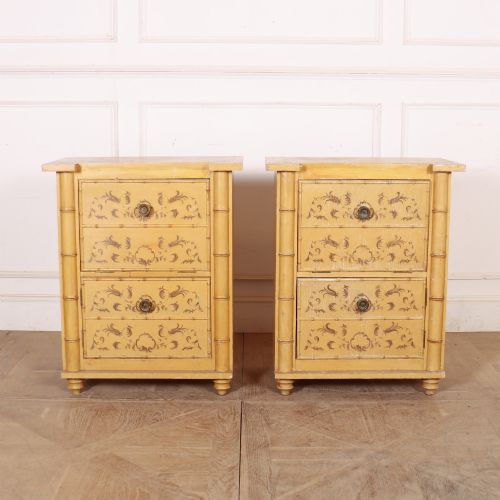
A faux bamboo table encompasses various practical household forms, from compact bedside cabinets and dressing tables to larger writing desks and nests of tables. The selection spans the Regency, Victorian, and Edwardian periods, reflecting a sustained fascination with turned emulation of natural canes.
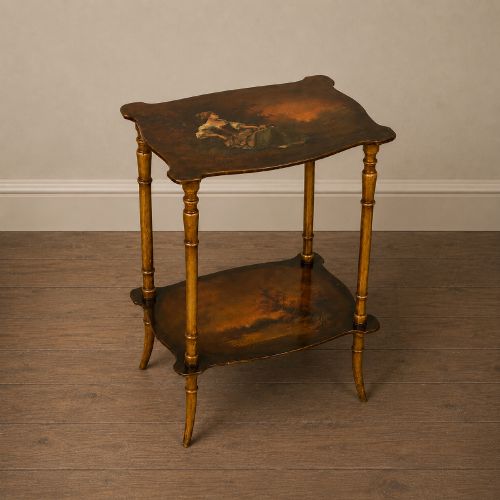
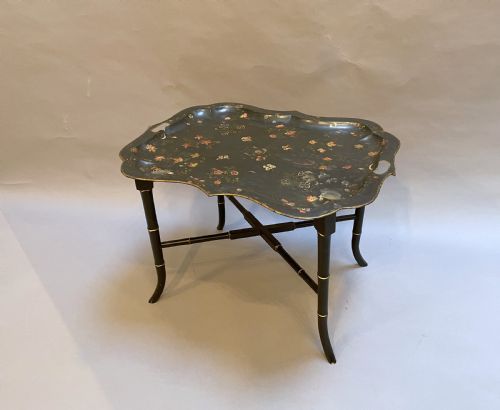
Buyers most frequently meet side tables, occasional tables, and tray tables featuring simulated bamboo turnings. These pieces bridge formal cabinet-making and whimsical design, serving functional roles in bedrooms, drawing rooms, and hallways.
Materials and Turnings
Craftsmen shaped solid woods such as pine, hardwood, and maple into the characteristic segmented joints and nodes associated with real bamboo. This labour-intensive turning technique required precision to mimic natural plant irregularities on rigid timber.
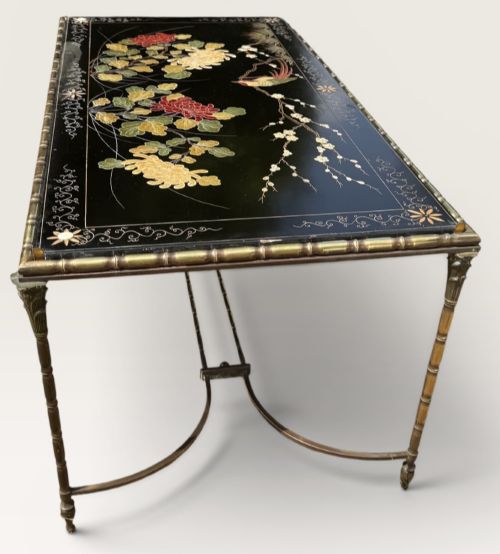
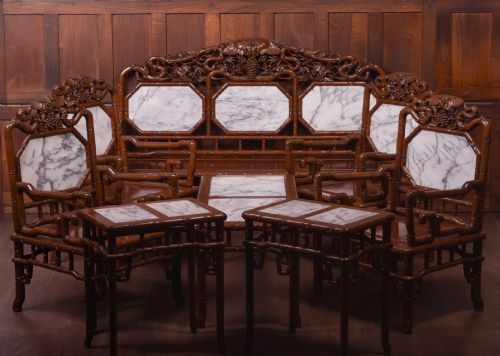
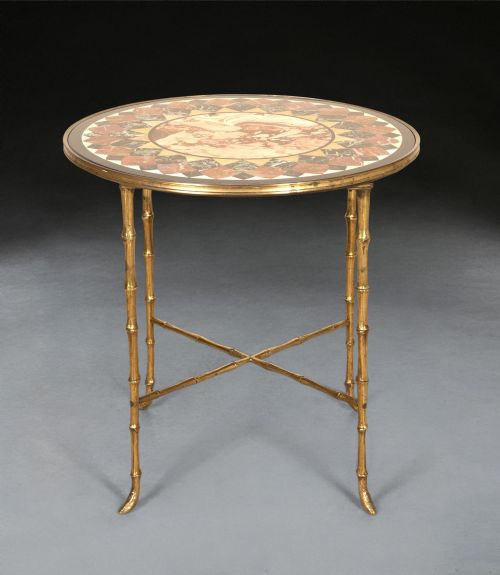
Surfaces received diverse treatments including original ochre or monochrome paint, ebonisation, gold leaf highlights, and lacquering. Certain examples incorporated contrasting materials like marble tops, brass fittings, and papier-mâché panels.
Some nineteenth-century makers went so far as to carve the fake nodes onto hidden interior frame stretchers nobody would ever see.
Evaluating the Make
Quality rests upon the fidelity of the wood-turning and the preservation of original surface finishes. Tables retaining their early paintwork or gilding demonstrate superior generational survival compared to later stripped or repainted items.
Structural integrity depends on the precision of the joinery within the turned legs and folding bases. Finer examples display crisp articulation at the bamboo nodes and stable, wobble-free frames across side and coffee table formats.
Maison Bagues·John Taylor Edinburgh·Howard and Sons·William Whiteley London
The Faux Bamboo Table Glossary
- Faux bamboo
- A decorative turning technique where wood is carved and painted to resemble natural bamboo canes. This style reached peaks of popularity during the Regency and Victorian eras.
- Chinoiserie
- European interpretations of Chinese and East Asian artistic traditions, frequently applied to lacquered panels and decorative furniture surfaces. It appears across various tray tables and cabinets.
- Papier-mâché
- A composite material made from paper pulp or layers of paper bound with glue, pressed and dried into sturdy forms. It provided a smooth base for elaborate painted and japanned tabletop designs.
- Étagère
- A set of open shelves or a tiered side table used for displaying small decorative objects or serving drinks. These multi-level pieces often incorporated turned supports.
- Japanning
- A European imitation of Japanese and Chinese lacquerwork involving layered varnishes and heat curing. The finish created glossy, dark surfaces often decorated with metallic motifs.
Faux Bamboo Table: Frequently Asked Questions
How do I date a faux bamboo table?
Dating relies on examining the underlying timber construction, joinery methods, and surface patination. Regency and early nineteenth-century examples often feature hand-mixed paint surfaces like ochre, while later Victorian pieces frequently utilise ebonised finishes or pine.
Secondary clues include hardware styles and the specific form of the table, such as folding frames or bedside cabinets popular towards the end of the century.
Where were these tables used originally?
These pieces populated various rooms across the home, from bedrooms and dressing chambers to formal drawing rooms and conservatories. Lighter folding versions and tray tables allowed for flexible entertaining and daily domestic convenience.
Washstands and bedside cabinets served utilitarian bedroom functions while maintaining the fashionable aesthetic of the period.
Are painted surfaces usually original?
Survival of original paint varies significantly, with many pieces having undergone subsequent decoration or stripping over the decades. Inspecting the layer depth and wear patterns helps determine whether the finish dates to the original manufacture.
Original ochre, black ebonisation, or gilt highlights display natural craquelure and wear consistent with age rather than modern restoration.
What styles accompany faux bamboo furniture?
These tables frequently intersect with Chinoiserie decoration, Aesthetic Movement philosophy, and Regency revival designs. The bamboo motif complemented the Western taste for exotic, travel-inspired interior decoration throughout the nineteenth century.
French Chateau and Hollywood Regency iterations later adapted the turned aesthetic for grander salon settings and lighter occasional use.