
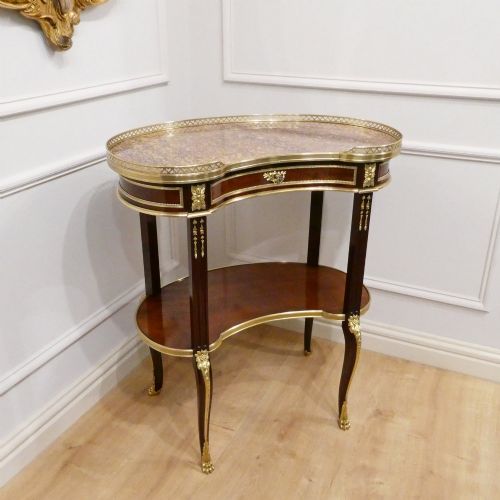
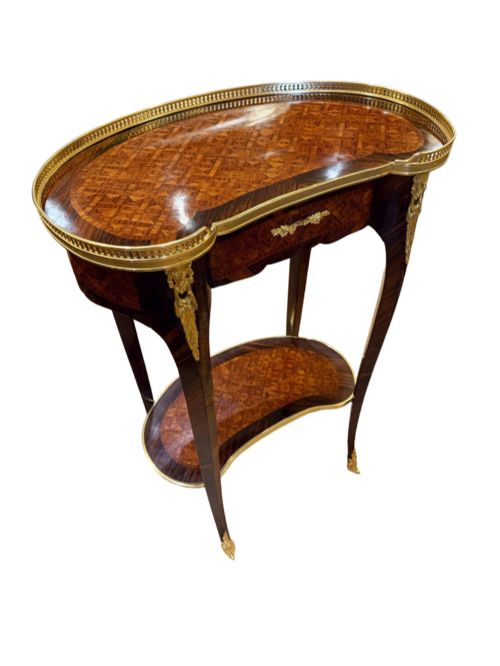
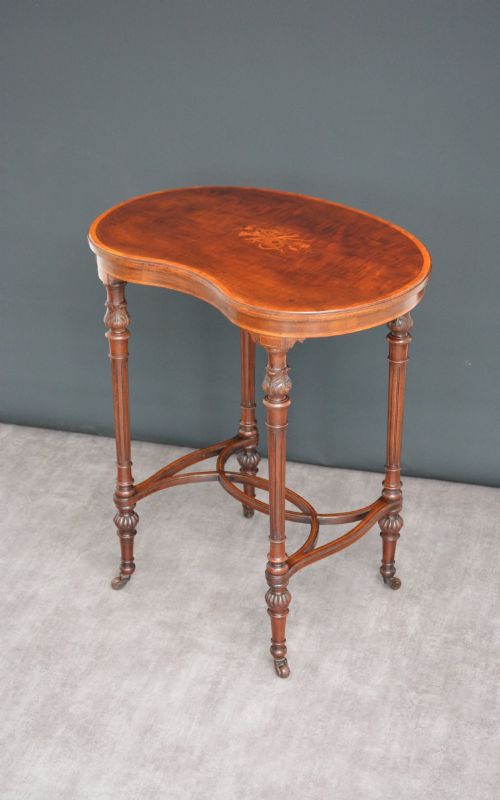
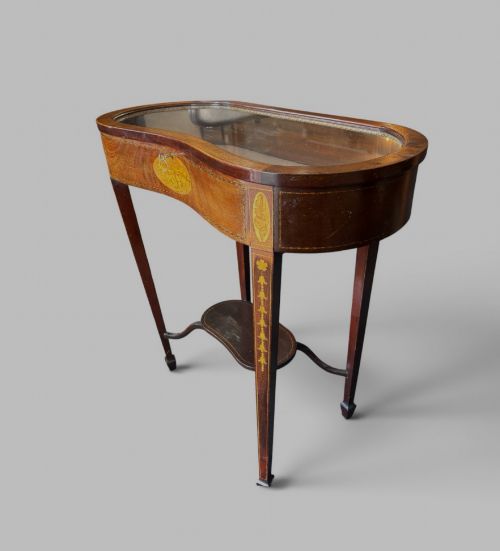


Kidney Shaped Side Table
A kidney shaped side table brings a graceful curve and compact footprint to a corner or bedside.
What they are
A kidney shaped side table follows a distinctive curved outline designed to fit neatly beside seating or against a wall. The form appears across the nineteenth century and into the twentieth century in various British and French iterations.
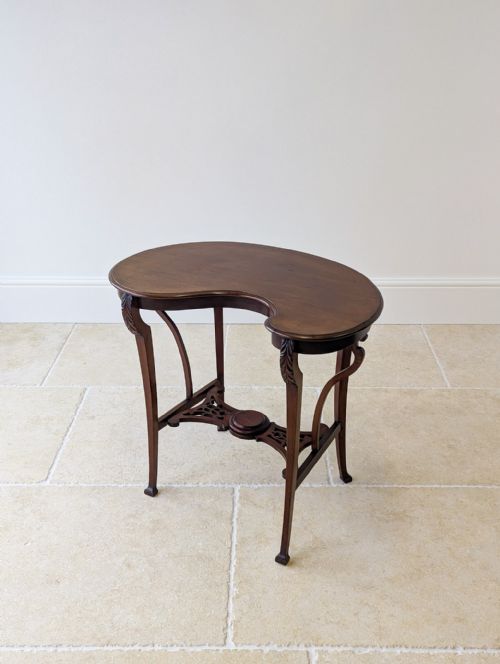
Most examples function as occasional tables, lamp tables or bedside tables, whilst specific variants serve as magazine racks or writing desks. The selection includes both simple mahogany pieces and highly decorative inlaid versions.
The style spans Victorian and Edwardian domestic furniture alongside French revival pieces, showing influences from Sheraton Revival to Louis XV design. Buyers frequently encounter pairs or single occasional tables suited to smaller spaces.
How they were made
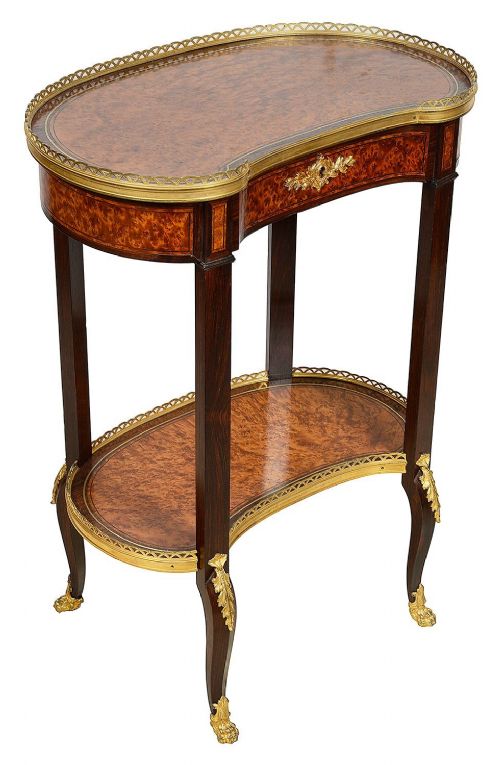
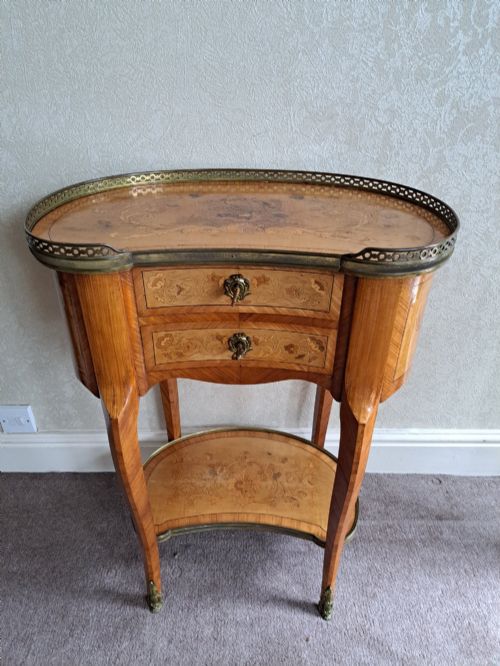
Joiners and cabinet makers constructed these tables using a timber carcase of mahogany, walnut, kingwood, rosewood or satinwood. Many surfaces feature boxwood inlay, marquetry or parquetry patterns set into the wood.
Fine examples incorporate cast or chased brass, ormolu and gilt bronze mounts, galleries and handles. Tops occasionally feature inset marble slabs supported by brass or wooden framing.
Retail Price Guide 2026
Typical UK retail prices for kidney shaped side table, calculated from the Sellingantiques database of over a million retail prices indexed since 2003. This retail price guide relies exclusively on Sellingantiques data; no external sources or auction records are used, so the figures do not describe the wider market.
Design influences appearing on this site range from Victorian and Edwardian to Sheraton Revival, Louis XV and Hollywood Regency.
What varies in quality
The standard of a kidney shaped side table depends on the precision of the curved timber work and the complexity of the surface decoration. Finely executed marquetry and parquetry patterns distinguish superior examples from plain timber builds.
Hardware and secondary materials also indicate grade, with cast ormolu mounts and marble tops appearing on higher status French and English pieces. The crispness of the boxwood inlay and the selection of figured veneers show the maker's hand.
Maison Millet
The Kidney Shaped Side Table Glossary
- Marquetry
- Decorative veneer applied to furniture in patterns and pictorial designs using different coloured woods. It creates intricate geometric or floral scenes across the top surface.
- Parquetry
- Geometric mosaic woodwork similar to marquetry but strictly using angular or regular shapes. It forms repeating patterns such as cubes or chequers.
- Ormolu
- Gilded bronze mounts and ornaments applied to furniture, popular in French styling. It adds metallic contrast to the timber carcase.
- Sheraton Revival
- A late nineteenth and early twentieth century style drawing on the neoclassical furniture designs of Thomas Sheraton. It favours lighter timbers, satinwood and delicate inlay.
- Étagère
- A set of open shelves for displaying small objects or books, sometimes built into the form of a side table. It provides vertical tiered storage.
Frequently Asked Questions
Where do I put a kidney shaped side table?
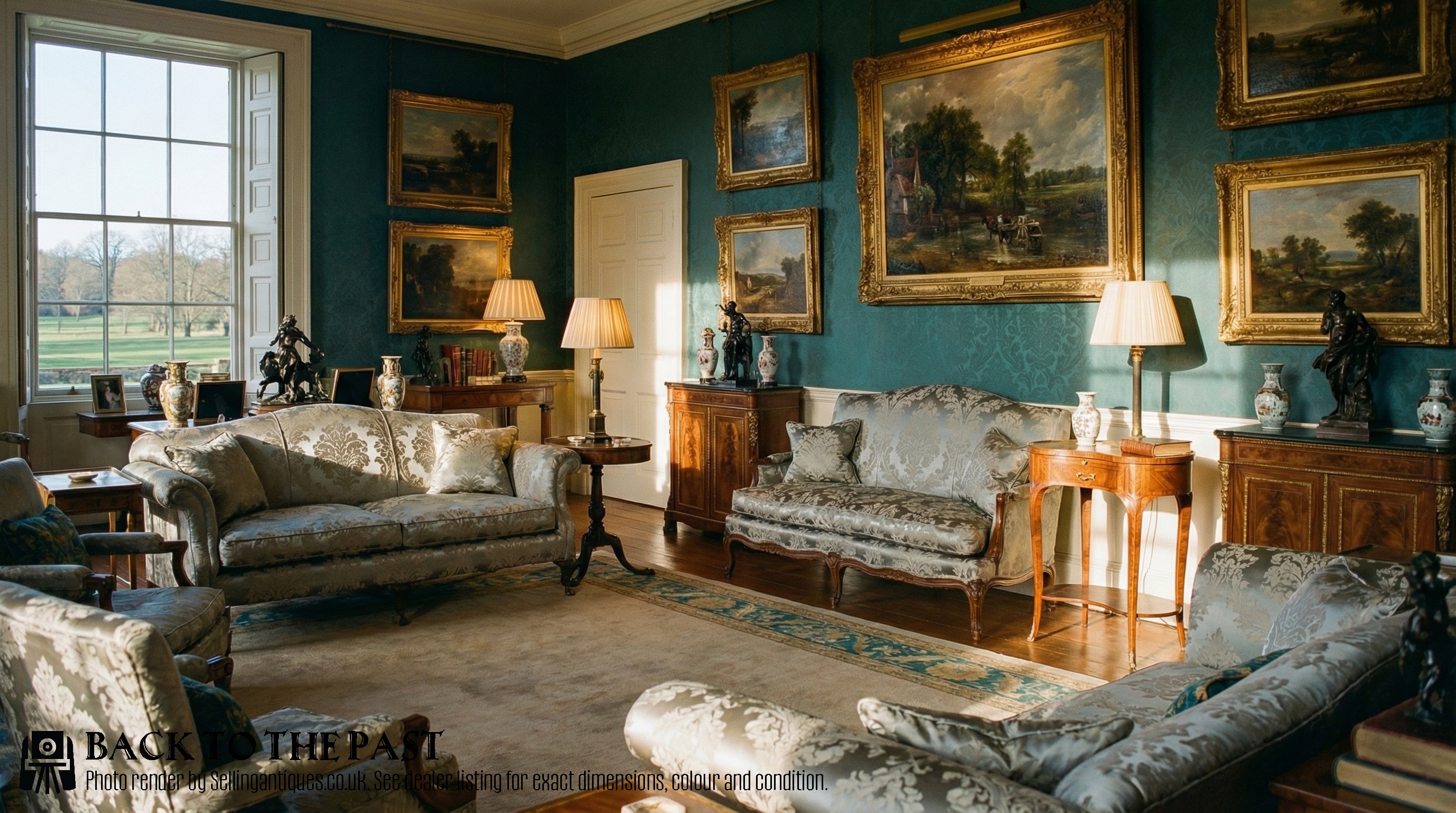
The curved profile allows these tables to sit comfortably beside an armchair, in a hallway or against a bedroom wall without obstructing movement. They take up minimal floor space while offering a useful surface for lamps or drinks.
Pairs often work well flanking a bed or fireplace, creating a balanced arrangement in a room.
How do I date a kidney shaped side table?
Dating relies on timber choice, construction methods and stylistic markers such as Sheraton Revival or Louis XV influence. Victorian and Edwardian examples frequently utilise solid mahogany or walnut with subtle inlay, whereas French nineteenth-century pieces often display parquetry and bronze mounts.
Examining the underside, drawer construction and secondary woods helps confirm the period of manufacture.
Are these tables sturdy enough for daily use?
Most surviving examples are built from dense hardwoods like mahogany and rosewood, making them durable for holding lamps, books or decorative items. The curved rails and leg joints provide solid structural support for everyday placement.
Care should be taken with pieces featuring delicate marquetry or marble tops to avoid heavy impact.
What is the difference between French and English styles?
English versions from the Victorian and Edwardian periods tend to emphasise mahogany and satinwood with understated inlay or simple polished surfaces. French designs frequently incorporate kingwood, elaborate parquetry, marble tops and gilt bronze mounts.
Both traditions utilise the signature curved top but express it through distinct regional cabinet-making techniques.