


Folding Tray Table
When you search for a folding tray table, you are looking at centuries of portable dining and serving furniture designed to be packed away when not in use.
Folding Tray Table
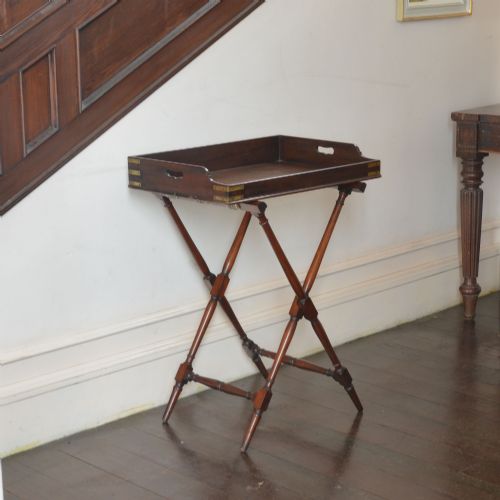
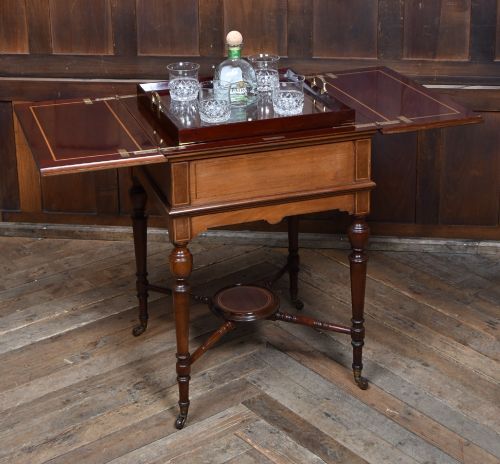
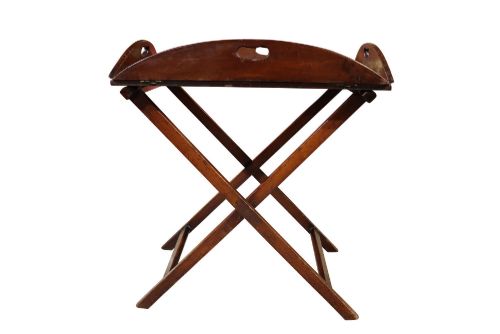
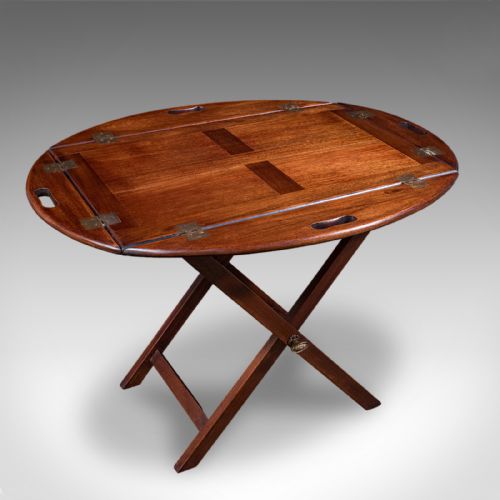
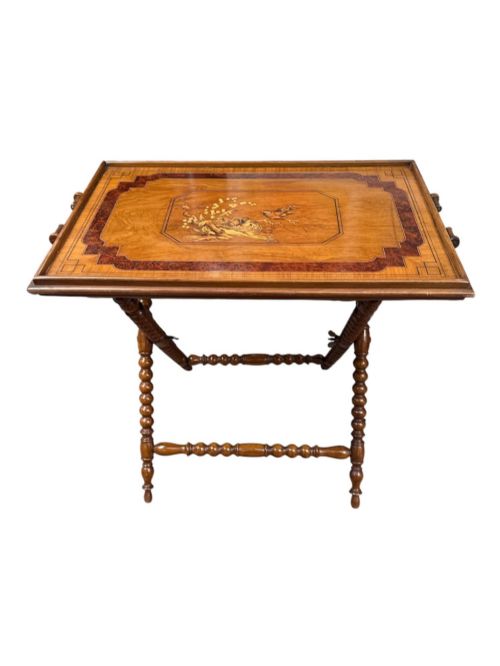
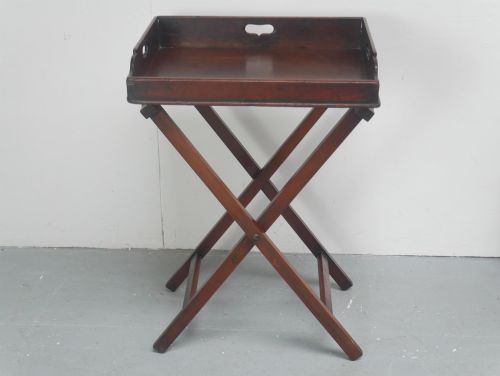
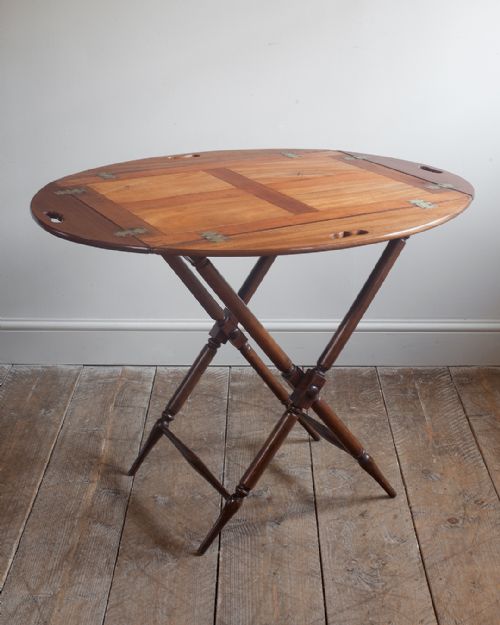
A folding tray table combines a removable or hinged serving surface with a collapsible wooden or metal stand, functioning as a versatile piece of furniture for serving and entertaining. These pieces range from formal butler trays on X-frame stands to elaborate inlaid tea tables from distant workshops.
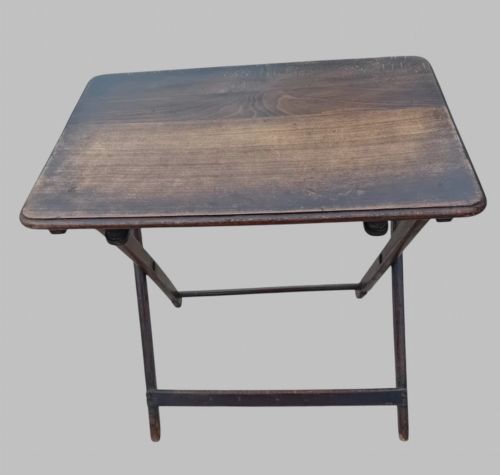
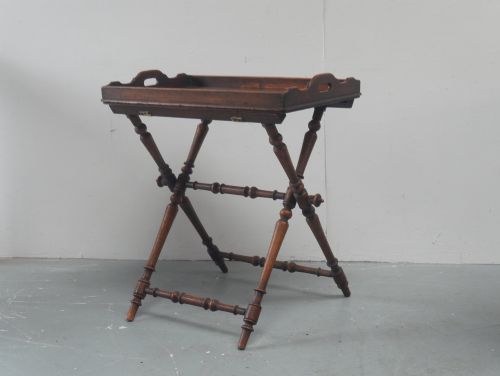
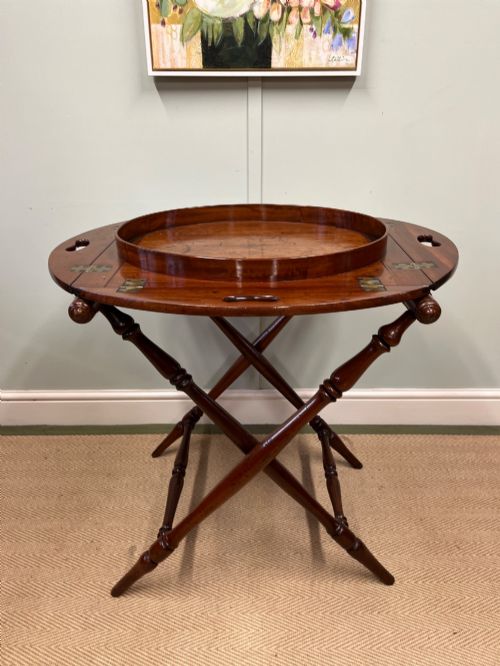
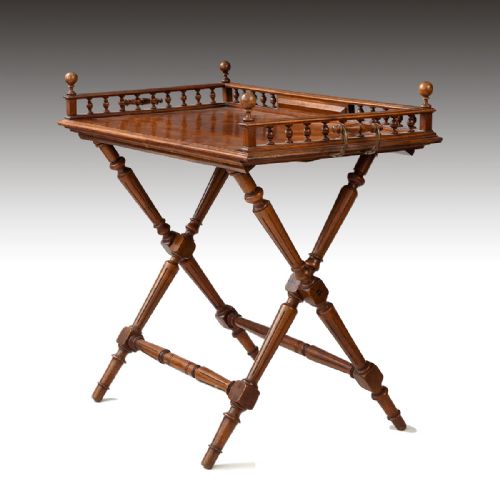
The version you are most likely to meet on this page is the nineteenth-century mahogany or oak butler tray on a folding stand, alongside twentieth-century variations suited for use as occasional or coffee tables.
Examples stretch from eighteenth-century Georgian designs through Victorian and Edwardian iterations to later colonial and campaign styles, reflecting changing domestic habits across Britain and beyond.
How They Were Made
Makers utilised dense timbers such as mahogany, oak, walnut, teak, and rosewood for the structural stands and wooden trays, often employing traditional joinery to ensure the folding mechanism remained stable under weight.
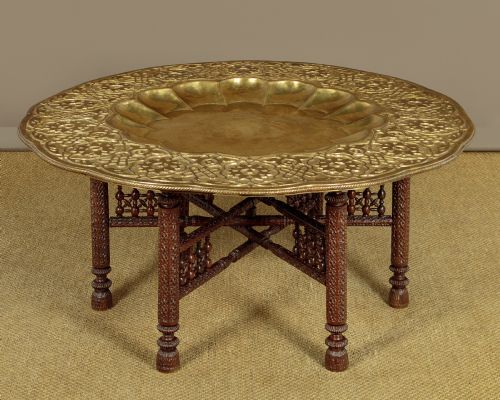
Metal components frequently feature in imported folding tray tables, utilising brass and copper for engraved or plain trays that lift off independent collapsible bases.
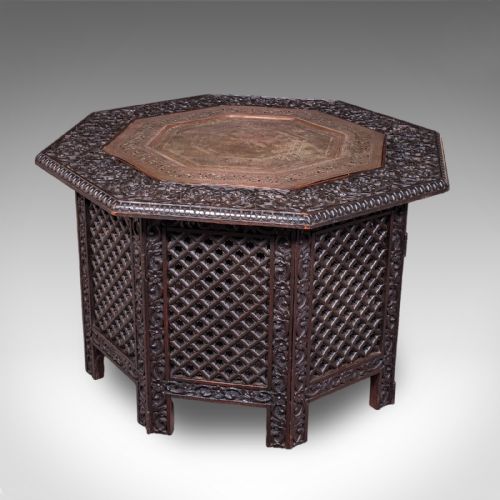
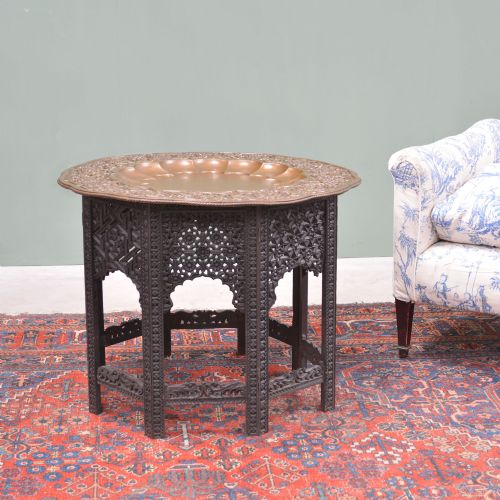
Surface ornamentation involved intricate marquetry, Sorrento ware, and hand-carved detailing, particularly on Anglo-Indian and Middle Eastern pieces where brass tops paired with folding wooden supports.
Folding Tray Table Retail Price Guide 2026
Typical asking prices for folding tray table among the pieces listed under this phrase on Sellingantiques today, from the lower quarter to the upper quarter. They describe what is for sale here now, not the wider market.
Materials represented across the inventory include solid mahogany, oak, walnut, teak, brass, copper, and beech.
What Varies in Quality
The integrity of the folding mechanism separates robust examples from utilitarian ones, with tight joints and well-fitted hinges ensuring the stand remains level when opened.
Timber selection and the crispness of carved or inlaid decoration distinguish standard production items from finer regional or campaign pieces.
The thickness of the tray rim, the dovetailing of tray corners, and the weight of metal used in brass and copper tops all indicate the original grade of manufacture.
C Sterley
The Folding Tray Table Glossary
- Butler tray
- A portable wooden tray with hinged or fixed sides, designed to lift off its support stand for serving food and drink. These trays often feature oval or rectangular shapes with handgrips cut into the rim.
- Campaign style
- Furniture designed for military officers to dismantle and pack into compact spaces for travel. These pieces rely on folding frames and brass hardware for durability during transport.
- Sorrento ware
- Woodwork decorated with micro-mosaic marquetry originating from Italy, frequently seen on Victorian tray tops. Craftsmen used various coloured woods to build up pictorial or geometric designs.
- Benares tray
- A round metal tray, usually brass or copper, decorated with chased or engraved Indian motifs. They typically rest upon folding wooden stands known as spider bases.
- X-frame stand
- A folding support structure built with intersecting legs that cross in the middle like the letter X. This design allows the entire base to collapse flat when the tray is removed.
Folding Tray Table: Frequently Asked Questions
What is a folding tray table used for?
These tables served historically for carrying tea, meals, or spirits from the kitchens to reception rooms before being folded and stored out of the way. Domestic staff utilised them for flexible service during garden parties and drawing room gatherings.
Today, homeowners adapt them as coffee tables, bedside stands, or portable serving surfaces for modern entertaining. Their ability to fold flat makes them practical for smaller spaces.
Are campaign folding tray tables different from Victorian ones?
Campaign pieces were originally built for travel, featuring robust folding frames designed for frequent assembly and dismantling. They prioritise utilitarian strength and portability.
Victorian and Edwardian domestic tray tables focused more on parlour presentation, incorporating decorative timbers, marquetry, or carved edges. While both fold, their intended environments shaped their ornamentation.
How do I care for an antique folding tray table?
Protect wooden surfaces from excessive moisture and heat by using coasters or mats when serving drinks. Regular dusting with a dry cloth keeps the polish intact without building up wax residues.
Inspect the folding hinges periodically to ensure they move freely without forcing the joints. Store the table in stable humidity conditions to prevent timber warping.